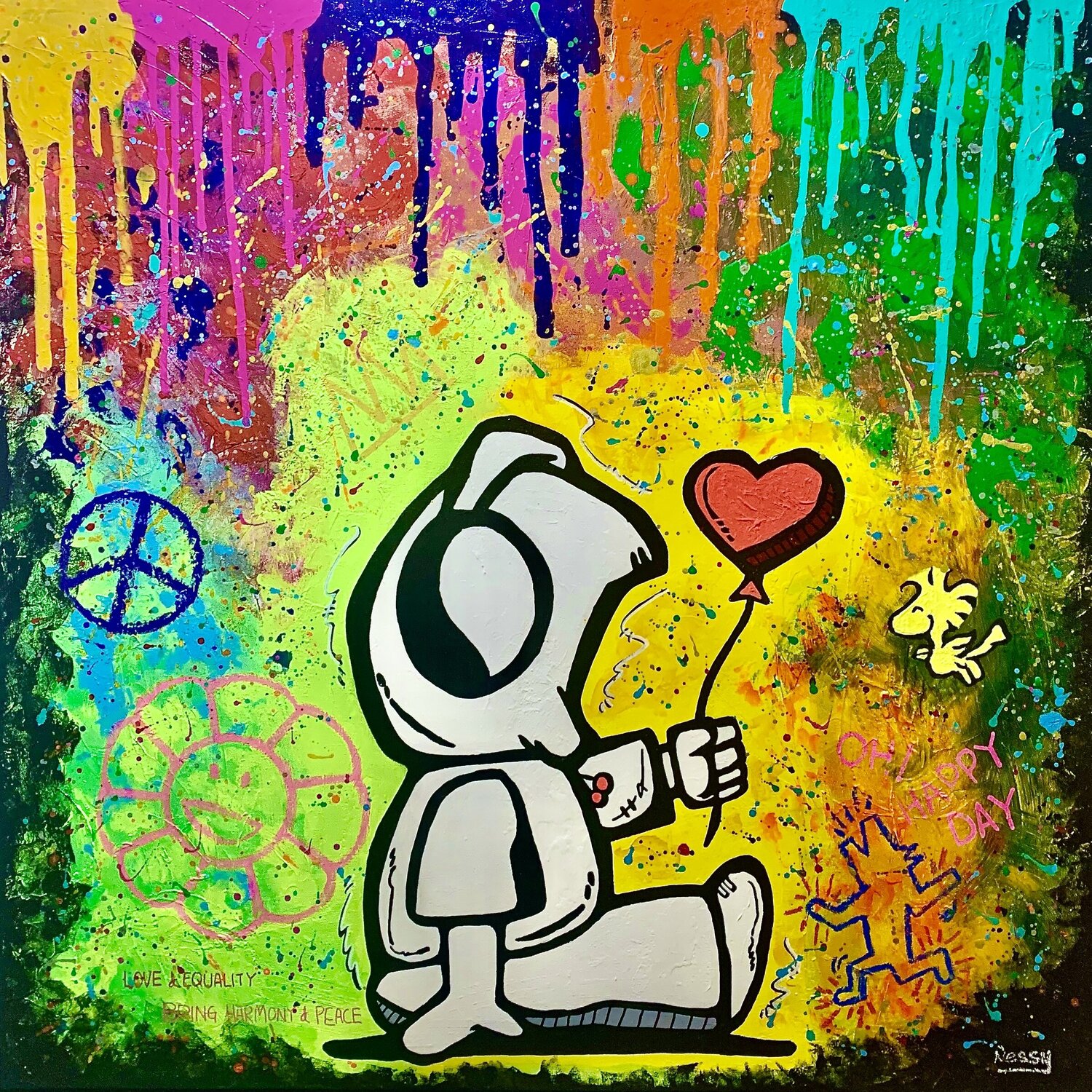
Your journey began in Singapore and blossomed in Sydney's vibrant Rocks district—how have these contrasting environments influenced the evolution of your pop art style and visual language?
Back in Singapore, my style was completely different, and I knew nothing about pop art. It felt like a very Western language, and I only truly discovered it after moving to Sydney. Seeing how boldly colour was used here opened my eyes. Pop art could be playful, political, or deeply narrative, and I loved how artists expressed powerful stories through such vivid simplicity. That energy inspired me to explore the style myself.
You draw inspiration from both playfulness and quiet strength in your pieces—can you share a recent work where these two energies intersected in a surprising way for you?
Playfulness often appears first in my work through bright colours and bold shapes, but underneath there’s usually a quieter strength drawn from lived experience. In one recent piece, the lighthearted palette contrasted with a more grounded emotional core. That mix surprised me and reminded me how humour and resilience often coexist. The playful surface invites people in, while the deeper strength gives the artwork its lasting impact.
With a background in graphic arts and advertising, how do you balance the polished clarity of those disciplines with the personal vulnerability and emotional resonance in your artwork?
My graphic-arts background taught me structure, clean lines and visual discipline. Those foundations still guide how I build a piece. But emotional vulnerability comes when I allow the work to break its own rules—through colour shifts, texture, or expressive marks that aren’t perfectly controlled. That tension between order and feeling reflects my own journey. The polished clarity gives the viewer something familiar, while the vulnerability makes the work honest and human.
Your creative process moves between digital and traditional media—what excites you most about blending these methods, and how does each step shape the final mood of your artwork?
I started with pencil, ink and watercolour before moving into digital art, where I felt safe because mistakes could be undone. Returning to traditional media last year pushed me to embrace errors as part of discovery. Mixing acrylics, acrylic markers and texture opened new possibilities, helping me evolve instead of staying in one style. My latest work, Hoodie Boy, reflects my mental-health journey—dark themes expressed through vivid colour, inspired by artists like Banksy, Basquiat, Warhol and Haring.
Much of your work focuses on transforming personal and collective struggles into uplifting visuals—what does this transformation look like for you on a personal level, and how do you hope viewers feel when engaging with your art?
Mental health is real and never something to hide. Hoodie Boy reflects my own struggles and the ways I’ve learned to cope. I let the artwork speak for me, sharing what many people keep bottled up. I believe expressing these experiences openly helps us heal, and I hope my work encourages others to feel less alone in their own challenges.
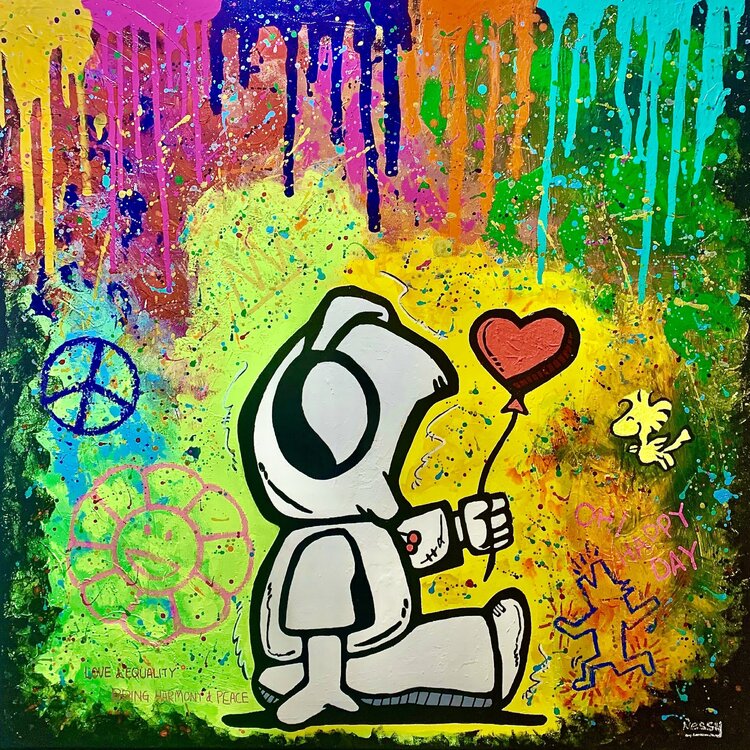 Hoodie Boy – Lovely Day
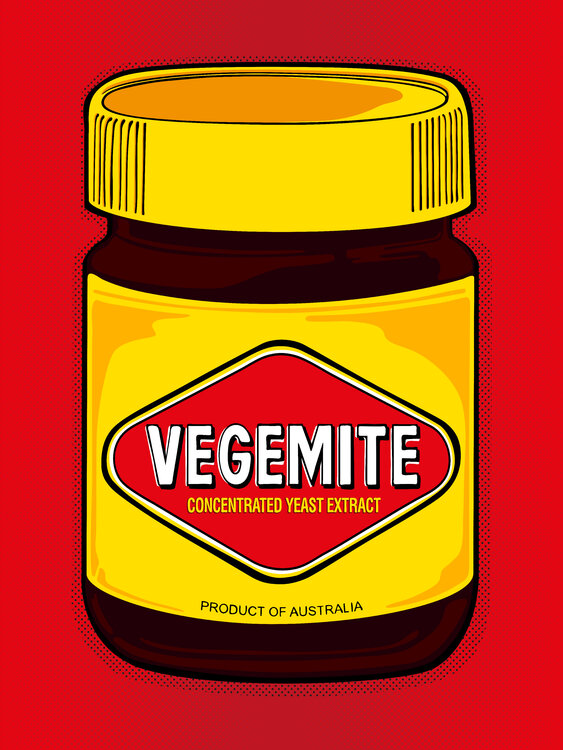 AUS POP – Vegemite
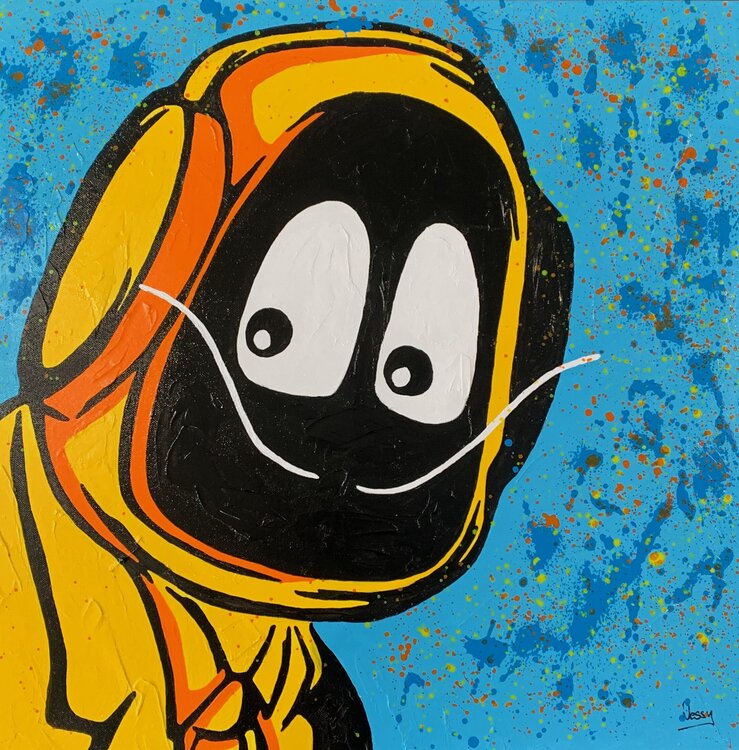 Hoodie Boy – Dali Who?