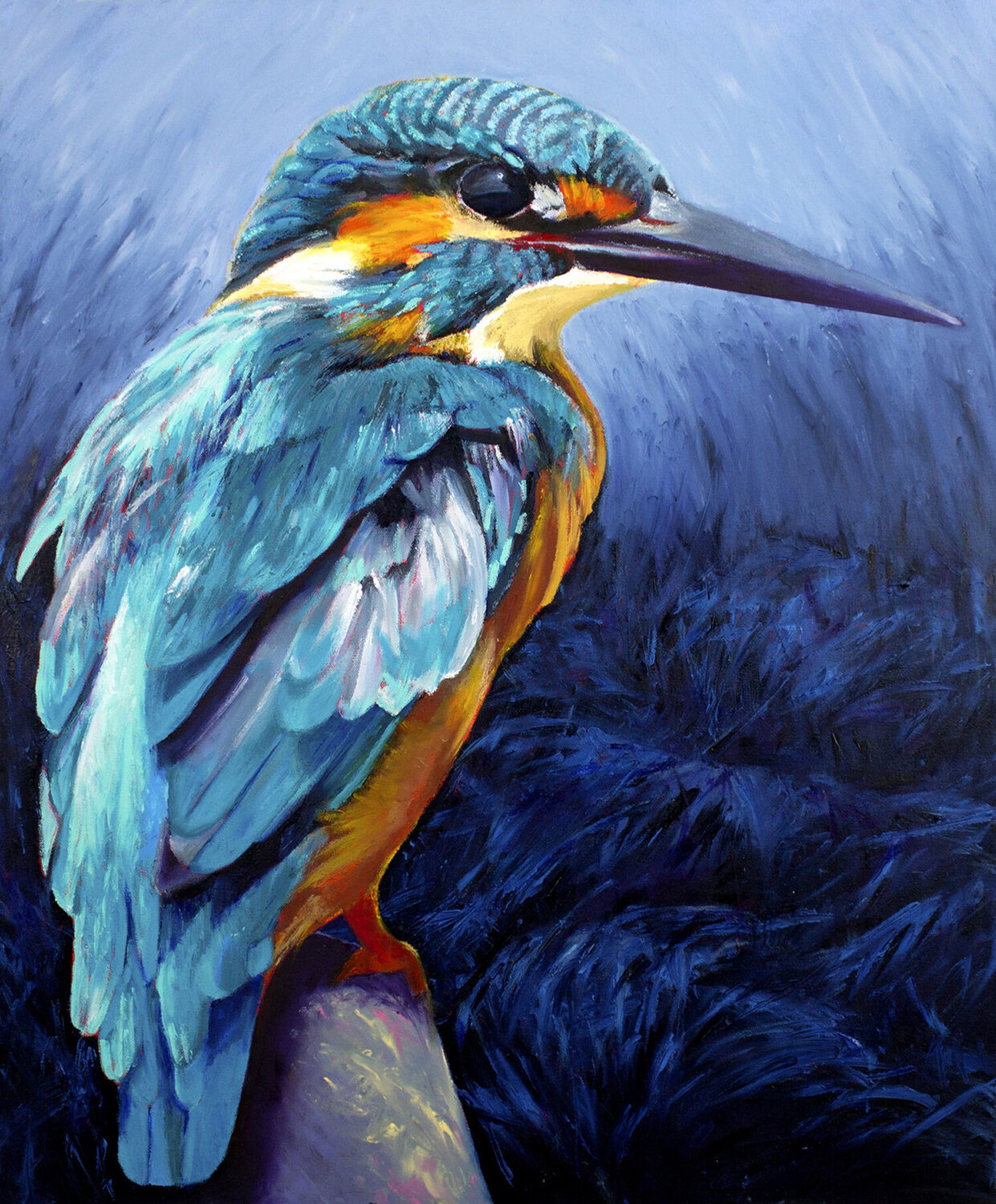
What are you currently exploring in your artistic practice that excites you the most?
At the moment I’m most interested in pushing my paintings a little further while still keeping the sense of calm and connection that is important to me. I’ve spent a long time developing my way of working with oil paint using only my fingers and I’m now exploring how far I can take my interpretation of the subjects I’m drawn to. I’m becoming more interested in giving myself greater freedom through colour, light, atmosphere and the way I use the paint while still keeping the subject recognisable and true to what I’m trying to convey. That balance between observation and interpretation is what excites me most at the moment and I feel ready to take more risks in my work and see where that can lead.
Is there a particular artwork on your Singulart profile that best represents your practice today? Tell us why you chose it.
The painting I would choose is Bondi Rocks. I chose it because it brings together many of the qualities that have become important to me as an artist: my connection with nature, the influence of travel, my use of heightened colour and my interest in creating atmosphere as well as capturing a subject. I particularly like the balance between the recognisable landscape and the way I’ve interpreted the water, rocks and surrounding atmosphere. Although my work continues to evolve, this painting still feels like a good representation of the qualities that have shaped my practice.
What experiences, places or moments have had the greatest influence on the artist you are today?
I think the experiences that have influenced me most are travelling, being outdoors and simply spending time in nature. Whether I’m somewhere familiar or exploring a new place, I have the freedom to slow down, look at things with fresh eyes and really take in what I’m seeing. I’m drawn to those moments when something makes me stop and look a little longer: noticing the light, colour, atmosphere, movement or simply the feeling of being there. Being able to slow down, really experience those moments and then translate what I feel through paint has become a very important part of who I am as an artist.
Is there a story about your artistic journey that people don't usually know, but that has shaped who you are as an artist today?
Like many artists, I was always drawn to art at school but when it came to choosing a career, I took a more design-focused route and studied Digital art and 3D animation. At the time, that felt like the more practical direction. I wanted to work in animation creating the worlds and environments around the characters. I think that interest in environment, colour and the relationship between a subject and its surroundings has stayed with me in my painting.
Are you currently working on anything you'd like people to know about?
At the moment, I’m continuing to work with the subjects that have always drawn me to paint: wildlife, the natural world and the places I encounter. What feels different now is that I’m beginning to give myself more freedom in how I translate those subjects onto the canvas. I’m experimenting more with marks and suggestion, rather than feeling that every part of the painting needs the same level of detail. I still want to stay true to what I’ve seen and retain the level of detail that has become part of my work but I’m becoming more comfortable deciding where that detail is important and where I can allow the paint to be more suggestive. I’m not sure exactly where that will lead yet, but I’m enjoying giving myself permission to explore it.
You began drawing from a young age, using sketching as a way to explore and interpret the world—how has your relationship with art evolved since those early days of childhood curiosity?
When I was younger, I would often take a pencil and sketchpad with me on bus journeys and let the movement of the bus move the pencil across the page. Looking back, I think that says quite a lot about my early relationship with art: I was naturally curious about observing and responding to what was around me. I also painted from a young age but as I became more serious about it I became quite focused on getting things right and developing my technical ability. That way of working has shaped much of my practice to this day but I’ve recently started to look again at how I experience what I see and how I choose to interpret it. I’m still very interested in observing the world around me and staying true to what I see but going forward I’m giving myself more freedom in how I translate those observations into paint.
Nature is a recurring theme in your work, from dense forests to the smallest creatures—what draws you back to these natural subjects time and again, and how do you hope viewers connect with them?
I think I’m drawn back to nature because there is always something to notice. Even when I’m looking at something I’ve seen many times before there are changes in light, movement, colour and atmosphere that make it feel different. I’m particularly interested in those moments when slowing down and really looking creates a sense of connection with what is around us: something that isn’t necessarily visible but can be felt. That feeling is an important part of what draws me to these subjects and something I hope comes through in my paintings. I don’t want to tell the viewer what they should see or feel but to give them a reason to pause, look more closely and perhaps experience some of that connection for themselves.
You have chosen finger painting as your sole method, achieving remarkable detail with just your fingertips—what inspired you to embrace such a tactile approach, and how does it shape your creative process?
While studying, I had one painting class alongside the more technical and design-led parts of the course, and our lecturer encouraged us to experiment with different mediums and ways of working. Through trying different materials and approaches, I found myself applying paint directly with my hands and fingers. I created a large abstract painting this way and became completely absorbed in the process. Something about working directly with the paint felt very natural to me and I kept coming back to it. Over time, I developed and refined the technique and eventually made the decision to use my fingers exclusively. What started as an experiment became a way of working that felt completely natural to me, and eventually became the only way I wanted to paint.
Living and working in the United Kingdom, are there any specific landscapes or moments in the local environment that particularly influence or inspire your recent pieces?
Although I live and work in the UK, I wouldn’t say that one particular landscape directly defines my recent work. I’m influenced more broadly by the natural world around me and by the moments I encounter when I’m outdoors. The changing Scottish weather, light and atmosphere are something I’m always aware of and living here has made me very aware of how dramatically they can change the feeling of a place. At the same time, travel has always been important to me, so I’m equally drawn to the new landscapes and wildlife I encounter elsewhere. For me, it’s less about a particular place and more about the experience of slowing down within that place, looking closely, feeling something and then wanting to translate that experience through paint.
When you begin a new painting, do you work from imagination, observation, or a blend of both, and what emotions or stories do you aim to convey through your unique finger painting technique?
I usually begin with observation. Most of my paintings start with a moment that has made me stop and look a little longer: whether that’s wildlife, a landscape, a particular light or something I’ve encountered while exploring a new place. My work to date has stayed quite close to what I see, particularly in the subject, proportions and composition, while allowing myself more freedom in colour and atmosphere. More recently, I’ve started to explore how much further I can take that interpretation and how much freedom I can give myself within the way I finger paint. I’m not trying to tell the viewer a particular story or give them a specific emotion to take from the painting; I’m more interested in translating something of that moment and leaving enough space for them to experience it in their own way.
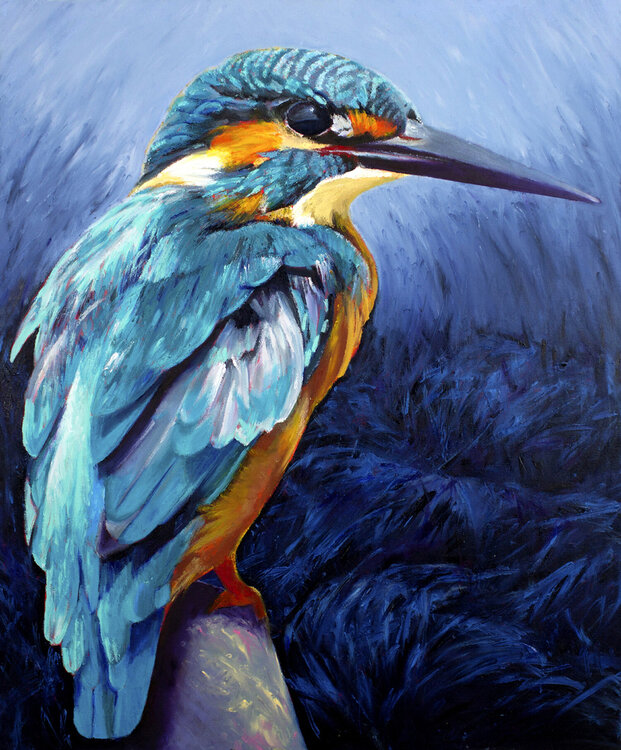 The King – Finger Painting
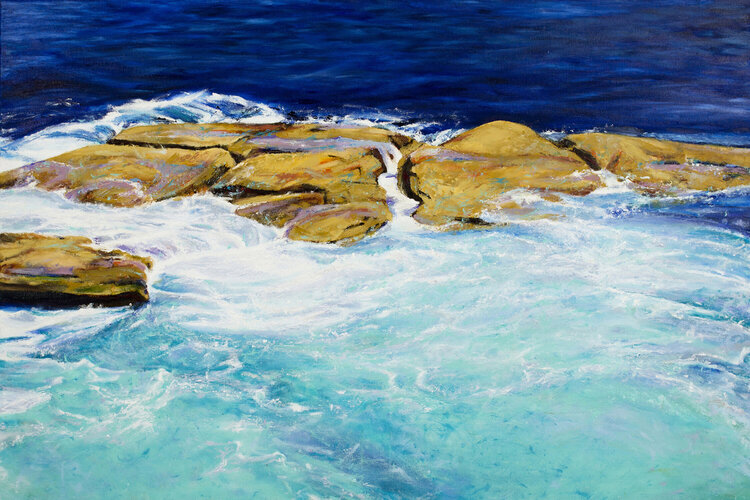 Bondi Rocks – Finger Painting
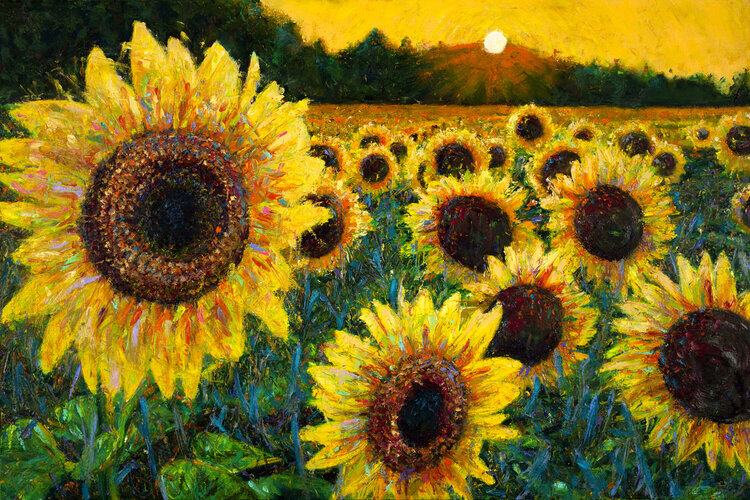 Follow the Sun – Finger Painting