What are you currently exploring in your artistic practice that excites you the most?
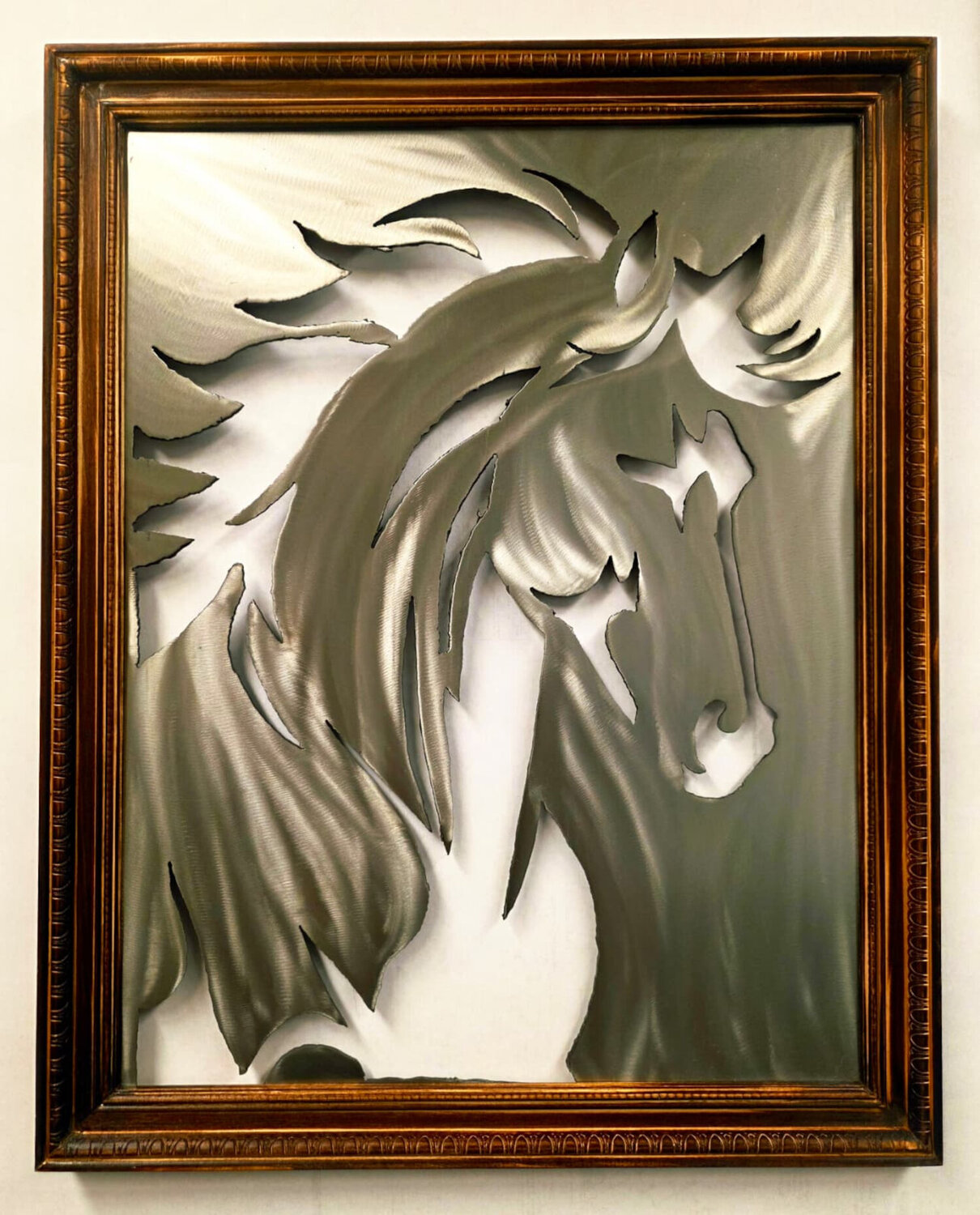
Right now it’s depth and range. The horse series taught me how a silhouette can carry a piece, both as the steel itself (Untamed) and as the void it leaves behind (Unleashed). Now I’m pushing that into layers, starting with a wave piece where several cut layers stack so the shadow and the color do the work. I’m also working on a wall-mounted horse head, where the steel stops being a picture and becomes an object. Past that, I’m sketching out life-sized sculpture, kinetic work and abstract pieces. I’m exploring everything metal lets me do. The torch, the grinder and the plasma cutter all leave marks I can’t fully control, and every piece is a one-off. I keep finding out what the metal will do next.
Is there a particular artwork on your Singulart profile that best represents your practice today? Tell us why you chose it.
Origin. It’s where I first realized what metal could do, and what I could do with it. I’ve always liked how steel can feel like it’s moving when you stack it. The layers sit at different depths, so the light and shadow shift as you walk past and the surface seems to move even though nothing does. It’s hand cut, hand finished, one of one. I chose it because it was the beginning of seeing the potential in the material and in myself, and everything I’m exploring now comes from that realization.
What experiences, places or moments have had the greatest influence on the artist you are today?
The shop. I’ve spent my life around cutting, grinding and welding steel, and that’s where I learned what metal will and won’t forgive. Now it’s also where I go to find calm. When I’m working, everything gets quiet and focused. That’s where I let the pain and joy of life out into a piece of metal, so that it’s physically striking to someone, and so that at the heart of it, it hits on more than a visual level. Art doesn’t come with instructions. What hits you hard might give someone else hope. That gap between the two is exactly where this work lives.
Is there a story about your artistic journey that people don't usually know, but that has shaped who you are as an artist today?
Most people don’t know that Self Crucifixion took me sixteen years. I kept starting it, stopping, and starting over. For five of those years I was sober, and that’s when it finally came together. The piece is a figure with its head hanging, and the weight of it doesn’t leave. For me, that weight was addiction. For someone else it’s their own struggle, and that’s the point. I want it to meet people wherever they are. But your head comes up with time. I couldn’t have finished it any sooner than I did. It’s the most honest thing I’ve made, and it’s the reason I believe the rest of the work can hit on more than a visual level.
Are you currently working on anything you'd like people to know about?
Undertow is up now, and it’s the piece that opened the door for what I’m doing next. I’m looking into a cyclone, and maybe another beach or water piece, because moving water and weather translate so well into stacked steel. I’m also exploring abstract and kinetic sculpture, and even some furniture. Metal gives me a lot of ways to work, and I’m loving finding out how far they go. If you want to follow along, the process videos go up on Instagram
You spent over 15 years working with metal in tough, unforgiving environments before becoming an artist; how has that real-world experience with the material shaped the way you approach your sculptures today?
Fifteen years of fabrication taught me the technical side. Steel doesn’t care about your intentions. A bad cut stays a bad cut, and heat does what heat does. It taught me precision and respect for the material: how it moves under a torch, how a grinder changes the way it catches light, and what it’ll take before it gives. But life has been harder than any steel I’ve worked, and thirty-seven years of it is what shaped the creative side. The fabrication gave me the hands. Life gave me something to put in them. All of it comes down to this: if you keep your eyes and ears open, you can shape your own beauty. Life comes from everyone around you, the good and the hard. What matters is what you turn it into. For me, that’s steel. I listen, and the steel speaks back. It’s where I put my pain and my happiness, and where my mind finally goes quiet. I know the material well enough now to stop forcing it, so I can follow the metal where it wants to go.
Steel and metal are often seen as industrial or utilitarian materials, yet you find and reveal their beauty through your art; what first inspired you to pursue metal as your primary medium for creative expression?
I always saw beauty in the metal around me. I spent years in the shop, and I noticed the way a grinder makes steel catch light and the colors a torch pulls out of it. Then I found Sean Guerrero, known as Bumper Hunter, who builds sculptures from hand-cut pieces of chrome car bumpers. His work showed me that material most people see as scrap or industrial can be art. It also taught me that if you see the beauty in it, showing it to the world is your responsibility. That’s what pushed me to start making my own work, and I haven’t stopped.
Your Untamed and Unleashed series uses horses as central symbols, representing freedom and wildness; what drew you to this motif, and how do these concepts relate to your own experience both as an artist and as a person?
My family has always been horse people, so the horse was already in my life before it was in my work. It’s the first thing I ever cut. A horse carries what I think freedom really is. Wild doesn’t mean reckless, and untamed doesn’t mean lost. For years I chased a kind of freedom that turned out to be a cage, so I know the difference. Untamed is the horse as the steel itself, solid and standing. Unleashed is the horse as the space cut out of the steel, where what’s missing is the shape. Making them, I’m free in my own way, too. I let the metal lead and trust my hands to follow it. I think real freedom is something you build, and it takes work.
You describe never starting with a finished plan, letting the metal—and the marks left by your processes—guide the development of each piece; can you share what you enjoy most about this organic, hands-on approach, and how it influences the final character of your work?
I start with an idea and a clear sense of what I expect, but I know better than to think it will end the way I picture it. The metal fights you. Heat does what it wants, and the tools leave marks that can’t easily be undone. Every piece has its own fight. I work up a silhouette or line art first, and from there the details, the design and the fit of the metal take shape as I work. What I enjoy most is that back and forth. I bring the idea, the steel pushes back, and what comes out of that is the character of the piece. The torch color, the grind marks and the raw edges are a record of that fight, which is why every piece is one of one.
There is a powerful metaphor in your practice about scars, resilience, and transformation, both for the material and for people; what do you hope viewers take away, emotionally or personally, when they encounter your sculptures?
I hope they feel something before they understand it. Every piece carries its scars. The grind marks, the torch color and the raw edges aren’t hidden, because they’re what the piece went through to become itself. People are the same. What we’ve been through doesn’t get erased, and it doesn’t have to. It can be what makes us who we are. I can’t tell you what my work will mean to you, because that part is yours. What brings pain out in one person brings hope to another. If someone walks away feeling a little less alone, or believing that their head comes up with time, then the steel did its job.
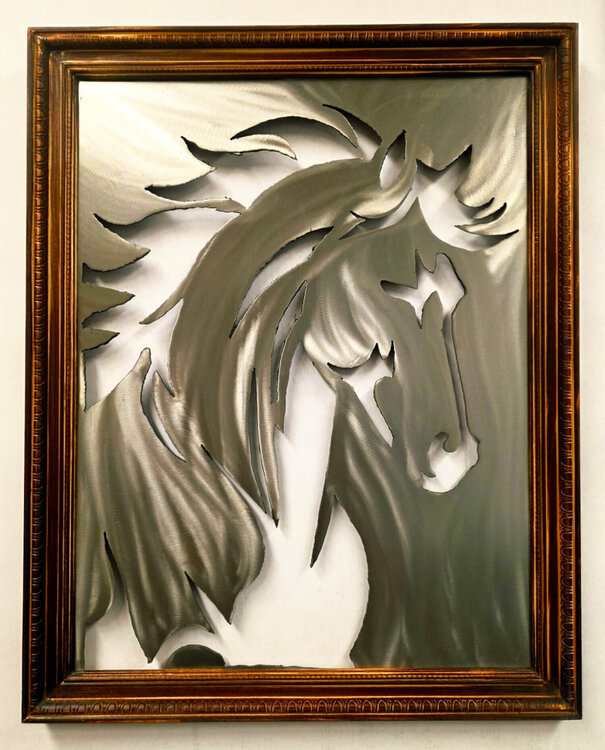 Untamed — Kinetic Silver
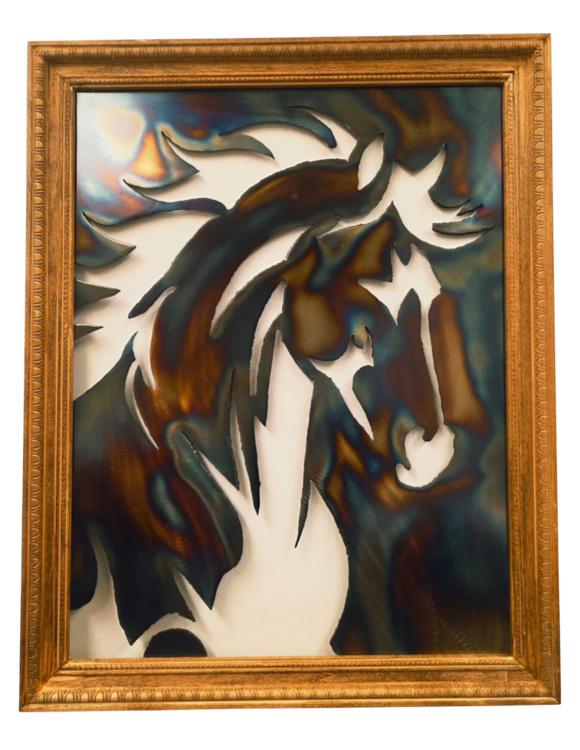 Untamed — Fire Blued
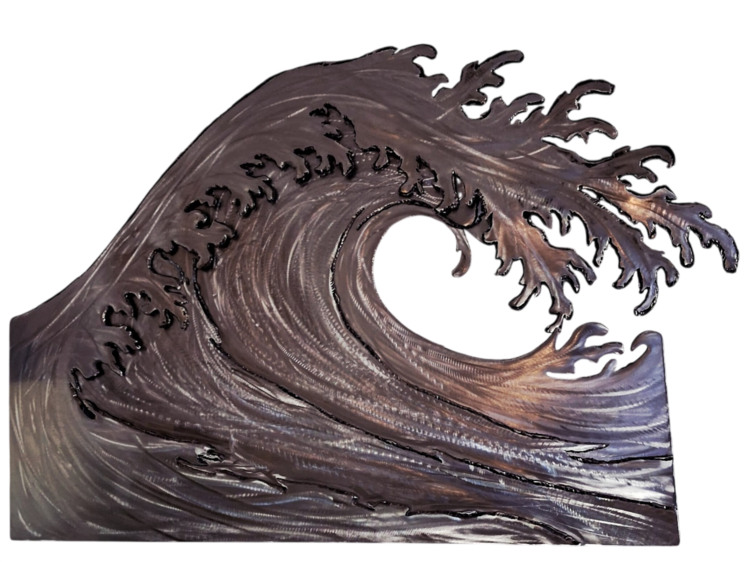 Undertow