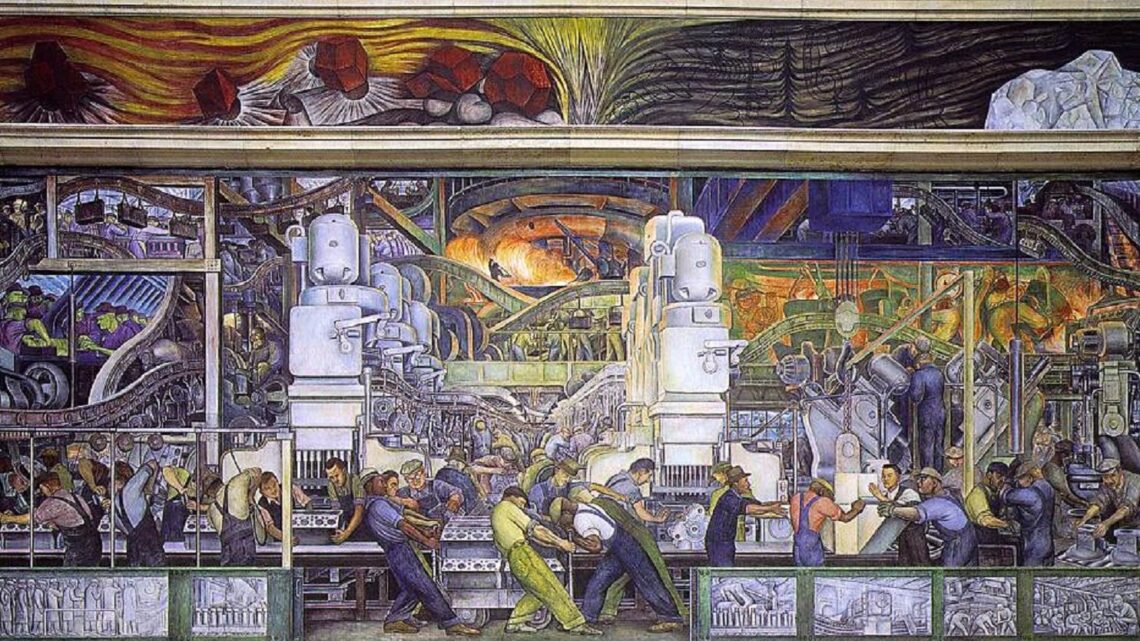
Diego Rivera, the illustrious Mexican muralist, occupies a unique place in the pantheon of 20th-century artists. His Detroit Industry Murals, created between 1932 and 1933, stand as monumental testaments to both his artistic genius and his unyielding dedication to social justice. To truly appreciate the depth and significance of these murals, we must embark on a journey through Rivera’s life, his artistic evolution, the intricate details of the murals themselves, and the enduring impact they have left on the world.
Who was Diego Rivera?

Diego Rivera wasn’t just an artist—he was a visionary whose work transcended cultural and political boundaries. Born in 1886 in Guanajuato, Mexico, Rivera’s artistic journey began in childhood. From an early age, he displayed a prodigious talent for drawing and painting, which eventually led him to the prestigious Academy of San Carlos in Mexico City.
Rivera’s artistic career was characterized by a relentless pursuit of truth and social justice. He drew inspiration from a diverse array of influences, from the classical techniques of the Renaissance masters to the avant-garde experimentation of his contemporaries. Yet, amidst this eclecticism, Rivera remained steadfast in his commitment to depicting the lives of ordinary people, giving voice to the voiceless through his art.
His Career
Rivera’s artistic career unfolded like a tapestry, weaving together threads of innovation, experimentation, and social consciousness. He traversed the globe, absorbing influences from Europe, the United States, and beyond. Yet, no matter where his travels took him, Rivera’s art remained rooted in the soil of his native Mexico, reflecting the struggles and aspirations of its people.
What is Happening in Detroit Industry Murals
| Artist | Diego Rivera |
| Date Created | 1932-1933 |
| Medium | Fresco |
| Genre | Mural |
| Period | 20th Century |
| Dimensions | Varies |
| Series/Versions | One series |
| Housed | Detroit Institute of Arts |
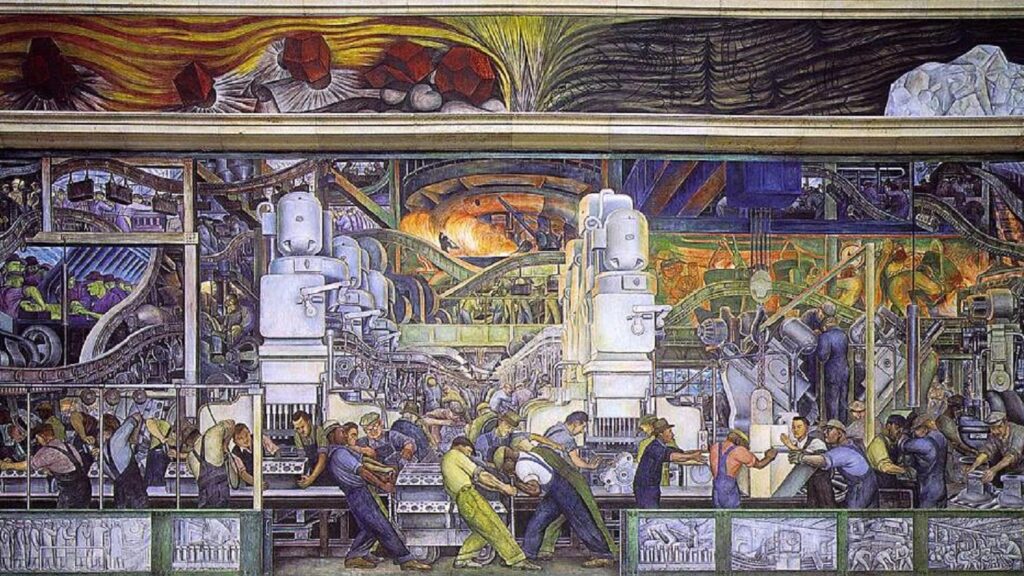
The Detroit Industry Murals represent the culmination of Rivera’s artistic vision and social commentary. Commissioned by the Ford family, who were titans of the automotive industry, these murals were intended to celebrate the industrial might of Detroit and its role in shaping the modern world. Rivera saw in this commission an opportunity to highlight the dignity and resilience of the working class, whose labor was the engine driving the city’s prosperity.
Spread across four walls of the Detroit Institute of Arts, the murals depict a kaleidoscopic panorama of industrial activity. From the smelting of steel to the assembly of automobiles, Rivera captures the dynamism and vitality of Detroit’s factories with breathtaking precision. Every brushstroke is imbued with a sense of purpose, every figure rendered with a dignity befitting their role in the grand drama of industrialization.
Interesting Facts about the Artwork
Symbols of Struggle and Solidarity: Rivera’s murals are replete with symbols that speak to the challenges and triumphs of the working class. The muscular figures of laborers, the towering machinery of industry, and the omnipresent motifs of Mexican folklore all serve to underscore the interconnectedness of labor and culture.
Controversy and Critique: Despite their acclaim, the murals were not without controversy. Rivera’s unabashed embrace of leftist politics and his inclusion of communist imagery drew ire from conservative critics, who accused him of propagandizing. Yet, for Rivera, art was inherently political—a means of challenging the status quo and envisioning a more just and equitable society.
Enduring Legacy: Today, the Detroit Industry Murals stand as a testament to Rivera’s enduring legacy. Designated a National Historic Landmark in 2014, they continue to inspire and provoke, reminding us of the power of art to transcend time and space.
Exploring the Details of the Detroit Industry Murals
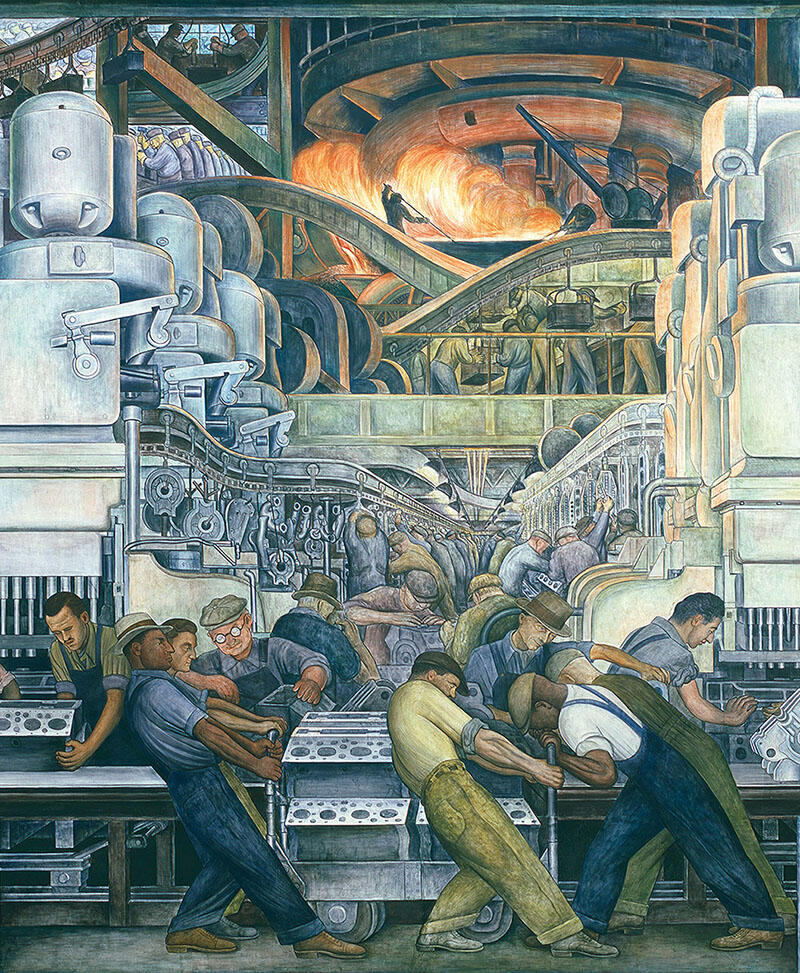
As one immerses themselves in the intricacies of the Detroit Industry Murals, they are confronted with a rich tapestry of imagery and symbolism:
The Workers: Rivera’s depiction of the workers is both tender and triumphant. Each figure is rendered with a dignity and grace that belies the harshness of their labour. They are not mere cogs in a machine but rather the beating heart of Detroit’s industrial landscape.
The Machinery: The machinery depicted in the murals is rendered with a meticulous attention to detail that borders on the obsessive. From the whirring gears to the billowing smokestacks, every element is imbued with a sense of purpose and power.
The Symbols: Throughout the murals, one finds a plethora of symbols and motifs that speak to Rivera’s ideological convictions. The hammer and sickle, the clenched fist of solidarity, and the triumphant figure of the proletariat all serve as reminders of the struggle for social justice.
Frequently Asked Questions
What do the Detroit industry murals painted by Diego Rivera mean?
The Detroit Industry Murals comprise 27 panels spread across four walls, portraying the industrial and technological essence of Detroit. These panels highlight the intrinsic connection between humans and machinery.
Why was Rivera’s mural at Rockefeller Center destroyed?
The Rockefellers insisted that he cover up the controversial portrait. When Rivera declined, the Rockefellers terminated his contract, leading to the destruction of the mural.
What is the historical significance of the Detroit Industry Murals?
The Detroit Industry Murals hold great historical significance as they depict the industrial processes and workforce of Detroit in the 1930s. They provide a visual representation of the city’s manufacturing base and labor force during that time.
Conclusion
In the end, Diego Rivera’s Detroit Industry Murals are more than just paintings—they’re snapshots of a time and place, capturing the spirit of a city and its people. They remind us that art can be powerful and meaningful, telling stories that resonate across generations. So the next time you visit the Detroit Institute of Arts, be sure to take a moment to admire Rivera’s incredible murals and the stories they tell.