Robert Rauschenberg was a Texan trailblazer in the art scene of the mid-20th century. He left an indelible mark on the world of contemporary art. His avant-garde approach and eagerness to challenge artistic norms are exemplified in his masterpiece, Monogram. In this blog post, we’ll dive deeper into this iconic work, shedding light on its significance, context, and the innovative spirit of its creator.
Who was Robert Rauschenberg?
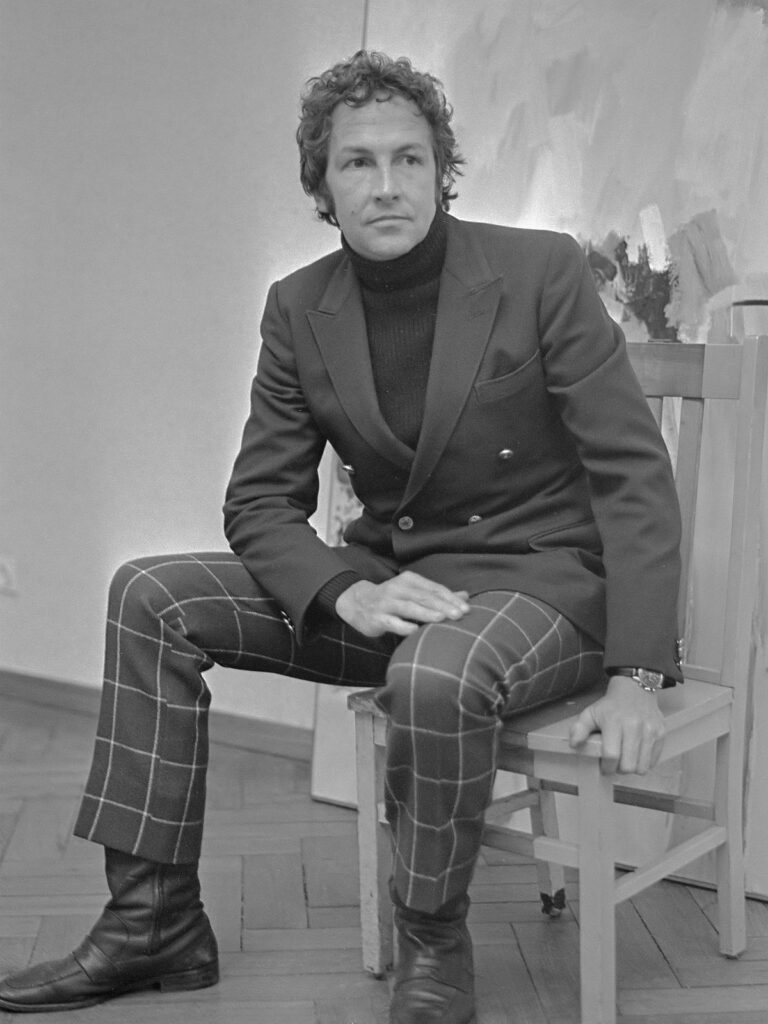
Robert Rauschenberg was not just an artist but he was a creative disruptor. Rauschenberg’s artistic journey began in the 1940s when he immersed himself in the vibrant art scene, first at the Kansas City Art Institute and later at Black Mountain College in North Carolina. Surrounded by influential figures like Josef Albers and Merce Cunningham, Rauschenberg’s artistic foundations were built on experimentation and a rejection of conventional boundaries.
In the 1950s, he migrated to New York City, a hub of artistic innovation, where he found kindred spirits in fellow luminaries such as Jasper Johns and Cy Twombly. Rauschenberg’s work became a testament to his diverse talents, spanning painting, sculpture, photography, and performance art. His distinctive style embraced found objects, collage techniques, and a ceaseless spirit of exploration, reflecting his belief in making art accessible to all.
FUN FACT: Robert Rauschenberg was not only an innovative artist but also a bit of a daredevil. In 1963, he famously collaborated with NASA to incorporate a small drawing onto a gold-foil thermal blanket, which was then attached to the surface of the spacecraft for the mission Gemini 11.
His Career
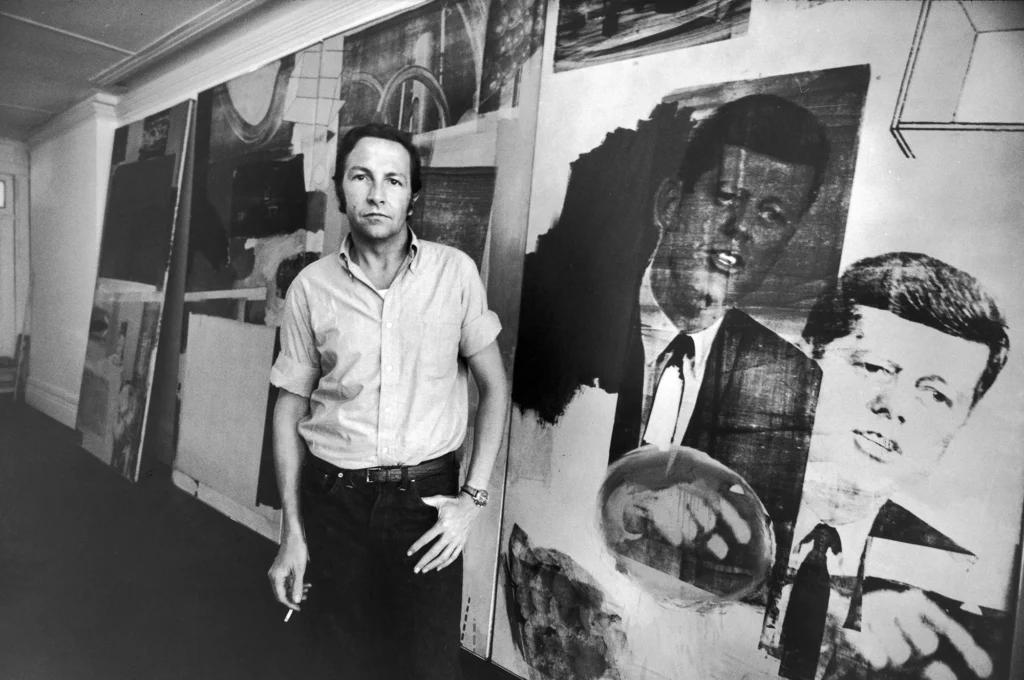
Rauschenberg’s career unfolded like a series of artistic explosions. The 1950s marked a period of intense collaboration and exploration with his groundbreaking “Combines” series catapulting him into the limelight. These hybrid works merged painting with sculptural elements, defying categorization and challenging the very essence of what art could be.
Monogram emerged during this prolific period of Rauschenberg’s career between 1955 and 1959, showcasing his skills for blurring the lines between mediums and daring viewers to question artistic norms.
What is happening in Monogram?
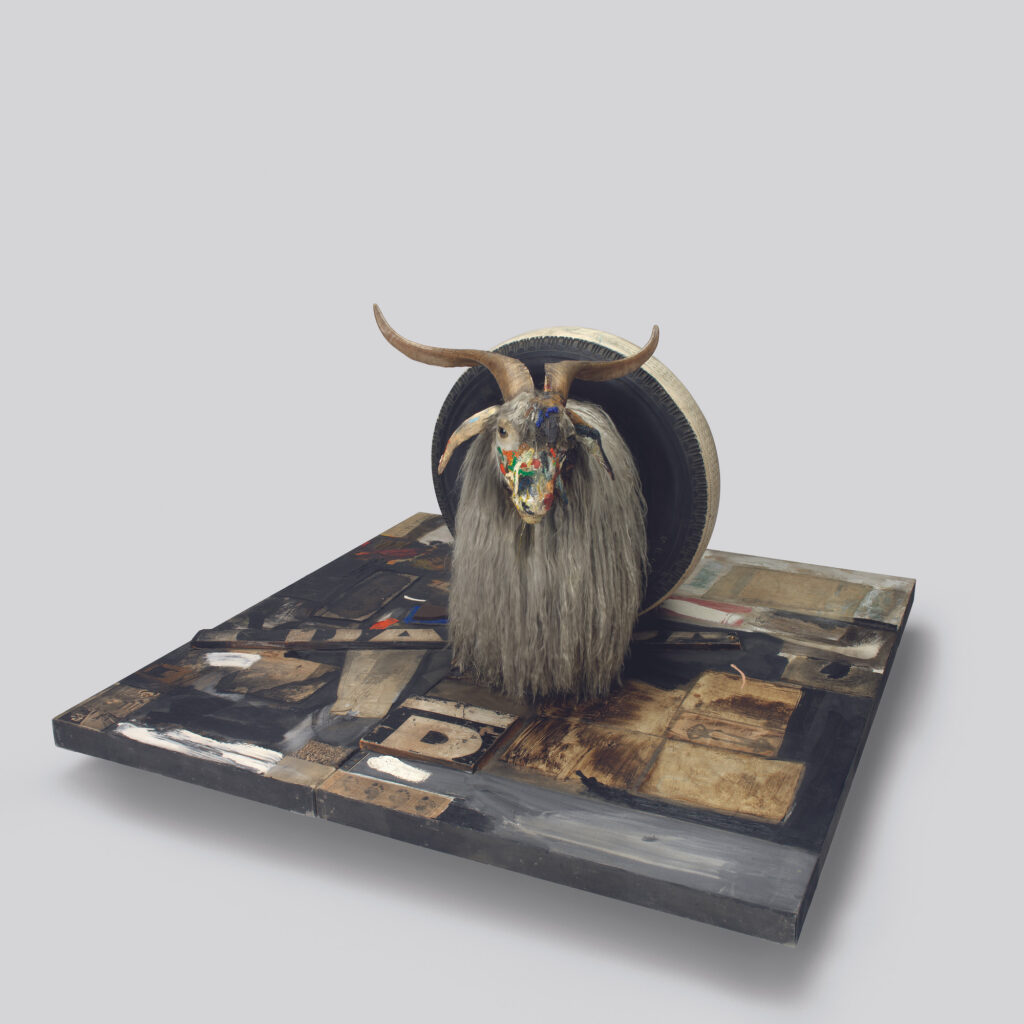
| Artist | Robert Rauschenberg |
| Date Created | 1955-1959 |
| Medium | Mixed media |
| Genre | Contemporary art |
| Period | 20th century |
| Dimensions | 42 x 63 x 64 in |
| Series/Versions | N/A |
| Where is it housed? | Moderna Museet, Stockholm, Sweden |
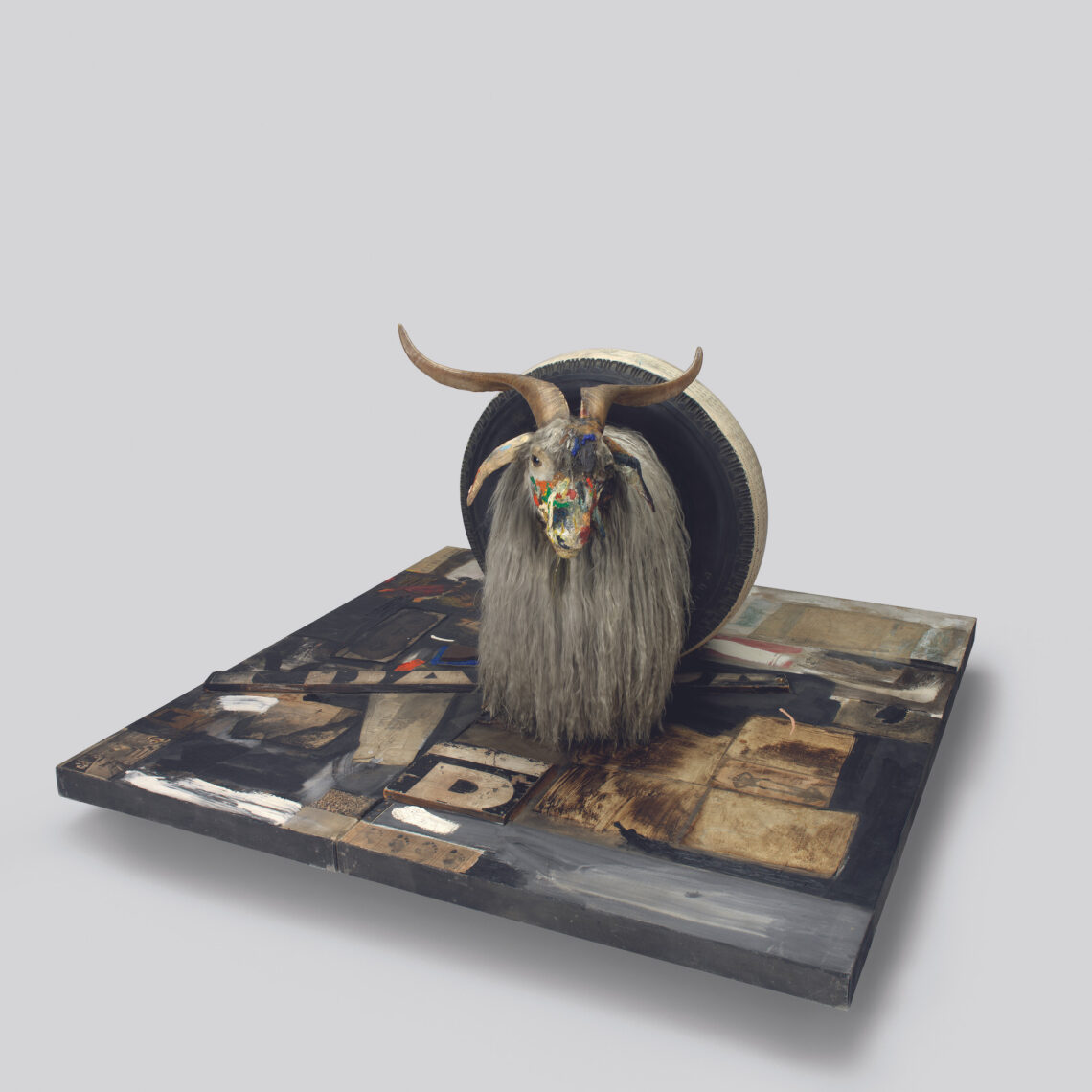
Monogram is a visual feast that defies easy interpretation. At its core is a stuffed Angora goat, perched atop a painted wooden platform, with a painted tire encircling its midsection and a tennis ball nestled beneath its front leg. The amalgamation of disparate elements—natural, manufactured, and artistic—creates a visually arresting tableau that challenges viewers to engage with themes of nature, identity, and cultural symbolism.
The goat, a recurring motif in Rauschenberg’s oeuvre, serves as a symbolic bridge between the primal and the domesticated, inviting contemplation on the complex interplay between humanity and the natural world. The incorporation of everyday objects, like the tire and tennis ball, injects an element of whimsy and subversion, inviting viewers to reassess their preconceptions about art and its meaning.
Interesting Facts about the Artwork
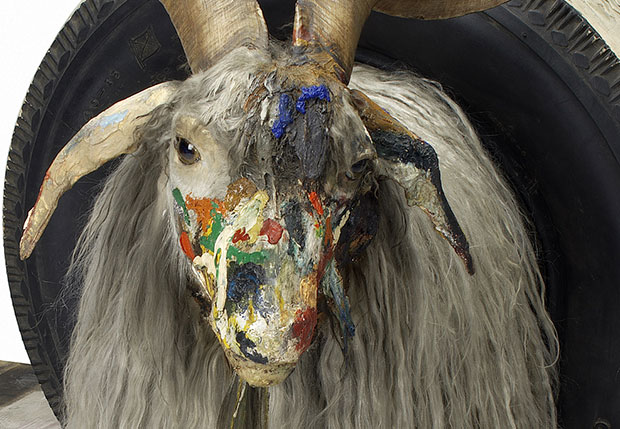
Monogram is part of Rauschenberg’s larger series of “Combines,” a revolutionary approach that melded painting, sculpture, and found objects into singular, multi-dimensional works. This series marked a departure from traditional artistic mediums, blurring the boundaries between high and low culture.
The title Monogram itself alludes to the synthesis of disparate elements into a unified whole. Rauschenberg’s fascination with merging the unexpected and creating cohesion from chaos is evident in the very name of the artwork.
The inclusion of a live animal in Monogram was a daring and controversial choice, reflecting Rauschenberg’s commitment to pushing boundaries and challenging societal norms. The presence of a living creature adds an unpredictable, dynamic element to the artwork.
Despite its initial shock value, Monogram has become a celebrated work of 20th-century art, recognized for its audacity, innovation, and enduring relevance. The piece has found a permanent home at the Moderna Museet in Stockholm, Sweden, where it continues to captivate audiences from around the world.
Artwork Spotlight: Soviet American Array I
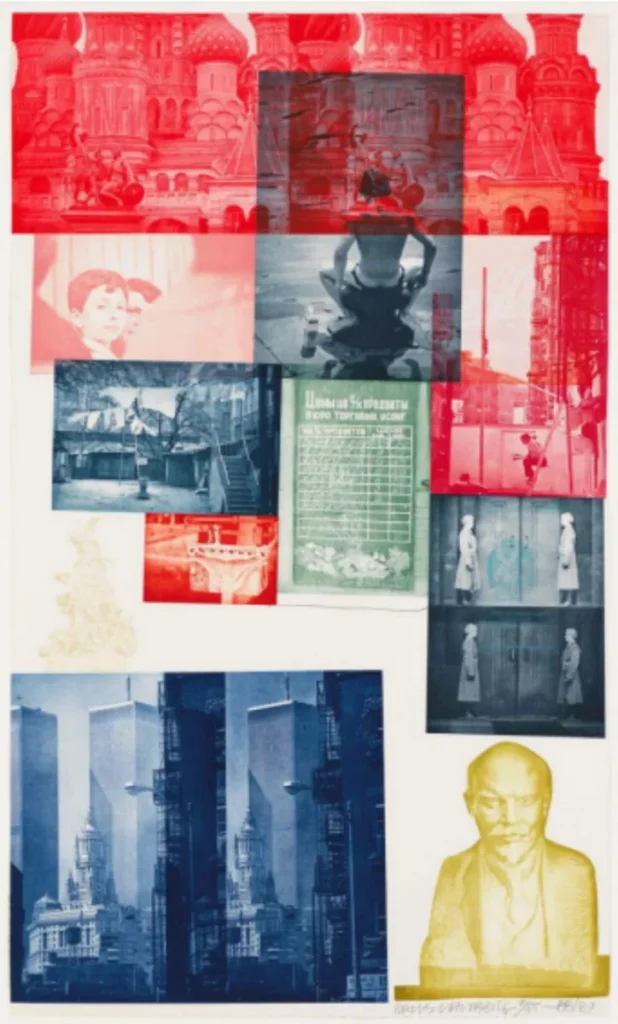
“Soviet American Array I” is a prominent creation by Robert Rauschenberg which is also available on Singulart. This artwork was made during the peak of the Cold War. Through this work, Rauschenberg laid over American and Soviet newspapers, which not only showcased the Cold War’s geopolitical tensions but also subverted the prevalent notions of art and its social function.
Are you looking for a masterpiece from Robert Rauschenberg?
Singulart presents exclusive limited edition pieces by Robert Rauschenberg. To discover and acquire Rauschenberg’s art, click on the artwork or the button below for more information!
Frequently Asked Questions
What was Rauschenberg best known for?
Rauschenberg gained fame in 1954 with his Combines series of paintings, which blurred the lines between painting and sculpture by using common objects as mediums.
What did Robert Rauschenberg use?
Rauschenberg’s two enduring passions were photography and printmaking. For the 1958–60 series, which was inspired by the thirty-four Cantos of Dante’s Inferno, he transferred photos from current periodicals and newspapers onto drawing paper using a solvent.
Conclusion
Monogram by Robert Rauschenberg stands as a testament to the artist’s unbridled creativity, innovative spirit, and willingness to challenge artistic norms. Through its daring fusion of materials and themes, this iconic work continues to captivate and provoke audiences, inviting us to reconsider our assumptions about art, nature, and the boundaries of creative expression.
Our partners at Artfacts offer an in-depth look into the remarkable career of Robert Rauschenberg, providing a rich collection of data that highlights his artistic journey and impact. Explore his profile here.