


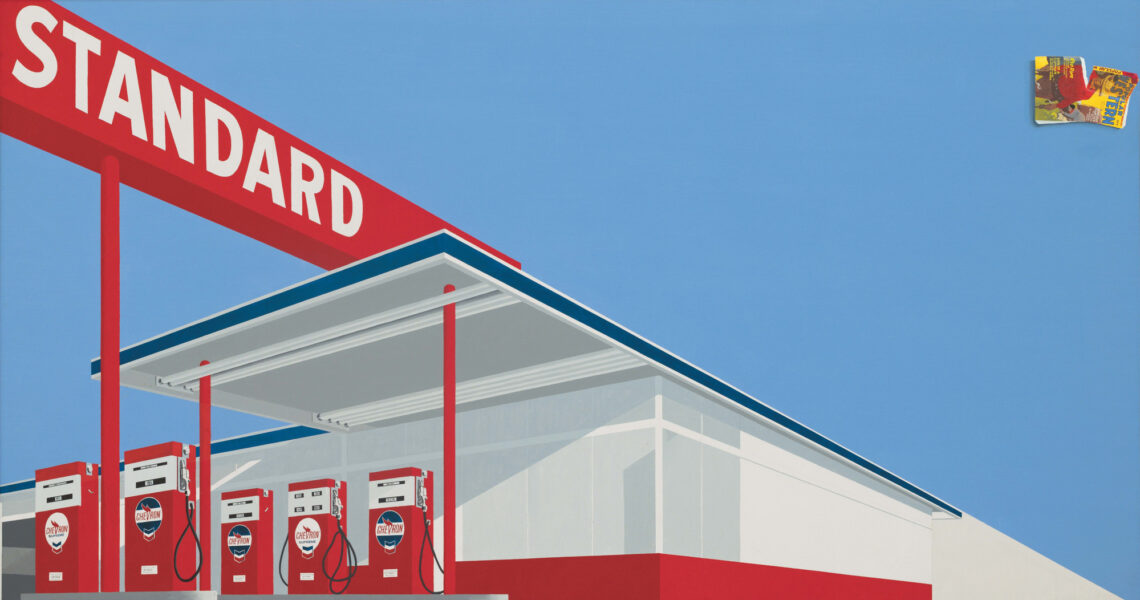
Let us examine the intriguing universe of Ed Ruscha – the well-known American artist who is recognized for his special attentiveness to ordinary items and landscapes. A remarkable work in his portfolio, “Standard Station” is one of a kind that really brings the core values of American culture even from an ordinary subject. The beauty of it is in the use of the vibrant colors and compositional boldness, which put the gas station on a pedestal of art, evoking the pondering of the American experience.
Who was Ed Ruscha
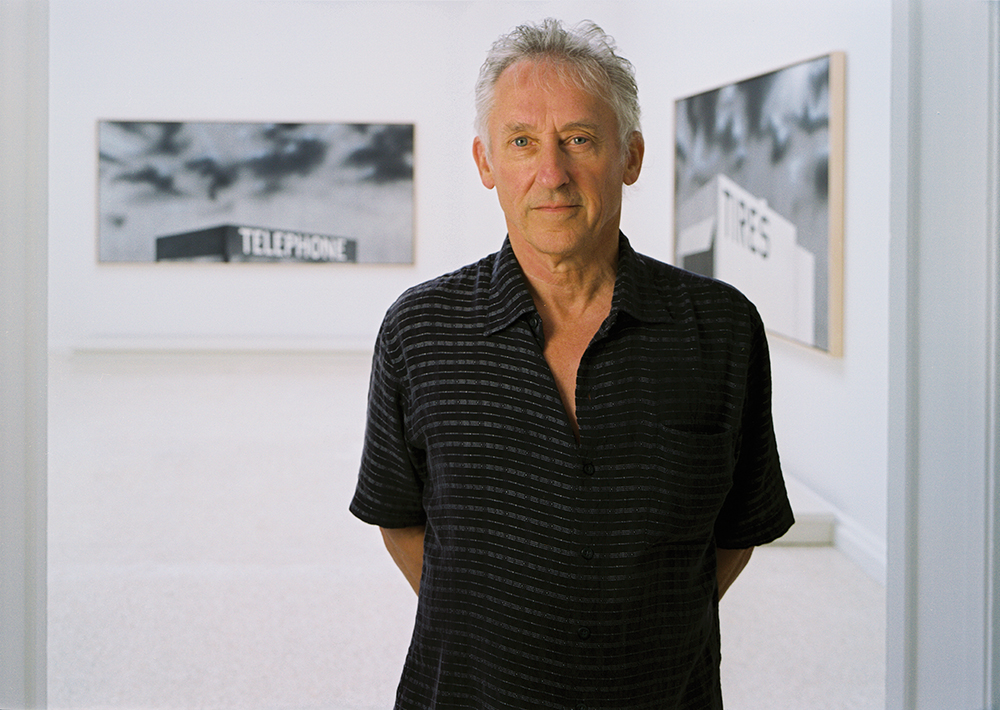
Ed Ruscha, an artist born in Omaha, Nebraska, in 1937, who utilized an innovative method that attracted people from all over the world is Ruscha. Ruscha spent his childhood on the dynamic American cultural landscape of mid-century and learnt how to see the everyday things from the mundane yet mysterious point of view. He used different media of art –painting, photography, and printmaking– as vehicles to express his concerns with consumerism, language, and the American West.
FUN FACT: Ed Ruscha often incorporates words and phrases into his artworks, blurring the lines between visual art and language. This unique approach has earned him recognition as a pioneer of the Pop Art movement and a significant figure in contemporary art.
His Career
Ruscha’s artistic journey dates back to the 1960s which was quite pivotal in the United States history. Following the pop art movement and advertising and mass media visual language, Ruscha was tasked with breaking with the existing assumptions of fine art by elevating common themes into the world of art. Among others, his work featured big type and streamlined imagery, mirroring his fixation on the visual habitat of the United States.
What is it in Standard Station?
| Artist | Ed Ruscha |
| Date Created | 1966 |
| Medium | Oil on canvas |
| Genre | Pop Art |
| Period | Contemporary |
| Dimensions | 64 x 121 inches |
| Series/Versions | Original |
| Where is it housed? | Museum of Modern Art, New York |
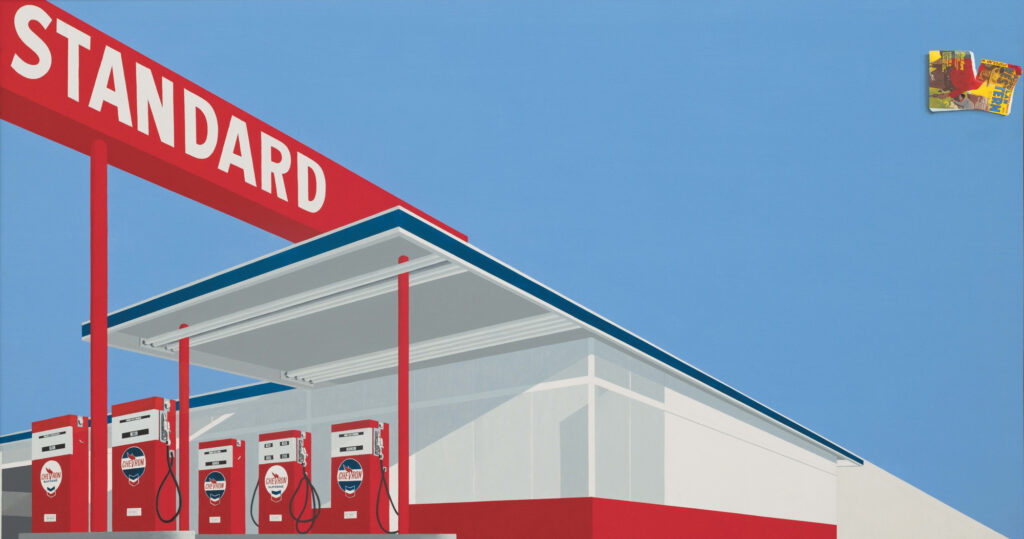
In 1966, “Standard Station,” exemplified Ruscha’s distinctive style and thematic inclinations. The painting shows the gas station that is decorated by the word “Standard” in bold, red letters on a stark white background. Despite its simplicity, the artwork looks dynamic and vibrant, mirroring the excitement of being a part of the American road culture. His unique approach of the particular method of detail and composition make a gas station the visual effect of which attracts viewers.
Interpreting Standard Station
“Standard Station” serves as a poignant commentary on the standardization of American life and culture during the mid-20th century. Through the depiction of a ubiquitous gas station adorned with the word “Standard,” Ruscha highlights the homogenization of the American landscape and the prevalence of consumer culture. The bold colors and crisp lines underscore the visual impact of the composition, inviting viewers to contemplate the broader implications of standardization on society.
Interesting Facts about the Artwork
Textual Emphasis: Ruscha’s “Standard Station” text’s statement is an iconic feature of his artistic approach. By indenting the word “Standard”, the commercial branding of the gas station automatically becomes highlighted because it is the image element that is most prominent and stands out within the composition.
Everyday Scenes: Ruscha had an eye for glorifying mundane scenes even turning them into fascinating works of art. Through a peculiar process of transforming the flat abstract look of gas stations and street signs into the realm of high art, he upset the established hierarchies of artistic subjects and urged us to reevaluate what is beautiful and important in the world.
Photographic Influence: The close-up detail and meticulousness of “Standard Station” is evident from Ruscha’s early experiences as a commercial artist and photographer. The influence of the painting’s composition and perspective goes beyond the visual language of painting. Sociologists have observed that the visual language of photography is starting to influence the visual language of painting.
Legacy and Recognition: “Standard Station” has been an important contribution to Ruscha’s artistic career, becoming one of his most celebrated works, which brought recognition for the innovativeness of the subject matter and composition. It has been a part of the permanent collection of such prestigious institutions like the Museum of Modern Art in New York and the audiences of these institutions continue to be fascinated by the piece with its lasting importance and the beauty.
Artwork Spotlight: Zoot Soot
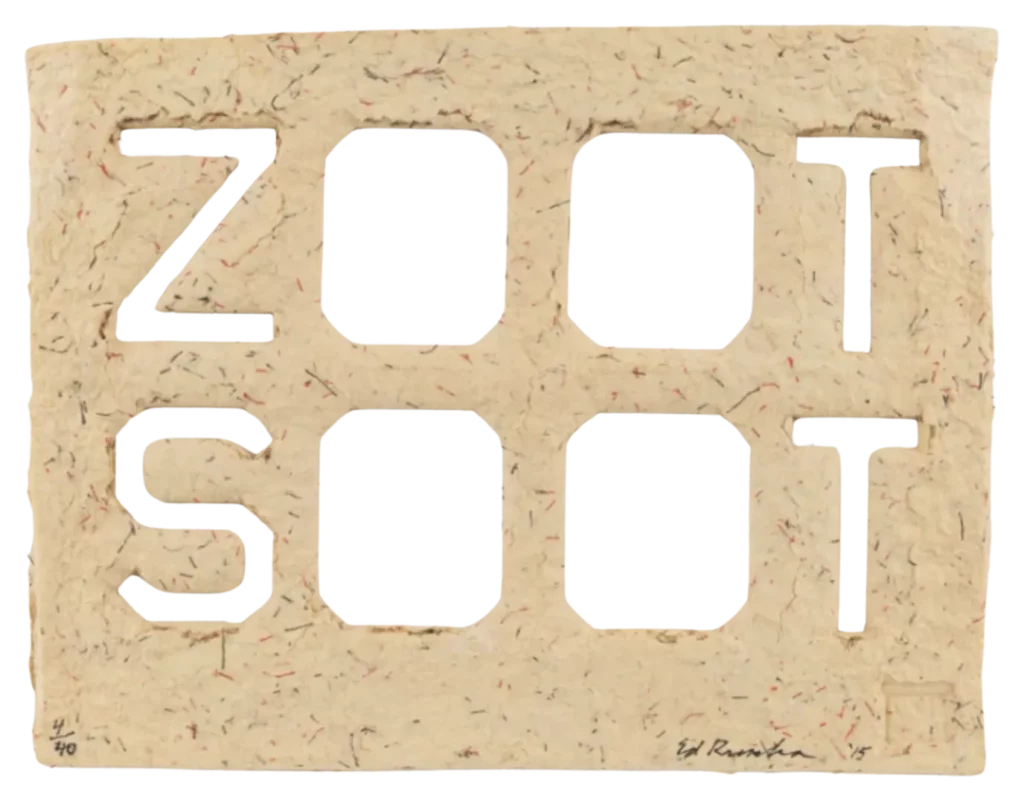
“Zoot Soot” by Ed Ruscha is available on Singulart. It is an enthralling study of urban landscapes using his signature style of text and images to portray a feeling of place and atmosphere. This piece is designed to provoke viewers into thinking about how language and visual communication within the framework of American culture intersect.
Are you looking for a piece of artwork from Ed Ruscha?
Singulart has limited edition prints of Ed Ruscha. If you are looking for a piece of Ruscha’s artwork for sale, simply click on the artwork or the button below to discover more!
Frequently Asked Questions
What was Ed Ruschas standard station inspired by?
The most recognizable image in Ruscha is the gas station. His first artist’s book, Twentysix Gasoline Stations (1963), reproduces a sequence of ordinary photos the artist took while traveling on Route 66 between Oklahoma City, his hometown, and Los Angeles. This is where he initially experimented with the theme.
What is Edward Ruscha famous for?
When Ruscha started creating little collages in the late 1950s utilizing text and images from commonplace materials like ads, he gained popularity. Because of his fascination with the ordinary, he began to draw inspiration from the cityscape of Los Angeles, his new birthplace, a place he has frequently visited.
Conclusion
“Standard Station” by Edward Ruscha is a clear illustration of how the artist was able to find profound meaning and create widespread impact in the most ordinary subjects. In Ruscha’s unique visual language and topics, viewers are encouraged to ponder the intricacies of American life and culture, and to stretch their minds to see beyond the obvious and appreciate the beauty of the mundane. As a seminal work in the field of contemporary art, “Standard Station” is a source of inspiration and remains relevant, endorsing Ruscha’s lasting place in the ranks of American influential artists.


