


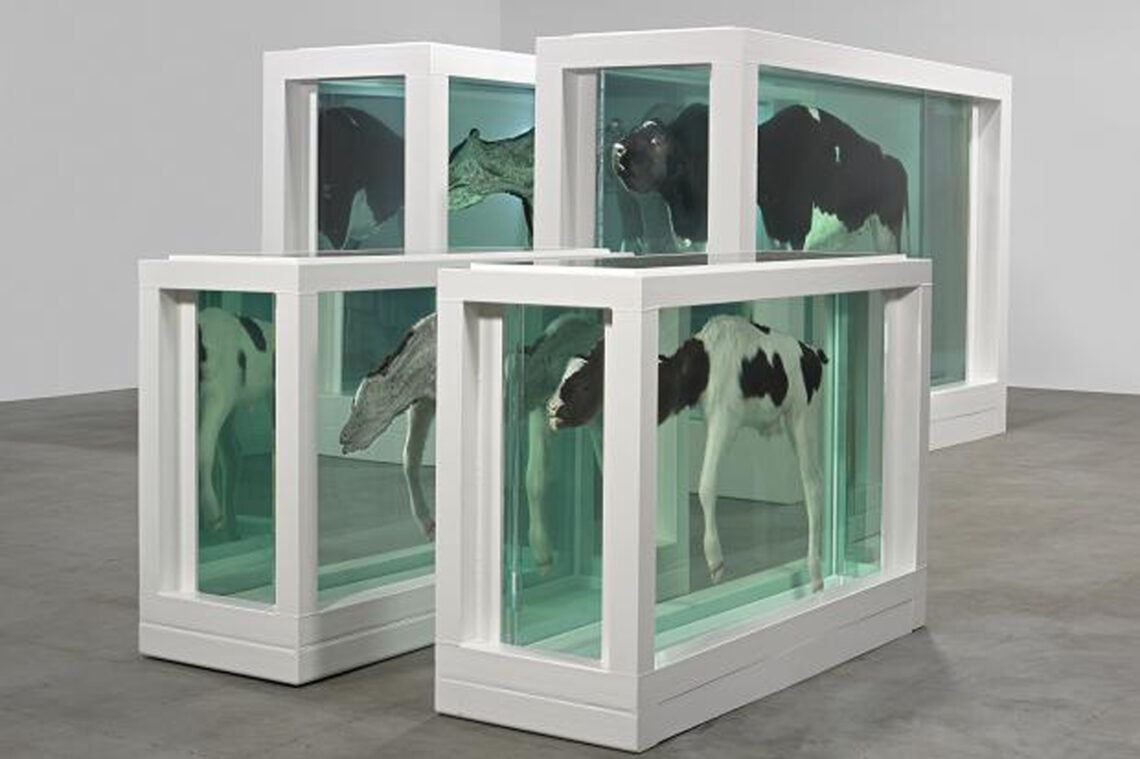
Damien Hirst, has become a household name in the context of contemporary art and has burnished his stature considerably. It is his name that we are by now used to mention in connection with both controversies and innovative art. Among many examples, “Mother and Child Divided” symbolizes fatalities through human life, where he brings up uncomfortable facts through the work. This article shall go deeper into the life and career of Damien Hirst, look at what was the main purpose behind “Mother and Child Divided”, and also understand the intricacies involved in the success of this trophy work.
Who is Damien Hirst?

Damien Hirst, born on the 7th of June, 1965, in Bristol, England, asserted himself as one of the most prominent artists in the world by the late 1980s. Along with other Young British Artists (YBAs), he is known for his rebellious and imaginative art. One of Hirst’s most frequent themes is life, death, and the human condition, which makes the viewers think of their mortality. His work includes installations, sculptures, paintings, and more, all directed at the same concept of how fragile life is.
FUN FACT: Did you know that Hirst himself doesn’t actually do the physical work of creating many of his pieces? Instead, he often oversees a team of assistants who carry out the production under his direction.
His Career
Hirst’s career is distinguished by unceasing exploration and experimentation. One of his early and most famous works, “The Physical Impossibility of Death in the Mind of Someone Living” (1991), is an example of a preserved shark that is suspended in a tank of formaldehyde. This artwork made him famous all over the world and marked him as an important name in contemporary art.
Hirst has pursued new avenues and expanded the concept of art by continuously pushing the limits of what art can become with his shocking and provocative creations. Varying from a skull decorated with diamonds to paintings made solely of butterflies, he questions the concept of beauty and morality.
What is Happening in “Mother and Child Divided”?
| Artist | Damien Hirst |
| Date Created | 1993 |
| Medium | Glass tanks with preserved cow and calf |
| Genre | Modern Art |
| Period | Late 20th Century |
| Dimensions | Different sizes |
| Series/Versions | None |
| Where is it housed? | In different private collections and art exhibitions around the world |
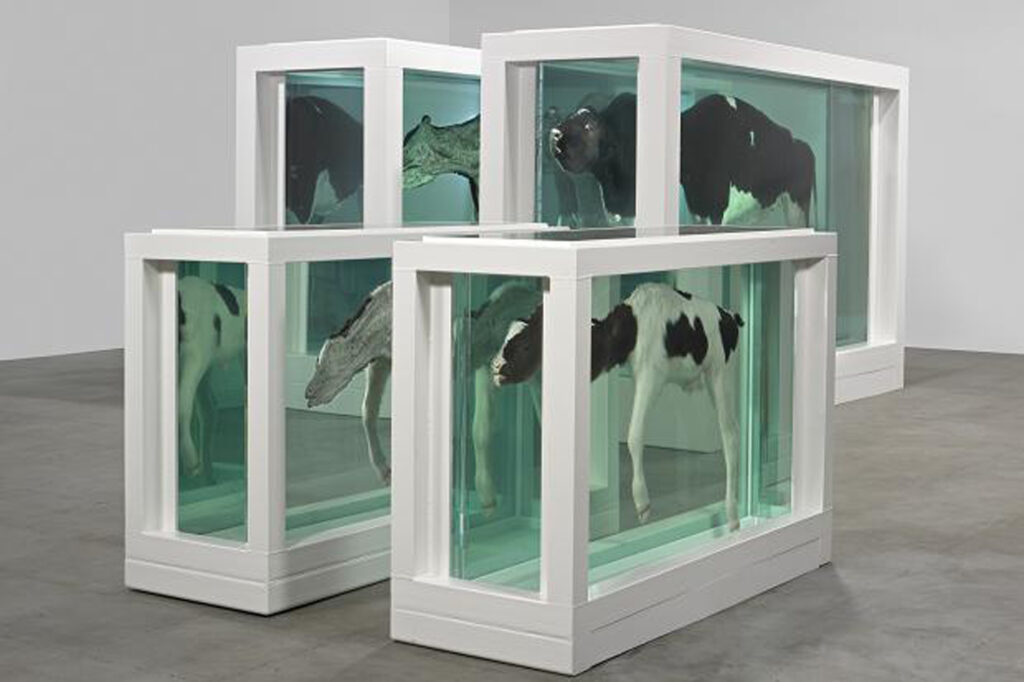
“Mother and Child Divided” created in 1993 is a powerful meditation on themes of life, death, and separation. The installation is comprised of four glass tanks, each with a cow and a calf bisected, and preserved in formaldehyde. The mother and the baby are put in separate tanks that evoke feelings of loneliness and disconnectedness. Hirst makes his viewers think of family relationships and the certainty of separation by presenting the animals in such a way.
The contrast of life and death, along with the visceral nature of the preserved specimens, make “Mother and Child Divided” a deeply disturbing but profoundly moving encounter. We are faced with the realization of our mortality and the temporal aspect of existence, which requires us to come to terms with the harsh truths of life and death.
Interesting Facts about “Mother and Child Divided”
Controversy: Upon its unveiling, “Mother and Child Divided” sparked controversy, with opinions divided on its artistic merit and ethics. Some praised its commentary on life’s fragility, while others condemned its gruesomeness.
Technical Complexity: Creating “Mother and Child Divided” posed significant technical challenges for Hirst and his team. They meticulously preserved the cow and calf in tanks of formaldehyde, ensuring long-term preservation and structural integrity.
Symbolism: The division of the mother and child in the installation serves as a potent metaphor. Hirst separates the animals into distinct tanks, underscoring familial bond fragility and impermanence.
Artwork Spotlight: The Virtues: Mercy
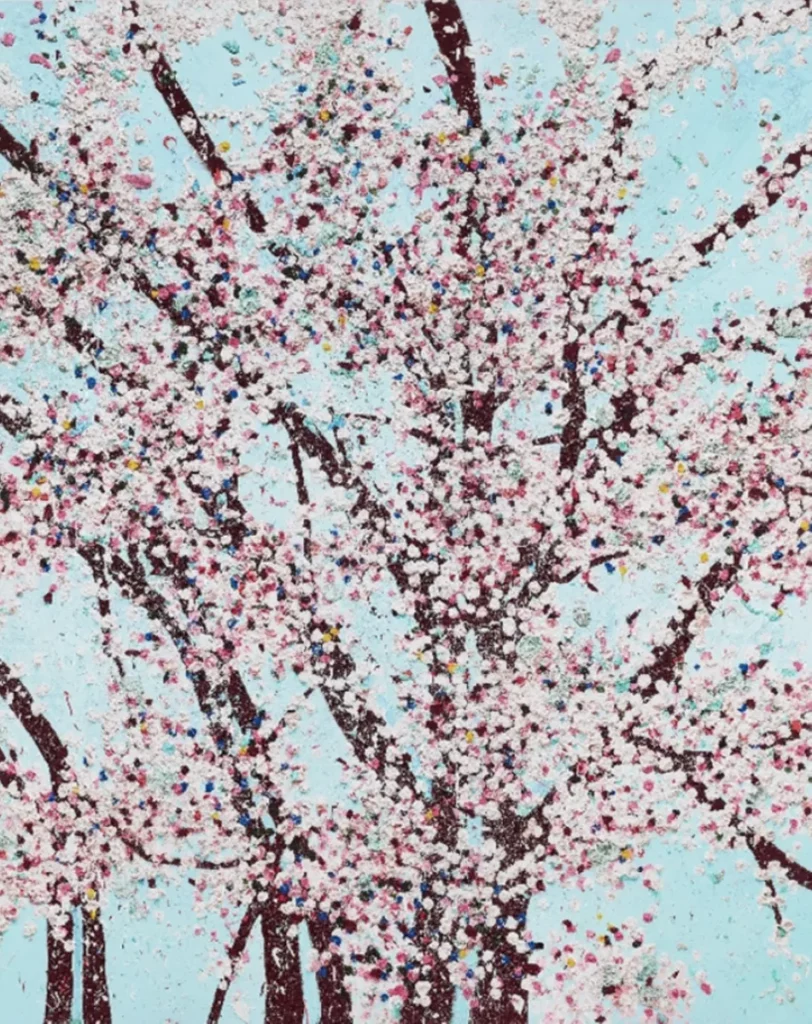
“The Virtues: Mercy” is available on Singulart. This artwork is from Hirst’s series on morality and virtue. The work contains a dove submerged in formaldehyde, which in fact allows for meditation on the issue of mercy and its role in modern society.
Are you looking for a masterpiece from Damien Hirst?
Singulart presents exclusive limited edition pieces by Damien Hirst. To discover and acquire Hirst’s art, click on the artwork or the button below for more information!
Frequently Asked Questions
What is the meaning of mother and child divided art?
Instead of celebrating the traditional happy union of mother and child, Hirst portrays a unique perspective. Despite their irreversible separation, there’s room for contemplation and growth within.
What is the main theme in Damien Hirst’s art?
Mortality is a central theme in Hirst’s artwork. His ‘Natural History’ series, featuring deceased animals preserved in tanks, catapulted him to fame. In addition to creating spot paintings, spin paintings, and steel and glass cases, he explores medical accessories with keen interest.
Conclusion
“Mother and Child Divided” is a brilliant work that explores life, death, and humanity. Damien Hirst’s bold approach forces us to confront mortality and life’s transience. While artworks often spark controversy, “Mother and Child Divided” continues to captivate audiences worldwide.


