


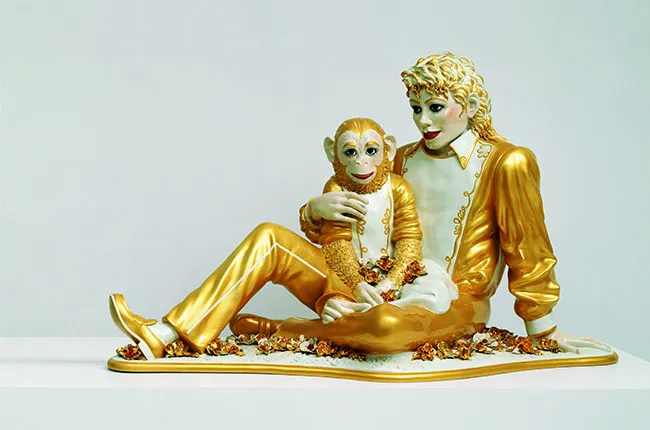
In the brightly woven fabric of modern art, no names stand out more than Jeff Koons. Known for his imaginative and controversial works, Koons has enravelled the audience worldwide with his amazing real-life observations. In his most famous piece, “Michael Jackson and Bubbles,” Koons shows his interest in celebrity culture and the mysterious spell of fame through porcelain sculpture. The article dissects the story of Jeff Koons, scrutinizes the intricacies of “Michael Jackson and Bubbles”, and finally uncovers the everlasting history of this famous work.
Who is Jeff Koons?
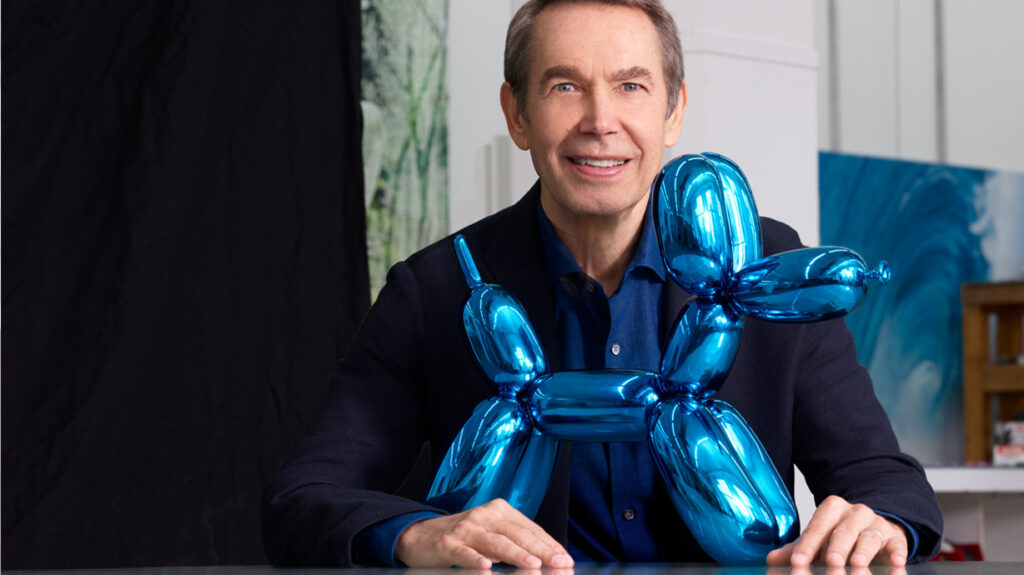
Having been born in York, Pennsylvania, in 1955, Jeff Koons started having a significant role in the field of art in the 1980s. His variety of style and novel application of art evoked both admiration and censure. Koons frequently blurs the borders between elite and popular culture, digging into topics such as consumerism, mass media, and, eventually, the goals of art.
FUN FACT: Jeff Koons once worked as a Wall Street commodities broker before pursuing a career in art. This unique background in finance, coupled with his artistic vision, has influenced his approach to art production and marketing.
His Career
Throughout his career, Koons has staged series of seminal works that disrupt viewer’s assumptions about art and aesthetics. In the 1980s he got the recognition for his “Banality” series where he sculptured absurdly huge objects like toys and animals. Through their quirky yet insightful creations, he played with sculpture’s boundaries and challenged the art of taste.
As his career progressed Koons continued to experiment with new mediums and techniques, producing versatile body of work that is composed of paintings, sculptures and installations. He utilizes objects from pop culture and kitsch to make viewers think about the value of objects and images in modernity.
What is Happening in Michael Jackson and Bubbles?
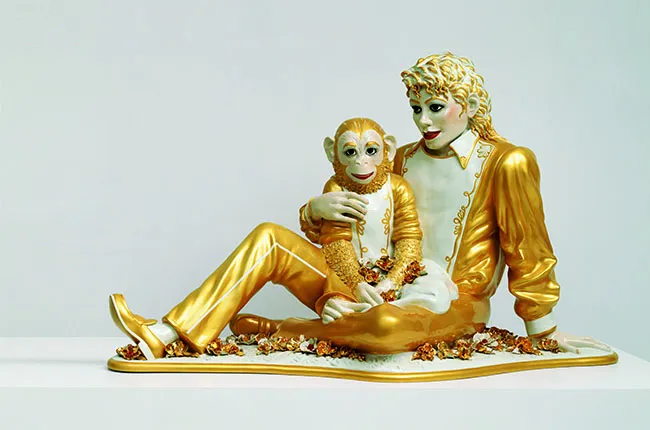
| Artist | Jeff Koons |
| Date Created | 1988 |
| Medium | Porcelain sculpture |
| Genre | Modern Art |
| Period | After the 1980s |
| Dimensions | About 42 x 71 x 32 inches (roughly) |
| Series/Versions | There are more like it |
| Where is it housed? | In many private collections and museums |
One of Koons’ best-known pieces, “Michael Jackson and Bubbles”, can be seen as an example of the artist’s ability to pair the famous with the offbeat. Cast in the year 1988, the gigantic statue depicts the legendary pop star Michael Jackson next to his favorite chimpanzee Bubbles in an optical illusion that blends glamour and playfulness.
According to “Michael Jackson and Bubbles”, the masterpiece of the artist, Koons rightly depicts Jackson at the peak of his fame, clad in military outfit and radiating royal magnificence. The bubbles occupying the top of Jackson’s shoulder with a look of inquisitive silliness provide a light feel to the artwork. In his precise craftsmanship and meticulous approach, Koons changes the cultural symbols into everlasting altitudes of devotion and mystery.
Interesting Facts About the Artwork
Celebrity Connection: Koons’ decision to depict Michael Jackson alongside his cherished companion, Bubbles, reflects the artist’s fascination with the interplay between fame, identity, and the animal kingdom.
Controversy: Despite its acclaim, “Michael Jackson and Bubbles” has courted controversy, with some critics questioning its portrayal of Jackson and Bubbles as objects of spectacle and scrutiny.
Record-Breaking Sale: In 1994, “Michael Jackson and Bubbles” shattered records when it fetched a staggering $5.6 million at auction, solidifying Koons’ status as a pioneering force in the world of contemporary art.
Ongoing Legacy: Decades after its creation, “Michael Jackson and Bubbles” continues to captivate audiences around the globe, affirming its status as a cultural landmark and a testament to Koons’ enduring influence.
Koons’ Impact on Art
Jeff Koons has substantially affected the art world. Others think his art is wow and trendy, while the others just think it’s weird and unfunny. Whatsoever you think, it is quite difficult to deny that Koons’ art catches the eyes of onlookers. He wants to make people stop and think about what art really is.
Koons’ Legacy
Despite the fact that Jeff Koons is the oldest of them all, he is still making art and captivating people. You can see his sculptures in museums and galleries all around the globe, and people still come and talk about them. Koons’ art has redefined what contemporary art is, and he will forever be remembered as one of the most audacious artists of his generation.
Artwork Spotlight: Puppy

“Puppy” by Jeff Koons is also available on Singulart. It is an impressive sculpture of a West Highland White Terrier puppy sprawled on the ground, covered with colorful flowers. This artwork expresses all we know about joy and innocence, dragging in viewers to share the fun of children.
Are you looking for a masterpiece from Jeff Koons?
Singulart presents exclusive limited edition pieces by Jeff Koons. To discover and acquire Koons’ art, click on the artwork or the button below for more information!
Frequently Asked Questions
Why did Jeff Koons make Michael Jackson and Bubbles?
According to Koons, he intended to show Jackson as a fresh redeeming figure who empowers everyone to unearth their own cultural mythology. Another interpretation of Michael Jackson and Bubbles is as a representation of the human yearning for self-discovery.
Why is Jeff Koons so famous?
Jeff Koons is linked to minimalism, conceptual art, and pop art. Pop art is typified by his use of themes and motifs from popular culture (such as toys, ornaments, and advertisements). However, there are also elements in Koons’s work that hint to minimalist art.
Conclusion
Jeff Koons is a contemporary artist who doesn’t mind taking risks. Through his daring sculptures and creative notions, he encourages us to discover the world from new perspectives. “Michael Jackson and Bubbles” is one of many artistic works of his that provoke you to think about fame, stardom and the very character of art itself. Koons’ legacy, which will certainly survive as one of the driving forces behind generations of new artists, is undoubtedly immortalized in the annals of history of contemporary art.


