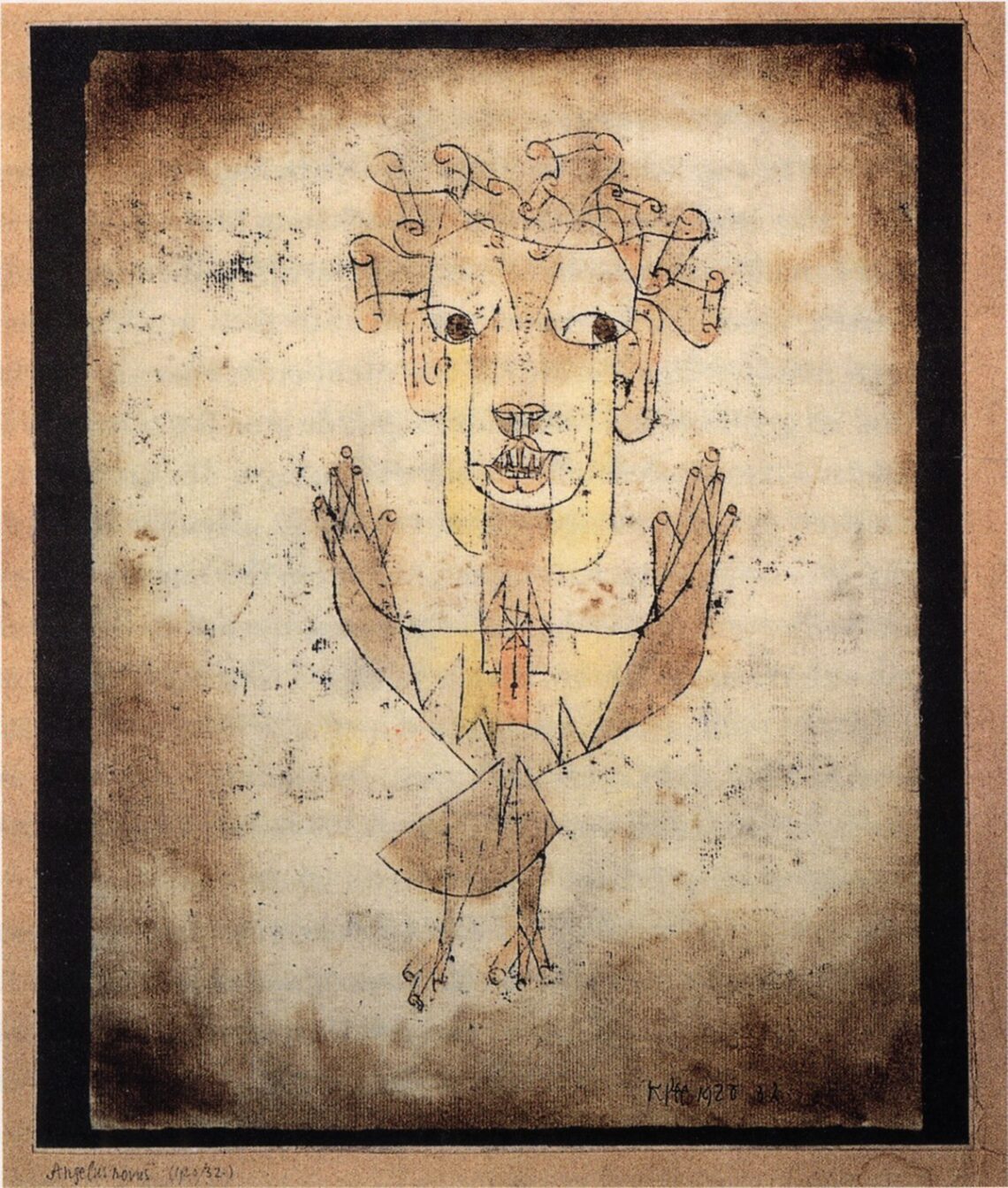
During the centuries of art history, a name can stand as prominent as that of Paul Klee, the Swiss-German pioneer in the works of 20th century art. This masterpiece not only demonstrates Klee’s captivating vision but also his deep philosophical understanding. This little yet impressive piece of art, completed in 1920, includes the themes of time, history, and human consciousness with great details. We embark on the quest of “Angelus Novus” by studying Paul Klee as a person, exploring his art and the deep symbolism in it.
Who was Paul Klee?
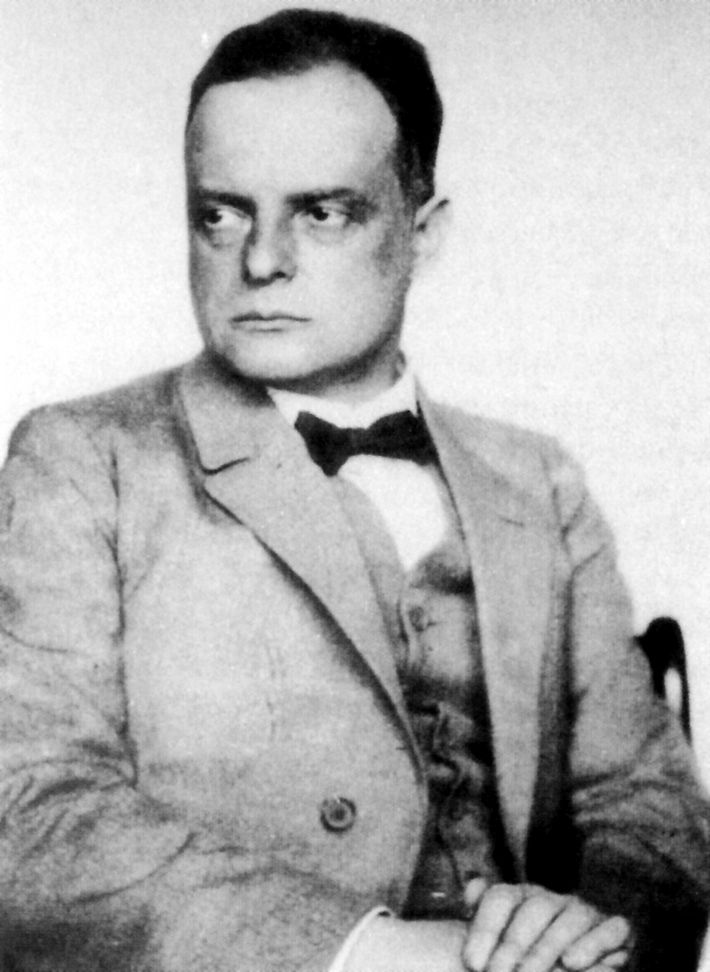
In the early 20th century Paul Klee, a Swiss-German artist, born in 1879, was a key figure of the art scene. The combination of abstraction and figuration in the style of the artist established him as a major figure in Expressionism, Cubism, and Surrealism. Klee’s compositions mostly revolved around the topics of spirituality, philosophy, and the subconscious, which demonstrated his mastery of visual language and symbolism to a great extent.
FUN FACT: Paul Klee often incorporated elements of humor and whimsy into his artworks, reflecting his playful personality.
His Career
Klee’s artistic career started at the Munich Academy of Fine Arts where he got traditional education. Gradually, his own style that features vivid colors, complex lines, and geometric shapes emerged. He got more and more successful when he started to join the groups like Blue Rider and Bauhaus where he worked with other avant-garde artists like Wassily Kandinsky and Lyonel Feininger.
However, Klee’s imagination was not daunted by such obstacles as health problems and political strife. The abundance of his talent included paintings, drawings, etchings, and writing which therefore made him one of the most outstanding artists of his time.
What is Happening in Angelus Novus?
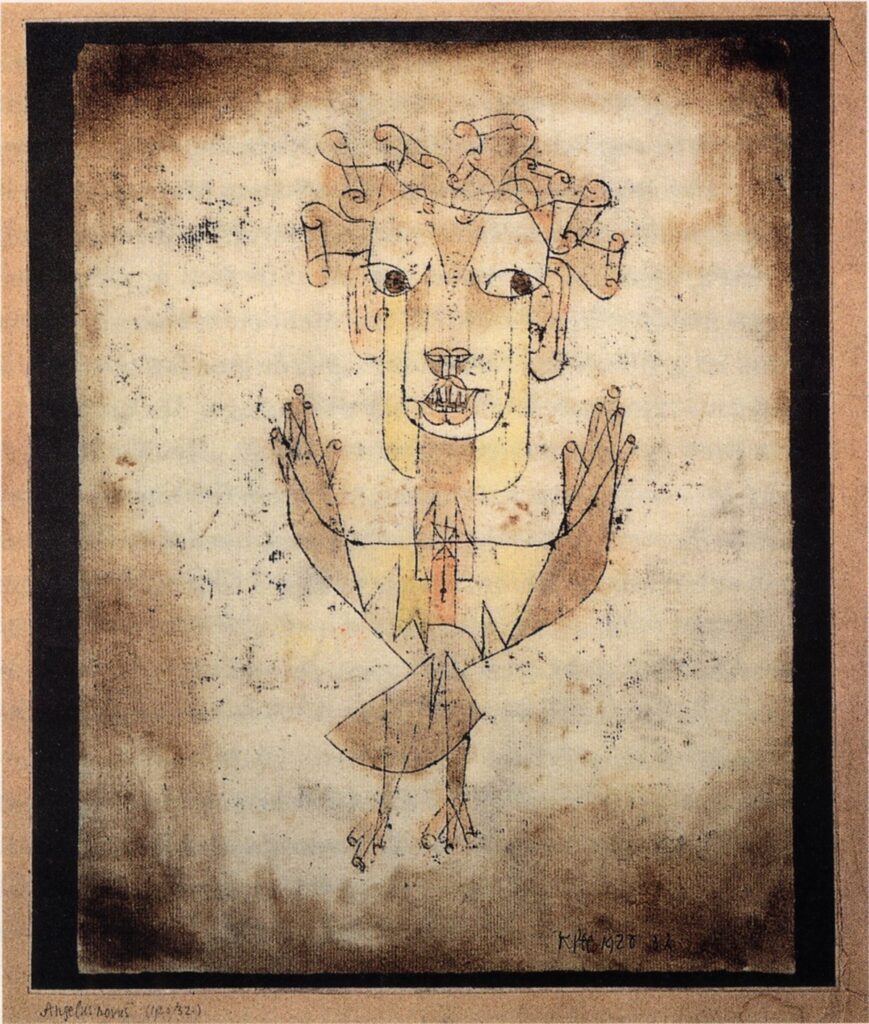
| Artist | Paul Klee |
| Date Created | 1920 |
| Medium | Oil on paper laid on board |
| Genre | Expressionism |
| Period | Early 20th Century |
| Dimensions | 31.8 cm × 24.2 cm (12.5 in × 9.5 in) |
| Series / Versions | N/A |
| Where is it housed? | Israel Museum, Jerusalem |
Among Klee’s most mystical works is “Angelus Novas,” made in 1920. In spite of its diminutive size this work of art features a character with wings in some state of distress or wonder, its eyes looking at something invisible. The woman is placed against a stormy background that brings to mind the idea of eddy and disarray with the swirling lines and distracted shapes.
Initially, one might suppose that, “Angelus Novus” is just a picture of an angel. On the other hand, a deeper analysis shows more complexity as well as profound symbolism. The very name of the piece, “Angelus Novus,” conveys the meaning of “New Angel” in Latin, suggesting the coming of some new order, a revolution.
Walter Benjamin, one of the most influential philosophers and critics, figured out the meaning of “Angelus Novus” in his essay “Theses on the Philosophy of History.” He described the angel as a personification representing the level of historical consciousness, which is constantly moving forward toward the future in spite of being confronted with the wreckage of the past. Benjamin’s interpretation provides a philosophical touch to Klee’s painting, suggesting ideas of time, history and human condition.
Analysis
Exploring the profound layers of symbolism and meaning in Paul Klee’s well-known painting, “Angelus Novus”, reveals the painting to be a complex weave of signification. Using the complexity of its composition, evocative imagery, Klee provides the viewers with an opportunity to go on a voyage that could help to unravel themes of history, time and human condition. Let us decipher the symbols in this mysterious painting and reveal their meaning in the context of Klee’s work and 20th century art trends.
Interesting Facts about “Angelus Novus”
Inspiration from Klee’s Personal Collection: Klee’s inspiration for “Angelus Novus” can be traced back to his personal collection of folk art and religious artifacts, which often featured angelic motifs and mystical symbolism.
Influence of Kabbalistic Thought: Some scholars suggest that Klee’s interest in Kabbalistic thought and Jewish mysticism influenced the spiritual themes present in “Angelus Novus,” adding another layer of interpretation to the work.
Ownership History: “Angelus Novus” has changed hands several times since its creation, eventually finding a permanent home at the Israel Museum in Jerusalem, where it continues to captivate audiences with its enigmatic presence.
Artwork Spotlight: Personnage heureux
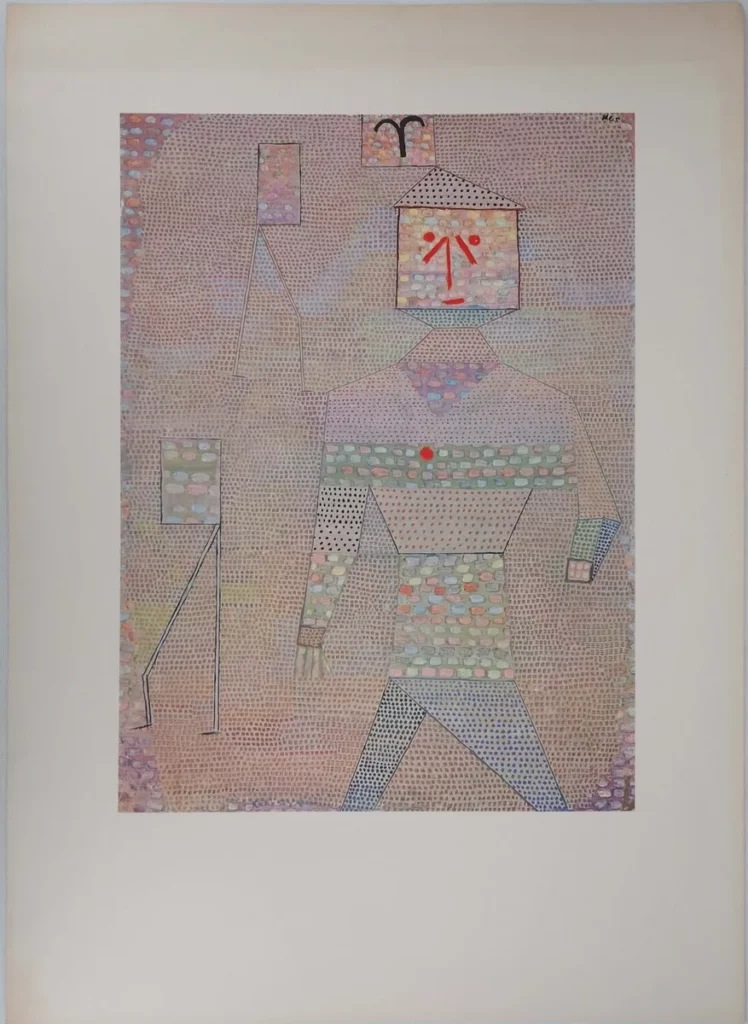
Another notable artwork by Paul Klee, “Personnage heureux” which is also available on Singulart. This artwork portrays a whimsical figure adorned with vibrant colors and playful shapes. This work exemplifies Klee’s ability to infuse joy and spontaneity into his creations, inviting viewers into a world of imagination and wonder.
Are you looking for a piece of artwork from Paul Klee?
Singulart has limited edition prints of Paul Klee. If you are looking for a piece of Klee’s artwork for sale, simply click on the artwork or the button below to discover more!
Frequently Asked Questions
What is the masterpiece of Paul Klee?
His Ad Parnassum (1932), one of his largest and most intricately painted canvases, is regarded as his masterpiece and the pinnacle of his pointillist style. In 1933, his final year in Munich, Germany, he created close to 500 pictures.
What is Paul Klee’s most expensive painting?
The most expensive piece of art ever sold in an auction house was a painting by Paul Klee titled Tanzerin. This masterwork was created in 1932.
How many paintings did Paul Klee paint?
Paul Klee produced almost 10,000 paintings and 4,877 drawings during his lifetime. He also experimented with lithography, engraving, watercolor drawing and even music.
Conclusion
Among contemporary art, “Angelus Novus” by Paul Klee is immortally a great piece for people to think about time, progress, and human awareness. With its remarkable photography and stimulating symbolism, Klee forces us to face the ever-changing currents of history and to dream about a future that is full of hope and renaissance. When we look upon the mystical form of the “New Angel,” we are reminded of Klee’s eternal authorship as an artist whose works bypass both time and space, enabling the feat of discovering the inspirations of future generations.