


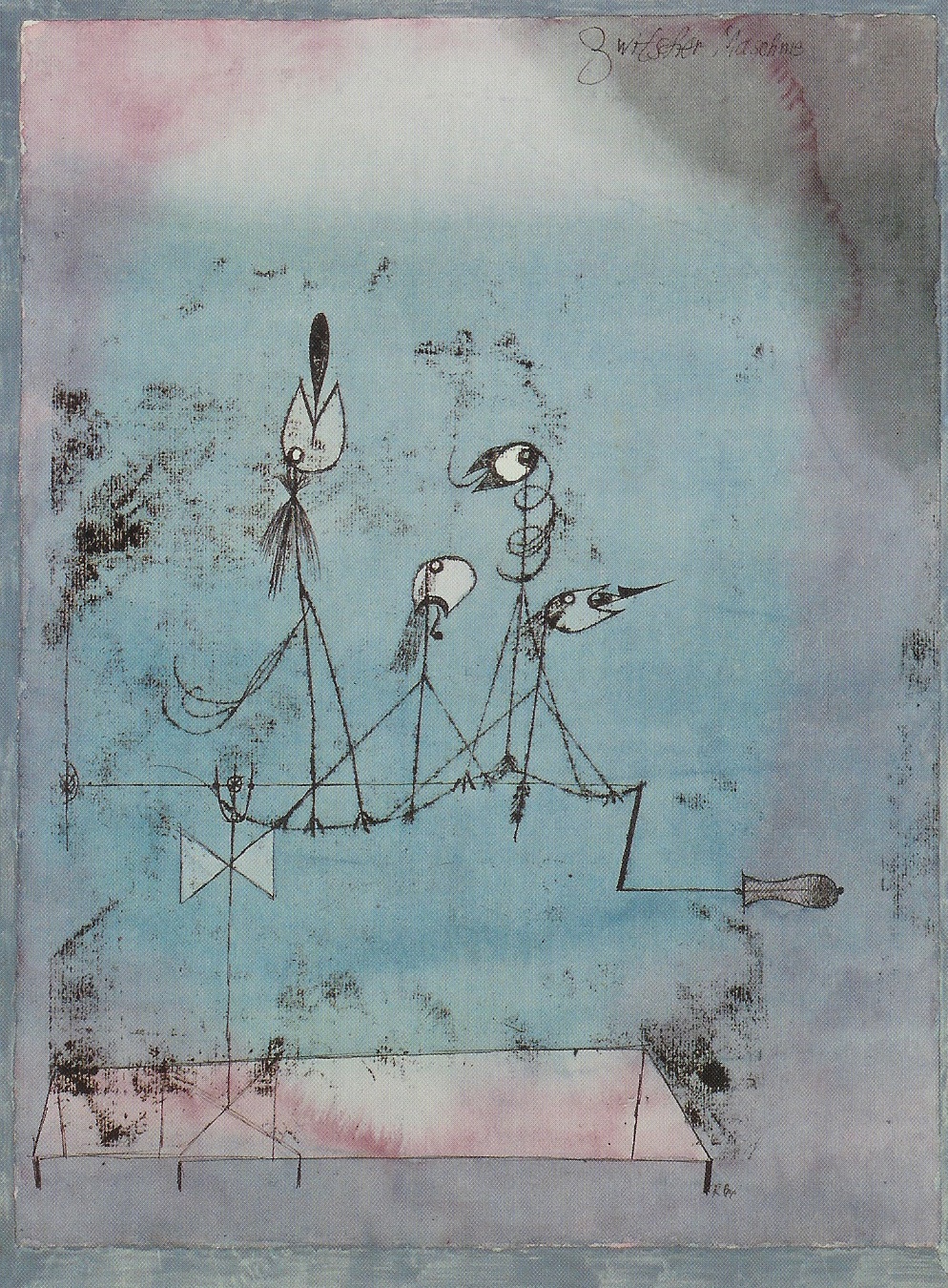
A leader of the abstract art movement, Paul Klee left an indelible mark on the art world due to his innovative compositions and individual method of color and shape manipulation. Among the many masterpieces that he created, “Twittering Machine” remains a remarkable artwork that attracts the attention and imagination of many viewers from all over the world. In this article, we explore the surrealistic world of Paul Klee, his illustrious career, the weightiness of “Twittering Machine,” and also some enlightening insights into this iconic artwork.
Who was Paul Klee?
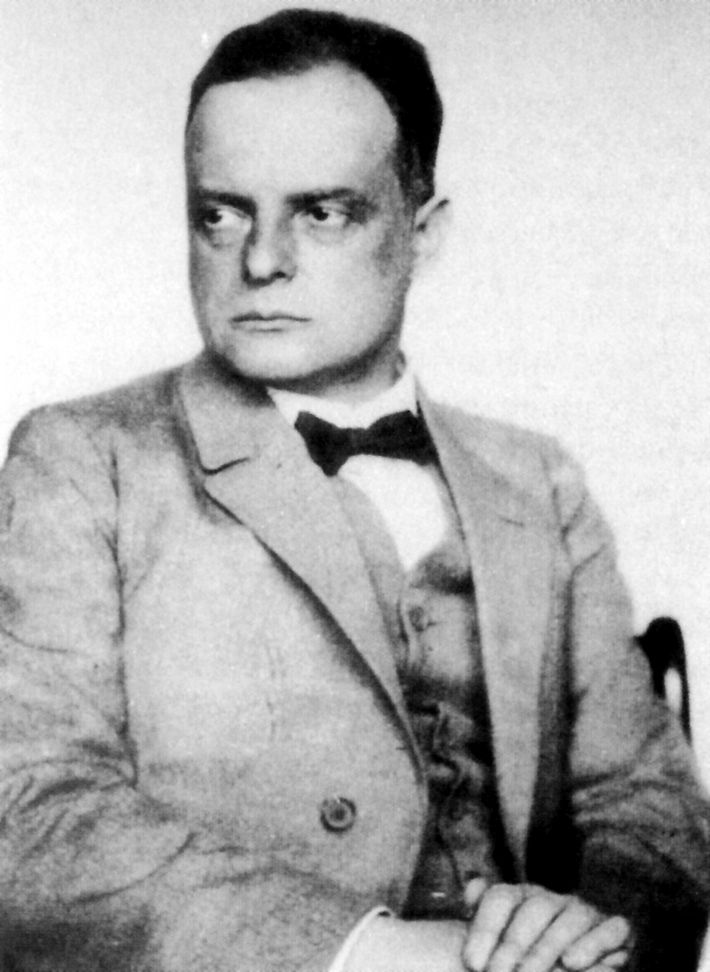
In the early 20th century Paul Klee, a Swiss-German artist, born in 1879, was a key figure of the art scene. The combination of abstraction and figuration in the style of the artist established him as a major figure in Expressionism, Cubism, and Surrealism. Klee’s compositions mostly revolved around the topics of spirituality, philosophy, and the subconscious, which demonstrated his mastery of visual language and symbolism to a great extent.
FUN FACT: Another intriguing aspect of Paul Klee’s life is his fascination with the art of children. Klee was profoundly influenced by the uninhibited creativity and spontaneity he observed in children’s artwork.
His Career
Klee’s artistic career started at the Munich Academy of Fine Arts where he got traditional education. Gradually, his own style that features vivid colors, complex lines, and geometric shapes emerged. He got more and more successful when he started to join the groups like Blue Rider and Bauhaus where he worked with other avant-garde artists like Wassily Kandinsky and Lyonel Feininger.
However, Klee’s imagination was not daunted by such obstacles as health problems and political strife. The abundance of his talent included paintings, drawings, etchings, and writing which therefore made him one of the most outstanding artists of his time.
What is Happening in Twittering Machine?

| Artist | Paul Klee |
| Date Created | 1922 |
| Medium | Watercolor and ink on paper |
| Genre | Surrealism |
| Period | Modernism |
| Dimensions | 25.4 cm × 33 cm (10 in × 13 in) |
| Series / Versions | N/A |
| Where is it housed? | Museum of Modern Art, New York |
Established in 1922, “Twittering Machine” is considered to be one of Paul Klee’s most remarkable pieces of art. This watercolor and ink artwork on paper shows a fantastic apparatus similar to a birdcage full of strange birds-like creatures. The mechanical structure, embellished with winding handles and wheels, takes the role of a whimsical interpretation of a bird feeder or a music box.
The birds inside the cage seem to be chirping through an extended beak that resembles inhumanity. However, beneath the cheerful mask there is a subtle hair-raising sensation in the picture when the birds seem to be imprisoned within the gears, unable to fly freely.
Twittering Machine is such a title which inspires the viewers to ponder over the knitted connection between nature and technology, questioning the relationship between man and the nature as well as the impact of industry on the environment. Klee’s symbols and metaphors create the artwork with a wide sense of meaning, thus appealing to the viewers to think and reflect.
Analysis
“Twittering Machine” attests to Klee’s talent of integrating the abstract with the realistic. The work of art clearly demonstrates his interest in the link between organic and mechanical components, the issue which penetrates most parts of his creative activity. The combination of the natural curves of the birds and the mathematical exactness of the machine sets off a tension that is both visually captivating and semantically deep.
Interesting Facts
“Twittering Machine” is believed to have been inspired by Klee’s observations of mechanical devices such as music boxes and phonographs, which fascinated him.
Despite its whimsical appearance, the painting has been interpreted as a commentary on the dehumanizing effects of modern industrial society.
Artwork Spotlight: Table aux dés (les années 20)
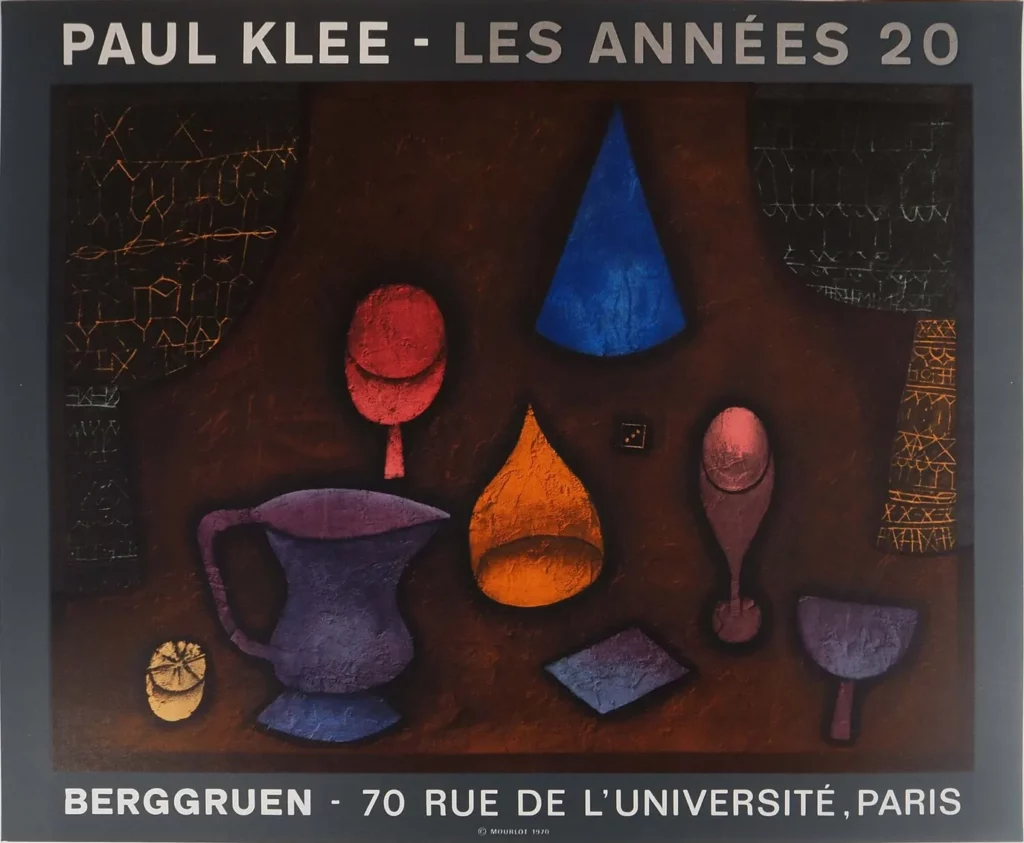
Paul Klee’s “Table aux dés (les années 20)” (The Dice Table, the 1920s) is also available on Singulart. This artwork exemplifies his playful use of geometric shapes and symbols to evoke a sense of mystery and intrigue.
Are you looking for a piece of artwork from Paul Klee?
Singulart has limited edition prints of Paul Klee. If you are looking for a piece of Klee’s artwork for sale, simply click on the artwork or the button below to discover more!
Frequently Asked Questions
What is the masterpiece of Paul Klee?
His Ad Parnassum (1932), one of his largest and most intricately painted canvases, is regarded as his masterpiece and the pinnacle of his pointillist style. In 1933, his final year in Munich, Germany, he created close to 500 pictures.
What is Paul Klee’s most expensive painting?
The most expensive piece of art ever sold in an auction house was a painting by Paul Klee titled Tanzerin. This masterwork was created in 1932.
How many paintings did Paul Klee paint?
Paul Klee produced almost 10,000 paintings and 4,877 drawings during his lifetime. He also experimented with lithography, engraving, watercolor drawing and even music.
Conclusion
Paul Klee’s artwork “Twittering Machine” still attracts viewers with its magical power that induces reflections and interpretations. With his own visual language, Klee gives the viewers a chance to consider the eternal issues of the nature, technology, and human existence. As an expert in abstraction, Klee still continues to inspire generations of artists and art fans with their creative adventures.


