


The modern art world belongs to Simon Hantaï, who, through his art, becomes a source of inspiration without boundaries for abstraction. The Hungarian-born Hantaï was later able to find his artistic voice in France, where he started on a journey of continuous exploration and transformation. During his career he abandoned Surrealist influences and tried to discover his own style for which he is still venerated today.
Here we analyze the compelling story of Simon Hantaï’s life and artistic endeavors, exploring his journey of artistic growth and the career of innovation that marks his work to this day. Delving into “Tabula” as a part of Hantaï’s oeuvre of work, we decipher the secrets of this emblematic masterpiece while revealing the reason for its enduring meaning in the modern art world.
Who was Simon Hantaï?
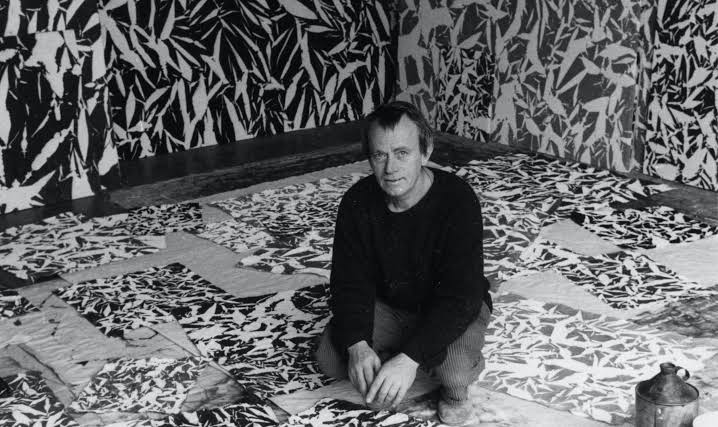
Simon Hantaï, a Hungarian artist who worked in France, was an innovator of abstract painting. He was born in 1922 and in 1948 he emigrated to France, where he got involved in the Abstract Expressionism. Hantai’s work grew and expanded over the years, guided by a dedication to spontaneity, inventiveness, and an exploration of the limits of paint and canvas. His artistic adventures had him compose bewitching pieces that rather defied the conventional patterns of form and technique.
FUN FACT: Simon Hantaï was deeply inspired by nature and often incorporated elements from the natural world into his artwork. He was particularly fascinated by the patterns and textures found in natural phenomena
His Career
Hantaï’s career started in the 1950s after he began to get recognition for his abstract paintings. Under the impact of Surrealism and spontaneous painting of the Art Informel movement, he created a distinctive style based on gestural abstraction and creative process. In his early years, many of his paintings feature expressive brushwork and bright colors, reflecting the spirit of the post-war generation.
Along with the progress of his career, Hantaï started to pay more attention to the role of convergence and choice in art-making. He experimented with the different methods, such as folding and crumpling the canvas before applying the paint to give up a control and let unforeseen forms emerge. By doing so, he eventually came up with “pliage” or folding, which thereafter represented in his work.
What is Happening in Tabula?
| Artist | Simon Hantaï |
| Date Created | 1960 |
| Medium | Oil on canvas |
| Genre | Abstract |
| Period | Contemporary |
| Dimensions | 195 cm × 114 cm (76.8 in × 44.9 in) |
| Series/Versions | None |
| Where is it housed? | Centre Pompidou, Paris, France |
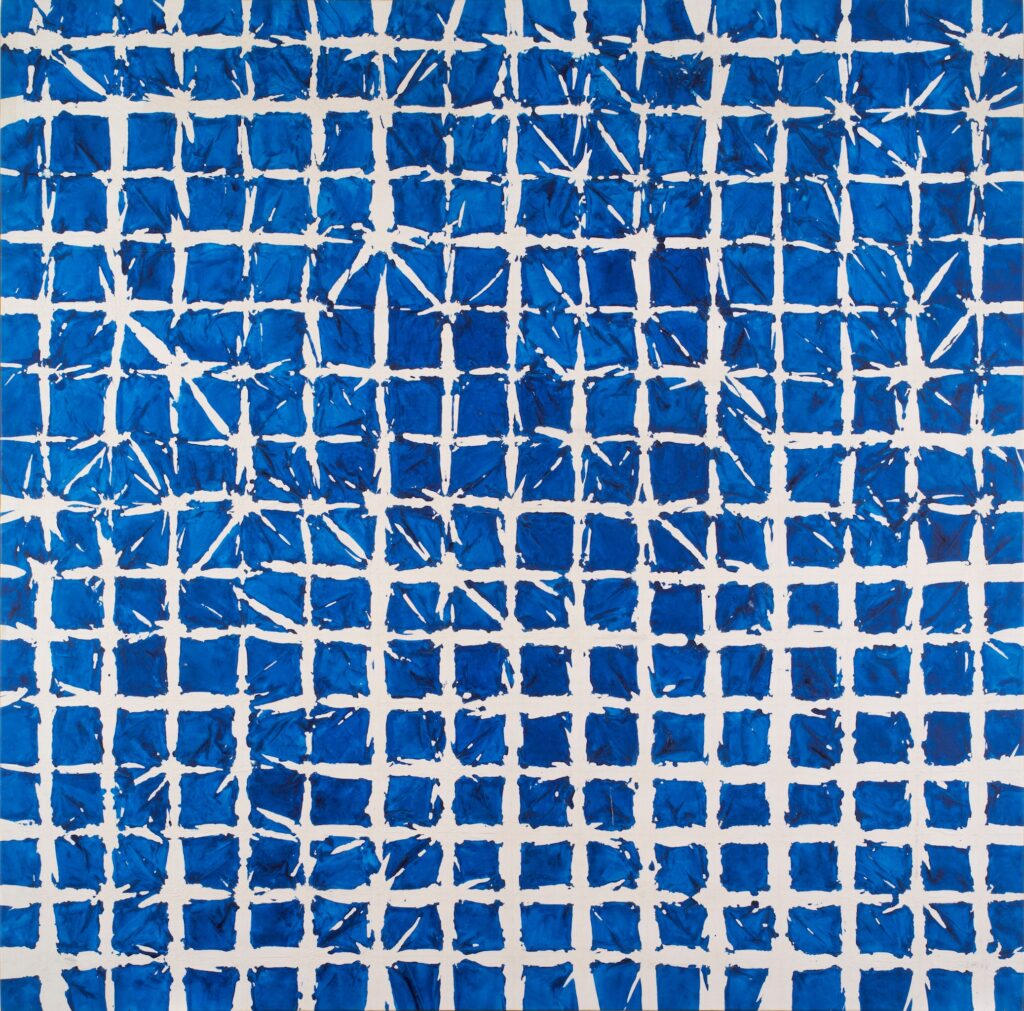
One of Hantaï’s most confusing and captivating works, “Tabula,” is similar to his genius as an abstract artist and his innovation in the creative process. Created in 1960, this astonishing piece takes the viewer into a world where the form and the color play in an exciting balancing act between chaotic and orderly movement.
Glancing at the painting, the perceiver will find themselves immersed in a gorgeous painting that depicts gestural marks of several tones and shades. Every brushstroke, sensitively applied by Hantaï through his revolutionary “pliage” (folding) technique clearly shows the artist’s touch – a symbol of the dialogue between the creator and the canvas.
The major attraction of ‘Tabula’ is the dynamic element of “chaos and order”, which is almost “Separated by a slash” and also dominates many of the other works. The most distinctive aspect of painting for Hantaï was unfolding the canvas again and again, giving up control in a sense, and even relaxing himself to let the flow of nature take over the composition. As the end-product, it is a work that does not yield to easily comprehension and interpretation, consecutively, its meaning either staying or changing with each outcome.
Interesting Facts about the Artwork
Innovative Technique: Hantaï’s pliage technique revolutionized abstract painting, offering a fresh perspective on the relationship between gesture and materiality. By embracing chance and spontaneity, he created works that pulsate with energy and vitality.
Influence of Eastern Philosophy: Hantaï drew inspiration from Eastern philosophies such as Taoism, which emphasizes the harmony of opposites and the acceptance of change. This influence is evident in the dynamic energy of “Tabula,” where opposing forces collide and converge in a mesmerizing dance of color and form.
Legacy of Obscurity: Despite his significant contributions to the art world, Hantaï remained relatively obscure outside of France for much of his career. It was only in later years that his work gained international recognition, cementing his place as one of the most innovative artists of the 20th century.
Artwork Spotlight: “Empreinte I”
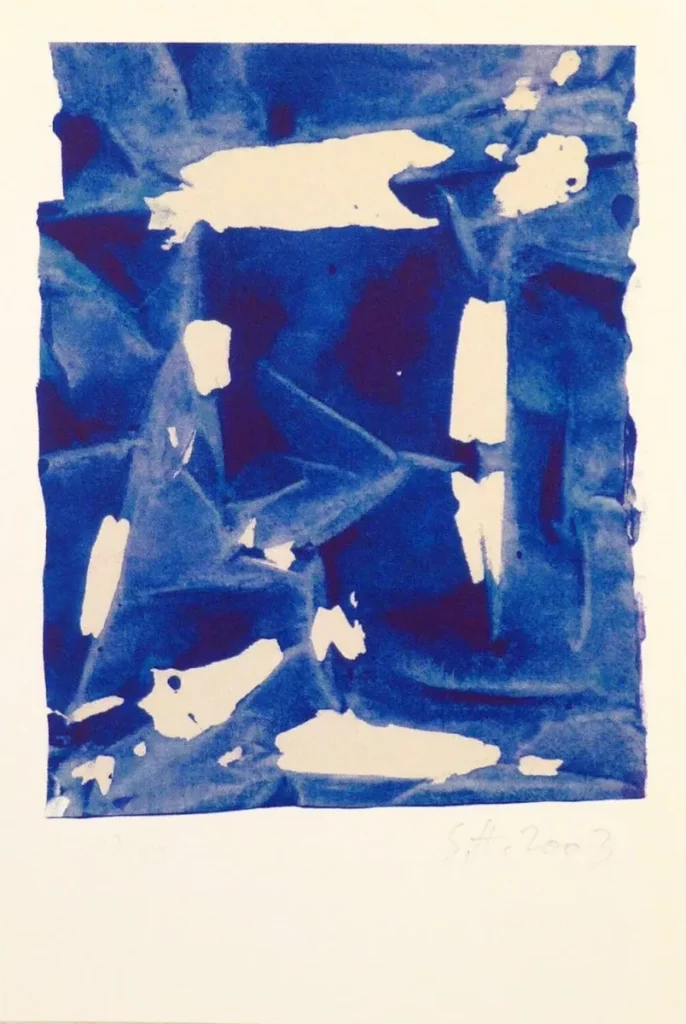
Another notable artwork by Hantaï, “Empreinte I,” which is also available on Singulart. This artwork exemplifies his fascination with texture and surface. Created in 2003, this piece invites viewers to contemplate the physicality of paint and the imprint of the artist’s hand. Through its bold gestural marks and richly textured surface, “Empreinte I” embodies the essence of Hantaï’s artistic vision.’
Are you looking for a piece of artwork from Simon Hantaï?
Singulart has limited edition prints of Simon Hantaï. If you are looking for a piece of Hantaï‘s artwork for sale, simply click on the artwork or the button below to discover more!
Conclusion
“Tabula” invites us to go deeper, where the boundaries between chaos and order grow blurry, and making art becomes a dialogue between the artist and the canvas. Using its powerful and experimental technique, the artist creates a piece that keeps the onlooker wondering and amazed, always expanding the limits of abstraction.


