Let’s dive into the funky world of modern art, where creativity flows like rainbow-colored paint! Picture this: it’s the early 1900s, and artists are shaking up the scene like never before. In steps Man Ray, the ultimate cool cat of the art world. Born Emmanuel Radnitzky, he’s not your average artist—he’s a jack of all trades, dabbling in everything from painting to sculpting to filmmaking. But where he really shines? Photography!
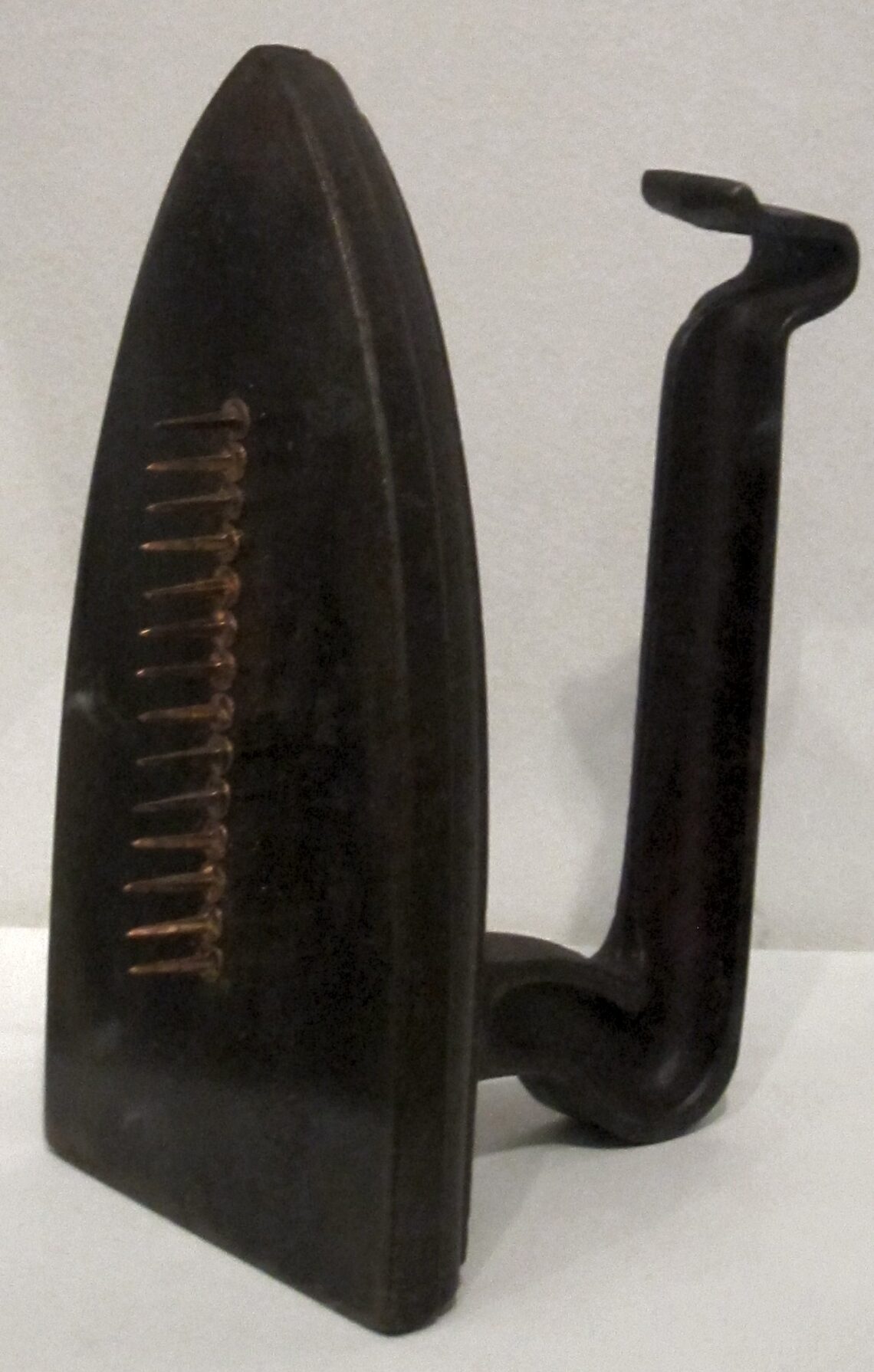
Now, imagine you stumble upon The Gift, a creation straight out of Man Ray’s wild imagination. It’s like he took your grandma’s old iron and sprinkled it with a dash of surreal magic. What do you get? A funky masterpiece that’s part art, part mystery, and all sorts of cool.
Who was Man Ray?
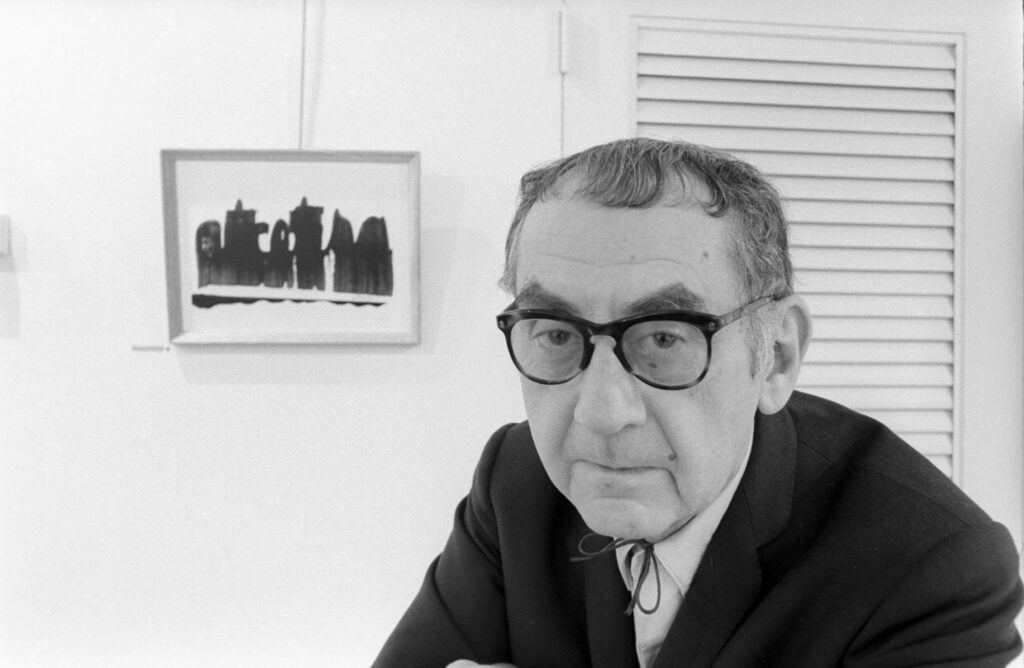
Man Ray was born in Philadelphia in 1890, who went on to become one of the leading artists and pivotal figures in the avant-garde Dada and Surrealist movements of the early twentieth century. He started with painting and was first acknowledged in photography, sculpture and movie creation. Man Ray often worked without boundaries, using diverse media and accident as well as experimentation in his artworks. He moved the art world away from conventional concepts, thus becoming a pioneer of modern art.
FUN FACT: Did you know that Man Ray was also a talented chess player? Yep, he didn’t just make mind-bending art—he liked to bend minds over the chessboard too!
His Career
Man Ray’s artistic creativity started early in his life and he experimented with many artistic styles during his long career. In the 1910s, he relocated to New York City, which became the center of his association with the avant-garde circles of Greenwich Village. This was the period of his career when he took the first steps in experimenting with photography, using solarization and multiple exposures techniques to get surrealist and abstract pictures.
In the 1920s, Man Ray moved to Paris, where he fully immersed himself into the Dada and Surrealist movements. He worked with other artists like Marcel Duchamp and André Breton to expand the limits of artistic norms through his unique photography and assemblage.
Man Ray’s work was relentlessly in progress, which echoes his search for ever new ideas and approaches. He was an influential person in the artistic world until his death in 1976, and he left a legacy of creativity and innovation that artists still admire, even up to this day.
What is Happening in The Gift?
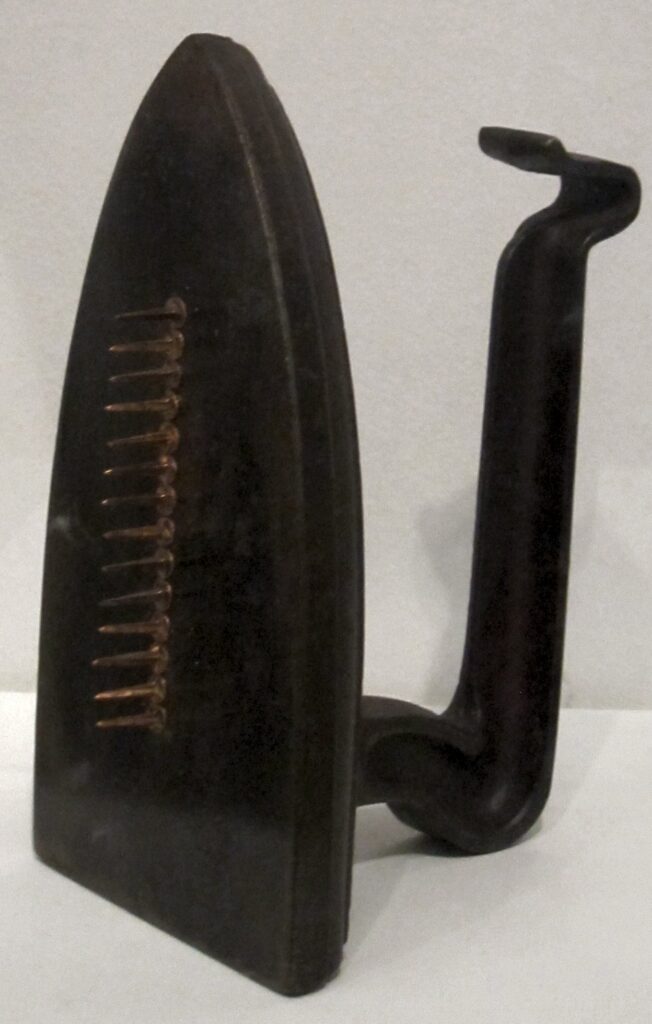
| Artist | Man Ray |
| Date Created | 1921 |
| Medium | Ready-made sculpture |
| Genre | Surrealism |
| Period | Modernism |
| Dimensions | 16.5 x 10.8 x 10.3 cm (6.5 x 4.25 x 4.06 in) |
| Series/Versions | Unique piece |
| Where is it housed? | The Museum of Modern Art, New York |
Let’s get that party started and see what groovy, awesome modern art is all about. It’s a place where ideas exist like the rainbow urine painted on a canvas and your imagination has no boundaries. Picture this: it is 1900-s, and artists start to break the rules, which were as solid as a stone. At this stage, Man Ray became the gentleman of the whole art world. He’s far from the standard artist. This individual is a Jack of all trades – from painting, sculpting to movie making. More than that though , the part where he excell?Photography!
Now, visualize yourself unexpectedly coming across “The Gift,” one of in 1921. It’s like he took your grandma’s cast-iron containing a pinch of surrealistic wizard.What do you get? A funky masterpiece, part art, and part mystery, but very cool.
Yet, what really goes on in “The Gift”? We mean this iron you use every day. Not anything extraordinary, just another typical household item. But Man Ray is not finished yet. He puts a line of sharp tacks on the body of the iron. Yes, that’s right! Next thing you know, that plain old iron turns itself into a quirky and maybe even risky item that has you head-scratching, doubting what is going on.
Interesting Facts about The Gift
Dadaism Dreaming: “The Gift” is like the rebel yell of Dadaism, a movement all about sticking it to the art establishment. Man Ray flips the script by turning a boring old iron into something that’s totally out there, man! It’s like he’s saying, “Take that, art snobs!”
Safety Hazard or Art?: Those sharp tacks on the iron? They’re like a warning sign saying, “Don’t touch!” Man Ray takes something as mundane as ironing and turns it into an edgy, potentially dangerous work of art. It’s like he’s daring you to get close, but not too close!
Mind-Bending Surrealism: Ever looked at an object and thought, “Wait, what?” That’s the power of surrealism, baby! “The Gift” messes with your mind, making you question reality and see the world in a whole new funky light. It’s like stepping into a Salvador Dalí painting, but with more tacks!
Artwork Spotlight: Portrait onirique
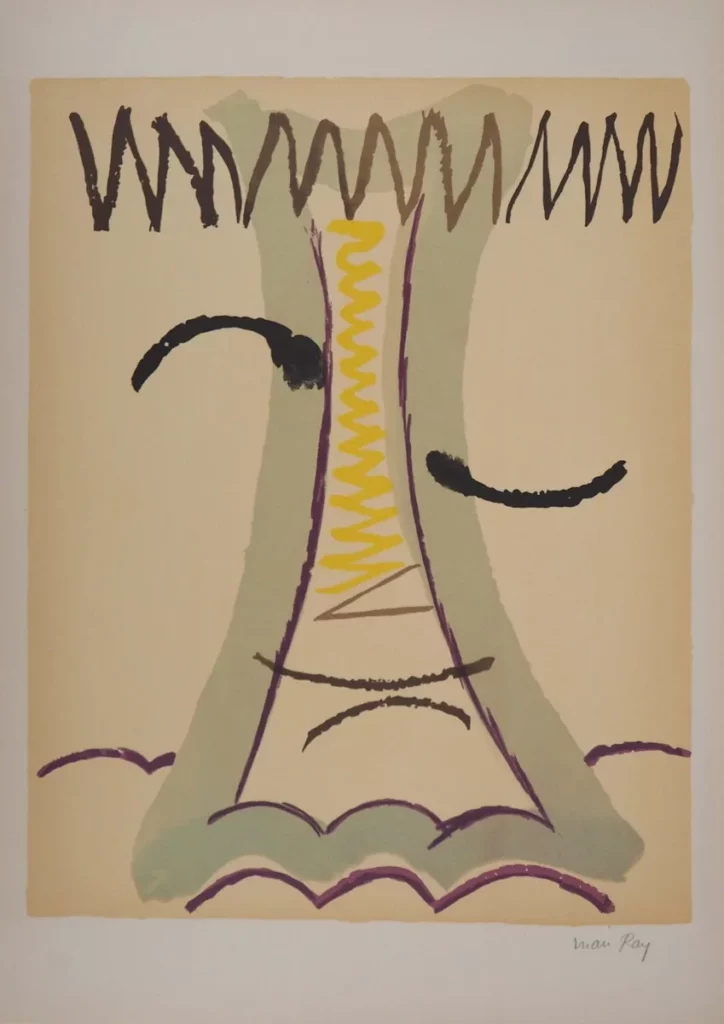
Man Ray’s “Portrait onirique” is also available on Singulart. Ray’s work with his usual photographic techniques, is very evocative for viewer who would like to explore their inner world with the art.
Are you looking for a masterpiece from Man Ray?
Singulart presents exclusive limited edition pieces by Man Ray. To discover and acquire Ray’s art, click on the artwork or the button below for more information!
Frequently Asked Questions
What was Man Ray best known for?
He was a well-known fashion and portrait photographer, but he was most recognized for his innovative photography. His work with photograms, which he referred to as “rayographs” in reference to himself, is very well known.
What technique did Man Ray use?
Ray’s two primary techniques were the use of solarization and his preferred rayographs. By immediately placing an object on photosensitive paper and subjecting it to light, he was able to obtain photograms, which are images of objects with varying intensities of tone transferred onto them.
Conclusion
Man Ray’s “The Gift” still mesmerizes viewers with its unique allure and the complexity of its concealed meaning. Apart from this masterpiece, Ray makes the viewer wonder about the limits of art and reality and thus forces them to discover something extraordinary in the ordinary.