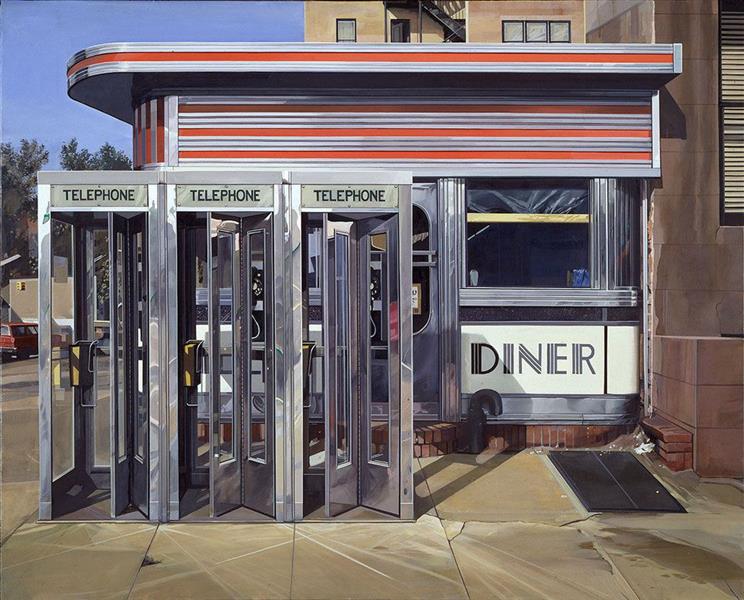
Jump into the fascinating world of Richard Estes, where reality comes together with artistic vision, and each brushstroke writes a narrative. The depth to which Estes conveys hyper-realism in his paintings makes him well-known. Viewers are taken on a journey of modern life through urban landscapes where he captures vivid details and sharpness without parallel. In this post, we look at one of Estes’ best known pictures, “Diner,” and the artist’s biography, career and the story behind the painting.
Who was Richard Estes?
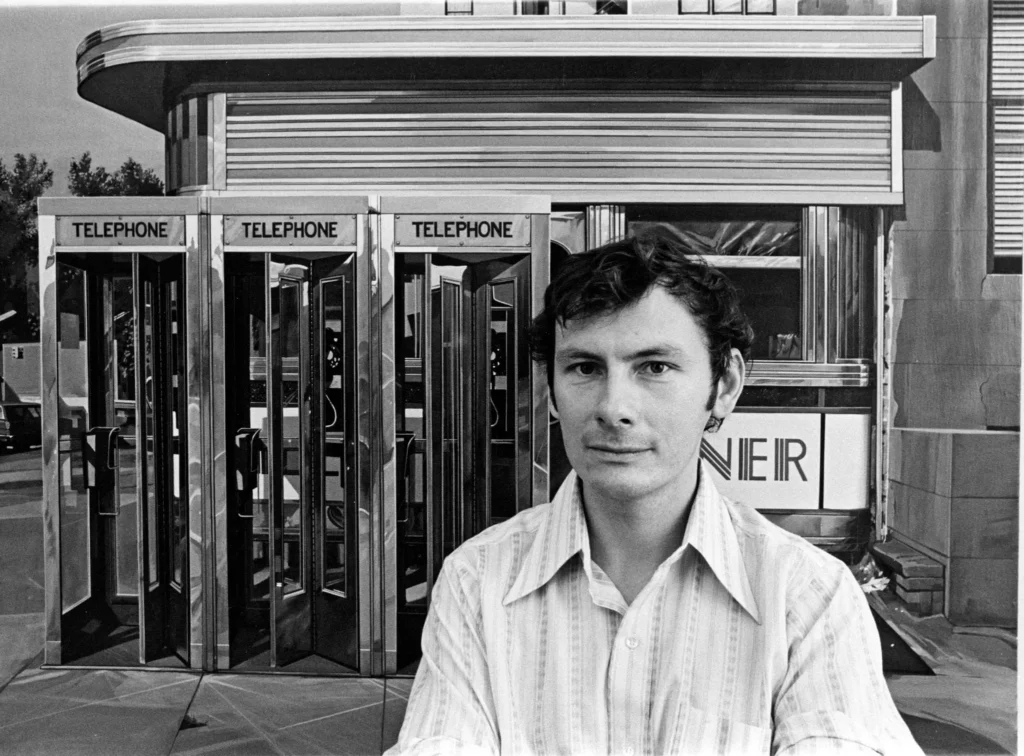
Richard Estes is famous for his photorealistic paintings depicting the very nature of urban existence. He became an important figure in the Photo-realist movement of the late 20th century that also included artists including Chuck Close and Audrey Flack. Estes’ careful attention to details and exceptional accomplishments in the use of light and perspective contributed to his well-deserved recognition in the world of art.
FUN FACT: Did you know he’s a bit of a globetrotter? Yep, Estes isn’t just about painting scenes from the streets of New York City. He’s been known to jet-set across the globe.
His Career
Estes’ journey as an artist began in the 1960s when he moved to New York City, where he found inspiration in the vibrant cityscape. His early works primarily focused on urban scenes, reflecting the dynamic energy and diversity of city life. Through his paintings, Estes sought to celebrate the beauty found in everyday surroundings, often highlighting overlooked elements such as reflections in storefront windows or the play of light on city streets.
As his career progressed, Estes gained recognition for his distinctive style, characterized by precise rendering and meticulous detail. He became known for his ability to capture the intricacies of urban architecture with remarkable accuracy, earning him the title of a master of Photorealism.
What is Happening in Diner?
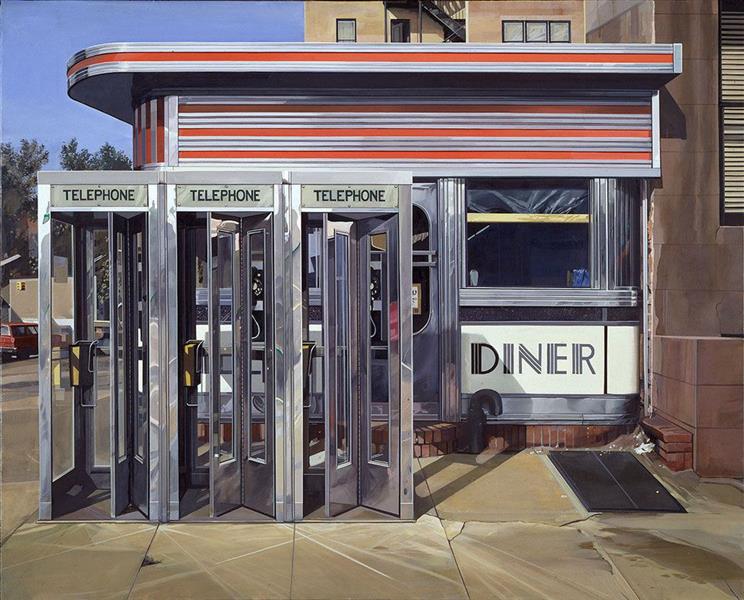
| Artist | Richard Estes |
| Date Created | 1971 |
| Medium | Oil on Canvas |
| Genre | Photorealism |
| Period | Contemporary |
| Dimensions | 59.8 cm × 89.5 cm (23.5 in × 35.25 in) |
| Series/Versions | N/A |
| Where is it housed? | The Art Institute of Chicago, Chicago, Illinois |
Here we go, everyone, hang on tight as we dig into Richard Estes’ “Diner”! Picture this: in a blink of an eye, you are whisked away into a traditional US diner. You become immediately saturated with activity, memories, and the scent of frying bacon. Estes doesn’t only show you a scene but he sends you right to its heart.
Analysis of Diner
Imagine this diner scene: customers digging into towering pancakes, servers speeding past swinging their trays in the air, and neon signs on the outside illuminated which turns the surroundings into a cozy little world. Estes can make you listen attentively to the clinking of silverware and the murmur of other people talking. It is as if you are entering a time machine of the Americana where every minute is just a perfect picture of the hustle and the cozy camaraderie.
Let’s talk about Estes’ attention to detail; it’s a next level feat. From the gleam of the diner’s windows to the reflection of passing vehicles, every little detail is carefully done. He’s almost like a bartender whose only purpose is pouring out the atmosphere of the bustling diner for us to submerge into.
Thus sit comfortably at the counter, order a stack of fries and enjoy yourself with a nostalgic journey of “Diner”!
Interesting Facts about the Diner
Master of Reflections: One of Estes’ signature techniques is his ability to capture reflections with astonishing accuracy. In “Diner,” the play of light on the diner’s windows and polished surfaces creates a sense of depth and realism, drawing viewers into the scene.
Hidden Stories: While “Diner” appears to capture a single moment in time, closer inspection reveals numerous narrative threads intertwining within the scene. Each diner patron and staff member has a story to tell, inviting viewers to speculate on their lives and interactions.
Influences of Film: Estes’ fascination with cinematic techniques is evident in “Diner,” with its carefully composed composition and dynamic sense of movement. The scene feels like a freeze-frame from a classic film, capturing the energy and excitement of urban life.
Frequently Asked Questions
Why is Richard Estes famous?
Over the course of a career spanning more than fifty years, Estes has been hailed as a premier painter of American cityscapes. Along with Duane Hanson, Chuck Close, Ralph Goings, and John Baeder, he is credited with helping to start the global Photorealism movement in the late 1960s.
How did Richard Estes paint?
Estes begins his paintings using photographs. He goes out and takes numerous photos of the same subject from various viewpoints, such as street corners, diners, and reflections in plate glass windows. He then edits, copies, and modifies the photos.
Conclusion
Richard Estes’ “Diner” is neither a painting nor a teleportation device. No, Richard Estes’ “Diner” is the Americana Dream come true, with whipped cream and a cherry on top! This is not just about the picture of reality; it about hitting you on the head with the sights, sounds, and smells of a busy diner in its busiest hour.
About The Author