In the pulsating scene of abstract expressionism, Franz Kline stands tall, mastering his brush with a strong sense and movement. Hailing from Pennsylvania 1910, Kline’s metamorphosis from a draughtsman to a famous painter emulates the vital process of artistic discovery and creativity. His paintings, known for their broad gestures and dramatic contrasts, summon up a world of emotional expressiveness and creative limitlessness for the viewer. Among the noteworthy pieces he did, “Chief” is an excellent example of Kline’s outstanding skills. In this article, we parade into the life and career of Franz Kline, find out the undeniable charm of “Chief,” and break the veil to discover the intriguing facts behind this emblematic piece of abstract expressionism.
Who was Franz Kline?
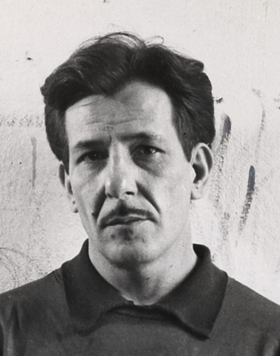
Franz Kline, who was born in 1910 in Pennsylvania was a highly regarded American artist famous for his abstract expressionist paintings. The shift to painting from drawings provides a milestone moment in the development of Kline’s artistic journey. His reputation rose rapidly in the 1950s through his powerful and lively abstract paintings imbued with the life of the abstract expressionist movement.
FUN FACT: In addition to his artistic talents, Franz Kline had a surprising hobby: he was an avid baseball fan. Despite his stature as a titan of abstract expressionism, Kline found solace and inspiration in the sport.
His Career
Kline’s artistic journey was defined by his experiments and unwavering search of the receptive means of expression. In the beginning of his career, he was a representative painter, but he discovered his unique style of abstract expressionism later on. Kline’s paintings show expressive, brushy strokes, strong contrasts, and energetic compositions. His canvases usually create a feeling of motion, vitality, and physical emotion, letting the audience form their own subjective viewpoint.
What is Happening in “Chief”?

| Artist | Franz Kline |
| Date Created | 1950 |
| Medium | Oil on canvas |
| Genre | Abstract expressionism |
| Period | 20th century |
| Dimensions | Approximately 198.1 × 257.5 cm (78 × 101.4 in) |
| Series / Versions | N/A |
| Where is it housed? | The Museum of Modern Art (MoMA), New York City, USA |
The painting “Chief” represents the unique nature of art of Franz Kline. Created in 1950, in the peak of the abstract expressionism, this painting can be regarded as the best example of the artist’s ability to manage shapes and forms. With every brushstroke, Kline gives life to the canvas and, by implication, to the artwork, making it vibrant and emotional.
At first sight the viewer’s attention is captured by the title painted in big black lines on an immaculate white surface. The brisk change of light and shadow causes a visual agitation where the spectator can feel the impulse of entering the unknown story. The large, wild strokes glide all over the canvas almost frantically, putting into it much tension and liveliness.
Interesting Facts about “Chief”
Minimalist Palette: Despite its minimalistic color palette of black and white, “Chief” exudes a sense of depth and complexity. Kline’s mastery lies in his ability to convey a wide range of emotions and sensations through the strategic use of contrasting tones.
Dynamic Composition: The composition of “Chief” is highly dynamic, with bold strokes intersecting and overlapping to create a sense of movement and rhythm. The painting invites viewers to explore its intricate details and interpret its meaning from various perspectives.
Title Significance: The title “Chief” adds another layer of meaning to the artwork. While Kline’s paintings are abstract and open to interpretation, the title hints at possible associations with leadership, authority, or even tribal symbolism. However, Kline himself was known for his reluctance to assign specific meanings to his works, preferring to leave them open to individual interpretation.
Frequently Asked Questions
What was Franz Kline known for?
Kline rose to prominence for his striking black and white abstractions. Here, the forceful brushstrokes don’t merely depict, but rather appear to capture the very motions and energy unleashed in the act of painting itself.
Who was Franz Kline influenced by?
He began his artistic journey as a realism painter, developing a fluid style during his academic studies. This early training instilled in him a deep appreciation for the Old Masters, particularly Rembrandt’s use of light and shadow. However, after relocating to New York and encountering the work of Willem de Kooning, Kline’s artistic compass began to shift. Inspired by the burgeoning Abstract Expressionist movement, he embarked on a path to refine his own distinctive abstract style.
Conclusion
Franz Kline’s image “Chief” is an embodiment of his artistic vision and skills in abstract expressionism. Using strong brush strokes and powerful composition, Kline invites the spectators not only to interpret but also to rediscover the painting. Regarded as one of the key Abstract Expressionist artists of the time, Kline’s works have amazed generations of artists and art lovers with his innovative and groundbreaking art.