Georg Baselitz is a highly important figure in contemporary art. His style of painting, sculpture, and printmaking has not only been the reason for his popularity but he has broken the stereotypes of art expression. Out of his masterpieces, The Brücke Chorus stands for the greatest success. In this article, we explore the realm of Baselitz as we dive into the fascinating “The Brücke Chorus”, its veritable layers of meaning, and the everlasting notability of the work in art history.
Who was Georg Baselitz?

Born in 1938 in Deutschbaselitz, Germany, Georg Baselitz has become a leading figure among contemporary artists. His fame stems from his unconventional and often controversial approach to painting, sculpture, and printmaking. Emerging in the 1960s alongside other German Neo-Expressionists, Baselitz consistently challenges artistic norms by tackling themes of identity, history, and the human condition.
FUN FACT: Georg Baselitz legally changed his name in 1961 as an act of rebellion against his German heritage.
His Career
Baselitz’s career covers more than 60 years of experimentation with forms and a restless passion for artistic innovation. His popularity spread in the 1960s with his unique style representing some inverted figures which contrasted with conventional representations. Throughout his entire career, Baselitz has used different media, various techniques, and different themes, making him one of the most important artists of his generation.
What is Happening in The Brücke Chorus?

| Artist | Georg Baselitz |
| Date Created | 2007 |
| Medium | Oil on canvas |
| Genre | Neo-Expressionism |
| Period | Contemporary |
| Dimensions | 330 cm × 600 cm (130 in × 236 in) |
| Series/Versions | N/A |
| Housed | Pinakothek der Moderne, Munich, Germany |
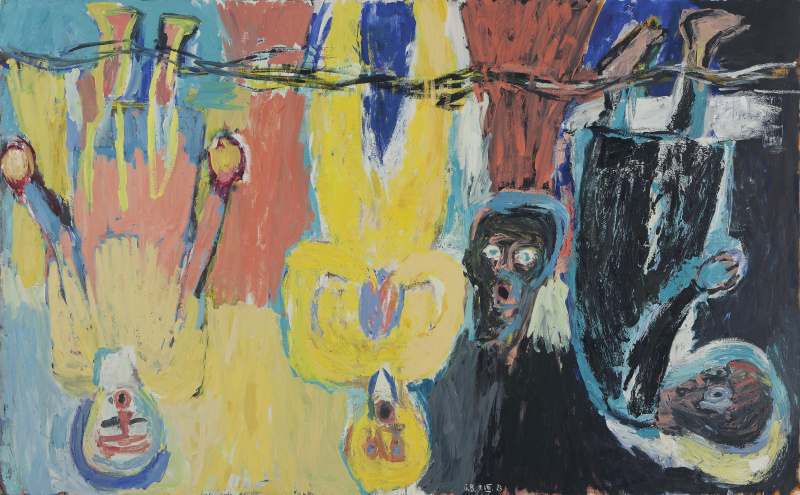
Baselitz’s epic work, The Brücke Chorus, confronts viewers with a powerful and emotional mosaic. Painted in 2007, the piece overflows with raw energy and a stark design. It’s a direct homage to Die Brücke (“The Bridge”), a group of German Expressionist artists.
Baselitz channels their avant-garde spirit through powerful, expressive brushstrokes. The canvas explodes with figures, all jostling in his signature style: distorted forms and bold colors. The rhythmic chaos pulsates with a sense of disorder and conflict, inviting viewers deep into its turbulent narrative.
What’s So Special about The Brücke Chorus?
The remarkable characteristic of The Brücke Chorus that makes it precious is its multifaceted and multi-layered nature. Salute to Die Brücke, the famous German Expressionist group that guided Baselitz’s artistic development, adds new dimensions and reasons to this painting. Pensive social power and nervous stroke work hypnotize the viewer, luring them to a realm of rawness and mental distress.
His unique style which consisted of upside-down and distorted figures brought about a component of mystery and inscrutability to The Brücke Chorus. The unorthodox creation of human shadows forces the viewers to look inside their minds to seek beyond the usual. The painting is punctuated with different kinds of symbolism, allowing the spectator the privilege of their interpretation.
Interesting Facts about The Brücke Chorus
Upside-Down Technique: True to his distinctive style, Baselitz employs his renowned upside-down technique in The Brücke Chorus, flipping the entire composition to challenge conventional modes of perception. This inversion adds a layer of complexity to the artwork, inviting viewers to reconsider their preconceptions and engage with the painting in a novel way.
Homage to Die Brücke: The title of the painting, The Brücke Chorus, pays homage to Die Brücke, the seminal art movement that profoundly influenced Baselitz’s artistic development. Through this homage, Baselitz underscores his affinity with the ideals of Die Brücke, which sought to break free from the constraints of academic tradition and embrace a more authentic and expressive form of artistic expression.
Multifaceted Symbolism: The Brücke Chorus abounds with rich symbolism and allegory, inviting viewers to interpret its myriad layers of meaning. From the tumultuous throng of figures to the visceral brushwork, every element of the painting contributes to its enigmatic narrative, leaving ample room for interpretation and speculation.
Artwork Spotlight: Tree
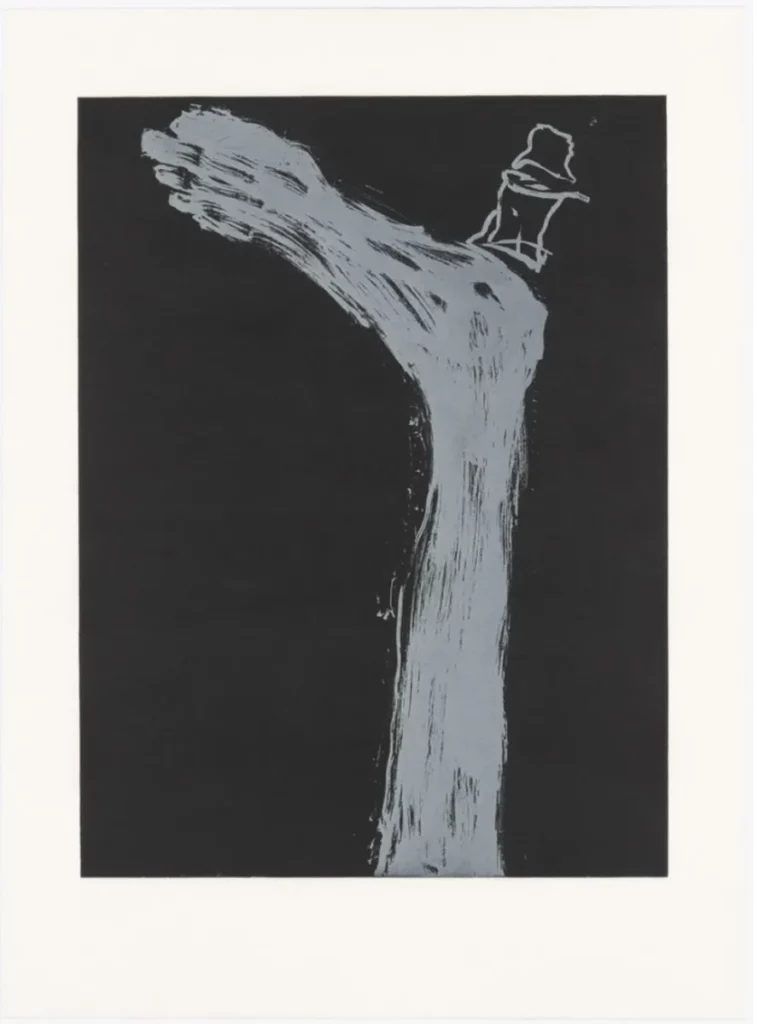
The painting “Tree” by Georg Baselitz is available on Singulart. This artwork reveals the author’s distinct technique of turning the object upside down. It reflects the beauty of nature and at the same time is critical about the conventional ways of perceiving and representing.
Are you looking for a piece of artwork from Georg Baselitz ?
Singulart has limited edition prints of Georg Baselitz. If you are looking for a piece of Baselitz‘s artwork for sale, simply click on the artwork or the button below to discover more!
Frequently Asked Questions
What materials does Georg Baselitz use?
Baselitz carved these sculptures directly from tree trunks, frequently with chainsaws and axes. In 1983, he stated that he avoided all manual dexterity, all elegance, and all related to construction by working with wood.
What inspired Georg Baselitz?
He created his unique visual language by referencing various sources, such as African sculptures, Mannerist paintings, and Soviet graphic art.
Conclusion
Overall, Brücke Chorus is a perfect piece of evidence of Georg Baselitz’s deep artistic view and lasting impact on present-day art. The unique style, remarkable details, and valuable symbols that the artist used in this painting unfold a story for the viewers, where they discover the subtle undertones of human nature. As a seminal work of Neo-Expressionism, The Brücke Chorus still impacts audiences, reaching beyond time and space to stir thoughts, arouse emotions, and marvel.
Our partners at Artfacts offer an in-depth look into the remarkable career of Georg Baselitz, providing a rich collection of data that highlights his artistic journey and impact. Explore his profile here.