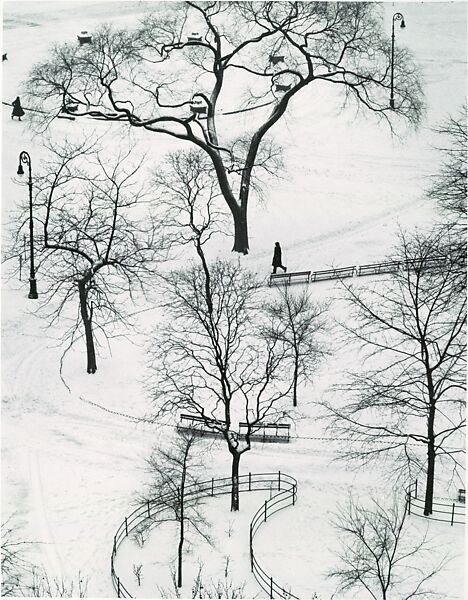
In the middle of New York City, among the bustling streets and mighty skyscrapers, there is a corner of quietness and beauty—Washington Square Park. Here, amid wintertime, Hungarian-born photographer André Kertész froze a moment in time with his camera, making Washington Square Park’s serene atmosphere immortal in his iconic work ‘Washington Square, Winter.’ Via his lens, Kertész invites audiences to dive into the tranquility of a snowy day and watch the stark contrast of light and shadow creating a stunning cityscape. Come with us as we uncover the world of André Kertész, break through the mystique, and find out what is behind one of the most outstanding photos ever taken.
Who was André Kertész?
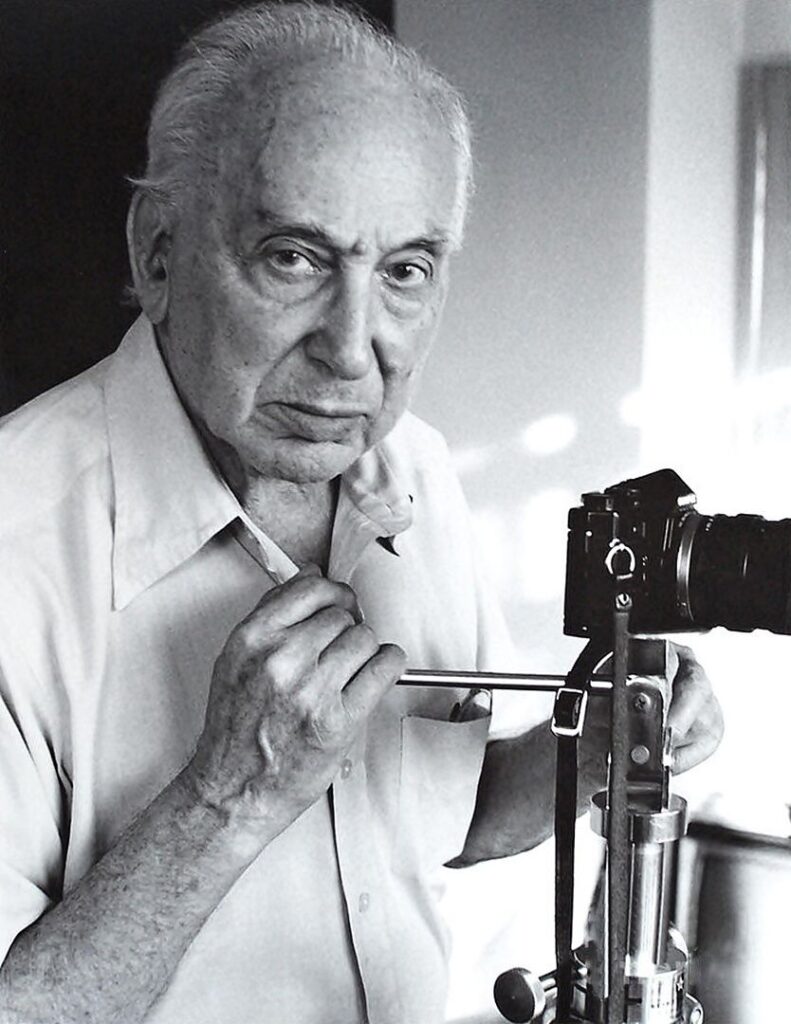
André Kertész, an emigrant from his homeland of Hungary, is appreciated internationally as one of the greatest photographers. In 1894, Kertész was born. He took up photography in the early 20th century, and until his death, he remained a dominant force and left a legacy of his distinct vision and style. His paintings often dealt with common situations, poetically developing them, and thus turning the usual into the extraordinary.
In his early years, Kertész was experimenting with different photographic techniques and improving his skills so that he was able to create his style, which is characterized by its closeness and emotionality. His photographs were telling, they unveiled the hidden poetry that was wrapped into the texture of the daily world. Through the capturing of fleeting moments of urban life and the quiet beauty of nature, Kertész imbued his photographs with timeless qualities, allowing viewers to reflect on the mysteries of existence.
FUN FACT: André Kertész often referred to his camera as his “third eye.” This whimsical nickname reflects Kertész’s deep connection to his craft and his belief in the transformative power of photography to reveal hidden truths and capture fleeting moments of beauty.
His Career
Kertész’s relocation to Paris in the 1920s brought the necessary change in his career. Immersion in the lively cultural field of the city became a source of his art inspiration from the works of other artists and intellectuals who went to the cafés and the salons of Montparnasse. This is a period in which he built connections with famous people, such as Piet Mondrian (whose studio was the background of one of Kertész’s most famous photos).
He was a real trailblazer in photography and went ahead to try new techniques while remaining faithful to his artistic vision. Through his images, he pictured urban life modernly, showing the essence, beauty, and complexity of the human experience. Whether it was the busy streets of Paris or the towering skyscrapers of New York City, Kertész’s lens was enough to create a portrait of the chaotic world in transition, amidst which one could find beauty and transcendence.
What is Happening in Washington Square, Winter?
| Artist | André Kertész |
| Date Created | 1954 |
| Medium | Gelatin silver print |
| Genre | Street Photography |
| Period | 20th Century |
| Dimensions | 19.1 x 24.1 cm (7 1/2 x 9 1/2 in) |
| Series/Versions | N/A |
| Where is it housed? | Currently housed in various private and public collections worldwide. |
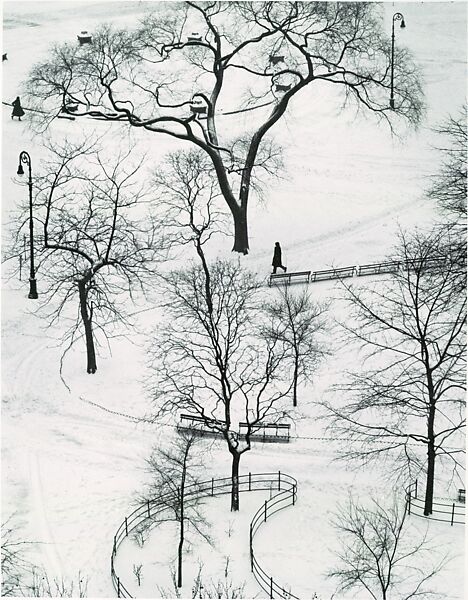
Through “Washington Square, Winter,” André Kertész reveals a serene New York sanctuary. Captured in 1954, it showcases a snow-covered Washington Square Park. The delicate snow blankets the scene, accentuating the trees’ bending branches.
From the viewer’s perspective, Kertész’s composition emerges beautifully. Tree shadows dance over the snow, creating flickering designs. The long, silk-like shadows add depth, drawing viewers deeper into the picture.
What’s So Special about Washington Square, Winter?
In the middle of this wintry scenery, calmness takes over. The park, which was filled with activity, is now quiet under a soft white blanket of snow. The fact that nobody is present makes for reflection and enables you to plunge into the atmosphere of serenity that surrounds you.
Kertész’s sharp eye for detail is everywhere in the painting. From the fine lines of the branches reaching high into the winter sky to the detailed aspects of the snow-covered ground, each element of the scene is portrayed with precise detail. Capturing not only the physical reality of the park but also its emotional aura is evidence of Kertész’s talents – to add a touch of poetry and depth to his pictures.
Interesting Facts About Washington Square, Winter
Despite its tranquil appearance, “Washington Square, Winter” was captured during a hectic period in Kertész’s life. Despite undergoing heart surgery and experiencing financial difficulties, he created this timeless masterpiece.
Kertész’s skillful use of shadow and light in “Washington Square, Winter” showcases his mastery of composition. It evokes mood and atmosphere effectively.
Part of Kertész’s broader documentation of New York City life, “Washington Square, Winter” reveals his fascination with the urban landscape and its inhabitants.
Artwork Spotlight: Hazy Day, Budapest, November
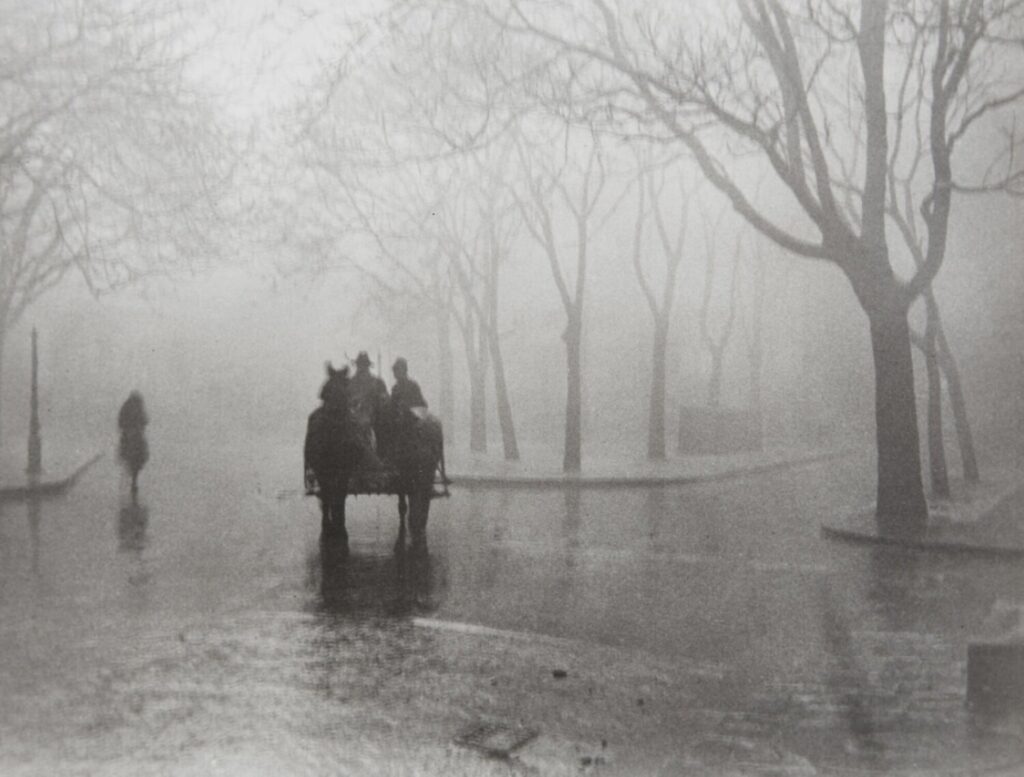
“Hazy Day, Budapest, November” by Kertész is available on Singulart. It is a reflection of the fragility and ethereal charm that a misty day brings to his town. The soft and wavy light and the airy setting bring back memories and provoke some thoughts of contemplation that make viewers lose themselves in the peace and quietness of the moment.
Are you looking for a piece of artwork from André Kertész ?
Singulart has limited edition prints of André Kertész. If you are looking for a piece of Kertész‘s artwork for sale, simply click on the artwork or the button below to discover more!
Frequently Asked Questions
What is André Kertész famous for?
Kertész’s photography in the 1960s and 1970s inspired modern photographers. His work blends formalism with photojournalism, making it historically significant.
What camera did André Kertész use?
Kertész utilized a Leica camera to capture a seemingly straightforward street scene in this enigmatic image. Preceding Henri Cartier-Bresson by three years in the 1920s, Kertész was spotted with a Leica from 1928. Its lightweight and user-friendly design endeared it to photojournalists.
Conclusion
“Washington Square, Winter” was André Kertész’s masterpiece which showcased his incredible talent and skill to find aesthetic in everyday moments. Looking at the timeless photograph, the spectators travel to a world where serenity is the ruler and art breaks boundaries in time and space.