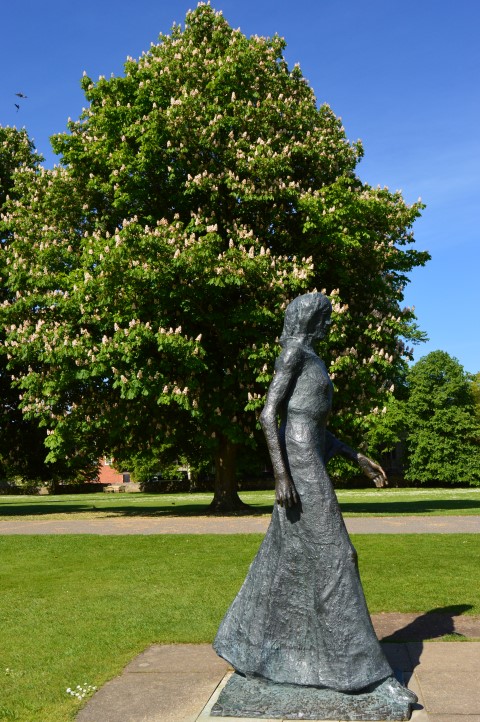
The bronze sculpture “Walking Madonna” by Elisabeth Frink is situated at the peaceful Salisbury Cathedral Close. This 1981 portrayal of the Madonna departs from traditional images. Instead, it features her with life-affirming movement and strength. Many people know about Frink because of her unusual sculptures, shaped exactly according to her vision. Aiming to inspire reasons for pride, she created this sculpture. This piece delves into Elisabeth Frink, her renowned statue “Walking Madonna,” and some surprising facts.
Who was Elisabeth Frink?

Elisabeth Frink, born on November 14, 1930, in Thurlow, Suffolk, was a famous British sculptor focused on human and animal forms. Through her artworks, she explored themes of strength, vulnerability, and the human condition. Significantly, the war and the mental and physical states of her models shaped her art style.
The beginnings of Frink’s life were deeply influenced by the war, which she experienced in the English countryside. This period instilled in her a profound love for nature and its inhabitants. These themes prominently appeared in her later work. She completed her studies at Guildford School of Art and Chelsea School of Art, where she honed her skills and developed her style.
FUN FACT: Elisabeth Frink was known for her love of animals, particularly horses, which often served as inspiration for her sculptures.
Her Career
At the very beginning of her career in the late 1950s, she became part of the “Geometry of Fear” school of post-war British sculptors. Their main achievement was creating works that embodied the stressful post-war environment, often abstract and fragmented. Nevertheless, Frink’s style was more figurative and expressive, although greatly influenced by the movement.
Her early creations predominantly featured animal forms, captured with a sense of strength and movement. This phase of her life brought her many acknowledgments and awards, boosting her success in the UK art scene. Over time, her interest shifted towards humanity, exploring the complexity of human beings, suffering, and resilience.
What is Happening in Walking Madonna?
| Artist | Elisabeth Frink |
| Date Created | 1981 |
| Medium | Bronze |
| Genre | Sculpture |
| Period | Contemporary Art |
| Dimensions | Life-size |
| Series / Versions | Part of a series exploring human figures in motion |
| Where is it housed? | Salisbury Cathedral Close, Salisbury, England |
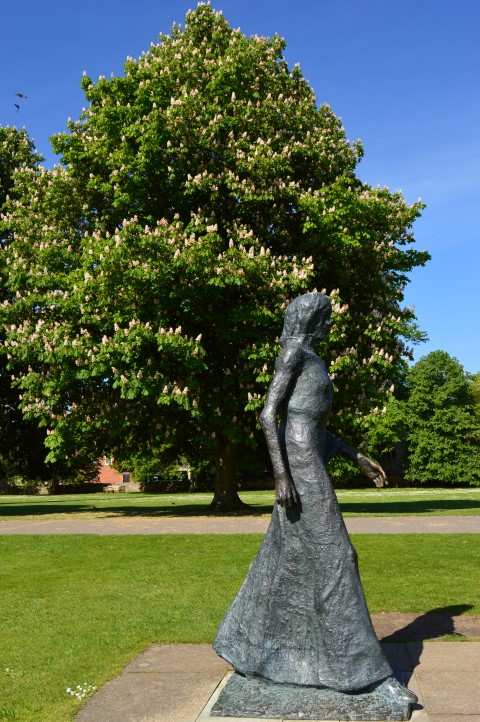
“Walking Madonna,” crafted in 1981, holds a significant place in Elizabeth Frink’s collection. Situated in Salisbury Cathedral Close, the life-sized bronze statue seamlessly blends with its historical and spiritual setting. Unlike traditional depictions, Frink portrays a dynamic and independent Madonna.
The sculpture depicts Madonna in a flowing dress, moving with purpose and serenity. Her elongated figure and swirling robes suggest motion, while her expressive face radiates joy and resilience. Frink’s characterization diverges from the norm, presenting Madonna as a strong, determined woman.
What’s So Special About Walking Madonna?
“Walking Madonna” by Elisabeth Frink presents a new version of traditional religious images, where the Madonna is in active motion. Unveiled in 1981, the life-size bronze sculpture sits in the beautiful setting of Salisbury Cathedral. It blends perfectly with the cathedral’s atmosphere, which is rich in history and spirituality. Unlike traditional art that uses static images to portray people, Frink’s Madonna represents power and independence. Sporting athletic steps and free-flowing garments, she portrays the sophisticated strength and resilience of our time. This original approach allows one to contemplate beliefs, power, and time, providing a novel perspective on the old tradition.
Interesting Facts about Walking Madonna
An Outdoor Masterpiece: In contrast to many sculptures that are located inside galleries or museums, the “Walking Madonna” is exposed to the elements outdoors in the Cathedral Close of Salisbury Cathedral. This particular site and environment enable the sculpture to have different appearances in daylight and weather conditions.
A Departure from Tradition: Frink’s portrayal of the Madonna contradicts schematic representation. In contrast to the usual serene and nurturing pose, “Walking Madonna” depicts her in a dynamic expression, signifying strength and resilience.
Bronze Beauty: This sculpture is made out of bronze which is a material Frink prefers for its durability and flexibility. The bronze begins to develop a natural patina over time, which not only adds depth and character but also makes the work unique.
Artwork Spotlight: Rolling Over Horse
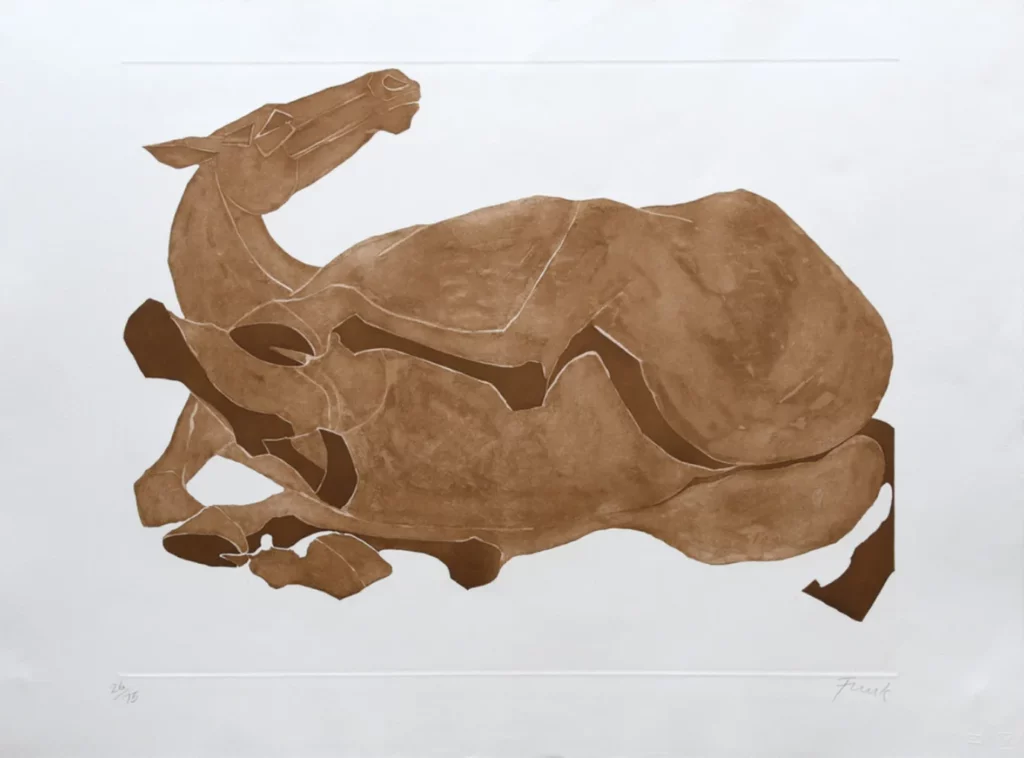
“Rolling Over House” by Elisabeth Frink is available on Singulart. Here, she infuses everyday scenes with unexpected elements, showcasing her diversity. This piece highlights her efforts to blend humor and surprise into her art.
Are you looking for a piece of artwork from Elisabeth Frink?
Singulart has limited edition prints of Elisabeth Frink. If you are looking for a piece of Frink‘s artwork for sale, simply click on the artwork or the button below to discover more!
Frequently Asked Questions
What was Elisabeth Frink famous for?
In the year 1952, she held her first solo exhibition at the Beaux Arts Gallery in London and the Tate Gallery acquired one of her works called ‘Bird’ (1952). Frink began to be called one of Britain’s best post-war sculptors and figurative artists; she also worked in drawing, and printmaking and produced illustrations.
Where can I see Elisabeth Frink’s sculptures?
Dorset Museum houses the Elisabeth Frink collection. The exhibit is composed of 30 sculptures and more than 100 prints and drawings. All were supplied to the Dorset Museum under the wishes of the late son of Elisabeth Frink, Lin Jammet.
Conclusion
Elisabeth Frink’s “Walking Madonna” showcases her ability to convey emotions and strength in sculpture. The Madonna’s resolute stride challenges tradition, prompting reflection on resilience and faith. Positioned in Salisbury’s Cathedral Close, it captivates viewers, securing Frink’s legacy in British art.