


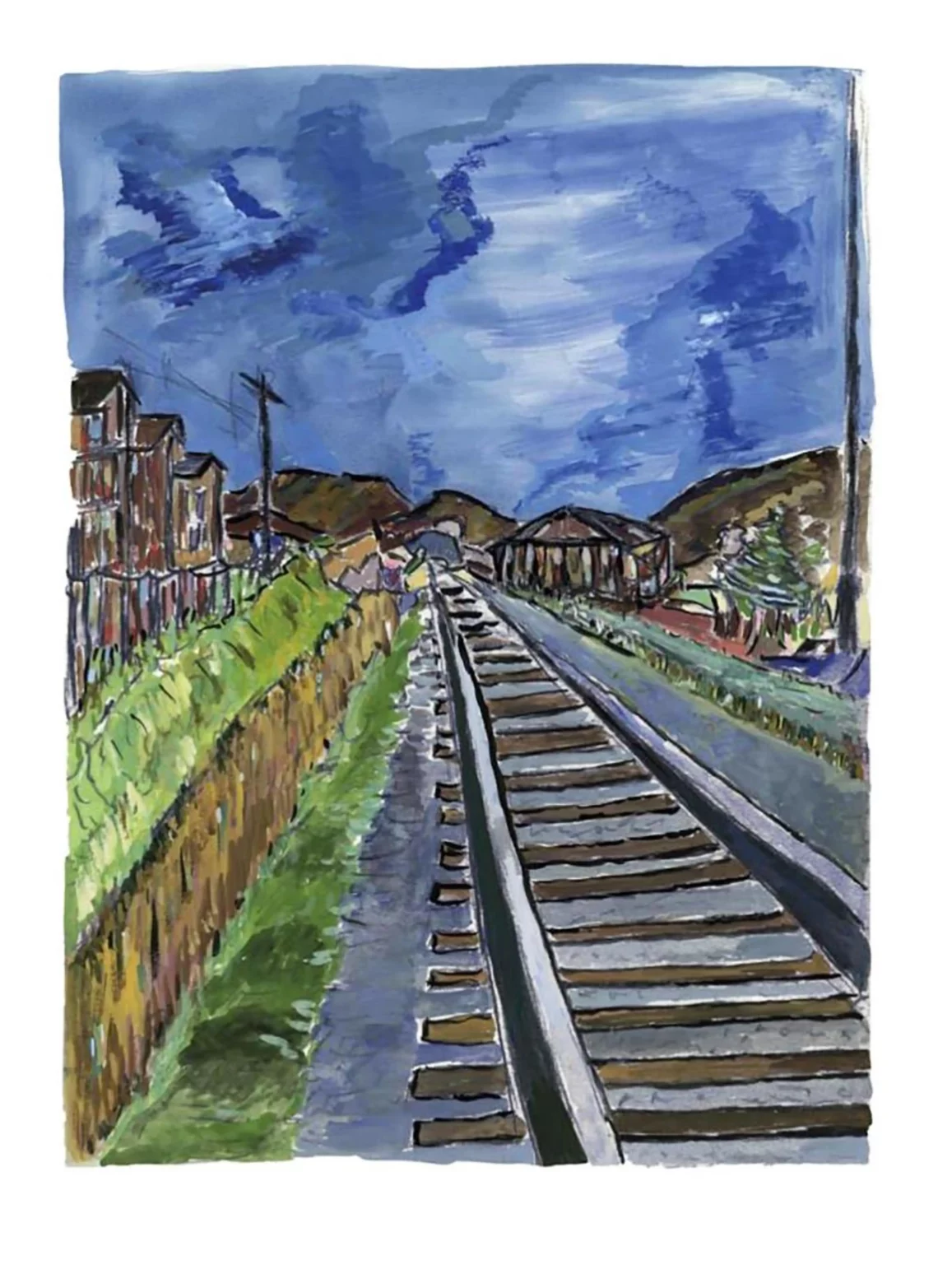
Bob Dylan is a name that would make anyone associate it with poetry, music, and the arts of the ages. Most people associate such attributes with the music icon of the 1960s, Dylan can be described as a creative mastermind. Apart from acting and guitar strings, he is also a man of many faces in visual arts. One of his noteworthy works, specifically the painting called Train Tracks, is devoted to the LIFE concept, loneliness, and the time when people travel. In this article, I will tell you about Bob Dylan’s famous career, look into the mystery of Train Tracks, and discover what makes one and all come running.
Who is Bob Dylan?
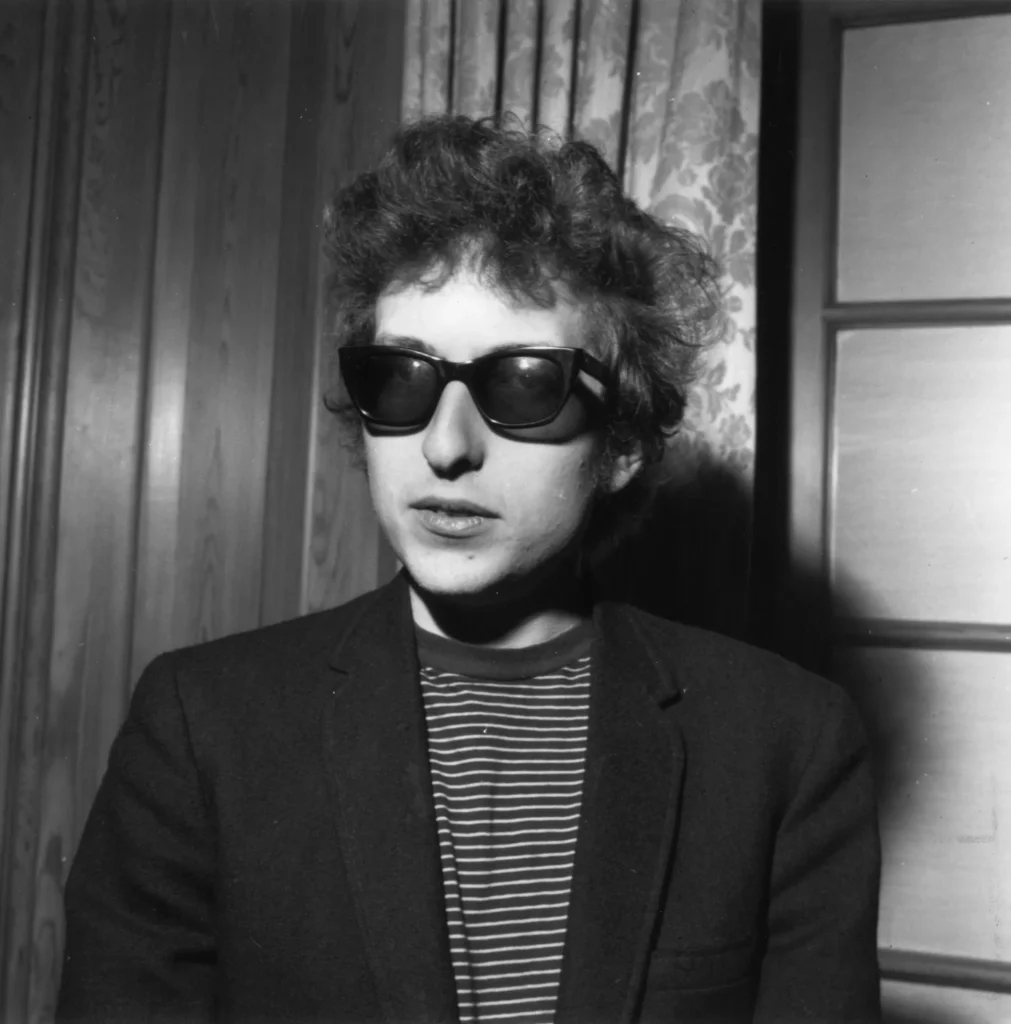
Although being a singer and a songwriter, Bob Dylan is much more than that, he is a living legend. They are as much embedded in the culture as those of any significant figure. Originally known as Robert Zimmerman in 1941 in Duluth, Minnesota, he rose to be the voice of the generation. In this case, there was a shift in the social and political climate and the public wanted answers, and Dylan gave them that. He became somewhat the folk oracle of his generation, providing the culture with such tracks as ‘Blowin’ in the Wind” and ‘The Times They Are A-Changin’.” What made his lyrics poignant was that he was singing about two different worlds at once, but his words are as meaningful today as they were back in the seventies.
But then again, Dylan’s career has always been far from one-sided. From time to time people have doubted and were let down, but he has proved them wrong and changed his style and personality time and again. When he went, for example, to Electric Rock in 1965 many of them were surprised and angered. But this act [of embracing the concept of erasing several pages of the manuscript] made him one of the genuine artists of the twentieth century. Whether through folk ballads in poetry or hard electric rock music, Dylan grasped the emotions, thinking, and tribulations of the human spirit.
FUN FACT: Bob Dylan won the Nobel Prize in Literature in 2016, becoming the first musician to receive the prestigious award.
His Career
Dylan has always reinvented himself while staying true to his artistic vision. His breakthrough came with his 1962 self-titled debut. However, it was 1963’s The Freewheelin’ Bob Dylan that truly made his mark. Although his sound evolved, he initially began as a folk musician.
During his 1965 performance at the Newport Folk Festival, he shocked his loyal folk music fans with the transition to electric instruments. But it was a major moment in his career of not staying within the boundaries.
However, it wasn’t until the early 2000s that Dylan’s visual art began to attract attention. His music and his art are consistent representations of humanity with wandering, solitude, and introspection in its darkest undertones of humanity.
What is Happening in Train Tracks?
| Artist | Bob Dylan |
| Year | 2013 |
| Medium | Acrylic on Canvas |
| Dimensions | 36 x 48 inches |
| Collection | Private Collection |
| Mood | Reflective, Solitary |
| Color Palette | Muted Earth Tones |
| Themes | Journey, Solitude, Time |
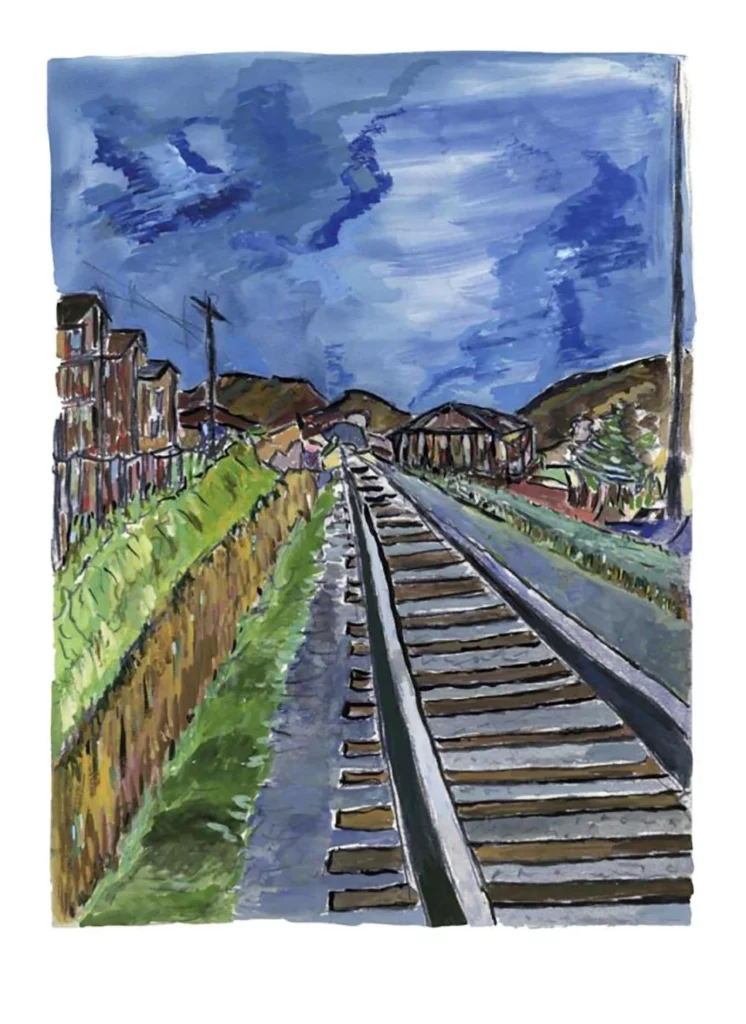
Train Tracks seems deceptively simple at first. The scene comprised two railway tracks as if they were reaching the horizon. The more you look at it, the more you realize how emotionally weighted the image is.
The railway tracks painted in muted tones of grey and brown are invitingly inviting the viewer to step into, but the desolation around them leaves the viewer questioning everything. There’s no sign of life—no trees, no people, no buildings—just the silent tracks leading to an unseen destination. The emptiness in the tracks makes you feel isolated similar to Dylan’s most celebrated songs about the search for life, love, and loss.
The overall idea of painting gives an impression of motion and at the same time, it’s quite uncertain. Where do these tracks lead? Are they the hopes of a symbol, or just evolving from time slipping away? What makes Train Tracks so compelling is that part has yet to be clarified. It allows the viewer to contribute their thoughts, feelings, and experiences to the scene in ways that Dylan’s lyrics encourage.
What’s So Special About Train Tracks?
“Train Tracks” serves as a visual metaphor for time and the lifelong journey woven through much of Dylan’s work. This artwork feels as though it could be lifted straight from one of his songs, like “Like a Rolling Stone” or “Tangled Up in Blue.” It takes you on a journey through life, yet somehow always circles back to the same starting point.
By focusing deliberately on railway tracks as the central theme, Dylan emphasizes travel, transition, and destiny. Trains symbolize the forces that pick us up and carry us along, ready or not. In “Train Tracks,” there’s no clear destination. The future feels uncertain yet inevitable, with the horizon line remaining hazy.
The painting’s muted palette of browns and greys adds a quiet atmosphere to the scene. The tracks guide us toward an unknown future. Although the scene feels lonely, the tracks are sturdy and unbroken, suggesting the journey continues onward.
Cultural and Historical Context
Dylan’s work has always been deeply rooted in the American experience. For much of American culture, trains symbolize progress, industrialization, and the movement of people over long tracts of land. But there’s also an element of loss when it comes to train tracks, especially in American folk music, trains are symbols of departure and separation. Like many of his songs, this painting echoes the American people’s disillusionment.
Interesting Facts About Train Tracks
A Unique Artistic Pivot: While Bob Dylan is best known for his musical genius, Train Tracks also showcases his often-overlooked talents as a visual artist. This piece reflects his ability to convey mood and emotion through art, much like he does with his music.
Themes of Solitude and Journey: Train Tracks embodies Dylan’s deep fascination with themes of loneliness, travel, and the unknown—ideas that resonate in his song lyrics. The empty tracks represent both isolation and the potential for new possibilities.
Absence of Human Presence: Interestingly, the artwork features neither people nor a train, which enhances the sense of mystery. The deserted tracks invite viewers to imagine their own narrative, much like the abstract quality of Dylan’s lyrics.
Artwork Spotlight: Manhattan Bridge, Downtown

Bob Dylan’s artwork Manhattan Bridge, Downtown is available on Singulart. This artwork captures the iconic New York skyline with a vibrant yet subdued palette, showcasing his mastery in cityscape depictions.
Are you looking for a piece of artwork from Bob Dylan?
Singulart has limited edition prints of Bob Dylan. If you are looking for a piece of Dylan‘s artwork for sale, simply click on the artwork or the button below to discover more!
Frequently Asked Questions
1. Why is Dylan so famous?
Bob Dylan has developed a unique body of work that includes some of the best and most well-known songs. He has sold more than 125 million records worldwide.
2. Did Bob Dylan win a Nobel Prize?
On October 13, 2016, Dylan was given the Nobel Prize in Literature. The Nobel committee has not given out the prize in the American literature category since 1993.
Conclusion
Bob Dylan’s Train Tracks is more than just a painting of railway lines; it invites deeper exploration. Much like his music, this artwork offers a chance to reflect on the human condition. It encourages us to contemplate where we’ve been, how we’ve arrived here, and where we might be heading. Whether you admire his music, his art, or both, Train Tracks serves as a powerful reminder of Dylan’s fascination with life’s contrasts, presented in both simple and profound ways.


