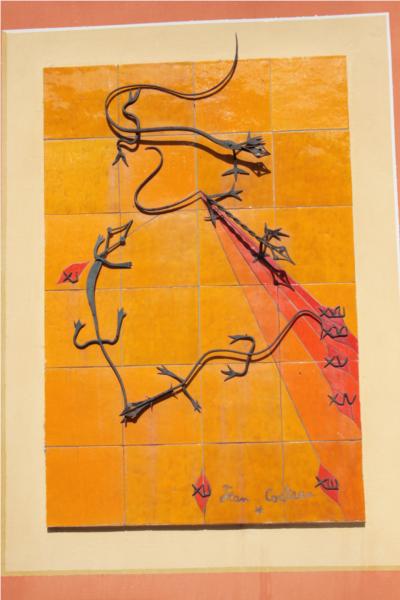
Jean Cocteau was an amazing artist, and he could use simple ideas, and make them magical. Les Lézards is one of his lesser-known works that when you first see it seems quite simple but has a deeper story going on below the surface. Before we dive into what makes this artwork so special, we should learn a little bit about Cocteau.
Who Was Jean Cocteau?
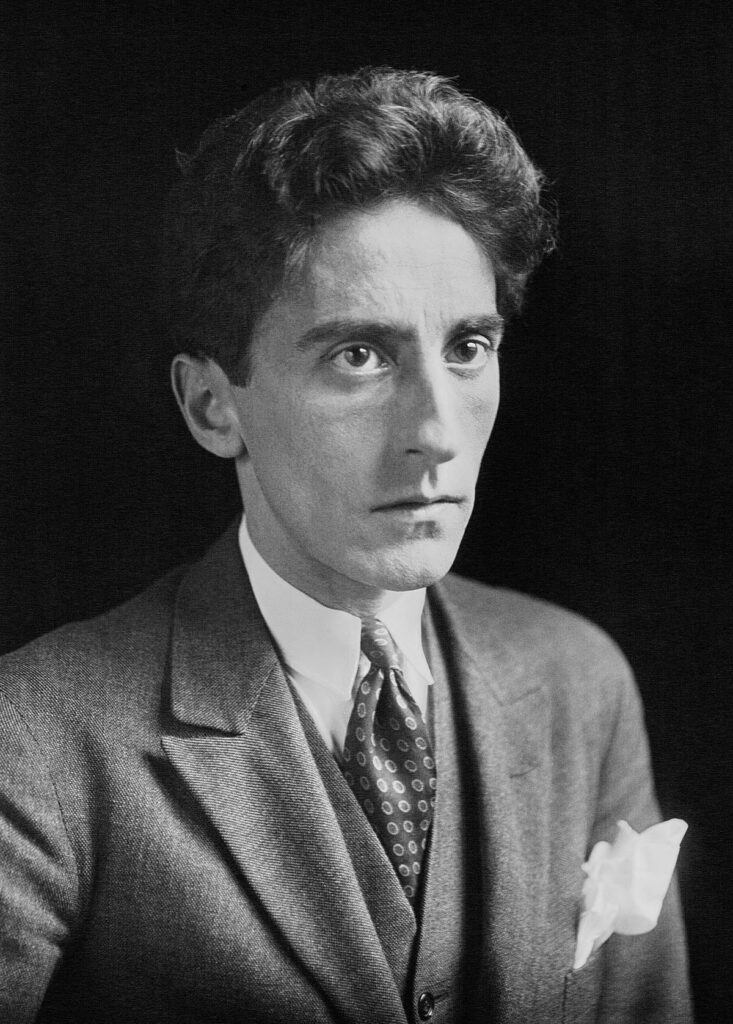
Jean Cocteau was a multi-faced artist who wore a lot of hats throughout his life. He was born in 1889, and time spent growing up saw Paris at the epicenter of artistic innovation. By his early 20s, his career took off, and he started horn mingling with an equally creative set of Pablo Picasso and Erik Satie. His literature, theater, and film works such as Beauty and the Beast (1946) had great success and brought him his reputation as a creator of avant-garde. As already said, this did not stop in words and film, but in artistic matter, he painted and sketched his perspective of the world.
He was more widely influential than in his lifetime, and his works are still praised not only for their daring and creativity but for their emotional depth. It is evident in Cocteau’s work, especially in Mythologie Blonde, that his world was a place where dreams and reality intersect.
FUN FACT: He was a close friend of many famous artists, including Pablo Picasso and Edith Piaf.
His Career
Cocteau’s life is quite a grand and complex story. His poetry and writing helped to thrust him into the spotlight during his earliest years. La Voix Humaine showed him combining emotion with experimental form. This wasn’t good enough, Cocteau concluded. He had an insatiable thirst for creation, wandering into the world of cinema to create timeless films that played out in the margins between dream and reality.
Beauty and the Beast (1946), his film masterpiece, left audiences with an impression of its surreal stories and visually beautiful scenes. Cocteau also worked with ballet composers and choreographers, creating a portfolio of work exploiting the interplay of visual and auditory senses. But Cocteau did much more in literature and film, and his work as a visual artist usually played no small role, which is a shame because it’s just as fascinating.
What’s Happening in Les Lézards?
| Artist | Jean Cocteau |
| Date Created | 1950s |
| Medium | Ink on paper |
| Genre | Surrealism |
| Period | Mid-20th Century |
| Dimensions | Vary |
| Series / Versions | Likely a standalone work |
| Where is it housed? | Private Collections, France |
Les Lézards might appear at first to be the simplest drawing of lizards. Unlike many of Cocteau’s works, however, more is happening here than it appears. The lizards’ curvy almost playful shapes were dancing or moving in some rhythmic pattern.
These aren’t just any lizards. Lizards have symbolized something deeper in Cocteau’s world. In many cultures, lizards symbolize change or renewal, because they can shed and regenerate their tails. In Les Lézards, Cocteau is alluding to processes of transformation, rebirth, or natural cycles of life.
Or maybe, he just liked lizards! That’s the fun part about Cocteau’s work—it lets your imagination wander. You can interpret it in many ways, and there’s no right or wrong answer.
What’s So Special About Les Lézards?
Now, what’s interesting about this artwork? One reason is its simplicity. Cocteau didn’t need to spend too much time building depth to it. The flowing lines create movement and energy. They dance like the lizards are alive across the page. Cocteau’s style is reflected in this piece, it’s playful, but equally, it’s deep.
What sets Les Lézards apart is that it contains invitations for the viewer to think and picture. Some symbols of renewal you might see in the lizards, others might just be fun creatures. The artwork doesn’t tell you what to think; it allows you to make your mind up.
Why Les Lézards Stays with You
What we like so much about Cocteau’s art, including Les Lézards, is how it lingers with you. You don’t just look at it and never look at it again. Their playful shapes and their ballroom kind of movements also keep you coming back and thinking of them. The lines are so simple that you can read the artwork however you want it each time you look at it.
Cocteau knew that great art doesn’t have to mean complicated. With Les Lézards, we are shown that art can be fun, imaginative, and so deep that quite overwhelming.
Interesting Facts About Les Lézards
Symbolism of Lizards: In many cultures, lizards are symbols of regeneration because of their ability to regrow their tails. Cocteau’s choice of lizards might reflect his interest in themes of transformation and renewal.
Human and Animal Blend: Cocteau was known for blending human and animal forms in his art. If you look closely at the lizards in Les Lézards, you might notice how their twisting shapes are almost human-like, emphasizing Cocteau’s interest in blurring the line between species.
Less is More: One of the things that make this artwork special is how much it says with so little. The drawing uses very few lines, but each one is full of life and movement. It’s a great example of how Cocteau could make something simple feel profound.
Artwork Spotlight: L’âge du verseau : l’ellipse

One of his notable works, L’âge du verseau : l’ellipse which is also available on Singulart. This artwork perfectly captures his love for mixing the mystical with the real. It’s a work filled with astrological symbols and flowing lines that suggest a journey of transformation, much like many of his other pieces.
Are you looking for a piece of artwork from Jean Cocteau?
Singulart has limited edition prints of Jean Cocteau. If you are looking for a piece of Cocteau‘s artwork for sale, simply click on the artwork or the button below to discover more!
FAQs
1. What happened to Jean Cocteau?
At the age of 74, Cocteau passed away from a heart attack in his château in Milly-la-Forêt, Essonne, France, on October 11, 1963.
2. Is Jean Cocteau a surrealist?
Cocteau’s films and the Surrealist movement of the late 1920s and early 1930s have been closely associated. However, Cocteau never saw himself as a Surrealist.
Conclusion
Jean Cocteau’s Les Lézards is a great example. These few lines work to create a world with movement, life, and symbolism. The lizards in the artwork could be change or transformation, but they also bring joy and light.
Like so much of Cocteau’s work, this piece feels like a window into a dream—a place where reality and imagination seem to merge. You don’t have to understand every detail to enjoy it. Simply sit and let the dance of the lizards calm you and enjoy what the artwork is taking you.