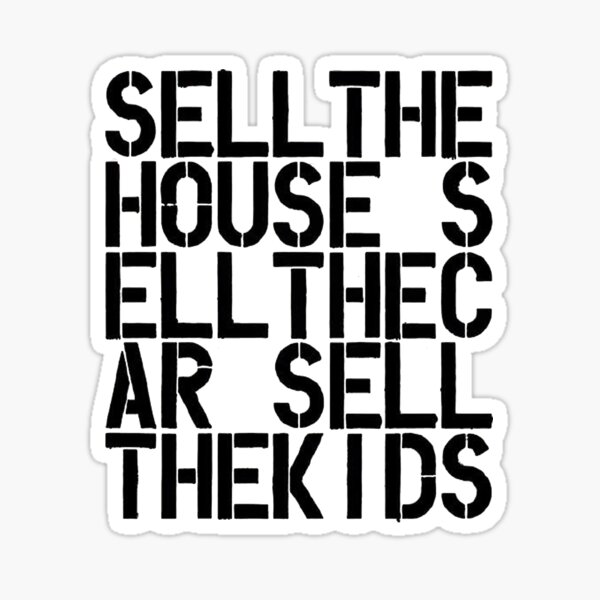
Christopher Wool’s Apocalypse Now lives boldly on the wall; it doesn’t quietly ask for attention. Instead, it’s a confrontation, with stark, bold lettering that declares, “Sell the house, sell the car, sell the kids.” Borrowing a haunting phrase from the classic film Apocalypse Now, this 1988 piece reflects minimalism while exploring indecision and chaos. It delves into the tension between control and disorder. At first glance, Wool’s text-based style may seem simple, but it resonates with emotion, context, and meaning.
Why should Apocalypse Now matter? And why was Christopher Wool such a pivotal figure in contemporary art? In this article, I’ll delve into his life and career. We’ll explore this specific work that continues to capture attention, evoke emotions, and challenge perceptions. Additionally, we’ll consider Wool’s unique relationship with words and visual art, showcasing him as a master of discomfort, chaos, and beauty.
Who Was Christopher Wool?
Christopher Wool was born in Chicago (1955) and has become one of the key American artists of contemporary art. During the 1980s, New York City was exploding with creativity from graffiti to minimalism, and he rose to prominence, making a name for himself collecting and selling junk. This dynamic is exactly what Wool comes into, fitting right in with his bold, text-based paintings. He wasn’t afraid to push the boundaries either, if anything he liked confusing or just ignoring them. Once, he said, “The more you try to define something, the less definable it becomes.” It could over-sum up his entire career.
All of his early works focused on simplicity, but not in a calm or soothing way. Instead, Wool’s art often felt like a gut punch, pulling viewers into emotionally complicated terrain. His text-based works, using black-and-white palettes and stencils, challenged the smooth, polished art world. While his art made bold statements, Wool invited you to grapple with the tension within it to make sense of the world.
FUN FACT: He once worked as a studio assistant for the legendary minimalist sculptor, Joel Shapiro, in the 1970s.
His Career
Christopher Wool’s work has been anything but predictable in the four decades of his artistic career. The gritty, graffiti-covered streets of New York inspired the iconic stenciled text pieces of his early work. The urban influences and desire he wishes to toy with traditional notions of ‘ high art,’ can be seen in Wool’s choice to work with industrial materials such as enamel paint on an aluminum backing.
In the ’90s, Wool shifted away from strictly text-based works to more abstract and gestural works incorporating other techniques including silkscreen and as he erased parts of his paintings, he created more of a raw, imperfect piece. Wool’s career is marked by constant experimentation and reinvention, but his works always circle back to key themes: control, language, chaos, and the breaking down of meaning.
What is Happening in Apocalypse Now?
| Artist | Christopher Wool |
| Date Created | 1988 |
| Medium | Enamel on aluminum |
| Genre | Text-based art |
| Period | Contemporary |
| Dimensions | 274.3 x 182.9 cm |
| Series / Versions | Part of Wool’s text-based series |
| Where is it housed? | Private Collection |
Christopher Wool offers us a large enamel on aluminum canvas with such stark black lettering as “Sell the house, sell the car, sell the kids” in Apocalypse Now. The sentiment is straight from the movie Apocalypse Now: Captain Willard speaking despairing words about the futility of all things. However, in Wool’s hands, this is more than just a quote, it’s an existential scream.
Everything is smudged, and some letters are slightly out of place, giving just the hint that behind the message, there are imperfections and chaos. Beautifully beautiful, the stark black text on a white background carries emotion and harsh simplicity in a way that can easily get missed. Just like in life, not everything is in control, and the unevenness of the stenciling betrays that. It’s an artwork that forces you to confront the fragility of stability, and makes you wonder: what would you have to go through to be ready to sell it all and walk away from everything?
What’s So Special About Apocalypse Now?
Apocalypse Now is special because it mixes stark minimalism with an undertow of deeply felt emotion. However, the use of text as art by Wool may be perceived as easy, however, his use of text is left with more questions than answers. The phrase is direct and abstract, speaking to loss, disillusionment, and abandonment. Even without a background in art, you will feel the weight of this piece.
What’s most compelling about Wool’s work may be his signature use of imperfections. Some of the letters on the letters are not uniform, some are blurry and the paint coat doesn’t sit evenly on the canvas. He knows that life isn’t perfect, and he doesn’t want the work to be perfect. The smudges, the uneven stenciling—they are part of the narrative. They make us remember that control is an illusion and there is chaos just around the corner.
The piece has a rebellious nature as well. Lines like “Sell the house, sell the car, sell the kids” feel like rejecting or rebelling from doing the conventional, material-driven life. It’s a thing of despair, but also of freedom. In his art, Wool plays with these dualities and his art isn’t just something to look at; it’s something to work through intellectually and emotionally.
Interesting Facts About Apocalypse Now
The phrase “Sell the house, sell the car, sell the kids” is from Apocalypse Now, a film by Francis Ford Coppola. In the movie, this line is spoken during utter despair, perfectly aligning with the tone Wool creates on his canvas.
Wool often repurposed stencils, so this wasn’t the only work featuring this particular phrase. His technique of reusing and rearranging stencils brought a sense of randomness to his work, which aligns with his themes of chaos and control.
While Apocalypse Now uses text to convey its message, the imperfections in the stencil suggest Wool’s deeper interest in abstraction and the breaking down of traditional language structures.
Artwork Spotlight: The Show is Over
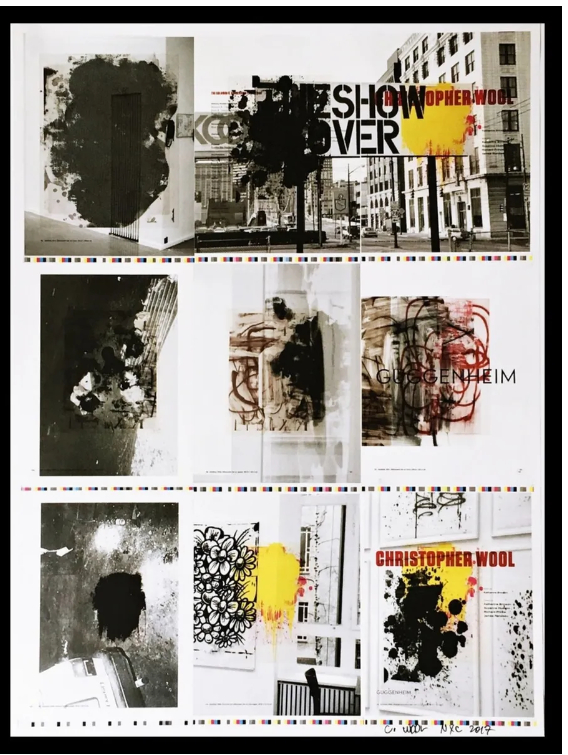
Wool’s The Show is Over is another brilliant example of his mastery of language which is also available on Singulart. This artwork encapsulates the finality of moments, using text as a powerful statement.
Are you looking for a piece of artwork from Christopher Wool?
Singulart has limited edition prints of Christopher Wool. If you are looking for a piece of Wool‘s artwork for sale, simply click on the artwork or the button below to discover more!
FAQs
1. What is Christopher Wool known for?
Although Christopher Wool’s paintings of big, black, stenciled letters on white canvases are his most well-known works, he uses a variety of painting techniques, such as screen printing, spray painting, and hand painting.
2. What materials does Christopher Wool use?
He has used decorative paint rollers, found text, stencils, stamps, silkscreens, clip art, and even his own work as an image bank for generating paintings. Sometimes these sources appear directly, while other times they are layered or collaged.
Conclusion
At first glance, Apocalypse Now might seem like just another piece of text-based art. However, if you look deeper, you’ll see the chaos lurking beneath the surface. Wool’s work forces you to reflect on control, loss, and the fragility of life. It’s not just the words that speak in his art; the imperfections make his pieces raw and emotional.