Imagine standing in front of something that pulses with life, like a piece of art. It’s a repeated, mesmerizing interplay of stillness and movement in which colors seem to ripple, shift, and come alive. You are viewing Chromointerférence by Carlos Cruz-Diez. This world is where color moves with you and entices you into a sensory world.
The thing that is so strong about Chromointerférence is that it interacts with the viewer on a deeply personal level. The artwork changes as you shift your gaze or move slightly, each viewer experiences the artwork in its way, and no one else will quite get it. Cruz-Diez named this phenomenon ‘interference,’ a visual phenomenon in which colors and shapes dance in response to your presence. Let’s explore this amazing artwork in this article.
Who Was Carlos Cruz-Diez?
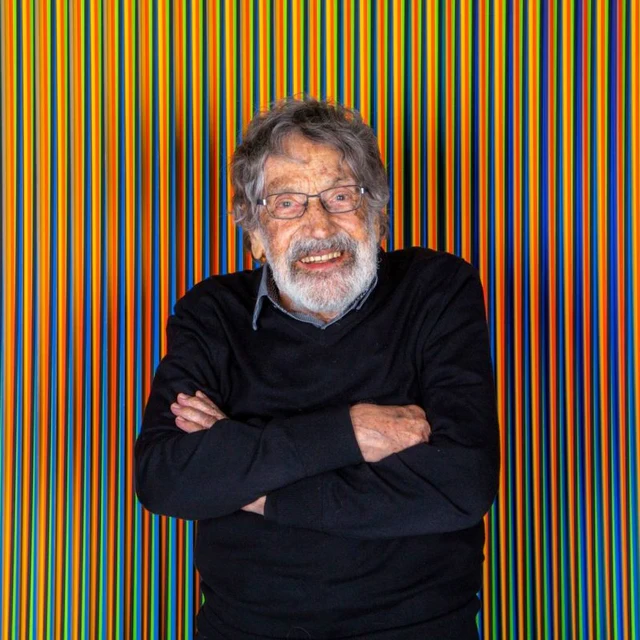
Venezuelan artist Carlos Cruz-Diez didn’t merely use the traditional way of painting. Instead, he really dove deeper and further into the exploring of color in a much more exciting way. Cruz-Diez was born in 1923 in Caracas and wanted to learn how color worked in the real world. For him, color was more than something you saw, it was a living thing in the world you lived in.
Cruz-Diez had a big breakthrough when he discovered that color changes to reflect our perception based on angle and light. This inspired him to produce his Physichromie series, a series of works that transform your very eyes.
FUN FACT: He once created art that could be “worn”! In the 1970s, he designed a line of “chromatic environments” – vibrant, color-shifting installations – and even experimented with patterns and colors that people could wear as clothing.
His Career
Cruz-Diez spent much of his career studying and experimenting with color. He spent the 1960s in Paris where he became part of a group of artists who looked at how color related to light. It didn’t end up being just about painting on a canvas, but rather all about making color feel alive. He works on aluminum and PVC layers playfully altering their colors based on whether you stand in front of it or the light moves around in the room.
This idea led to the birth of the Physichromie series. These artworks were meant to be dynamic, shifting, and ever-evolving depending on the view orientation. They were unlike anything anyone had ever seen before.
What is Happening in Chromointerférence?
| Artist | Carlos Cruz-Diez |
| Date Created | 1964 (and continued in various versions) |
| Medium | Acrylic on panels, screens, color filters |
| Genre | Kinetic and Optical Art |
| Period | Kinetic Art Movement |
| Dimensions | Vary by version |
| Series / Versions | Chromointerférence Series |
| Where is it housed? | Private collections, and public installations worldwide |
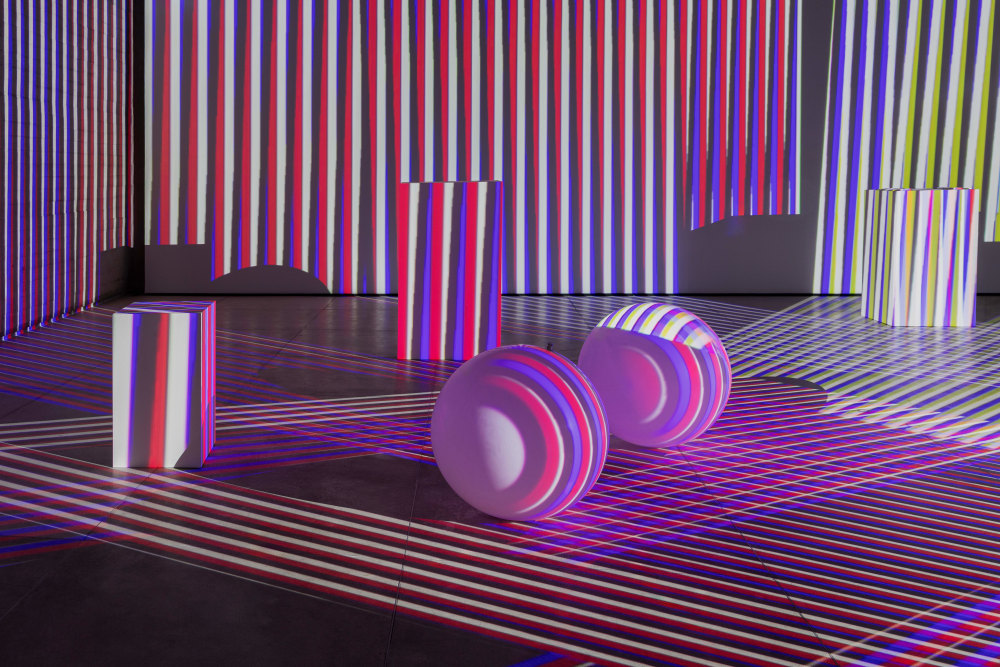
At first glance, Chromointerférence seems like a trivial series of grids, patterns, and bright colors. Cruz-Diez is not about simplicity, though. As soon as you start moving, the magic begins. Colors start to move, patterns begin to shimmer and they seem to be moving, creating an optical illusion. You almost feel like the artwork has a life of its own and that whatever you’re doing is a part of the artwork.
This is achieved by utilizing clever use of transparent layers, color overlays, and grids. These layers seem to allow light to pass through them, mixing, interacting, and transforming in a way that Cruz Diaz referred to as “interference.” That’s why Chromointerférence is such a thing, each viewer experiences it differently depending on where they choose to stand and how they move throughout the work.
What’s So Special About Chromointerférence?
Chromointérférence is something irresistibly playful. This piece is a piece that invites the viewer to interact directly with it. His work allowed color to behave almost as if it were a living entity. Chromointerférence is much more than just an artwork, it is a phone call, a conversation between the spectator and the colors buckling in front of him.
Cruz Died wanted color freed from form so it could have an emotional and sensorial impact on the observer. He achieved the vision of this with Chromointerférence. Like with static paintings, this one is rhythmic, almost musical, as colors chase each other across the surface.
Interesting Facts About Chromointerférence
Endless Variability: Each installation of Chromointerférence changes depending on its location and the lighting. The result? An artwork that never looks the same twice.
Science Meets Art: Cruz-Diez’s art reflects scientific principles of light and color. By layering transparent colors, he could simulate the effects of light refraction and create the illusion of movement.
Interactive by Design: Cruz-Diez called Chromointerférence a “participatory” artwork. It’s only complete when a viewer engages with it, adding a unique, personal touch to every interaction.
Global Presence: Versions of Chromointerférence have been displayed around the world, from Venezuela to Paris, making Cruz-Diez’s vision accessible to diverse audiences.
Artwork Spotlight: Caura-7
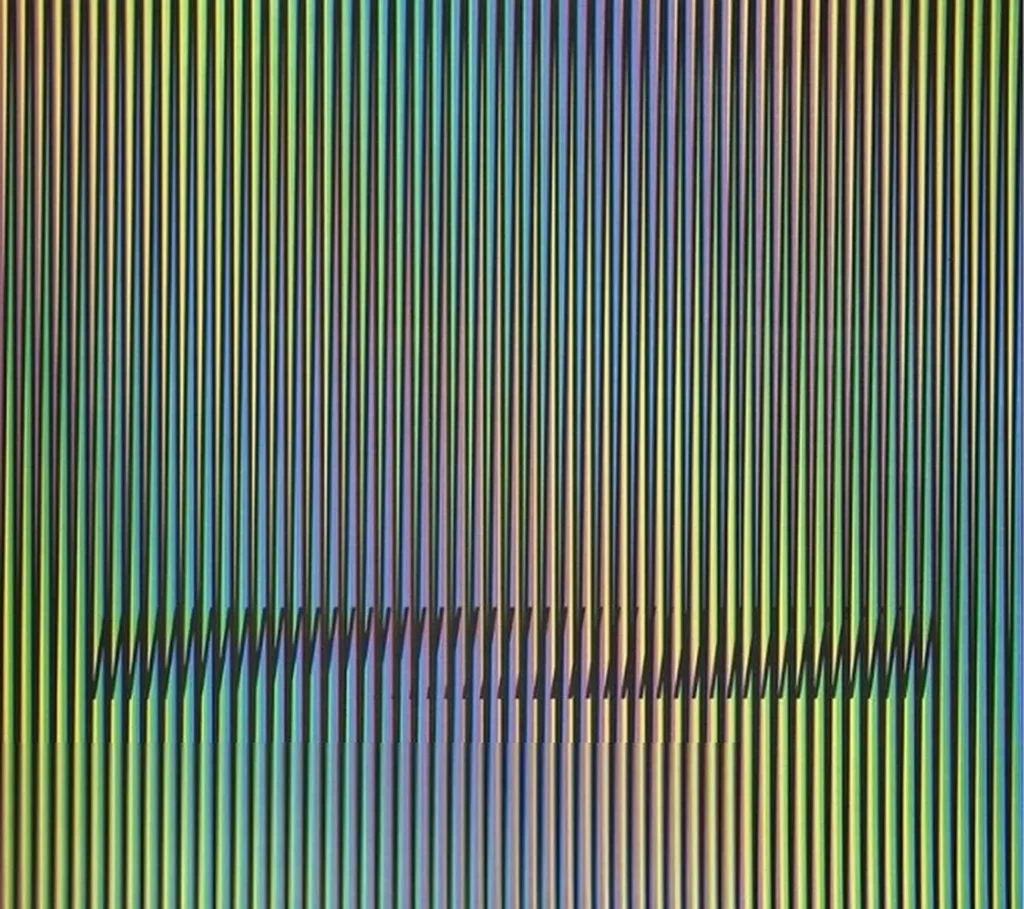
Caura-7 by Cruz-Diez is available on Singulart. This artwork showcases his signature exploration of color, a work that feels as vibrant and dynamic as Chromointerférence, yet in its unique way.
Are you looking for a piece of artwork from Carlos Cruz-Diez?
Singulart has limited edition prints of Carlos Cruz-Diez. If you are looking for a piece of Diez‘s artwork for sale, simply click on the artwork or the button below to discover more!
FAQs
1. How old was Carlos Cruz-Diez when he died?
Carlos Cruz-Diez, a Venezuelan artist, passed away in Paris at the age of 95.
2. What is the work of Venezuelan kinetic artist Carlos Cruz-Diez about?
Cruz-Diez’s work can be viewed as an excellent theoretical and experimental thesis concerning the active participation of the observer in the spatial generation of color.
Conclusion
Chromointerférence is more than a piece of art. It’s an exploration, a reminder that there is movement even in stillness, and that color has the power to shape how we see the world. Cruz-Diez offers us a lens through which we can experience color in a way that feels as natural as breathing. He invites us to pause, to notice, and to marvel at the beauty of color’s dance. With Chromointerférence, we aren’t just observing art; we’re moving with it.