The magic of art lies in how it changes our view of things. Carlos Cruz Diez takes that idea to a whole new level with his Physichromie. Imagine walking into a room, and noticing the artwork changes color when you walk around it. That’s the magic of Physichromie. The whole thing is about how light, space, and movement can make the colors you see.
In this article, we’ll dive into the colorful world of Physichromie, explore who Carlos Cruz-Diez was, and understand what makes this artwork so special. Ready? Let’s go!
Who Was Carlos Cruz-Diez?
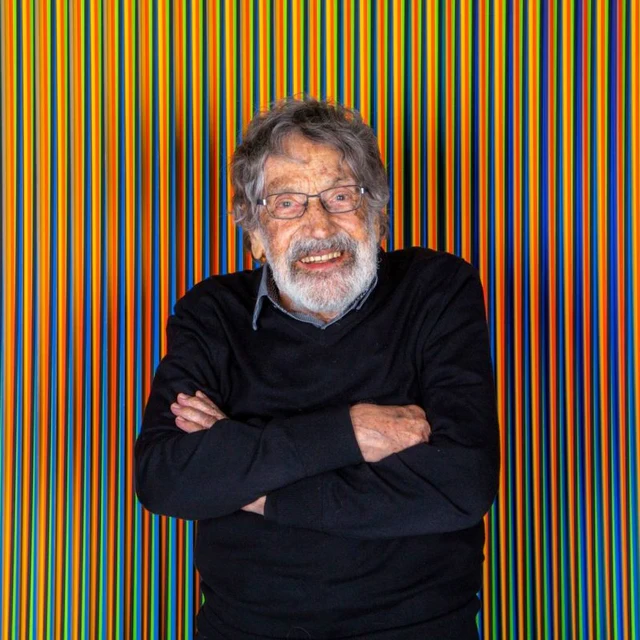
Venezuelan artist Carlos Cruz-Diez didn’t merely use the traditional way of painting. Instead, he really dove deeper and further into the exploring of color in a much more exciting way. Cruz-Diez was born in 1923 in Caracas and wanted to learn how color worked in the real world. For him, color was more than something you saw, it was a living thing in the world you lived in.
Cruz-Diez had a big breakthrough when he discovered that color changes to reflect our perception based on angle and light. This inspired him to produce his Physichromie series, a series of works that transform your very eyes.
FUN FACT: Carlos Cruz-Diez was so passionate about exploring color that he often described it as a “situation in space.” Rather than using color to represent objects, he created environments where color became a physical sensation, almost like a living entity.
His Career
Cruz-Diez spent much of his career studying and experimenting with color. He spent the 1960s in Paris where he became part of a group of artists who looked at how color related to light. It didn’t end up being just about painting on a canvas, but rather all about making color feel alive. He works on aluminum and PVC layers playfully altering their colors based on whether you stand in front of it or the light moves around in the room.
This idea led to the birth of the Physichromie series. These artworks were meant to be dynamic, shifting, and ever-evolving depending on the view orientation. They were unlike anything anyone had ever seen before.
What is Happening in Physichromie?
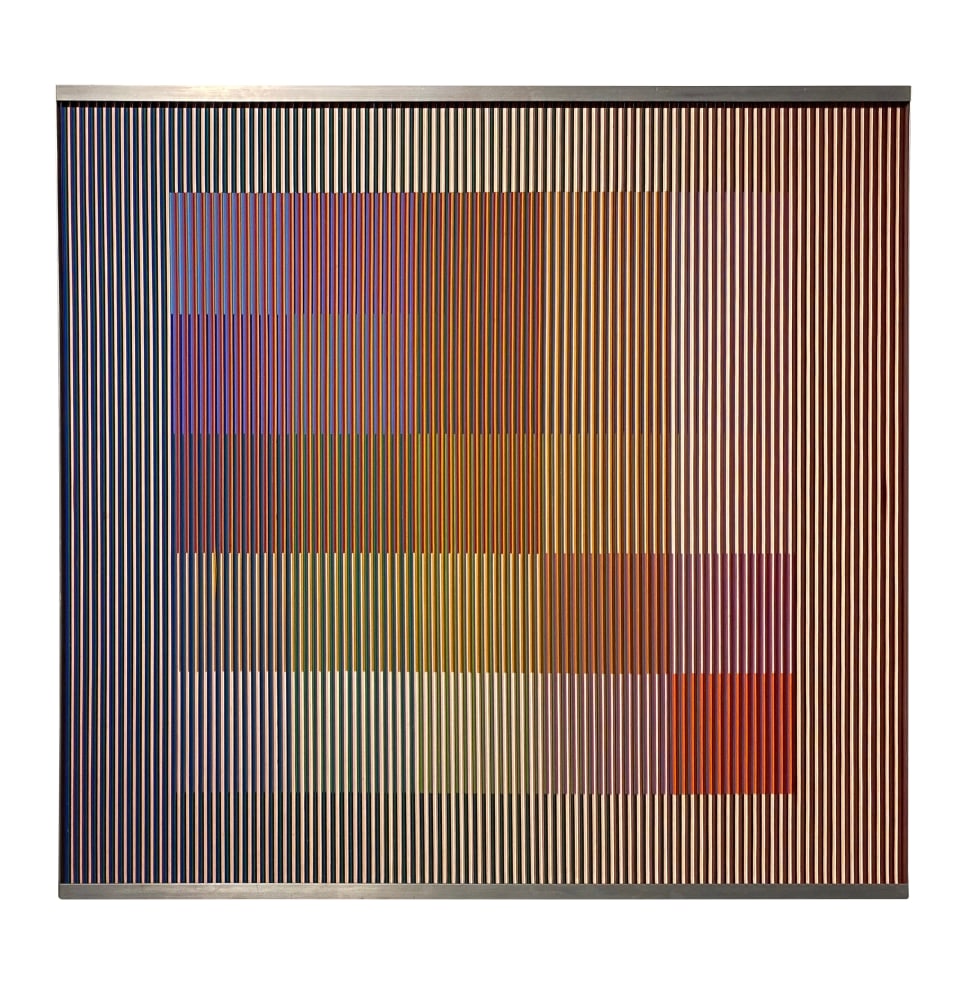
| Artist | Carlos Cruz-Diez |
| Date Created | 1959–ongoing |
| Medium | Acrylic on aluminum, wood, or PVC |
| Genre | Kinetic and Optical Art |
| Period | Mid-20th Century to Contemporary |
| Dimensions | Various (usually large-scale) |
| Series / Versions | Physichromie series, hundreds created |
| Where is it housed? | MoMA, Centre Pompidou, private collections |
With that said, what exactly happens in a Physichromie piece? It’s pretty amazing! Cruz-Diez also employed stripes of color in layers that work in response to the room’s light. The colors shift as you go around the artwork. They are combined, changed, dissipated, and sometimes disappear but reappear in a different form. You’re like it’s breathing, it moves as you move.
The really neat thing about this piece is that this piece looks different whether you are behind or in front of it. You might see the colors different from the other angle. It’s like a secret between the art and the viewer, always evolving.
What’s So Special About Physichromie?
Physichromie is unique because it’s not something just to be viewed, but something for experience. Cruz-Diez wanted you to activate the artwork by moving around it, like you would with nature, and different emotions can come up with changes in the environment. Each person’s experience with the art is different depending on where you are as the colors change based on your position.
These artworks challenge the idea that there is a clear difference between “static” and “moving” art. They are not fixed—they live and breathe with the space and light that surrounds them. Physichromie offers you a new experience each time you see it. That is art and you can never fully predict because it will change with you.
Interesting Facts About Physichromie
Not Your Typical Canvas: Cruz-Diez didn’t use a regular canvas. He used layers of materials like aluminum, PVC, and acrylic to create the moving, changing colors.
Science Meets Art: Cruz-Diez’s fascination with color came from his study of how light changes the way we see colors. He wasn’t just an artist; he was also a bit of a scientist.
World-Renowned: Cruz-Diez’s works have been shown in major museums worldwide, including MoMA (Museum of Modern Art) in New York and the Centre Pompidou in Paris.
Art That Changes with the Light: The beauty of Physichromie is that it’s never the same. The light and angle you see it from change the colors you experience.
Artwork Spotlight: Couleur à l’Espace Olot

Couleur à l’Espace Olot by Cruz-Diez is available on Singulart. This piece changes its colors depending on where you stand, making it another perfect example of his unique approach to art.
Are you looking for a piece of artwork from Carlos Cruz-Diez?
Singulart has limited edition prints of Carlos Cruz-Diez. If you are looking for a piece of Diez‘s artwork for sale, simply click on the artwork or the button below to discover more!
FAQs
1. How old was Carlos Cruz-Diez when he died?
Carlos Cruz-Diez, a Venezuelan artist, passed away in Paris at the age of 95.
2. What is the work of Venezuelan kinetic artist Carlos Cruz-Diez about?
Cruz-Diez’s work can be viewed as an excellent theoretical and experimental thesis concerning the active participation of the observer in the spatial generation of color.
Conclusion
The Physichromie by Carlos Cruz-Diez shows us that art isn’t wall displays that you stare at from afar. It’s a thing, that changes with you, it changes every time you interact with it. Whenever you get the chance to witness a Physichromie piece, watch wholeheartedly, and let it move with you.