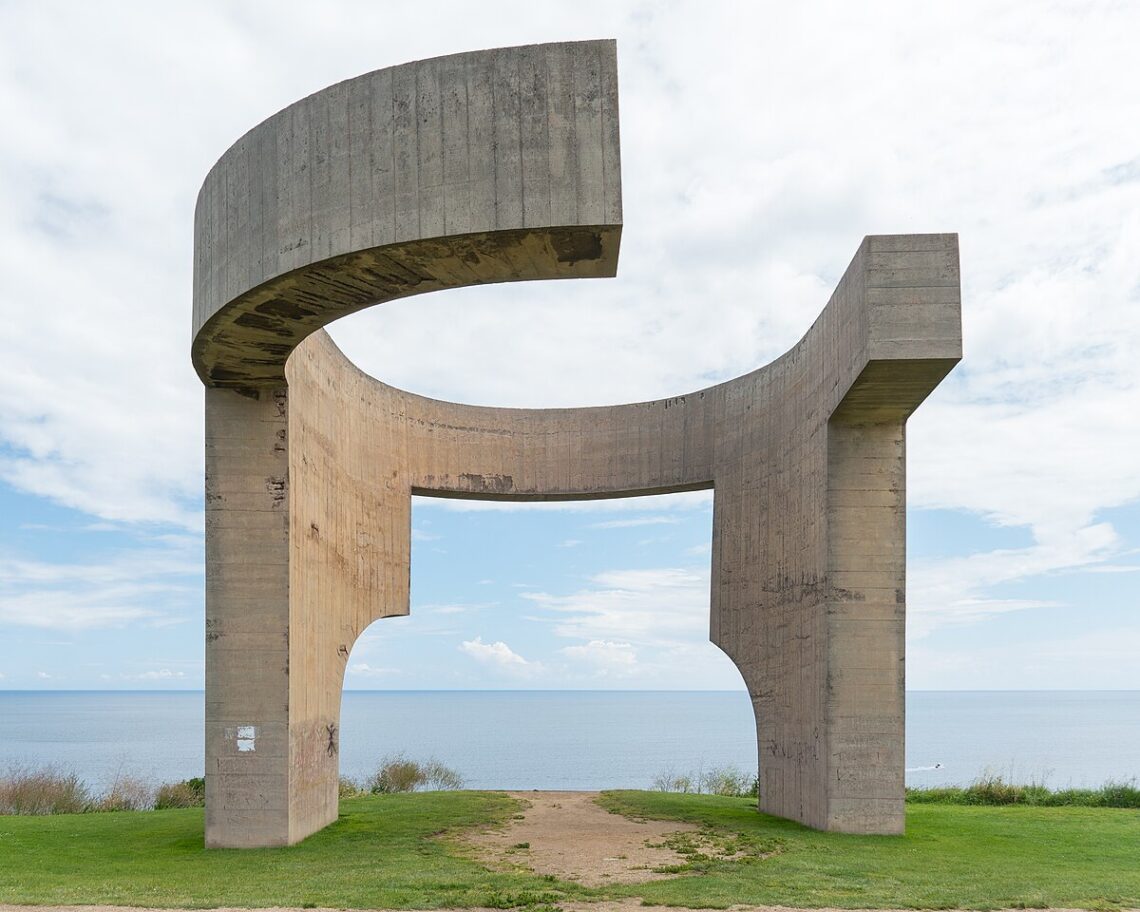
Elogio del Horizonte by Eduardo Chillida is simply an experience, but located perched high on a cliff near Gijón, Spain. Picture you standing between such concrete arms, feeling the wind race over you, and then seeing the endless sea and sky. You’re hugging the horizon. For Chillida, this sculpture is a form of praising nature’s beauty, a love letter for the moment when the earth and the sky meet.
So who was Eduardo Chillida, and why did he create this piece? Let’s dive a little deeper into the story of a man who remade space and time with concrete, stone, and iron.
Who Was Eduardo Chillida?
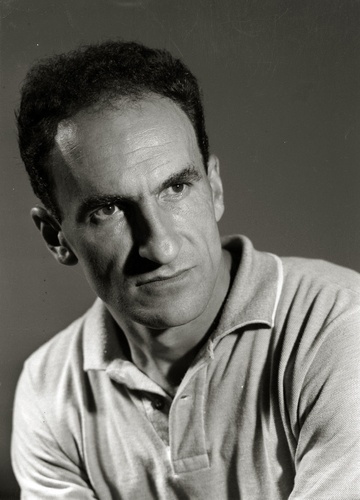
Eduardo Chillida was born in San Sebastián, Spain in 1924. Think of a kid who loves building blocks and grew up to be a world-famous sculptor. The fact that almost all of his sculptures felt so well thought out is probably because he started out studying architecture. Chillida didn’t want architecture, however. In the meantime, he switched to creating big, bold, and meaningful sculptures.
Chillida worked with a variety of materials, including iron, stone, concrete, and wood. He loved making art that wasn’t meant to sit there and be looked at but to be experienced. His sculptures usually have large openings or spaces for you to walk through, or to see the world in a new way. By 1950, Chillida was an established figure and by 1960 he was winning awards and gaining a reputation in Europe and worldwide. Chillida was all about making art that seemed like a talk between people, places, and materials.
FUN FACT: He was actually a pretty good soccer player! Before becoming one of the world’s most famous sculptors, Chillida played for the youth teams of Real Sociedad, the football club in his hometown of San Sebastián.
His Career
In the 1950s, Chillida’s career took off, creating iron sculptures. The pieces were bold and brought previously unseen strength and softness together. However, over the years Chillida worked with other materials, including stone and concrete. For him, every material had a voice and could tell another story.
Throughout his decades of work, Chillida centered his works and their environment on each other. Art was a conversation and it had to be a conversation between people, the spaces they inhabit, and the very elements that make our world. His public sculptures reflect a philosophy that ordinary locations can become spaces of reflection and connection.
What’s Happening in Elogio del Horizonte?

| Artist | Eduardo Chillida |
| Date Created | 1990 |
| Medium | Reinforced concrete |
| Genre | Monumental sculpture |
| Period | Modern / Contemporary |
| Dimensions | 10 meters high |
| Series / Versions | Not part of a series |
| Where is it housed? | Gijón, Spain (on a cliff overlooking the Bay of Biscay) |
Picture this: A giant sculpture made of reinforced concrete, standing on a cliff looking over the sea. Its two curved arms stretch out, almost as if reaching out to hug the horizon. It’s not just a sculpture to look at, but one where you can step in to experience.
Elogio del Horizonte was built at the end of 1990 in Gijón, in northern Spain. Chillida wanted to be walked underneath the sculpture so that people would feel like they belonged to the larger picture. When you stand inside it, you can hear the wind rushing. The wind becomes music, the sea its background, and you’re exactly right there amid the symphony. Chillida wanted the horizon to be felt, not just to be a long line at a distance.
What Makes Elogio del Horizonte So Special?
Elogio del Horizonte has a lot of things that set it apart. The first is how Chillida mixed art with nature. The sculpture is not separate from the wind, the sea, or the sky. Elogio del Horizonte depends on the weather or the time of day. It can feel protective and warm at times, and at other times, it’s a strong silhouette, standing proudly against the sky.
Chillida also chose the location very carefully. To him, art communed with its surroundings, and this cliff in Gijón was just the spot. When looking at the sculpture from your point of view you feel as if you are standing on the verge of the world. But it’s also a reminder of how small we are and how large we are about the vastness around us.
Interesting Facts About Elogio del horizonte
The Wind’s Song: The sculpture’s shape creates a tunnel for the wind, making a unique sound when the wind blows through. It’s like a natural wind instrument that plays its tune.
Built for Connection: Chillida wanted Elogio del Horizonte to be a place for people to gather and reflect. It’s a spot where you can sit quietly, meet with friends, or just take in the stunning view.
Concrete Beauty: Chillida chose concrete for this sculpture because it’s strong and can stand the test of time. Over the years, the salty sea air has given it a weathered look that makes it even more beautiful.
The Name Says It All: “Elogio del Horizonte” means “Praise of the Horizon.” Chillida wanted to celebrate the horizon as more than a line; he wanted people to experience it fully.
Blending the Permanent with the Changing: The sculpture’s concrete body feels strong and unchanging, but it interacts with things that are always changing—the light, wind, and even the waves. This mix of permanence and change was something Chillida loved to explore.
Artwork Spotlight: Composition pour les JO

Composition pour les JO is available on Singulart. Chillida created this artwork for the 1992 Olympics in Barcelona. It’s another example of his talent for creating art that feels perfectly at home in its surroundings. Short but sweet.
Are you looking for a piece of artwork from Eduardo Chillida?
Singulart has limited edition prints of Eduardo Chillida. If you are looking for a piece of Chillida‘s artwork for sale, simply click on the artwork or the button below to discover more!
FAQs
1. What is Eduardo Chillida known for?
Although Eduardo Chillida, a Spanish artist, has a diverse and innovative practice that includes small-scale sculpting, plastering, drawing, engraving, and collage, his most well-known monumental public sculptures are his most notable works.
2. What inspired Eduardo Chillida?
Chillida’s Basque background served as a major inspiration for most of his work, and the titles of many of his sculptures are in Euskera, a Basque language.
Conclusion
Standing inside Elogio del Horizonte is an experience unlike any other. It makes you feel connected to the sky, sea, and wind. Chillida’s work is a reminder that art isn’t just something to look at; it’s something to feel. His sculpture is a bridge between the solid earth and the wide-open sky. It shows us how big the world is, but also how we’re all a part of it. It’s a moment of beauty, connection, and awe. And isn’t that what art is all about?