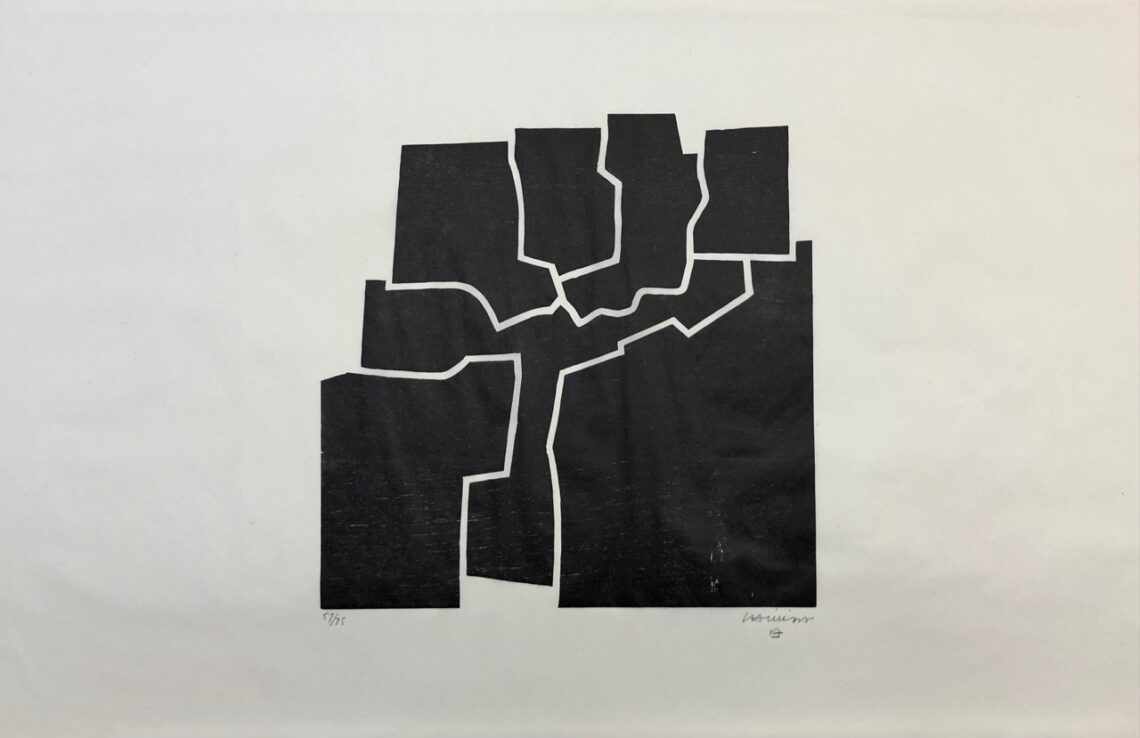
Imagine stepping into a world where formerly black and white meet to tell you their story just the way they like to. Composition in Black and White by Eduardo Chillida is not any other work of art. Bold shapes and open spaces make this grab you and spark thought and wonder. Here, Chillida struck out on a different path, playing with ink and paper to produce a tough work of art. Ready to dive in? So let us take a peek at this striking artwork and the man who had the guts to do it.
Who Was Eduardo Chillida?
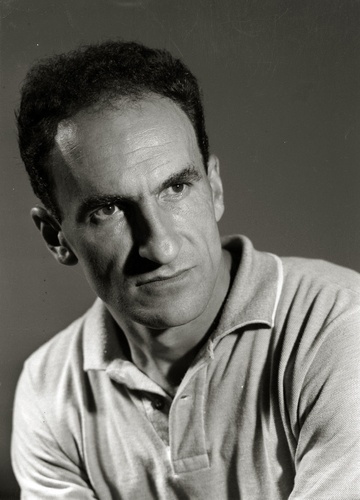
Eduardo Chillida was born in San Sebastián, Spain in 1924. Think of a kid who loves building blocks and grew up to be a world-famous sculptor. The fact that almost all of his sculptures felt so well thought out is probably because he started out studying architecture. Chillida didn’t want architecture, however. In the meantime, he switched to creating big, bold, and meaningful sculptures.
Chillida worked with a variety of materials, including iron, stone, concrete, and wood. He loved making art that wasn’t meant to sit there and be looked at but to be experienced. His sculptures usually have large openings or spaces for you to walk through, or to see the world in a new way. By 1950, Chillida was an established figure and by 1960 he was winning awards and gaining a reputation in Europe and worldwide. Chillida was all about making art that seemed like a talk between people, places, and materials.
FUN FACT: He loved working with heavy materials like iron and stone, but he was actually afraid of heights! This made creating some of his large outdoor sculptures, such as the famous Peine del Viento in San Sebastián, quite the adventure.
His Career
In the 1950s, Chillida’s career took off, creating iron sculptures. The pieces were bold and brought previously unseen strength and softness together. However, over the years Chillida worked with other materials, including stone and concrete. For him, every material had a voice and could tell another story.
Throughout his decades of work, Chillida centered his works and their environment on each other. Art was a conversation and it had to be a conversation between people, the spaces they inhabit, and the very elements that make our world. His public sculptures reflect a philosophy that ordinary locations can become spaces of reflection and connection.
What is Happening in Composition in Black and White?

| Artist | Eduardo Chillida |
| Date Created | the 1950s (specific dates vary based on series) |
| Medium | Ink on paper |
| Genre | Abstract art |
| Period | Mid-20th Century |
| Dimensions | Varies (smaller works, often about 20 cm by 30 cm) |
| Series / Versions | Variations within black-and-white compositions |
| Where is it housed? | Various private collections & museums |
In Composition in Black and White, Chillida makes a grand, bold eye-catcher with black ink in white. The shape and shadow composition of this piece feels like a conversation with each line, curve, and space working together. The black shapes glow, flickering, moving, twisting, and turning. You can almost feel the energy, and they speak to one another.
That white background matters too. But it’s not space, it lets the black shapes breathe, and it brings them to life. Chillida knew how to make the simplest thing into a potent and deep story. There is tension, movement, and calmness all together. It’s like a silent dance on paper, like the way it was probably written.
What’s So Special About Composition in Black and White?
What makes Composition in Black and White so special? Firstly, it displays how Chillida takes advantage of the use of contrast. He could take a little something and make it look really big and bold with no fancy colors, no fancy techniques. Black and white are strong alone but together they make a match of balance and depth.
Another reason this piece is unique is how different it is. Chillida preferred a quieter, simpler path at a time when lots of artists were using many colors and busy scenes. So he wasn’t afraid to be different and it worked. Even to this day, we think that his art feels fresh and modern. It’s unforgettable!
Interesting Facts About Composition in Black and White
Made with Simple Ink: This artwork isn’t made of fancy materials—just ink on paper. But Chillida used it to make something deeply impactful. Talk about making a big statement with something small.
Negative Space Matters: The white space around the black shapes is just as important. It adds meaning and lets you see the black lines in a new way.
Influenced by His Roots: Chillida often drew inspiration from the Basque Country’s landscapes. You can almost see those rugged cliffs in their bold shapes.
Flat, but Not Flat: This piece may be on paper, but Chillida treated it like a sculpture. The black shapes look like they could jump off the page.
The Paris Connection: During the 1950s, Chillida spent time in Paris, soaking in the city’s creative energy. You can see that spirit in his bold and daring choices.
Powerful Contrast: Chillida’s black ink grabs your attention right away. But when you look closely, you’ll notice how carefully everything is balanced.
Feels Like Music: The lines and shapes in this artwork have a rhythm to them, almost like a beat or a melody you can see.
Artwork Spotlight: Egokarri (Greeting Card for 1969)

One example of his lighter touch is Egokarri (Greeting Card for 1969) which is also available on Singulart. This artwork is a charming piece that celebrates the holiday season in its distinct style. It shows that Chillida wasn’t afraid to have a bit of fun with his work.
Are you looking for a piece of artwork from Eduardo Chillida?
Singulart has limited edition prints of Eduardo Chillida. If you are looking for a piece of Chillida‘s artwork for sale, simply click on the artwork or the button below to discover more!
FAQs
1. What is Eduardo Chillida known for?
Although Eduardo Chillida, a Spanish artist, has a diverse and innovative practice that includes small-scale sculpting, plastering, drawing, engraving, and collage, his most well-known monumental public sculptures are his most notable works.
2. What inspired Eduardo Chillida?
Chillida’s Basque background served as a major inspiration for most of his work, and the titles of many of his sculptures are in Euskera, a Basque language.
Conclusion
Composition in Black and White isn’t just a drawing—it’s an experience. It shows Chillida’s genius in creating something that looks simple but feels deep. It’s like a silent story told in shadows and light. So, what do you see when you look at it? A dance, a fight, or something else entirely? That’s the magic of Chillida’s work—it’s yours to explore.