Ben Vautier stands out in the contemporary art world. For years he’s broken the rules, challenged the public’s expectations, and forced us to think about the meaning of art. Peinture Rouge, one of his most famous pieces, is a striking example of his style. It appears to be just a huge red canvas at first glance, but much more is underway. This artwork makes us look beyond where we are, what red means to us, and what art is. Let’s take a closer look at Peinture Rouge, and explore why this bold piece is so special.
Who was Ben Vautier?

Ben Vautier is a major voice in the art world, using simple words to make big statements. He was born in Naples, Italy, in 1935. Later, he grew up in Switzerland and France before settling in Nice. During his early days, he ran a small shop in Nice. He quickly became famous, not for what he sold, but for what he wrote. Ben used his shop windows to display clever and bold phrases that grabbed people’s attention.
By the 1960s, Ben became part of the Fluxus movement, whose artists believed art could be everything and anything. Ben worked alongside other big names who wanted to destroy the old rules and join art with everyday life. Ben’s art would always be loud and playful, with a message to think differently, whether he was painting onto canvas, making performances, or creating installations.
FUN FACT: He once signed a blank piece of paper and called it “Art”. This act perfectly captures his playful and rebellious spirit.
His Career
Ben Vautier’s career is very about pushing the limit. The 1950s saw him writing bold phrasing on signs in Nice. Soon, the word “Ben” became a signature that was recognizable to people in town. Ben’s art didn’t seek fame or the applause of the masses. He became part of the Fluxus movement, a gang of rule breakers who didn’t believe that art should be about any rules at all. But these artists believed art didn’t have to stay in galleries—instead, it should be seen everywhere, including your day-to-day life.
Ben was a rebel and wanted to work collaboratively with people. Ben worked with people like Nam June Paik, and George Maciunas, challenging the art world to loosen up. His art is simple to look at, but full of meaning, and humor, with a little bit of a surprise.
What is Happening in Peinture rouge?
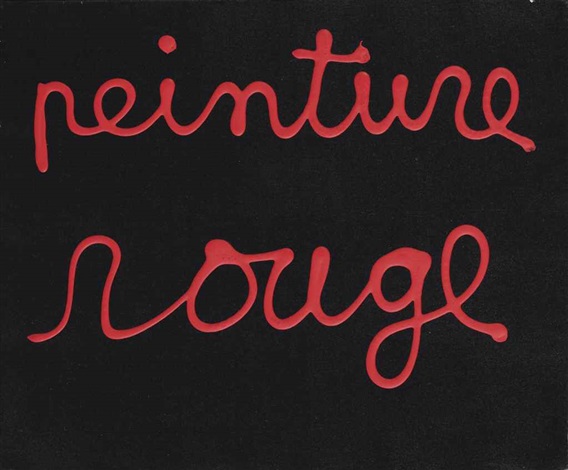
| Artist | Ben Vautier |
| Date Created | 1962 |
| Medium | Acrylic on canvas |
| Genre | Conceptual Art, Minimalism |
| Period | 1960s |
| Dimensions | 100 x 100 cm |
| Series / Versions | One-of-a-kind |
| Where is it housed? | Private Collection |
What’s happening in Peinture Rouge? At first glance, it’s just a very large, bright red canvas. However, that’s what makes it so interesting! Red isn’t merely an ornament; it’s meant to provoke thought. The color can symbolize many things: love, passion, anger, danger, or even revolution. In this piece, Ben doesn’t define what ‘red’ means. Instead, he lets us decide for ourselves. You’re invited to reflect on what that color makes you feel. Is it something personal you remember? Or is it connected to something larger, like politics or emotion? This simple yet powerful use of color makes Peinture Rouge feel different to each viewer.
What’s So Special About Peinture Rouge?
The special thing about Peinture Rouge is that it completely upends everything we know about art. It’s not about complexity or intricate details. Instead, it’s about pure, raw, bold, and powerful color. With just one color, Ben makes us reflect on what that color means personally. At the same time, it speaks to broader societal themes.
Ben also liberates with red, using the color as a blank canvas for the viewer’s emotions and thoughts. Instead of being tied to one idea, it invites personal interpretation. That’s the beauty of art—it’s yours just as much as it’s the artist’s.
Interesting Facts About Peinture Rouge
Red as a Theme: Ben was known for his use of bold colors, especially red. This isn’t the only time he’s used it, and the color often plays an important role in conveying emotions in his work.
Text and Simplicity: Even though this piece doesn’t have words, many of Ben’s works feature text. He often uses words to make the viewer think about what’s being said, or left unsaid.
Creating Conversations: One of the things that makes Ben’s art stand out is how it gets people talking. He doesn’t just want you to look at his work; he wants you to feel something and think about it.
Artwork Spotlight: Le train de l’amour

Le train de l’amour by Ben Vautier is available on Singulart. This artwork showcases Ben’s playful and unconventional style. While Le Train de l’amour uses the idea of movement and love, Peinture Rouge uses the boldness of color to stir up emotions.
Are you looking for a piece of artwork from Ben Vautier?
Singulart has limited edition prints of Ben Vautier. If you are looking for a piece of Vautier‘s artwork for sale, simply click on the artwork or the button below to discover more!
FAQs
1. What is Ben Vautier known for?
Ben Vautier is known best for his text-based artworks that experiment with traditional art concepts. Simple, handwritten phrases such as ‘Tout est Art’ (Everything is Art) are typical of his works, which challenge the limits of creativity and propose that art is everywhere, and everyone should see art in the simplest things.
2. How did Ben Vautier influence the art world?
Ben Vautier made the art world more accessible and less elitist. With simple words and phrases, he encouraged everyone, especially those who weren’t traditional art enthusiasts.
Conclusion
Ben Vautier’s Peinture Rouge may seem simple at first, but its impact is anything but. By using just one color, Ben makes us think about what that color means to us and what it says about the world. This piece challenges the idea that art has to be complicated to be meaningful. Sometimes, it’s the simplest things that have the most to say.
Next time you see a big red canvas, take a moment to ask yourself: What does red mean to you today? With Ben’s work, the answer might just surprise you.