T1971-R30 is a burst of pure energy on a canvas, capturing Hans Hartung’s unique style. Known for his bold and expressive paintings, Hartung infused as much emotion as visual impact into his art. As one of those captivating pieces, T1971-R30 grabs your attention and asks you, “What’s the story here?” However, Hartung wasn’t interested in offering simple answers—his art opens many doors and invites countless personal interpretations. In this article, we will explore what makes T1971-R30 special and unique. We’ll also take a look at Hartung’s fascinating life and delve into what’s happening in T1971-R30. Whether you are new to abstract art or a seasoned admirer, this journey will help you feel the magic of Hartung’s work.
Who was Hans Hartung?
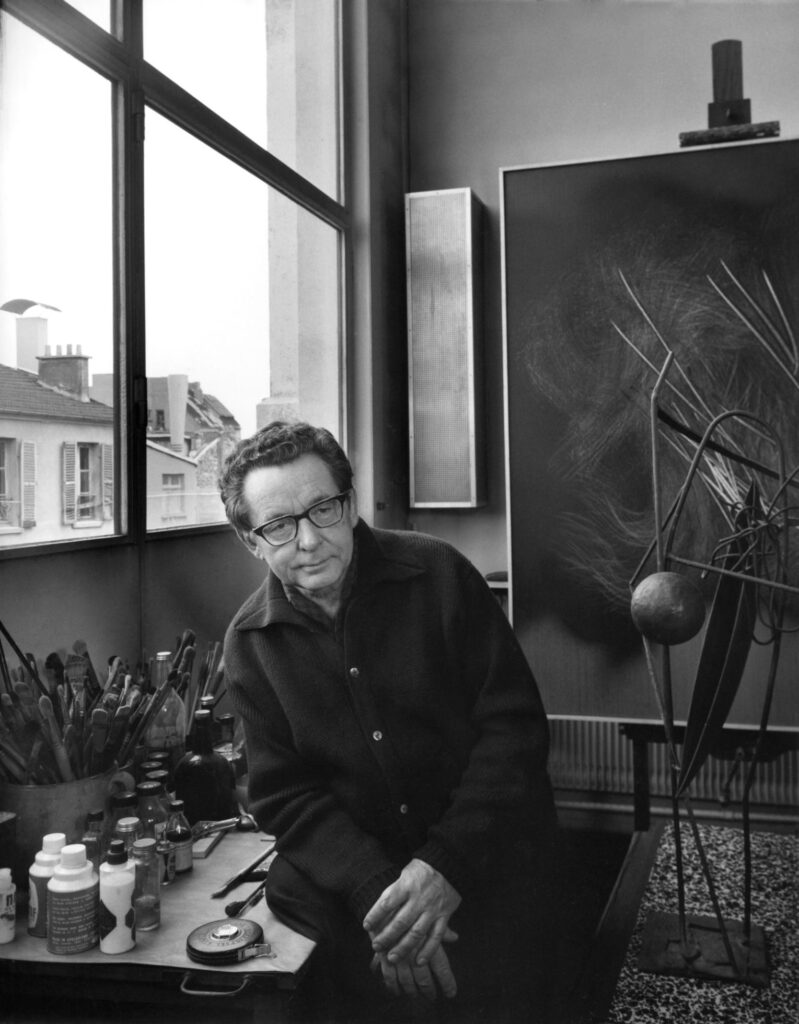
German-born artist Hans Hartung left a substantially important mark on the art world. He was born in 1904 and became a French citizen whilst fleeing from Nazi Germany. Hartung was best known for his powerful and energetic, sometimes emotionally charged, abstract art. With bold, sweeping lines and different materials, he made art that seemed to vibrate with life.
Surrealism was a key influence on Hartung’s early work, but he developed his deterministic course, becoming one of the most eminent abstract expressionists of his generation. His paintings weren’t about painting colors and shapes—his paintings were about painting memories and feeling something.
FUN FACT: Hans Hartung, a pioneer of abstract expressionism, was known for his unconventional painting techniques. He often used tools like brooms, rakes, and even spray guns to create dynamic, energetic lines and textures on his canvases.
His Career
Hartung’s artist’s journey was one of highs and lows. In the 1930s, he moved to France, where he was involved in a lively art scene. But World War II ruined it. Serious injury kept him from serving, and he lost a leg, joining the French Foreign Legion. Even through the challenges, Hartung found strength in his art. As a result of the war, his work gained an additional emotional dimension.
Hartung developed his signature style, with dramatic lines, bursts of color, and layers of texture, during the 1950s and 1960s. His atelier was his studio where he created art from brushes to metal tools, even spraying paint for dynamic effects. He was also known for making art that appeared moving, sometimes feeling alive with energy.
What is Happening in T1971-R30?
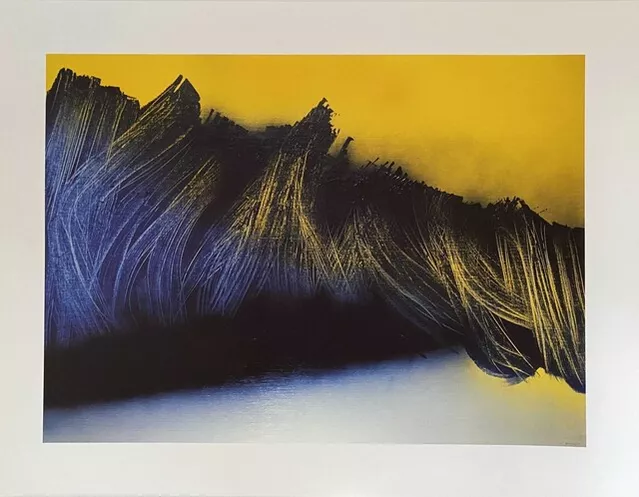
| Artist | Hans Hartung |
| Date Created | 1971 |
| Medium | Oil on Canvas |
| Genre | Abstract |
| Period | Post-War Modernism |
| Dimensions | 195 x 130 cm |
| Series / Versions | T1971 Series |
| Where is it housed? | Private Collection |
When you first see T1971-R30 it can all just look like a storm of lines and colours. Each stroke and mark has been set to its own rhythm. The jagged lines and sweeping curves are in collaboration to make you feel the motion. Hartung seems to have captured an important moment and held it still on the canvas.
What makes T1971-R30 beautiful is its energy. It doesn’t just hang on the wall, it leaps out at you. The brushstrokes of Hartung pulse with life, almost like they’re telling a story about movement and feeling. The canvas is full of energy so there isn’t a single point to focus on. You turn your eyes to the painting and understand and feel it.
What’s So Special About T1971-R30?
T1971-R30 is like something electric, immediately drawing you in. However, this piece isn’t only about abstract shapes and lines. Rather, it’s also about the powerful feeling that strikes you as you gaze. Hartung didn’t want his art to be easily understood; instead, he wanted it to be deeply felt.
The strange thing about T1971-R30 is how raw and real it feels. Unlike many abstract works, nothing about it is hidden; instead, everything is laid out openly for us to see. Hartung focuses on expression rather than explanation, which makes each detail feel intentional. As a result, the painting comes across as bursts of emotion plastered on the canvas.
Interesting Facts About T1971-R30
The Title: The title T1971-R30 might sound like a code, and in a way, it is. Hartung used this system to catalog his works, giving each one a unique identity.
Energy on Canvas: When you look at this painting, it’s like seeing Hartung’s energy frozen in time. Every stroke feels like it carries his passion and emotion.
The Texture: Hartung loved adding texture to his works. The surface of T1971-R30 has layers that make it feel alive. It’s not just about looking—it’s about experiencing.
Brushstrokes of Feeling: Hartung’s lines and strokes in this piece are full of emotion. He wasn’t afraid to let his feelings show on the canvas, making each piece deeply personal.
Parisian Influence: Spending much of his life in Paris, Hartung was influenced by the city’s rich art scene. His work reflects the bold and creative spirit of the French avant-garde movement.
Artwork Spotlight: Sans Titre 6
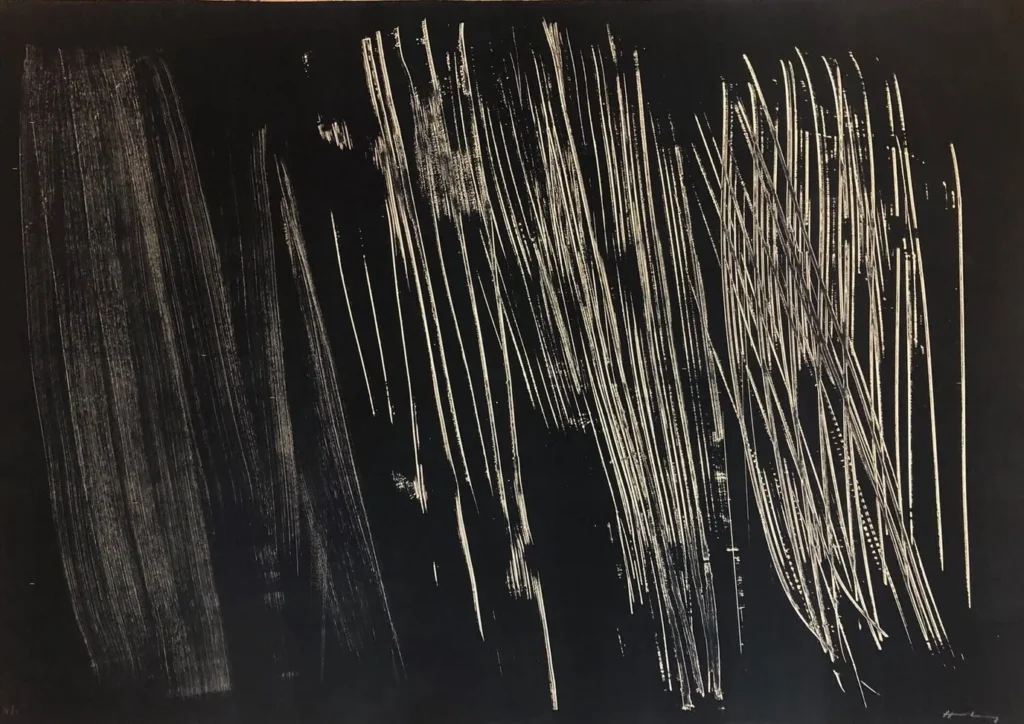
Sans Titre 6 by Hans Hartung is available on Singulart. This artwork is a testament to his use of gestural strokes and abstract forms. This piece reflects his mood and emotional energy at that particular moment, just like much of his later works.
Are you looking for a piece of artwork from Hans Hartung?
Singulart has limited edition prints of Hans Hartung. If you are looking for a piece of Hartung‘s artwork for sale, simply click on the artwork or the button below to discover more!
FAQs
1. What inspired Hans Hartung’s unique abstract style?
Hans Hartung drew inspiration from his own experiences, serving in the French Foreign Legion in World War II. Through his art, he channeled his emotional and physical struggles into bold, energetic works.
2. How did Hartung create the intense energy and movement in his paintings?
Bold brushstrokes, unconventional tools, and textured layers were used by Hartung to create intense energy and movement in his paintings. On occasions, he applied paint with brushes, spray guns, and even metal tools making his works highly dynamic and textured.
Conclusion
Hans Hartung’s T1971-R30 is a mere painting, but explosive with warmth, energy, and motion. It’s all about passion and the expression of it in every line, every stroke, every bit of texture. He didn’t want his art to be neat or easy to understand, he wanted you to feel it.