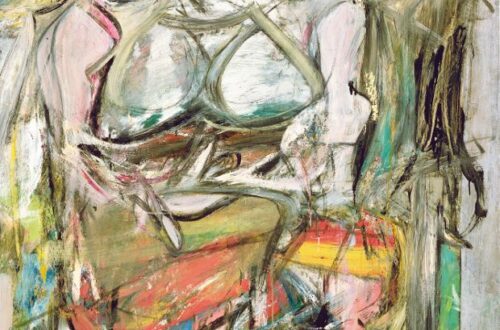
Damas by Antonio Saura is not a painting, but a whirlwind of emotions and energy embarked upon a canvas. Imagine something so raw, so intense, that you almost feel it move. This work, made in 1959, is full of misshapen faces, sweeping applications, and shades of black, white, and gray. But it’s messy and beautiful: a great blend of chaos and creativity.
What makes Damas so unique? Why does it still attract attention from galleries all over the world? Stepping into the world of Antonio Saura, a courageous Spanish artist who made it personal creating unforgettable art.
Who was Antonio Saura?

Antonio Saura (1930–1998) was a Spanish artist who preferred to paint images that would touch the heart. He was born in Huesca, Spain, and started painting as a teenager after an illness. Nonetheless, Saura didn’t follow the rules of traditional art. Instead, he made his own path, bold lines, dark colors, and deep emotions.
In the 1950s he achieved great fame as an abstract expressionist. He helped to found El Paso, the group of artists who sought to break boundaries in Spanish art. His works were full-on and often drawn from human emotions, religion, and history.
Saura didn’t just paint. In his spare time, he wrote books, designed illustrations, and even created sculptures. He believed art should be real and raw.
FUN FACT: He originally wanted to be a writer, not a painter! Saura loved literature and even wrote poems and essays throughout his life.
His Career
Antonio Saura was a bold artist. He didn’t paint for the crowd. He painted what he felt. His works were often distorted faces, chaotic lines, and dark colors.
During his career, Saura’s art had been a voice for change. It also allowed him to counter traditional conceptions of beauty and even to oppose political oppression, during Spain’s dictatorship.
What’s Happening in Damas?
| Artist | Antonio Saura |
| Date Created | 1959 |
| Medium | Oil on canvas |
| Genre | Abstract Expressionism |
| Period | Post-war Spanish Art |
| Dimensions | Varies across versions, typically large-scale |
| Series / Versions | Part of Saura’s distorted portraits series |
| Where is it housed? | Various collections, including the Museo Nacional Centro de Arte Reina Sofía in Madrid |
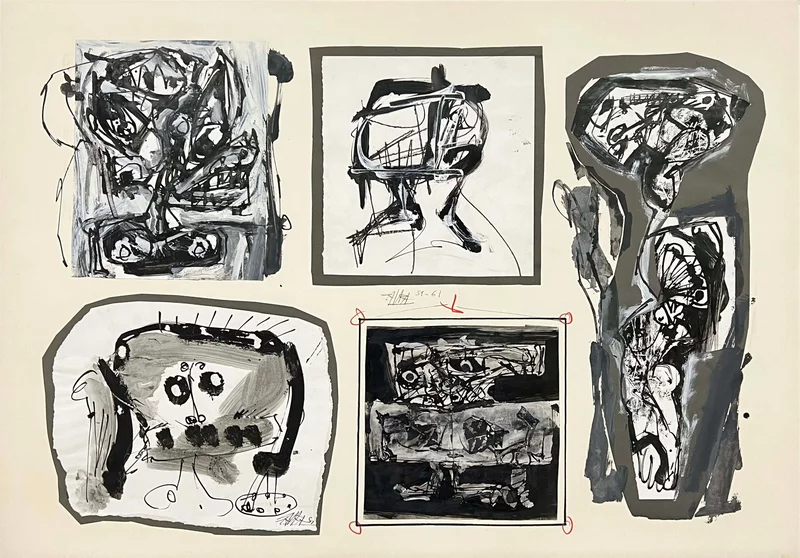
At first sight, Damas could seem like a collection of lines and shapes. However, if you take a closer look, you will see faces in there: deformed, overlapping, and congested. The word Damas, in Spanish, means ‘ladies’, but these are not traditional portraits. Instead of trying to paint beauty out of them, Saura paints the real women’s essence, stripping away beauty to show raw unfiltered identity.
Damas’ face isn’t perfect. They’re haunting, like masks, and messy. The painting is alive; Saura’s bold brushstrokes and wild layering make it feel like it is telling a story too complex for words.
What’s So Special About Damas?
One of the things that sets Damas apart is its honesty. Saura seems not to want to make the painting pretty or easy to understand. He pours emotion into every stroke, making something that feels full of human emotion.
It’s also worth noting that the painting is monochrome. Saura makes you focus on forms in black, white, and gray, stripping away distractions and reducing the feelings behind the forms to their barest essence. Sometimes earthy tones help warm the rooms and make everything come a little alive, like tiny sparks in a storm, when you’re sad or lonely.
Damas is unforgettable because Saura’s approach is fearless. He was true to vision, at a time when most of the artists followed the trends.
Interesting Facts About Damas
Not a Typical Tribute: While the title Damas means “ladies,” Saura’s focus is more on identity and perception than traditional beauty.
Why So Few Colors?: Saura believed that color could distract from the emotions in a painting. That’s why Damas uses mostly black, white, and gray.
It’s Part of a Series: Damas isn’t just one painting. It’s part of a series where Saura explored distorted portraits, each with its unique energy.
A Mirror of Emotions: Saura described his paintings as mirrors. Damas reflects both the artist’s feelings and the viewer’s interpretation.
Artwork Spotlight: Nez

Nez by Antonio Saura is available on Singulart. This artwork shows how he loved to experiment with human forms.
Are you looking for a piece of artwork from Antonio Saura?
Singulart has limited edition prints of Antonio Saura. If you are looking for a piece of Saura’s artwork for sale, simply click on the artwork or the button below to discover more!
FAQs
1. What inspired Antonio Saura’s unique style?
His struggles and his own life, Spanish history, and the human condition were sources of inspiration for Antonio Saura. The early illness made him explore his emotions through art.
2. Why did Antonio Saura often create distorted and chaotic images?
To Saura, art should not show perfection; it should show emotion. His distorted and chaotic images reflect inner struggles, human flaws, and rebellion against traditional beauty.
Conclusion
Damas is more than a painting. That’s a ballsy statement about art and about emotions and what it means to be human.
In a world where perfection is praised, Damas tells us imperfection is also powerful. This piece is a timeless treasure for its fearless approach to art taken by Saura.
So, whether you’re an art lover or just curious, Damas is worth exploring. It’s raw, real, and unforgettable—just like Saura himself. Au revoir, Damas. Until we meet again.