


Have you ever looked at a piece of art and thought it came to life? This is exactly what you do when you look at Eusebio Sempere’s Aguas, aires, adores. This isn’t a straight line or a pattern, this artwork seems alive, it’s moving, it’s breathing.
Sempere was a master of making you draw in. He spent hours listening to music while using simple shapes and colors. In Aguas, aires, ardores, he brings together the beauty of water, air, and heat in a manner balancing the entertaining and the soothing.
Let’s take a closer look at Sempere, his incredible career, and what makes this artwork so special.
Who was Eusebio Sempere?
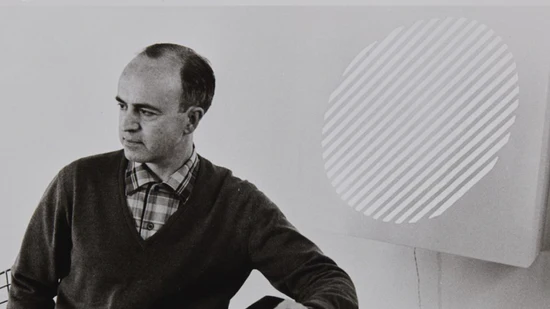
The artist Eusebio Sempere (1923–1985) loved shapes, patterns and light. He was born in Onil Spain, surrounded by nature. He decided to paint trees or mountains how we see them, but not how they are.
Sempere moved to Paris in the 1950s and got inspired by the art scene. He tried kinetic art, an art that looks as if it’s moving even when it’s not. He became famous for using clean lines and simple designs to bring alive his kind of work.
Despite his work being modern, he has an eternal soul to it. It’s the kind of art that makes you fall in love with it, no matter the time.
FUN FACT: He once used mathematical formulas to design some of his pieces, making his art both creative and scientific.
His Career
Sempere’s whole career was about breaking the barriers. He didn’t just create art to see, he wanted you to feel it. He didn’t just create art to see, he wanted you to feel it.
It was hardly just small pieces. He also created large sculptures for public spaces. Whatever people’s interests in art were, his work was to be enjoyed by them.
What Is Happening in Aguas, aires, ardores?

| Artist | Eusebio Sempere |
| Date Created | 1970s |
| Medium | Serigraphy (silkscreen print) |
| Genre | Abstract / Optical Art |
| Period | Modern Art |
| Dimensions | Varies (medium-sized prints) |
| Series / Versions | Part of Sempere’s serigraphy explorations |
| Where is it housed? | Private collections and galleries |
But what, precisely, is this artwork about? Initially, it might appear just like a line and a shape. Look closer and you’ll see something magical, it even seems to move. But the patterns themselves are more in the lines, they look like they’re shifting and flowing right in front of you.
Its name matches us enough to give us a clue to its meaning: Aguas, aires, ardores. You can see the aguas (water) in the wavy lines, which feel like ripples in a calm stream. The light and gentle curves make the piece very open and contain the aires (air). And the ardores (heat) is in the way the lines and colors seem to radiate energy.
Sempere turned something simple such as lines into a story about the natural elements. It’s soothing, hypnotic, and full of life.
What’s So Special About Aguas, aires, ardores?
This art is so great because it strikes the perfect balance between science and emotion. It’s very precise on the one hand. Everything feels so perfectly calculated, the lines are clean, and the patterns are symmetrical. On the other hand, it feels so alive.
What Sempere does so well with gradients (smooth switch in color) is give you depth. They completely shift from light to dark while almost seeming to change colors like the sky does when it is almost sunset. It’s a peaceful and mesmerizing effect.
The technique behind it is what’s even more impressive. This is a serigraph, or Sempere made the work with a silk screen print technique to layer the colors. Sempere made it look effortless, but it’s a process that takes extreme skill and extreme patience.
Why We Care About The Four Seasons?
We are interested in The Four Seasons because it evokes something greater than ourselves which is nature’s beat. Seasons come and go and each one teaches us their beauty. Sempere managed to nail this universal truth with freshness, modernity, and humanity.
This artwork is more than shapes and patterns, it is more of an invitation to pause and reflect. It compels us to look for beauty in change and reflect upon the life cycle whether that is as soft as spring, or as severe as winter. Let’s be honest, In a world with a whirlwind pace, we all deserve a reminder to slow down and appreciate it.
We also care because The Four Seasons connects art to real life. It’s not just for museums or galleries, it’s for everyone. It plays with light, space, and perception and feels alive almost like it’s talking to us. And it isn’t mundanity; it’s all about meeting you right where you are.
Interesting Facts About The Four Seasons
Illusion of Movement: Even though the artwork doesn’t move, the patterns make it look like it does. It’s like a magic trick for your eyes.
A Touch of Paris: Sempere’s time in Paris influenced his style, giving his work a sense of elegance and balance.
Inspired by Nature: While the artwork is abstract, it perfectly captures the feeling of the changing seasons.
Light is Key: The way the artwork interacts with light makes it feel alive. Depending on the time of day, it can look completely different.
Artwork Spotlight: Se4

Se4 by Eusebio Sempere is available on Singulart. This artwork is a fantastic example of his clean, geometric style. It’s a small but powerful piece that shows how much emotion he could pack into even the simplest shapes.
Are you looking for a piece of artwork from Eusebio Sempere?
Singulart has limited edition prints of Eusebio Sempere. If you are looking for a piece of Sempere’s artwork for sale, simply click on the artwork or the button below to discover more!
FAQs
1. What inspired Eusebio Sempere’s unique artistic style?
Eusebio Sempere was inspired by nature, his time in Paris, and geometry. In Paris, he had an exposure to patterns, light, and movement influenced by kinetic and optical art.
2. Why is Eusebio Sempere considered a pioneer of kinetic art?
Sempere’s work broke ground by harnessing minimalism and movement. Although his pieces didn’t physically move, he gave his pieces an optical illusion to make them feel alive.
Conclusion
Aguas, aires, ardores is not just an artwork, it is an experience. This is a piece that can bring calm and energy into your space if you’re an art collector, or even if you simply appreciate beauty.
It is Sempere’s ability to merge structure with emotion that makes work so eternal. And as the French might say, parfait. So, if you ever get a chance to see this piece in person, don’t miss it—you might just feel it breathe.


