Some artworks yell right in your face and are just loud and dramatic. Others will be quiet, and calm, and ask you to take a look a little closer. One of those is Femme au Manchon by Pierre Tal-Coat. A woman worn for the winter holds a muff. Simple, right? However, it’s got a way of stopping you in your tracks and getting your attention.
This painting has been credited to Pierre Tal-Coat, with a special way of seeing the world. He didn’t paint for fame. He painted trying to understand and explore life. In Femme au Manchon you can already feel that approach. It’s subtle, elegant, and oh so very French.
Let’s take a closer look at who Tal-Coat was, what makes this painting special, and why it still feels so timeless today.
Who Was Pierre Tal-Coat?
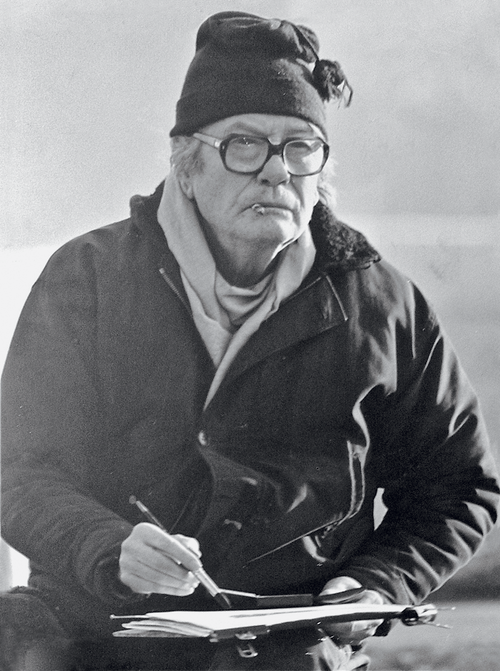
Émile Paul Jules (Pierre) Tal-Coat, born in 1905, was a French artist who was not afraid to break the rules. The name Tal-Coat, meaning Wood Face, was picked by him because he was from Brittany, France.
After graduating from ceramics he went to Paris. He then went there where he was grouped with other famous artists like Pablo Picasso and Georges Braque, but Tal-Coat was not copying others. He wanted to set his tone.
Realistic art is what he followed initially, but eventually, he abandoned abstraction to express his emotions a bit more freely. It wasn’t about perfect shapes, it was about feelings.
FUN FACT: Pierre Tal-Coat was so connected to nature that he often painted outdoors, directly inspired by the landscapes around him.
His Career
Pierre Tal Coat’s artistic path is that of a career of progression, by experimenting, new discoveries, and breaking boundaries. His career was all about keeping things fresh, exploring change, and exploring what art could be.
Tal-Coat learned the value of texture and form, things that would echo in his paintings further down the line. However, in the 1930s he turned to painting and relocated to Paris, the center of the art world. He also found the giants of modern art, Pablo Picasso, Georges Braque, and André Masson.
What Is Happening in Femme au Manchon?
| Artist | Pierre Tal-Coat |
| Date Created | 1920s-1930s |
| Medium | Oil on canvas |
| Genre | Portrait |
| Period | Early 20th Century Modernism |
| Dimensions | Approx. 55 x 46 cm |
| Series / Versions | Single work |
| Where is it housed? | Private Collection |
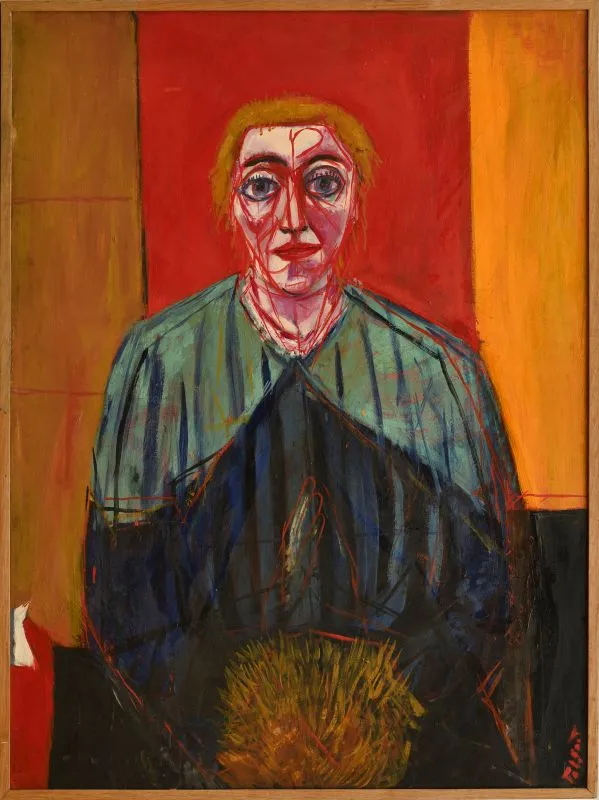
Femme au Manchon translates to Woman with a Muff from its title. That’s what you see, and it’s exactly what it is. Wearing there, a thick jacket and a muff to keep her hands warm.
The magic is in how Tal-Coat paints her. She’s quiet, calm, and even blends into the background. It’s a wintry mood with soft whites, browns and grays.
The woman’s face is gentle and mysterious. She is not trying to get your attention. Rather, she asks that you take a moment to settle down with her.
He doesn’t spend time on tiny details. Instead, he manages to convey what it feels like. It’s like a soft, familiar memory.
What’s So Special About Femme au Manchon?
Femme au Manchon stands out for its simplicity, and calm. Soft muted colors of grays, white,s and browns give a feeling of a peaceful winter day. Among the mystery, the woman’s face is quiet and unreadable. Who is she? What might she be thinking? It leaves them for us to imagine. The painting is located at a turning point in his style between figuration and abstraction.
Instead of just looking with eyes to see details, Tal-Coat tries to focus on the mood in front of you. The painting is like a memory, soft and still. Her hands hold her muff, a touch of timelessness, a flashback into history when such a convenience had style and sensibility. We can see her trudging her way through sleepy Parisian streets.
Why We Love Femme au Manchon?
Femme au Manchon is exactly the kind of thing Tal-Coat was good at. And it’s not about grandeur, nor is it about detail. It’s about feelings—how colors and lines make us feel calm and still.
The painting makes a woman timeless. She doesn’t share her story with us, because Tal-Coat doesn’t tell us. He lets us imagine it instead.
Interesting Facts About Femme au Manchon
A Nod to Fashion: In the early 20th century, muffs were more than accessories. They were statements—symbols of elegance and style during chilly Parisian winters.
Winter Serenity: Tal-Coat’s muted palette creates a hushed, wintry mood. You can almost hear the soft crunch of snow underfoot.
A Bridge to Abstraction: This work hints at Tal-Coat’s move toward abstraction. The woman’s form is softened, edges blurred—like an early sketch of his later style.
Silent Poetry: Unlike dramatic portraits of the time, Femme au Manchon celebrates quiet beauty. It doesn’t demand attention; it invites you to pause and reflect.
Artwork Spotlight: Menton

Menton by Pierre Tal-Coat is available on SIngulart. This artwork captures the soft energy of a coastal landscape with muted tones.
Are you looking for a piece of artwork from Pierre Tal-Coat?
Singulart has limited edition prints of Pierre Tal-Coat. If you are looking for a piece of Tal-Coat’s artwork for sale, simply click on the artwork or the button below to discover more!
FAQs
1. What inspired Pierre Tal-Coat to transition from figurative art to abstraction?
Pierre Tal Coat was deeply influenced by nature, emotion, and the changing Paris art movements. Although he started with figurative works he eventually discovered that abstraction gave him a way to express himself more freely.
2. Why is Pierre Tal-Coat considered an important figure in modern art?
Pierre Tal-Coat is famous for giving birth to new rules and for the ability to live with constant change. He became notorious for an inability to stand still artistically — exploring Cubism, Surrealism, and abstraction in equal measure.
Conclusion
Pierre Tal-Coat’s early work is demonstrated in Femme au Manchon. It’s simple, it’s peaceful, and it’s full of quiet charm. Tal-Coat proves to us that art can be effective without being loud.
Looking at this painting feels like stepping into a soft winter scene—calm, still, and comforting. It’s a moment captured forever, inviting you to pause and appreciate the beauty in simplicity.