France has always been a center of expression. The country gave rise to some of the influential and revolutionary artists in history. The following famous French artists have not left an impact on the art world but have also shaped the course of art history. From Claude Monet’s masterpieces to Marcel Duchamp’s avant garde creations, these artists have pushed the boundaries of creativity and continue to inspire generations.
1. Claude Monet
Claude Monet is widely regarded as the pioneer of Impressionism, an art movement that aimed to capture the effects of light and color. Monet’s unwavering commitment to painting en plein air and his inventive use of brushstrokes paved the way for an era in art.

Renowned Works
Water Lilies (1919): A captivating series that depicts Monet’s water garden at Giverny. These paintings exemplify his mastery in capturing the interplay of light on water.
Impression, Sunrise (1872): This painting coined the term “Impressionism”. This artwork conveys the beauty of Le Havre harbor.
2. Henri Matisse
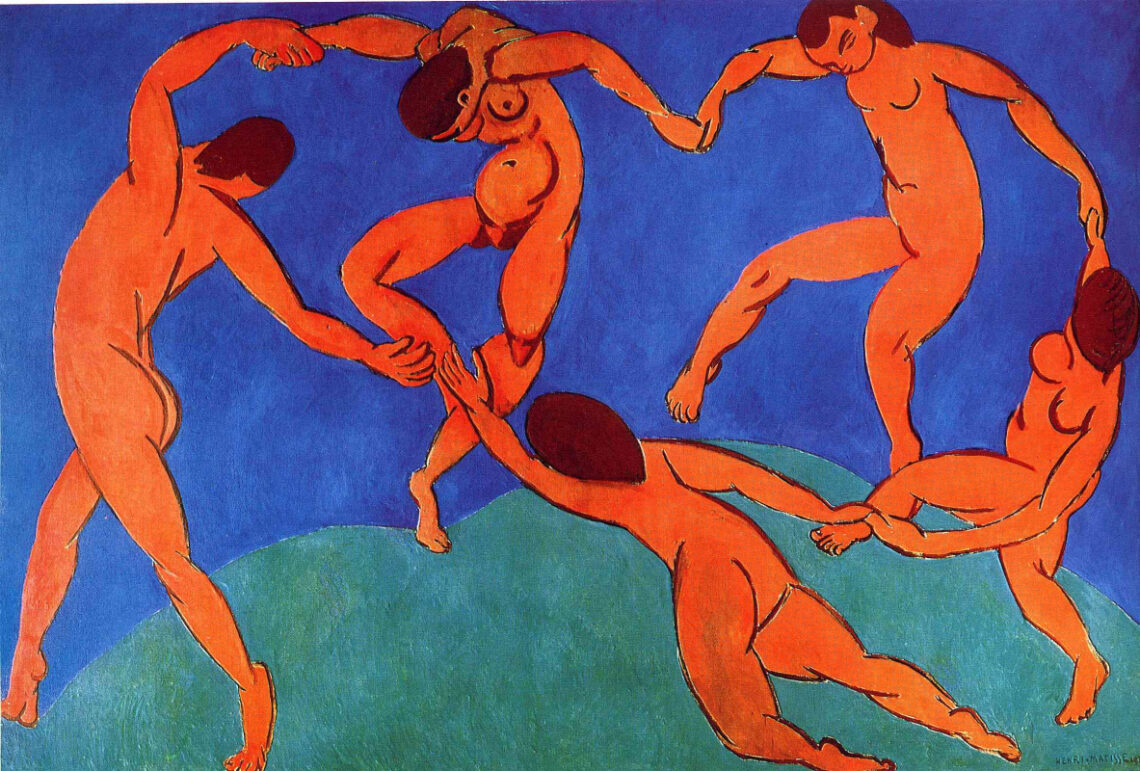
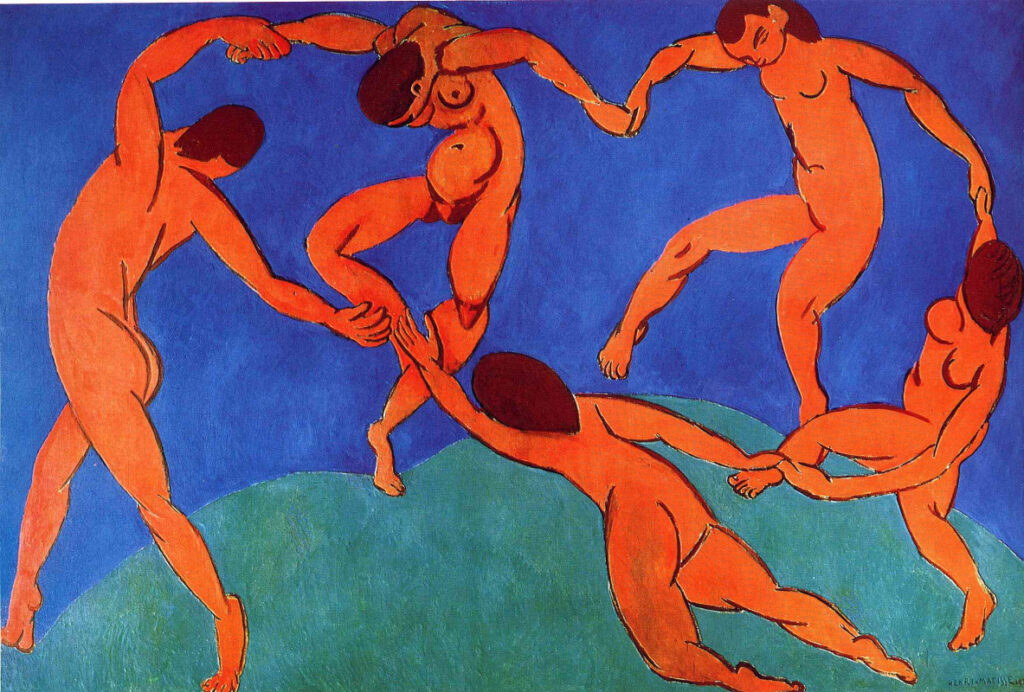
Henri Matisse, a leading figure in the Fauvist movement revolutionized art with his daring use of color and innovative approach. His contributions went beyond boundaries opening up possibilities for future generations of artists to explore the potential of color.
Renowned Works
The Dance (1910): This painting is a masterpiece of art capturing the joyous and rhythmic movements of dancers in a timeless and harmonious composition.
Woman with a Hat (1905): A piece from the Fauvist movement, this artwork showcases Matisse’s use of color and is considered a pivotal moment in the history of modern art.
3. Edgar Degas
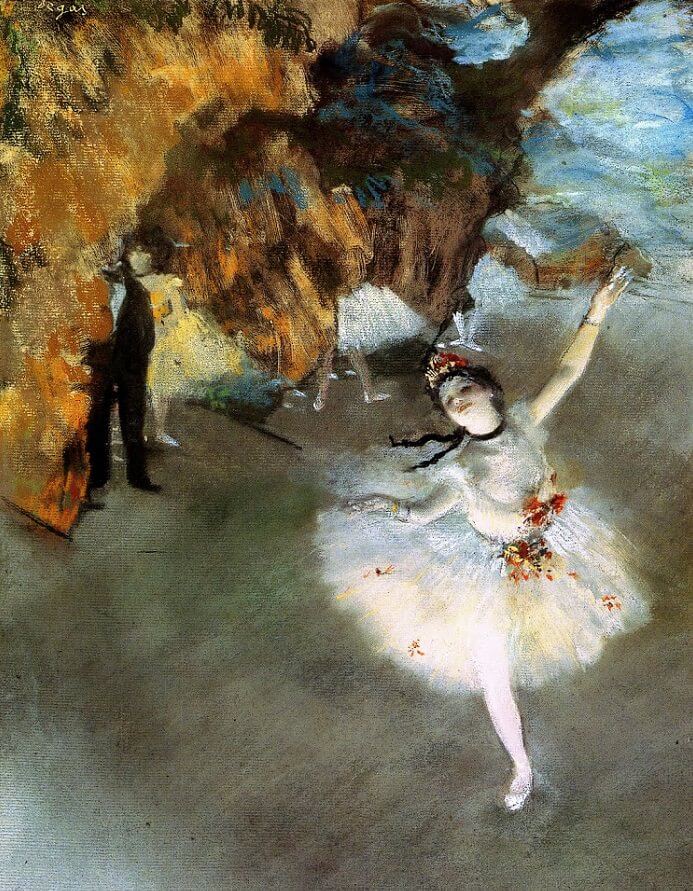
Edgar Degas, a figure in the Impressionist movement is renowned for his captivating portrayals of dance that skillfully capture the dynamism and grace of performers. His innovative compositions and use of perspectives distinguish him as a trailblazer in the art world.
Renowned Works
The Star (1876): This known painting vividly captures the energy and allure of ballet reflecting Degas’s fascination with movement and the human form.
Little Dancer Aged Fourteen (1881): This sculpture authentically embodies the spirit of a ballerina with unprecedented realism.
4. Paul Cézanne
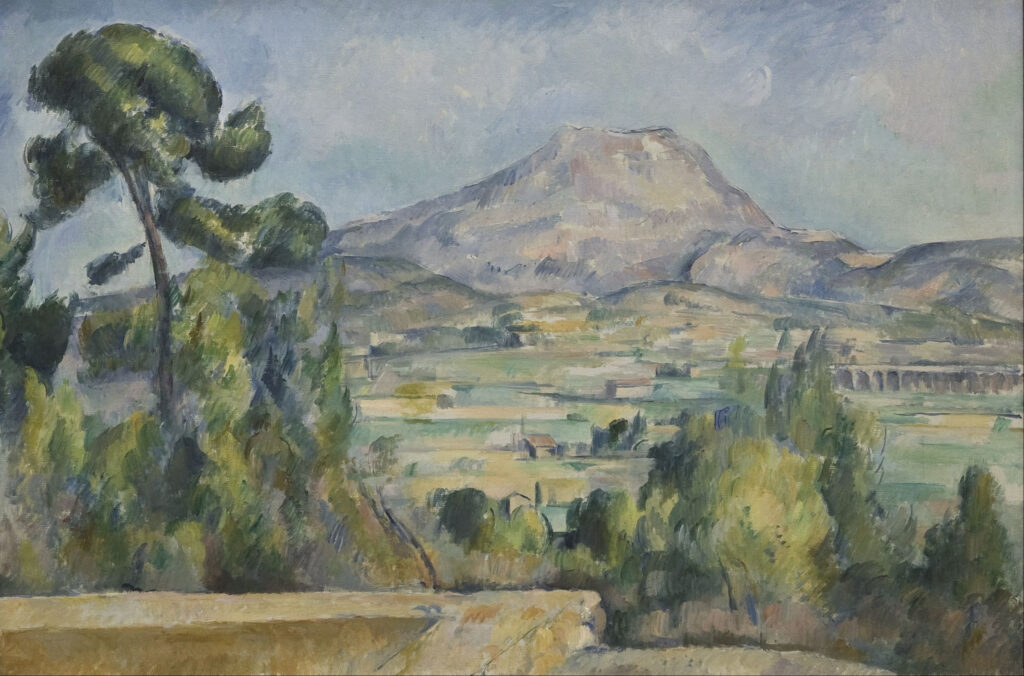
Paul Cézanne played a role in bridging Impressionism to Cubism while greatly influencing artists such as Picasso and Braque. His emphasis on forms and exploration of perspectives laid down solid foundations for the emergence of the Cubist movement.
Renowned Works
Cézannes Mont Sainte Victoire (1887): This painting beautifully portray the mountain near Cézannes residence showcasing his groundbreaking approach to landscape art.
The Card Players (1892–95): This series of paintings delves into the complexities of expression and form through the depiction of card players.
5. Pierre Auguste Renoir
Pierre Auguste Renoir, another figure in the Impressionist movement was renowned for his ability to capture the beauty of life with a warm and sensual touch. His artworks radiate a sense of joy and an appreciation for moments of connection.

Renowned Works
Luncheon of the Boating Party (1880–81): This masterpiece is a portrayal of friends enjoying a day on the river highlighting Renoir’s skill in capturing the interplay between light and surfaces.
Dance at Le Moulin de la Galette (1876): Renoir’s depiction of a dance scene encapsulates the spirit that characterized Montmartre district in the late 19th century.
6. Marcel Duchamp
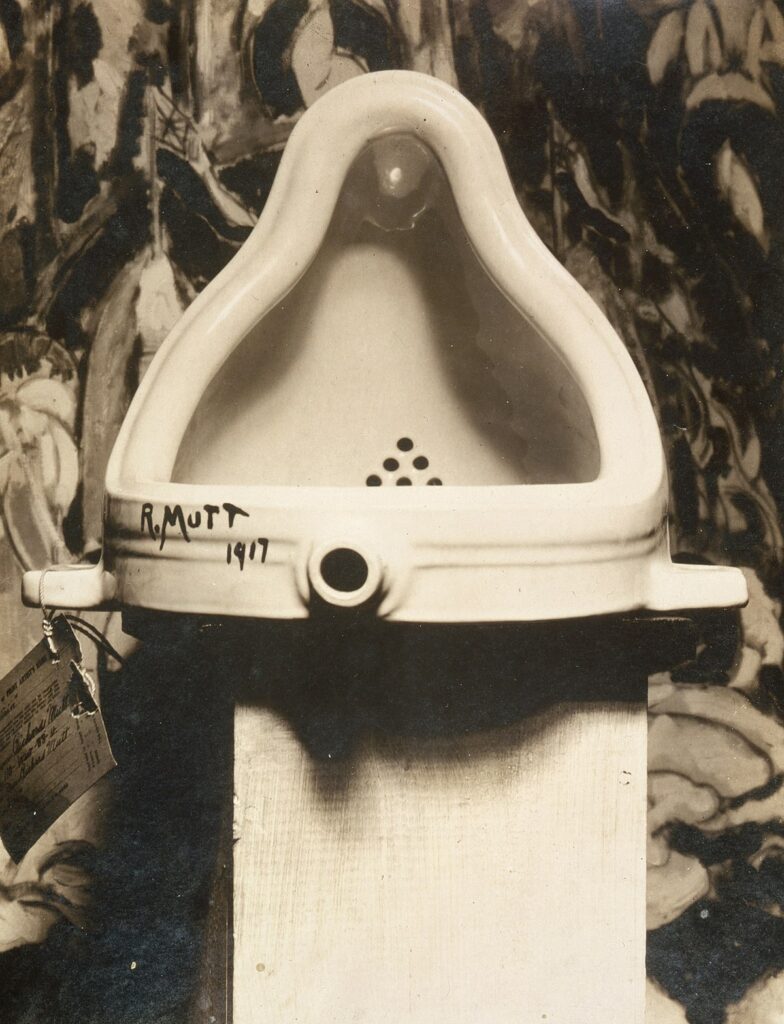
Marcel Duchamp was an innovator in art challenging notions of art and aesthetics. His ready made objects transformed into art—broke down barriers between art and life.
Renowned Works
Fountain (1917): Fountain challenges the very definition of art and explores the role of the artist by transforming a urinal into an artwork.
Nude Descending a Staircase, No. 2 (1912): This painting caused quite a sensation at the Armory Show in New York. Duchamp combined elements of Cubism and Futurism to depict the movement of a figure descending a staircase.
7. Auguste Rodin
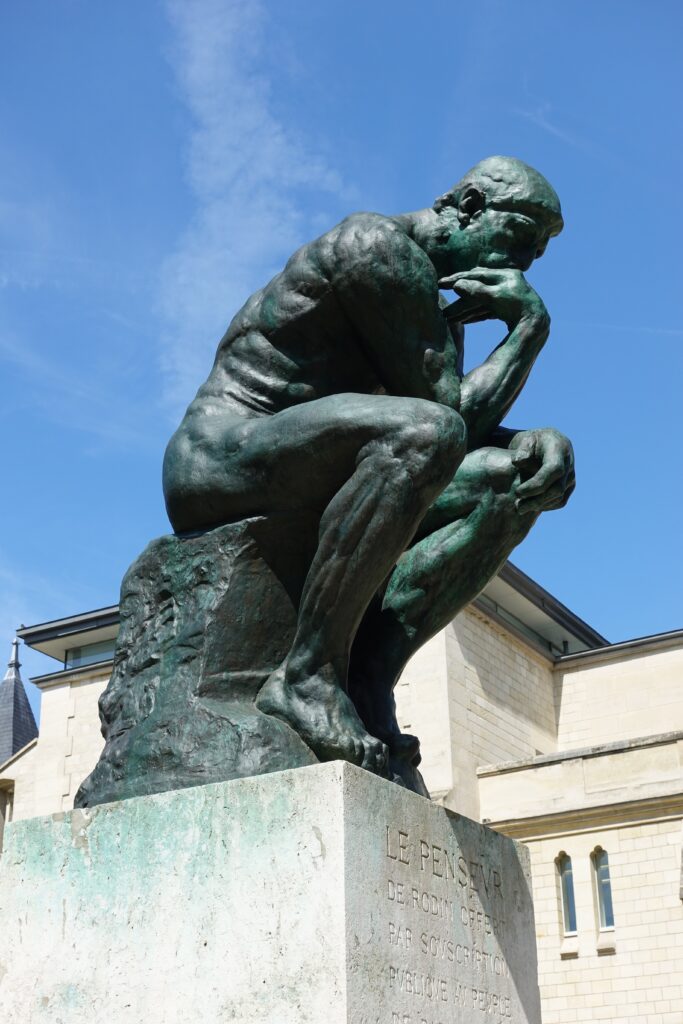
Auguste Rodin revolutionized sculpture with his approach that brought forth heightened emotion and lifelike qualities to this art form. Through his use of form and expression, he was able to capture the complexities of experience.
Renowned Works
The Thinker (1881): The Thinker is one of Rodin’s best creations capturing the profound contemplation of a man lost in thought.
The Kiss (1889): This sculpture beautifully portrays the passion and tenderness found in an embrace showcasing Rodin’s mastery in capturing emotions.
8. Joan Miró
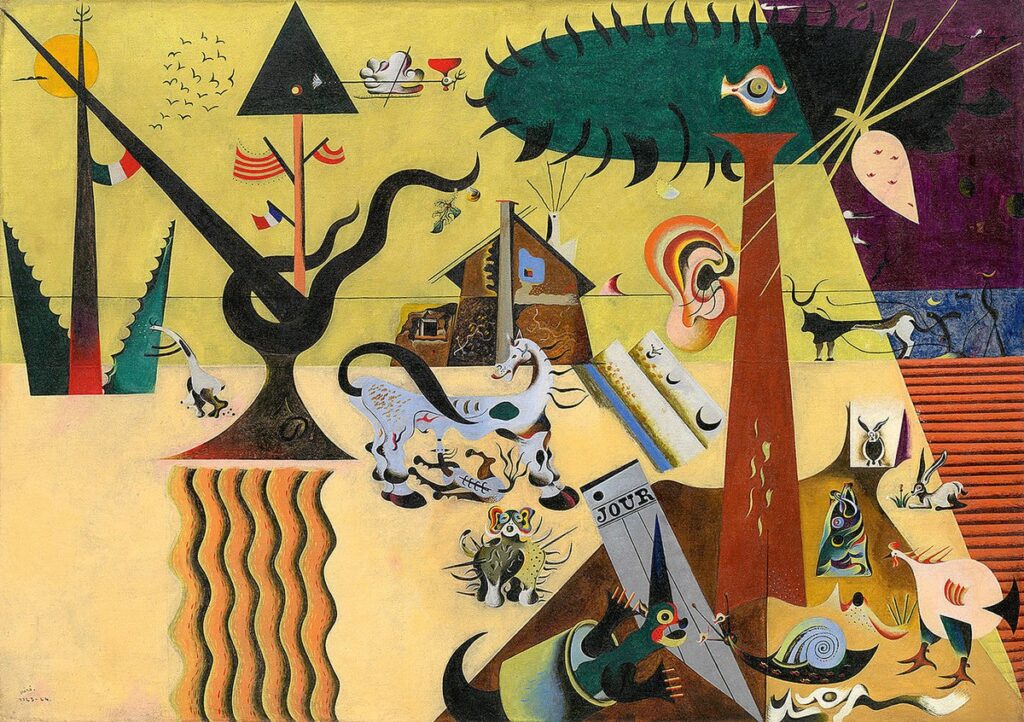
Joan Miró played a role in the Surrealist movement renowned for his dreamlike and imaginative paintings. His unique blend of abstraction and symbolism created a language that continues to influence art.
Renowned Works
The Tilled Field (1923–24): Miró’s exploration of landscapes is clearly evident in this painting, where imaginative forms and lively colors come together in a composition.
The Birth of the World (1925): This masterpiece exemplifies Miró’s utilization of drawing and spontaneous creativity capturing a feeling of origin.
9. Henri Cartier Bresson
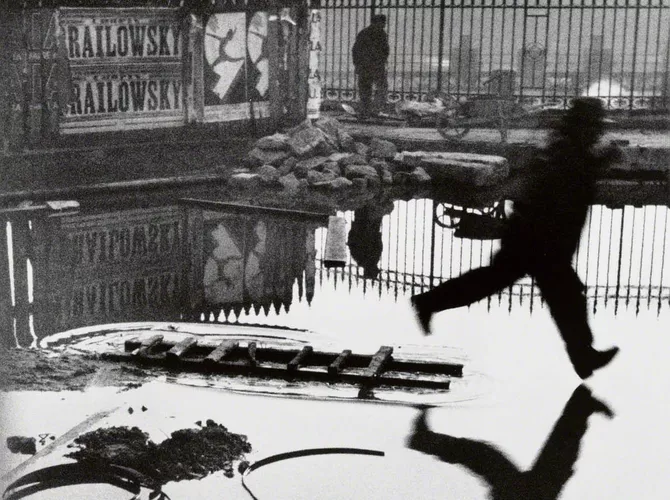
Henri Cartier Bresson is widely regarded as the pioneer of photojournalism and street photography. His exceptional ability to capture the moment along with his sense of composition has left an enduring impact on the field of photography.
Renowned Work
Behind the Gare Saint Lazare (1932): This iconic photograph freezes a moment in time with precision and elegance capturing a man mid leap over a puddle.
The Decisive Moment (1952): The title of this book reflects Cartier Bresson’s philosophy of seizing the instant that encapsulates the essence of a scene.
10. Yves Klein
Yves Klein was an innovator in the realm of art through his utilization of a deep vibrant blue known as International Klein Blue (IKB). His exploration of color, as a force, distinguishes him as a visionary artist.
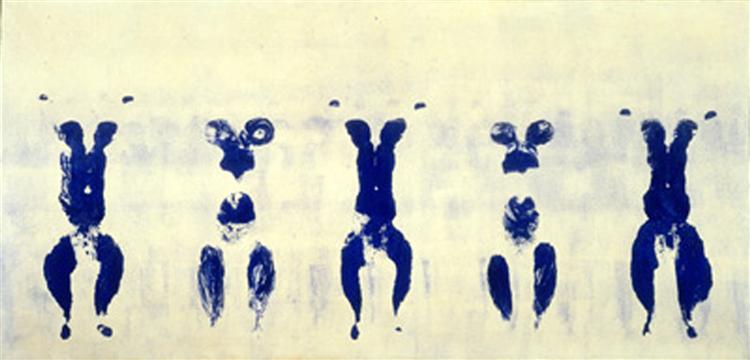
Renowned Work
Anthropometry of the Blue Epoch (1960): This series showcases Klein’s fascination with the form, where performers covered in IKB paint leave imprints on canvas through their movements revealing his connection to the human body.
Blue Monochrome (IKB 79) (1959): A canvas that exemplifies Klein’s dedication to the color blue as a means to explore infinite spiritual possibilities and serve as a conduit for profound artistic expression.
11. Georges Seurat
Georges Seurat was a pioneer of Pointillism Seurat. He introduced a technique that involves using dots of color to create cohesive images. His meticulous approach to color theory and composition laid the foundation for Neo Impressionism.

Renowned Work
A Sunday Afternoon on the Island of La Grande Jatte (1884–86): This monumental painting stands as a testament to Seurat’s mastery of Pointillism capturing a tranquil Sunday afternoon scene along the banks of the Seine River.
Bathers at Asnières (1884): Through his use of Pointillism, Seurat skillfully brings together dots of color to depict a vibrant and detailed scene portraying bathers enjoying their time by the river.
12. Jean Michel Basquiat
Jean Michel Basquiat emerged from the vibrant street art culture of New York City to achieve recognition as an artist. His graffiti inspired pieces, which blend socio commentary have pushed the boundaries of traditional art and still make an impact on contemporary art.

Renowned Work
Young Boy and Dog by a Fire Hydrant (1982): Basquiat’s exploration of identity and urban life is evident in this artwork, where he portrays a boy alongside a dog, against the backdrop of a fire hydrant.
Frequently Asked Questions
Who was the most famous French artist?
One of the most well-known French artists was Claude Monet. He was born in Paris in the year 1840. He started his career by copying the works of realist painters like Gustave Courbet.
Who are three famous French artists?
Claude Monet, Edouard Manet and Edgar Degas was among the top three French artists who brought the revolution.
Conclusion
The influence of these famous French artists goes far beyond their home country. Through their contributions, these imaginative individuals have shaped the course of art history, inspiring movements and countless artists worldwide. Their known creations stand as evidence to the richness and diversity of their visions weaving together a tapestry of creative brilliance that continues to captivate and inspire future generations.