Art possesses a language that goes beyond words. Watercolour paintings capture attention with their enchanting beauty and intricate brushwork. In our exploration of arts wonders, we will delve into the allure of famous watercolor painting that have left a mark on the canvas of art history. Each brushstroke and every shade conveys a tale allowing us to immerse ourselves in the minds behind these artworks.
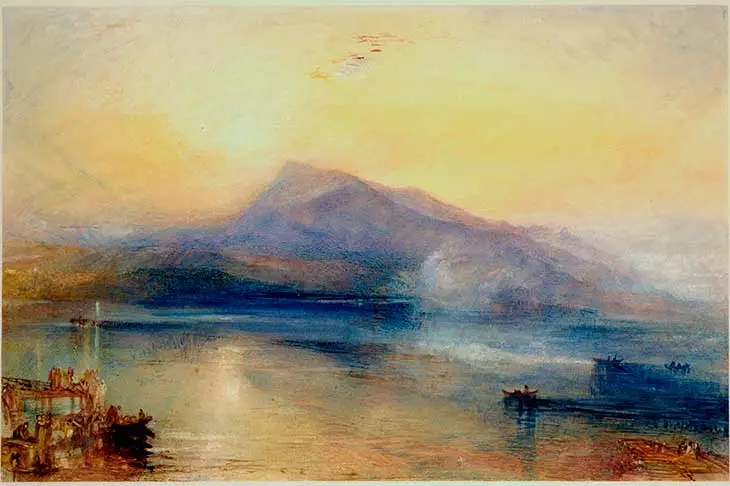
1. The Blue Rigi by J.M.W. Turner
| Completion Date | 1842 |
| Dimensions | 29.2 cm × 45.4 cm |
| Location | Tate Britain, London, UK |
The Blue Rigi, a glowing watercolor, is a great example of Turner’s misty mountain at dawn. His washes of blue and violet are delicately executed, creating a very peaceful mood. While a lot of watercolor paintings lack atmosphere and light, this one shows us how beautiful it can be. It is Turner’s finest work, and much loved at Tate Britain.
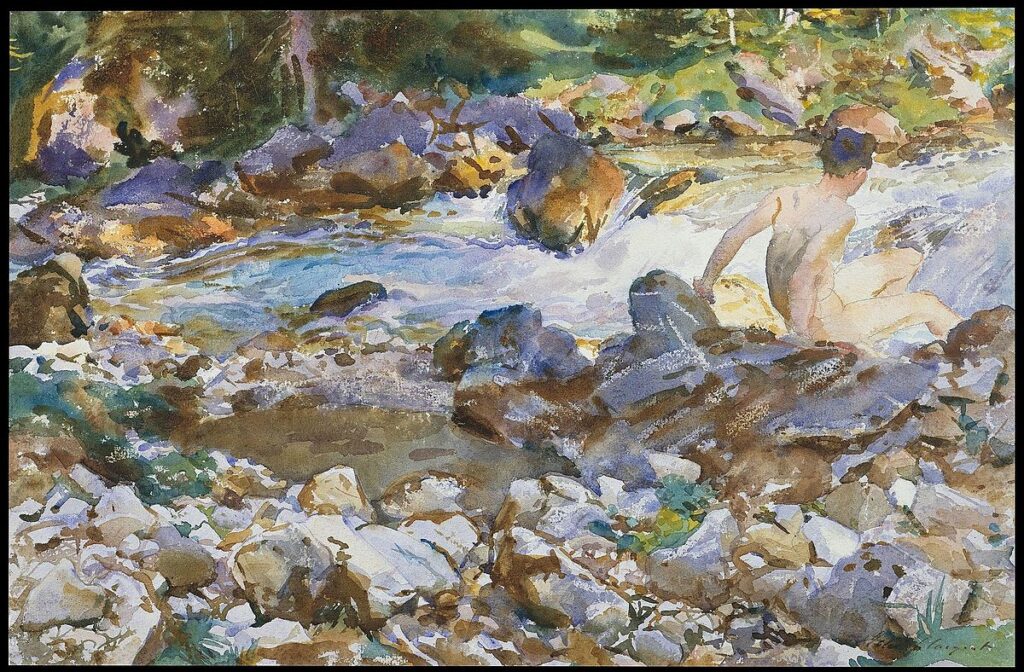
2. Mountain Stream by John Singer Sargent
| Completion Date | Early 1900s |
| Dimensions | 35.6 cm × 50.8 cm |
| Location | Museum of Fine Arts, Boston, USA |
John Singer Sargent’s “Mountain Stream” showcases a fresh, spontaneous use of watercolor. It easily bounces off the flowing water and rocks. His brushwork is bold but loose; it captures the movement and the texture of nature. This is a beautiful example of landscapes breathing in and out of watercolor.
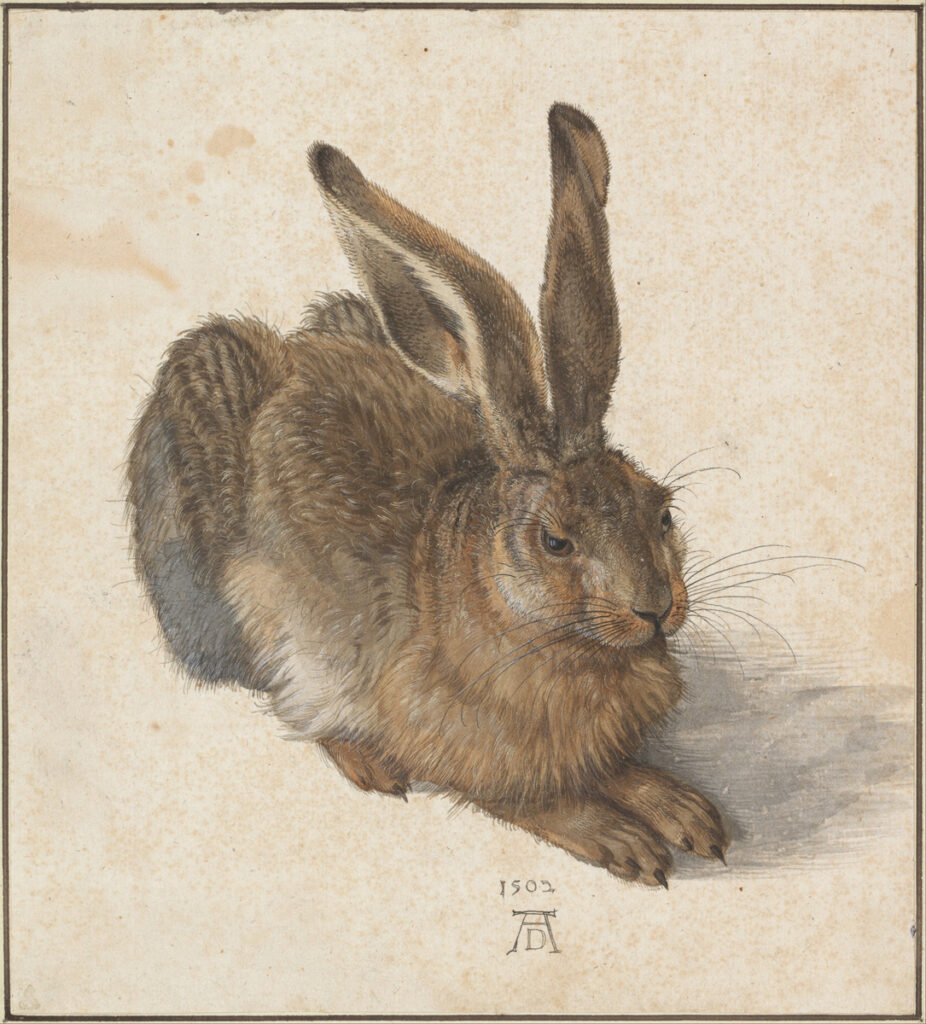
3. Young Hare by Albrecht Dürer
| Completion Date | 1502 |
| Dimensions | 25.1 cm × 22.6 cm |
| Location | Albertina Museum, Vienna, Austria |
Durer here made a watercolor painting which looks almost like a photograph. Every whisker and fur strand of “Young Hare” is revealed with precision. It was painted in the early 1500s and shows just how real watercolour can be. It remains one of the most highly recommended animal studies in art history.
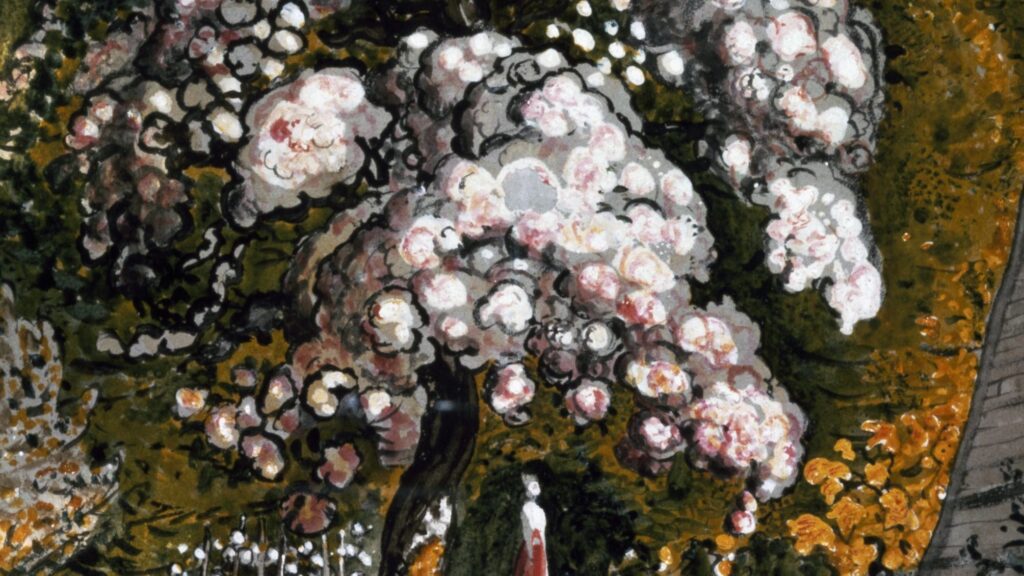
4. Garden in Shoreham by Samuel Palmer
| Completion Date | Circa 1830 |
| Dimensions | 15.2 cm × 22.8 cm |
| Location | British Museum, London, UK |
‘Garden in Shoreham’ glows with golden hues, greens layered over greens. This is a spiritual watercolor of the English countryside. Through his creative style, a simple garden is transformed into a poetic scene. It’s a watercolor full of wonder and warmth.
5. Rain, Steam and Speed – Sketch by J.M.W. Turner

| Completion Date | Mid-1800s (sketch phase) |
| Dimensions | Various |
| Location | Tate Britain, London, UK |
This was one of Turner’s many watercolor sketches to get started. For ‘Rain, Steam and Speed’ he painted his sketch of a train roaring through a stormy landscape. The blurred forms and loose washes give a sense of speed and motion. His studies were as emotional and energetic as anything he did.
6. The Red Maple by Winslow Homer
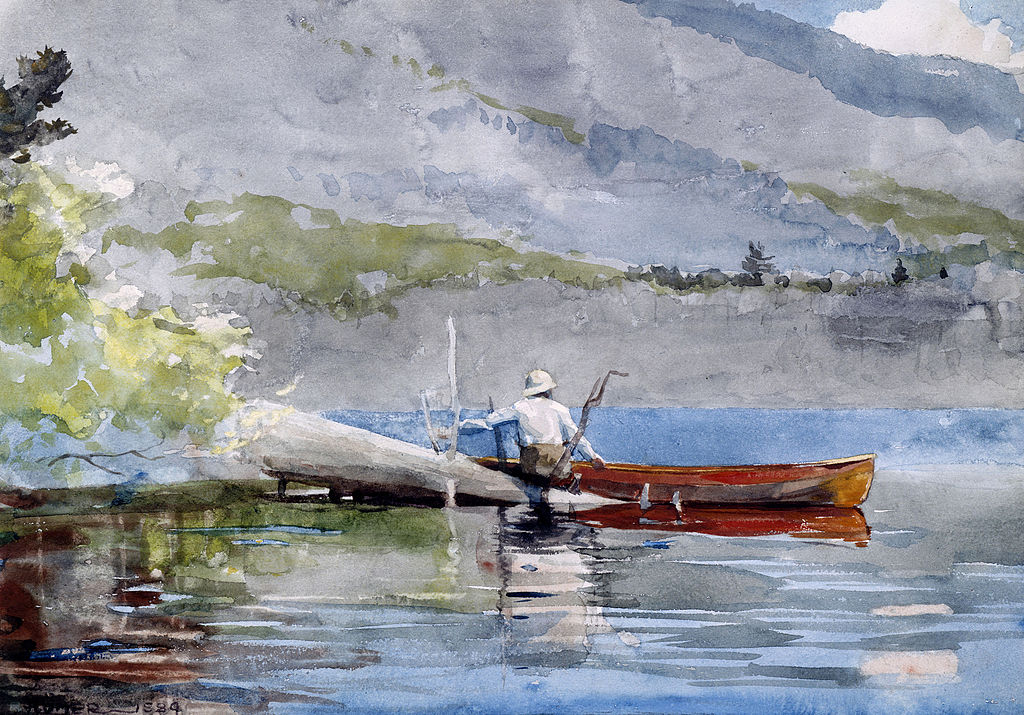
| Completion Date | 1892 |
| Dimensions | 35.6 cm × 50.8 cm |
| Location | Portland Museum of Art, Maine, USA |
“The Red Maple” by Winslow Homer features autumn leaves bursting with color. His watercolor work is crisp yet expressive. Homer’s love for nature shines through the page. This piece shows how vibrant and fresh watercolor can feel, especially in capturing American landscapes.
7. Venice: The Bridge of Sighs by John Singer Sargent
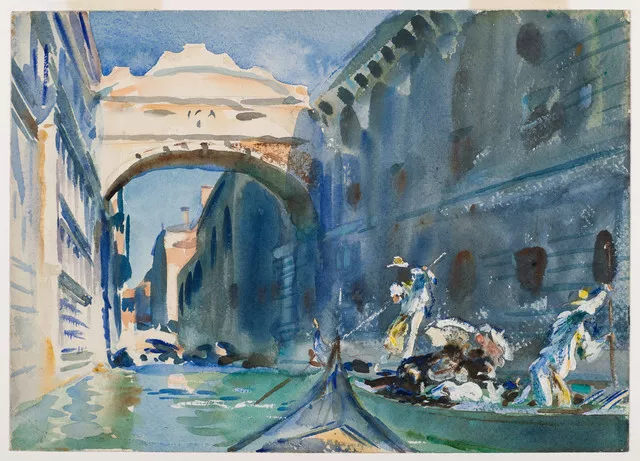
| Completion Date | 1904 |
| Dimensions | 31.1 cm × 45.7 cm |
| Location | Brooklyn Museum, New York, USA |
Sargent’s view of Venice in watercolor is a soft blend of shadow, reflection, and architecture. The Bridge of Sighs looms in mystery while the canals shimmer below. His quick strokes bring the scene to life. This piece captures the magic of Venice using only light and color.
8. Iris Garden by Charles Demuth
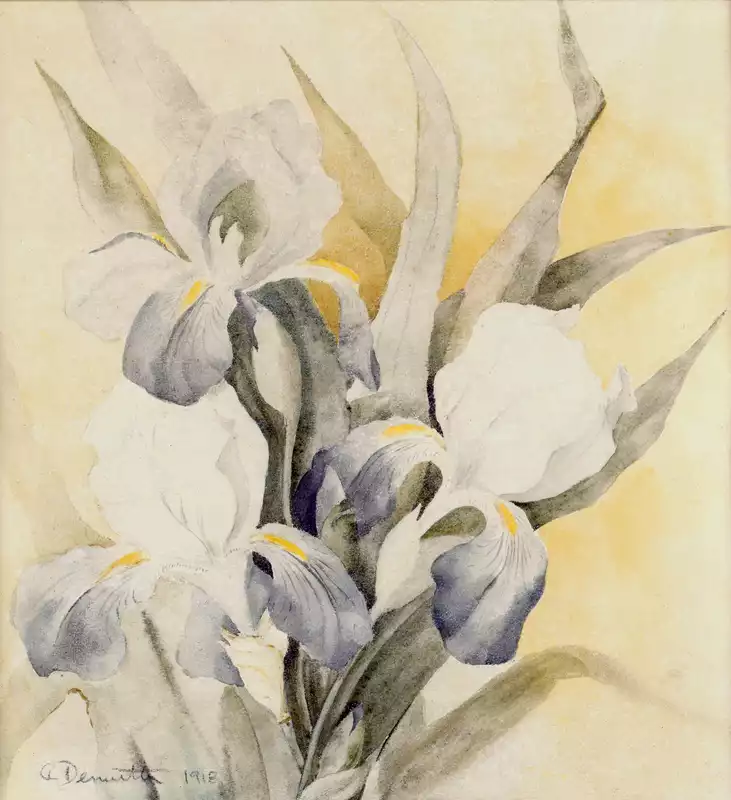
| Completion Date | 1920s |
| Dimensions | 35 cm × 25 cm (approx.) |
| Location | Philadelphia Museum of Art, USA |
“Iris Garden” by Charles Demuth is a delicate floral still life painted in soft watercolor hues. The petals feel almost translucent, and the composition is clean and elegant. Demuth’s work balances control and spontaneity—hallmarks of a master watercolorist.
9. The Avenue, Sydenham by Camille Pissarro (Watercolor Version)

| Completion Date | Late 1800s |
| Dimensions | Various |
| Location | Private Collection |
While known for oil paintings, Pissarro also painted watercolors like this lively street scene. “The Avenue, Sydenham” in watercolor has quick, loose strokes and vibrant city life. It’s a gentle, impressionistic moment captured with skill and lightness.
10. Moonlight by Edward Hopper (Watercolor)
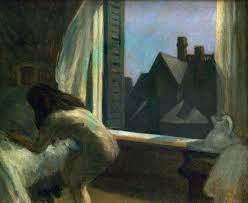
| Completion Date | 1933 |
| Dimensions | 35.6 cm × 50.8 cm |
| Location | Whitney Museum of American Art, New York, USA |
Known for his quiet, moody scenes, Hopper also used watercolor to great effect. “Moonlight” shows a lonely house glowing under a soft sky. The shadows and silvery tones create a haunting atmosphere. Hopper’s watercolor technique adds subtlety to his iconic style.
Frequently Asked Questions
What is the most famous watercolour painting?
One of the famous traditional watercolour paintings is titled as “Sloop, Bermuda.” It was painted by American painter, Winslow Homer in the late 19th and early 20th centuries.
Who is famous for watercolor paintings?
Great painters including William Blake, J.M.W. Turner, James Whistler, John Singer Sargent, Paul Klee, Georgia O’Keeffe, and Edward Hopper created outstanding watercolour paintings that are well-known today.
Was Vincent van Gogh a watercolor artist?
Similar to his drawings, Van Gogh frequently used watercolours as studies or practise before creating an oil painting. His watercolours became increasingly colourful and vibrant as he continued to hone his technique. Over the course of his life, he created close to 150 watercolour paintings.
Conclusion
In conclusion, these ten famous watercolor paintings go beyond expression; they serve as gateways to different worlds encapsulating timeless moments crafted by skilled artists. From Monet’s tranquil water lilies to the energetic dance of color portrayed in Pollock’s artwork “Blue Poles,” every painting beckons viewers to embark on an emotional voyage encouraging introspection and fostering a deep admiration for the limitless potential of artistic creativity.