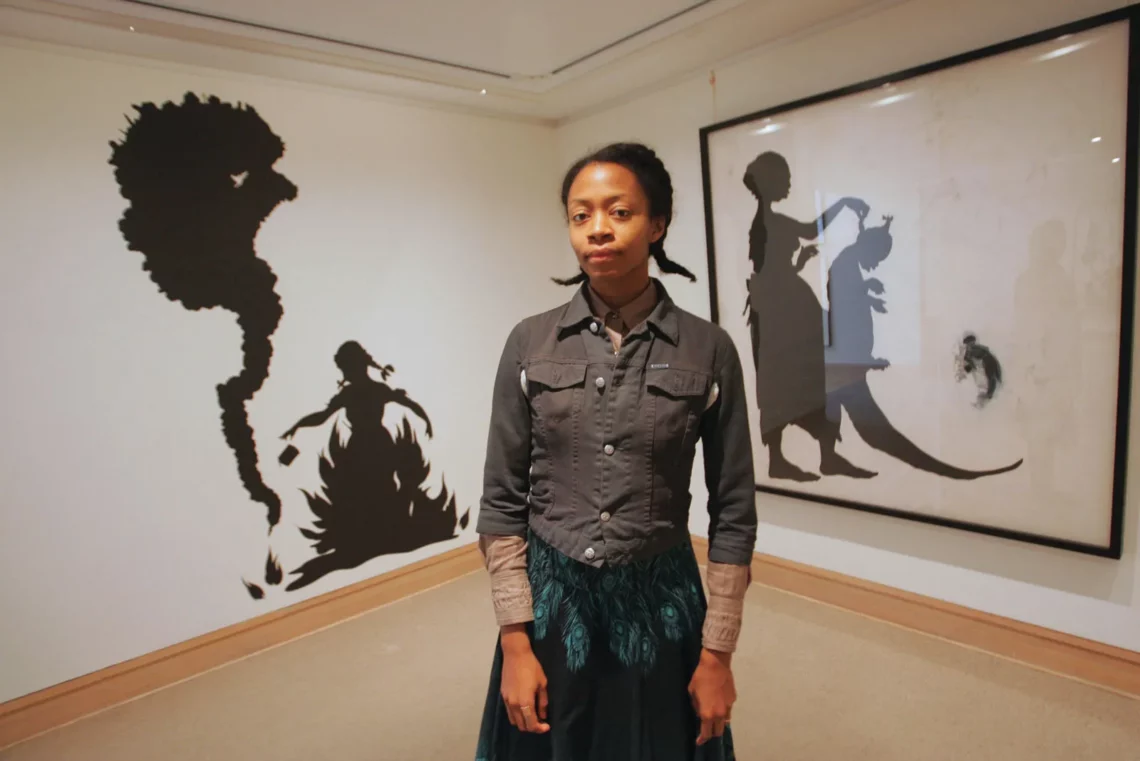
Kara Walker is a contemporary American artist known for her thought-provoking and often controversial works that engage with themes of race, gender, and history. Her art challenges viewers to confront uncomfortable truths and grapple with the complex narratives of the past and present. Over the years, Walker has produced a wide range of artworks, each carrying a unique message and artistic style. In this article, we will delve into famous Walker’s artworks, providing you each and every detail.
1. Gone

| Date of Completion | 1994 |
| Dimensions | 66 x 92 inches |
| Location | Private collection |
“Gone” is one of Kara Walker’s early works, featuring her signature silhouette style. This piece is a stark representation of the harsh realities of the antebellum South, where African Americans were enslaved and subjected to inhumane conditions. The work serves as a haunting reminder of the suffering and loss experienced by generations of African Americans during this dark period in American history.
2. The End of Uncle Tom and the Grand Allegorical Tableau of Eva in Heaven

| Date of Completion | 1995 |
| Dimensions | Variable |
| Location | Collection of the Solomon R. Guggenheim Museum, New York |
This large-scale installation presents a scene from Harriet Beecher Stowe’s novel “Uncle Tom’s Cabin,” depicting Uncle Tom’s death and Eva’s ascent to heaven. Walker’s use of shadowy figures, some engaged in grotesque acts, creates a jarring contrast with the idyllic portrayal of Eva in heaven. This juxtaposition serves as a commentary on the contradictory and complex nature of race relations in America.
3. Untitled (John Brown)
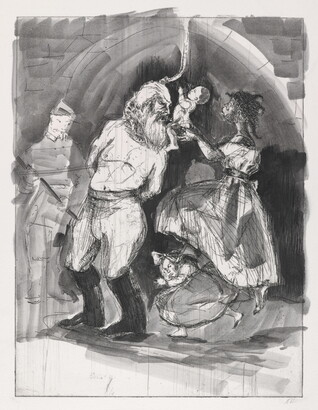
| Date of Completion | 1996 |
| Dimensions | 41 x 36 inches |
| Location | Collection of the Museum of Modern Art, New York |
This artwork is a part of Walker’s “American Primitive” series, in which she explores the intersections of race and violence in American history. “Untitled (John Brown)” focuses on the figure of John Brown, the abolitionist who played a significant role in the lead-up to the American Civil War. Walker’s skill of silhouettes and symbolic imagery conveys a sense of tension and urgency in this piece.
4. Darkytown Rebellion
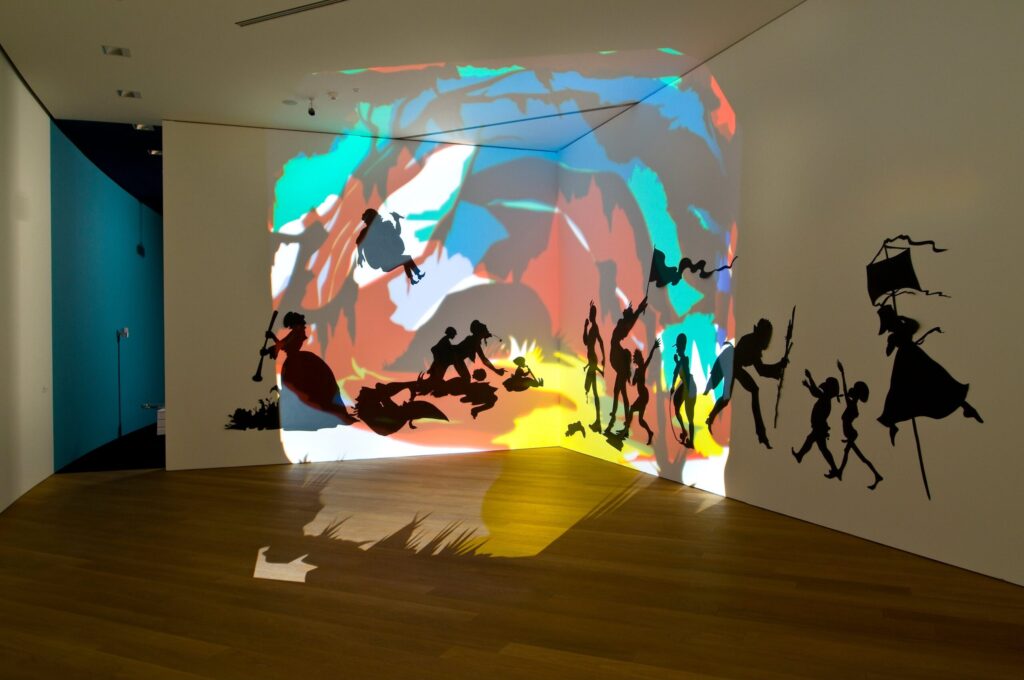
| Date of Completion | 2001 |
| Dimensions | Variable |
| Location | Collection of the Whitney Museum of American Art, New York |
“Darkytown Rebellion” is a large-scale, room-sized installation that immerses viewers in a chaotic and nightmarish scene filled with distorted and grotesque silhouettes. The artwork is a commentary on the ongoing racial tensions and the persistence of racism in contemporary America. Walker’s use of the term “darky” in the title confronts the derogatory language used to dehumanize African Americans.
5. A Subtlety
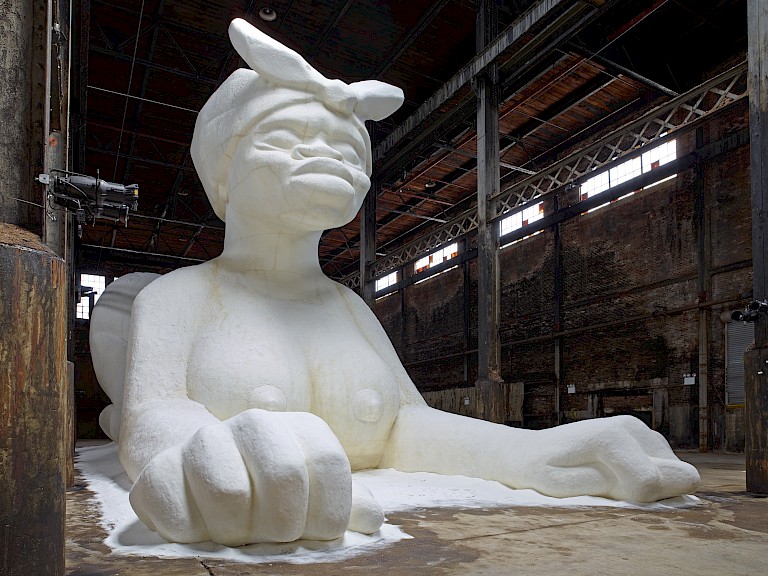
| Date of Completion | 2014 |
| Dimensions | Variable |
| Location | Domino Sugar Refinery, Brooklyn, New York (temporary installation) |
“A Subtlety,” also known as the “Marvelous Sugar Baby,” was a monumental sugar sculpture installed in a decommissioned sugar refinery. The sculpture, featuring a mammy-like figure, comments on the history of the sugar trade, slavery, and the exploitation of Black labor. The temporary installation became a symbol of dialogue about the legacies of slavery and sugar production.
6. Fons Americanus
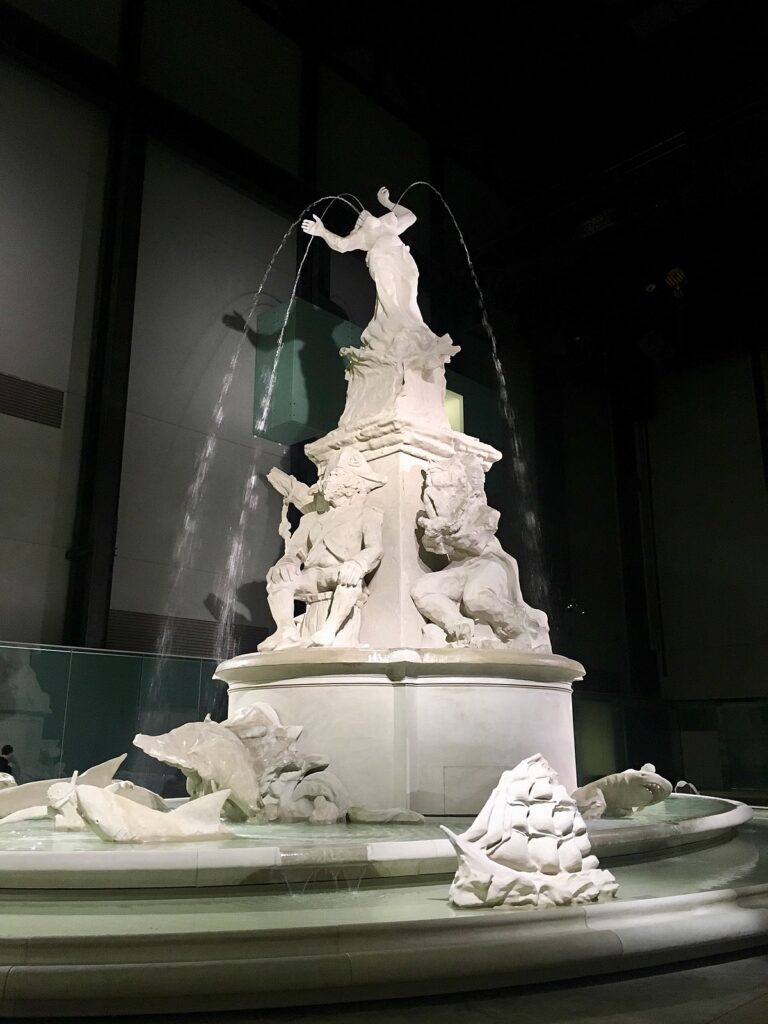
| Date of Completion | 2019 |
| Dimensions | Variable |
| Location | Tate Modern, London |
“Fons Americanus” is a massive, water-based sculpture that greets visitors at the Tate Modern in London. This Walker’s masterpiece is a contemporary take on the traditional European fountain, but it subverts the genre by addressing the transatlantic slave trade, immigration, and global displacement. The sculpture presents a powerful and thought-provoking narrative that challenges historical amnesia.
7. Christ’s Entry into Journalism
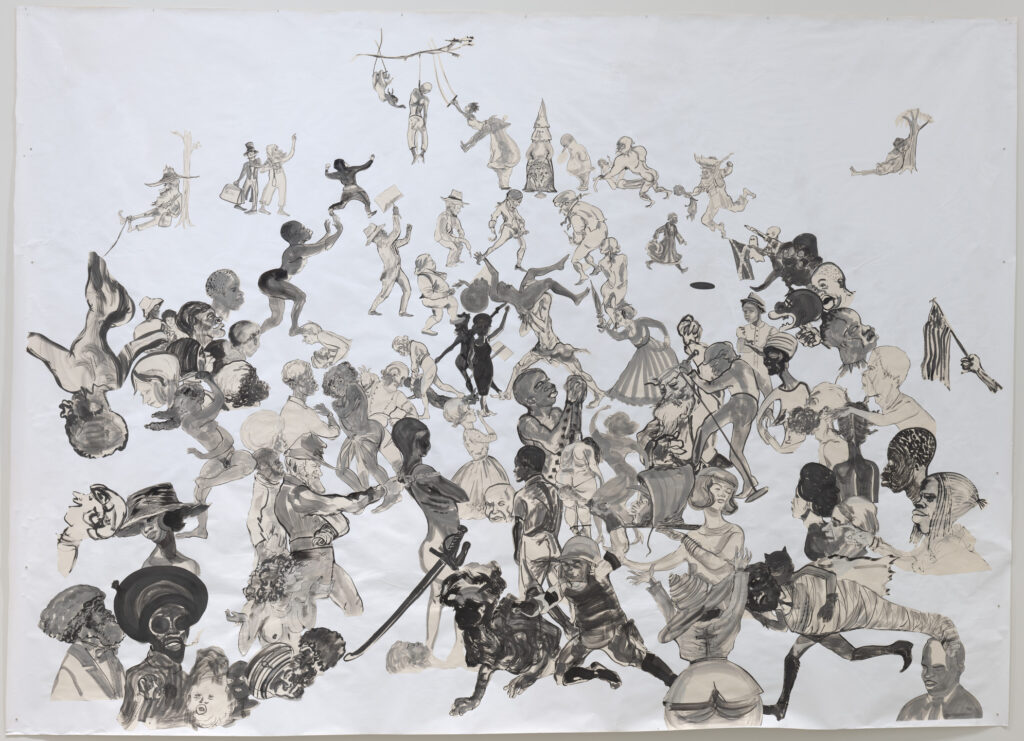
| Date of Completion | 2017 |
| Dimensions | 15 x 15 feet |
| Location | Collection of the Broad Museum, Los Angeles |
“Christ’s Entry into Journalism” is a monumental work that references a historic painting by William Holman Hunt, “The Triumph of the Innocents.” Walker reimagines the scene with contemporary silhouettes and imagery, highlighting the media’s role in perpetuating racial stereotypes and social injustices. The work questions the portrayal of innocence and guilt in today’s society.
8. Negress Notes
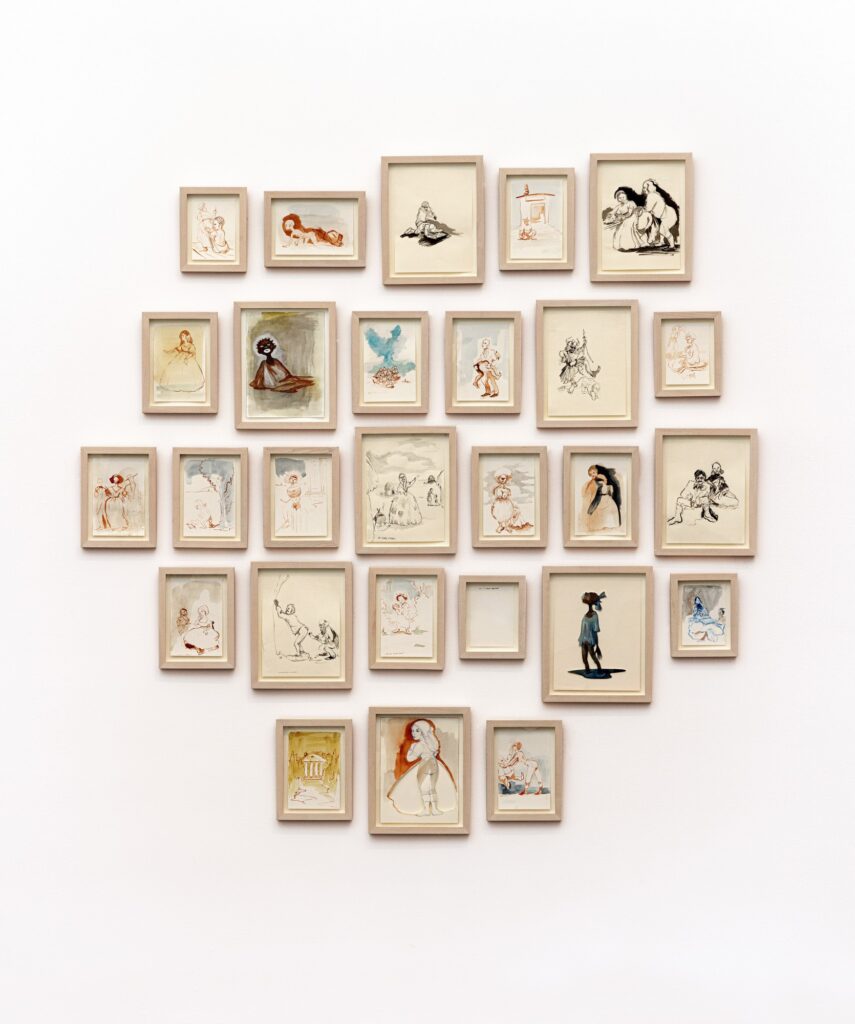
| Date of Completion | 2015 |
| Dimensions | Variable |
| Location | Collection of the Art Institute of Chicago |
“Negress Notes” is a mixed-media work that explores themes of memory, identity, and the complexities of being Black in America. Walker combines her signature silhouette style with handwritten notes and photographs, creating a deeply personal and evocative piece that resonates with viewers on a visceral level.
9. Lost Mountain at Sunrise from Harper’s Pictorial History of the Civil War

| Date of Completion | 2015 |
| Dimensions | Variable |
| Location | Collection of the Museum of Fine Arts, Boston |
In this work, Walker appropriates and transforms a historical lithograph from Harper’s Pictorial History of the Civil War. She overlays the original image with intricate cut-paper silhouettes that tell a different narrative, addressing the overlooked experiences and perspectives of African Americans during the Civil War.
10. Burn
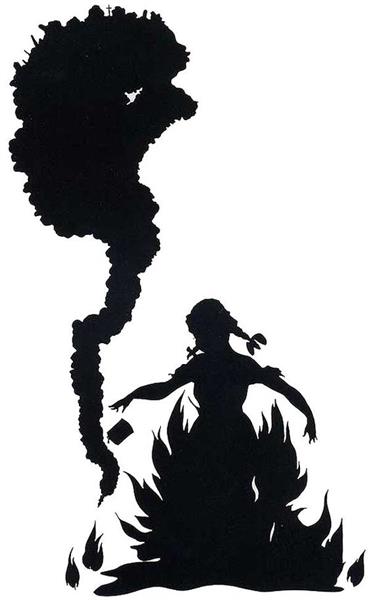
| Date of Completion | 2020 |
| Dimensions | Variable |
| Location | Collection of the Museum of Modern Art, New York |
“Burn” is a striking work that evokes both destruction and rebirth. It features a burning plantation house, a recurring motif in Walker’s art, and addresses the legacy of slavery. This Kara’s artwork forces viewers to confront the ongoing impact of historical atrocities.
11. I’m Only Dancing
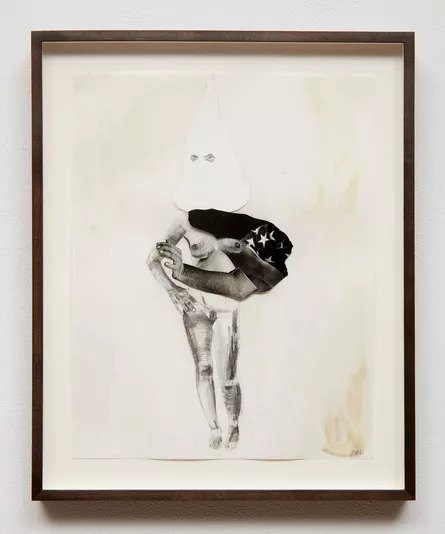
| Date of Completion | 2016 |
| Dimensions | Variable |
| Location | Collection of the Art Institute of Chicago |
“I’m Only Dancing” is a visually arresting work that uses silhouettes to create a sense of fluidity and motion. It raises questions about the performative nature of race and gender, challenging stereotypes and societal expectations.
12. The Trap
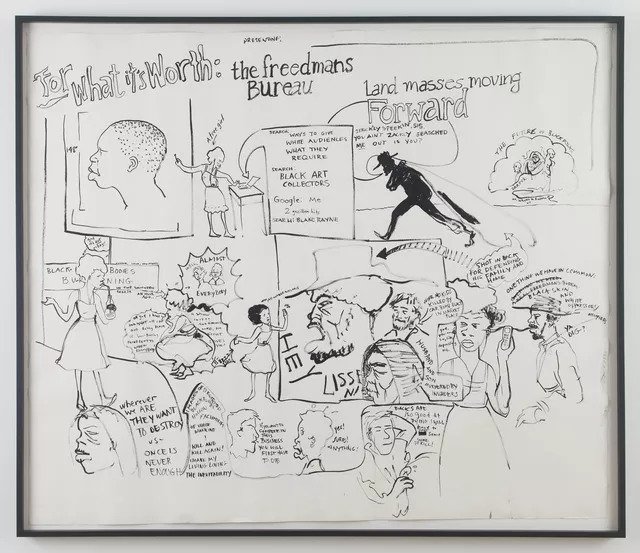
| Date of Completion | 2018 |
| Dimensions | Variable |
| Location | Collection of the Victoria Miro Gallery, London |
“The Trap” is a thought-provoking sculpture that engages with issues of confinement and captivity. This work continues Walker’s exploration of race and oppression through a multi-dimensional and abstract approach, leaving ample room for interpretation.
Artwork Spotlight: Turn of the Century Portrait of an Upper Class Couple in Red Tones
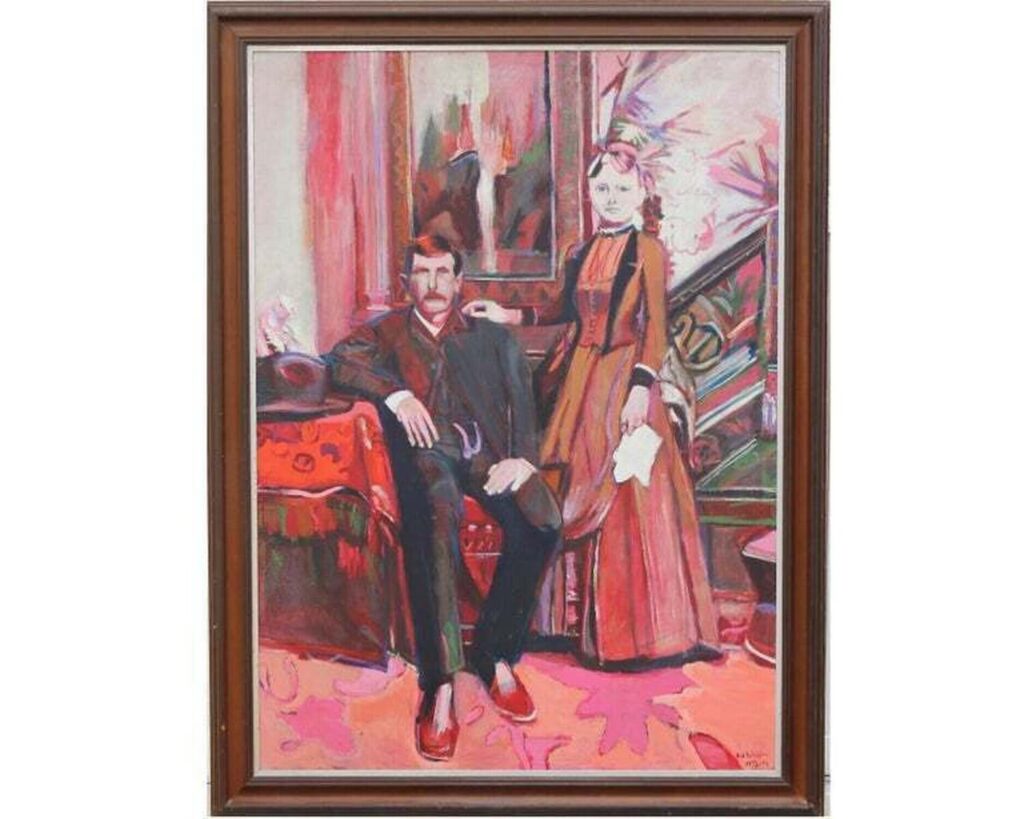
Kara Walker’s “Turn of the Century Portrait of an Upper Class Couple in Red Tones” is available on Singulart. It is a masterful work, one that deals with race, dominance, and history. By employing silhouettes and red tones, Walker challenges and subverts nostalgia.
Are you looking for a piece of artwork from Kara Walker?
Singulart has limited edition prints of Kara Walker. If you are looking for a piece of Walker‘s artwork for sale, simply click on the artwork or the button below to discover more!
Frequently Asked Questions
What are the types of Kara Walker’s artwork?
Kara Walker was an American installation artist who made statements about power, racial, and gender relations through the use of elaborate cut-paper silhouettes as well as collage, painting, drawing, performance, film, video, shadow puppetry, light projection, and animation.
What themes does Kara Walker explore in her artwork?
Kara Walker explores themes of race, gender, power dynamics, and historical narratives in her artwork.
Conclusion
Kara Walker’s art is a powerful and unflinching exploration of race, history, and contemporary society. Her ability to combine historical references with contemporary symbolism and her distinctive silhouette style make her work both visually captivating and intellectually challenging. These 12 artworks represent just a fraction of her impressive body of work, which continues to push boundaries and engage viewers in critical conversations about America’s complex and troubled past. Through her art, Kara Walker urges us to confront the uncomfortable truths and persistent injustices that shape our world.