Step into the enchanting paintings of Diego Velázquez, the artistic genius of the Spanish Baroque period. His paintings are like a time machine that whisks us away to the opulent Spanish royal court, bustling streets of Seville, and the mythological realms of gods and goddesses. Buckle up for a fun and light-hearted journey through 12 of Velázquez’s most famous masterpieces, where we’ll discover intriguing stories behind each artwork. And to keep things organized, we’ve created a nifty table with essential details about each painting.
1. Las Meninas (The Royal Bunch)

| Date of Completion | 1656 |
| Dimensions | Bigger than your TV – 318 cm × 276 cm |
| Location | Museo del Prado, Madrid |
Las Meninas, or “The Maids of Honor,” is like a royal Where’s Waldo. In this gigantic painting, Velázquez takes us on a stroll through the Spanish royal family’s crib. The highlight? The little Infanta Margarita Teresa, who’s front and center while everyone else is busy doing royal things. And if you squint just right, you’ll spot the King and Queen photobombing in a mirror. This one’s like a 17th-century royal selfie!
2. The Surrender of Breda (Let’s Shake on It)
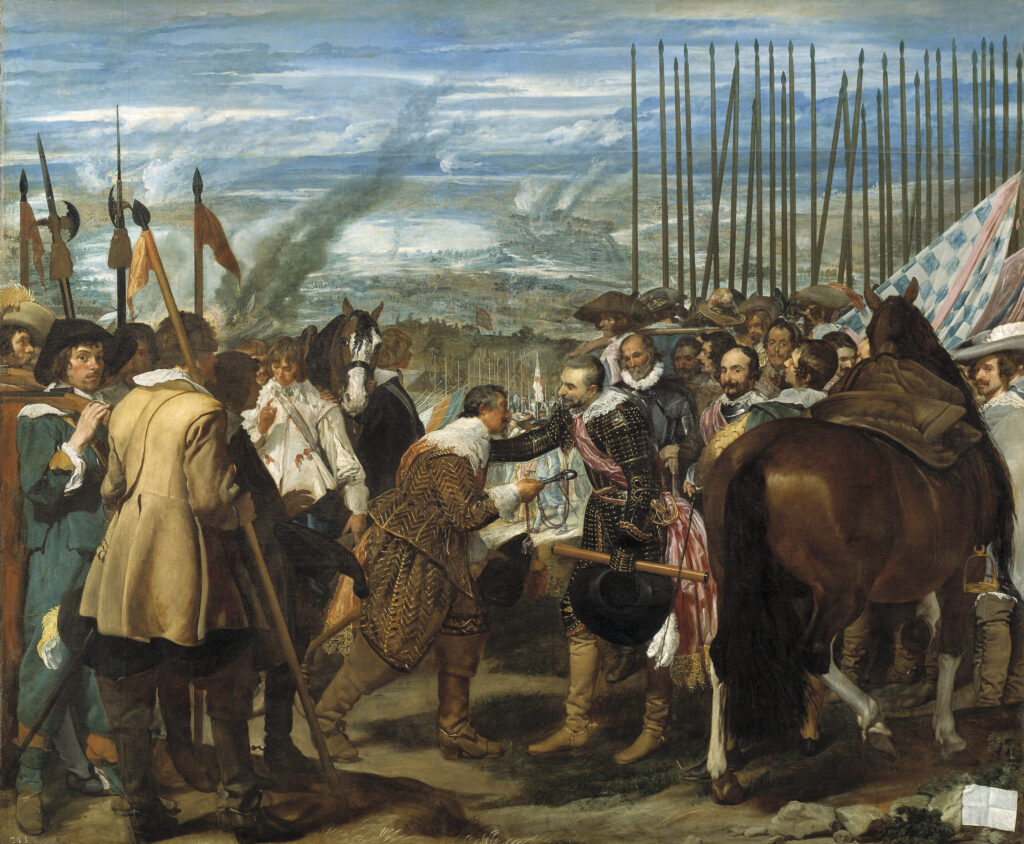
| Date of Completion | 1634-1635 |
| Dimensions | As big as two refrigerators – 307 cm × 367 cm |
| Location | Museo del Prado, Madrid |
Imagine an epic handshake moment in history – that’s what “The Surrender of Breda” is all about. Velázquez captures the Dutch city of Breda surrendering to the Spanish in 1625. The two main characters, General Spinola and the Dutch Governor, are like, “Bro, we’re cool now!” It’s a bit like a dramatic scene from your favorite historical TV show, but in paint.
3. Infanta Margarita Teresa in a Blue Dress (Blue-tiful)

| Date of Completion | 1659 |
| Dimensions | Bigger than your fridge – 127 cm × 107 cm |
| Location | Kunsthistorisches Museum, Vienna |
Infanta Margarita Teresa is ready for her close-up in a stunning blue dress. Velázquez basically took fashion photography to the next level 17th-century style. This portrait is all about showcasing Margarita’s charisma and royal charm. If Instagram existed in Velázquez’s time, this would have had millions of likes.
4. Pope Innocent X (The Pope’s Shocked Selfie)
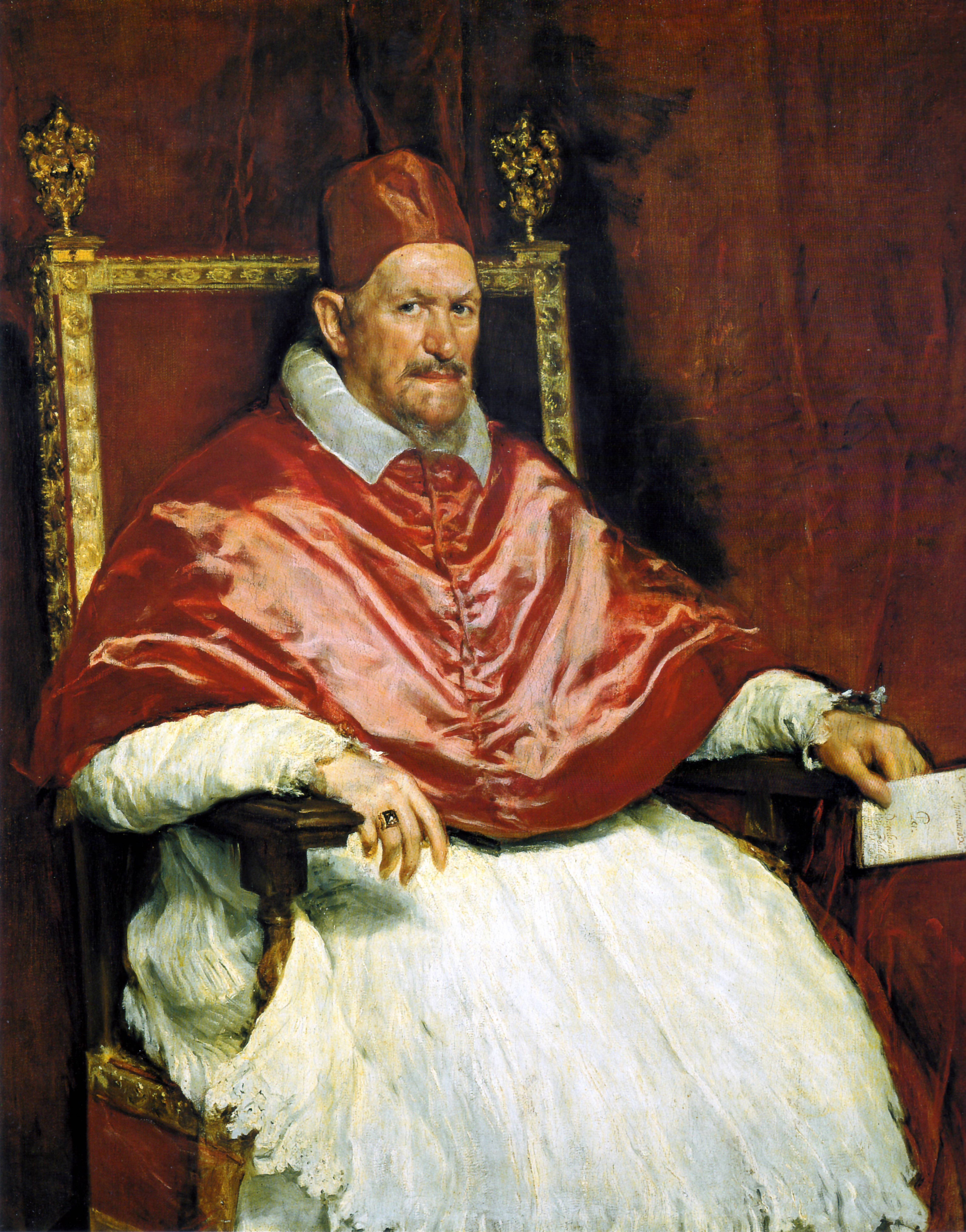
| Date of Completion | 1650 |
| Dimensions | About the size of your tall friend – 140 cm × 118 cm |
| Location | Galleria Doria Pamphilj, Rome |
Pope Innocent X had quite the reaction when Velázquez painted him. The Pope’s facial expression makes it look like he just saw the menu prices at a fancy restaurant. Velázquez’s skill captures the Pope’s power and vulnerability with impressive realism, and it’s like he’s taking a selfie that says, “Holy moly, what have I gotten myself into?”
5. The Rokeby Venus (Mirror, Mirror)
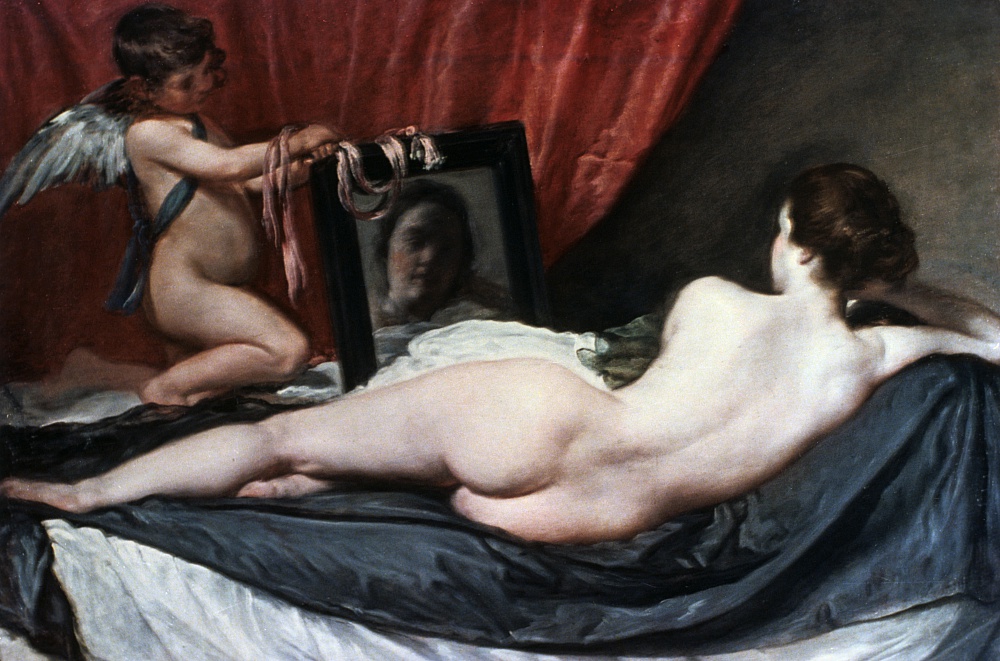
| Date of Completion | 1647-1651 |
| Dimensions | As tall as your doorway – 122 cm × 177 cm |
| Location | National Gallery, London |
“The Rokeby Venus” is all about that classic ‘mirror, mirror on the wall’ moment. It’s the only known nude by Velázquez, and the goddess Venus herself is the star. What makes this painting special is the clever use of a mirror held by Cupid, reflecting the viewer’s own curious face. You’re a part of the artwork – genius, right?
6. Philip IV in Brown and Silver (Royal Fashionista)

| Date of Completion | 1631-1632 |
| Dimensions | Almost as tall as your best friend – 203 cm × 107 cm |
| Location | National Gallery, London |
Ever wondered what a fashionable royal king looks like? Velázquez’s got your back with “Philip IV in Brown and Silver.” This painting shows the King in a more laid-back and reflective mood, as if he’s saying, “I rule the kingdom, but I also appreciate fine fashion.” The play of light and shadow on his fancy attire is on point.
7. The Spinners (Let’s Get Spinning)

| Date of Completion | 1657 |
| Dimensions | Bigger than your giant TV – 235 cm × 285 cm |
| Location | Museo del Prado, Madrid |
“The Spinners” isn’t about a top-secret spinning club – it’s a peek into the world of women spinning yarn. Velázquez adds a twist by blending everyday life with Greek mythology. The intricate details of the tapestry and the ladies at work are so realistic that you might be tempted to join them for a spin (pun intended).
8. Portrait of Juan de Pareja (Painting Within a Painting)

| Date of Completion | 1650 |
| Dimensions | A little taller than your coffee table – 81 cm × 69 cm |
| Location | Metropolitan Museum of Art, New York |
Meet Velázquez’s fellow artist and slave, Juan de Pareja. This isn’t just any portrait; it’s a portrait within a portrait. The rich details and the play of light on Juan de Pareja’s face and clothing make you want to have a conversation with him. Velázquez paints a masterpiece that’s as real as your best friend.
9. The Waterseller of Seville (Thirsty Much?)

| Date of Completion | 1618-1622 |
| Dimensions | About the size of your cool vintage record player – 105 cm × 80 cm |
| Location | Apsley House, London |
“The Waterseller of Seville” is like a snapshot of life on the streets of Seville. It features a vendor selling water. The attention to detail is insane – from the shiny water jug to the beggar’s shabby clothes. It’s a slice of everyday life in 17th-century Spain, but it’s so detailed you could almost hear the haggling.
10. The Forge of Vulcan (Hot, Hot, Hot!)
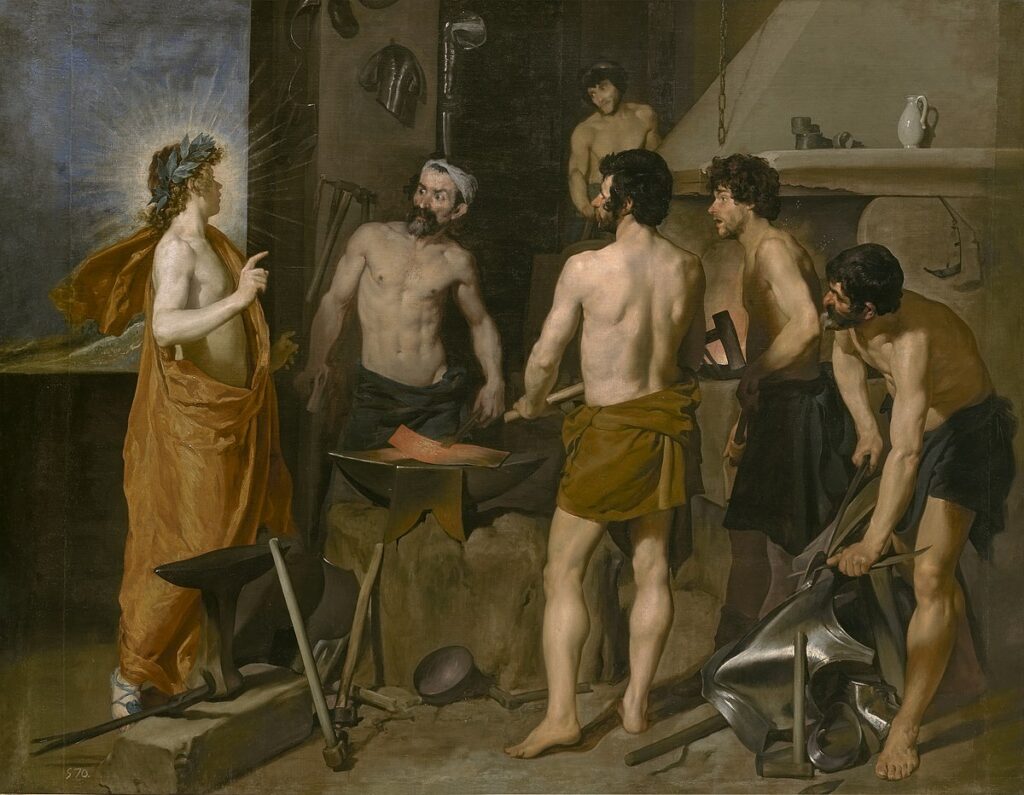
| Date of Completion | 1630 |
| Dimensions | As wide as your dining table – 223 cm × 290 cm |
| Location | Museo del Prado, Madrid |
“The Forge of Vulcan” takes you to the mythological realm of the blacksmith god, Vulcan. It’s like a blazing-hot barbecue party, but instead of burgers, they’re forging epic weapons. The fiery backdrop and muscular figures give this painting a supercharged, action-packed vibe. It’s like a 17th-century action movie poster.
11. Mars Resting (Nap Time for the God of War)

| Date of Completion | 1640 |
| Dimensions | Almost as tall as your bedroom door – 179 cm × 95 cm |
| Location | Museo del Prado, Madrid |
“Mars Resting” is a snapshot of the god of war, Mars, taking a well-deserved nap. Imagine your fiercest action figure snoozing on the couch. Velázquez brings a dose of reality to the mythological world, showing Mars as a weary and aging warrior. The play of light and shadow on his armor is like a spotlight on a rock star.
12. Christ in the House of Mary and Martha (Holy Hospitality)

| Date of Completion | 1618 |
| Dimensions | As wide as your favorite reading nook – 60 cm × 103 cm |
| Location | National Gallery, London |
“Christ in the House of Mary and Martha” is like a biblical episode of a reality TV show. It shows Jesus visiting the home of Mary and Martha. The rich colors and expressions of the characters make this religious scene surprisingly relatable. It’s like a scene from a heartwarming family sitcom, with a touch of spirituality.
Frequently Asked Questions
What was Diego Velazquez most known piece of artwork?
Among Velazquez’s paintings, Las Meninas is probably the most well-known and iconic piece from the Baroque era. It was finished in the year 1656 and shows a scene from King Philip IV of Spain’s court, with the monarch and queen visible in the background as they are mirrored in a mirror.
Who taught Diego Velazquez to paint?
Diego Velázquez began his studies with Francisco Herrera the Elder before serving as Francisco Pacheco’s apprentice for almost six years. Velázquez tried to win the royal favor when Great Philip IV took the throne in 1621. At last, he succeeded in 1623, and he was the only painter authorized to paint the king.
Conclusion
Diego Velázquez’s art is like a colorful time-travel adventure through history, and each of these Velazquez’s paintings is a vivid chapter in the story. From royal selfies to mythological BBQs and everyday life snapshots, Velázquez’s brushwork and storytelling are pure magic. The next time you’re in a museum or gallery, don’t just look – engage, and you might find yourself in a lively conversation with a 17th-century painting! Art, after all, is a timeless friend who loves to chat.