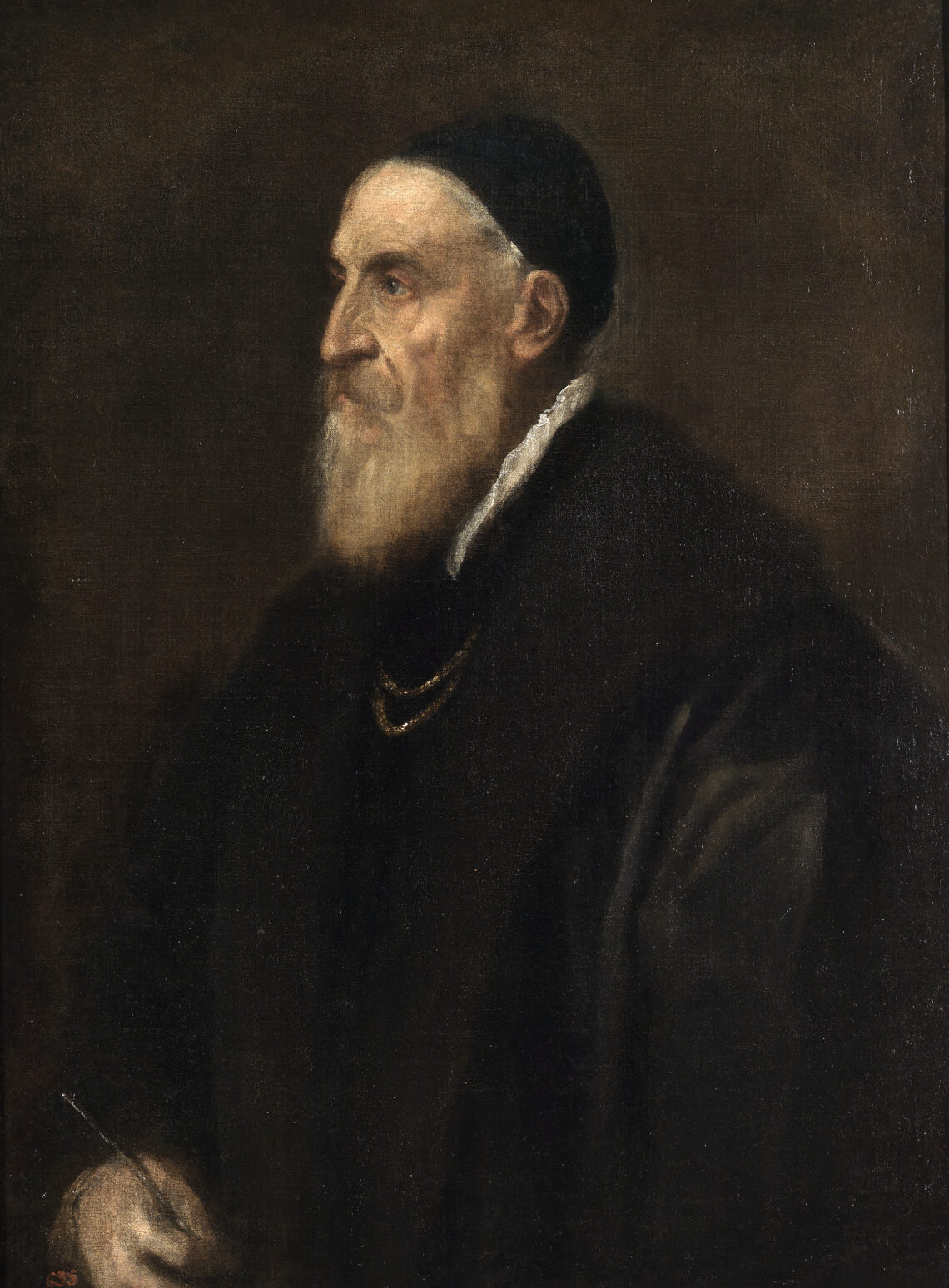
In the illustrious annals of art history, the name Titian stands as a beacon of brilliance, casting a luminescent glow across the Venetian Renaissance. Born Tiziano Vecellio in the late 15th century, Titian’s journey from the studios of Bellini and Giorgione to the pinnacle of artistic mastery is a narrative of resilience, creativity, and unwavering passion. As we delve into the enchanting world of Titian paintings, we unravel the threads of his early education, his soaring career, and the trials that shaped the hand behind the brush. These elements converge in a kaleidoscope of color and emotion in ten masterpieces that continue to captivate the hearts of art connoisseurs worldwide. Join us on this exhilarating odyssey through the life and works of a true Renaissance luminary.
1. Assumption of the Virgin
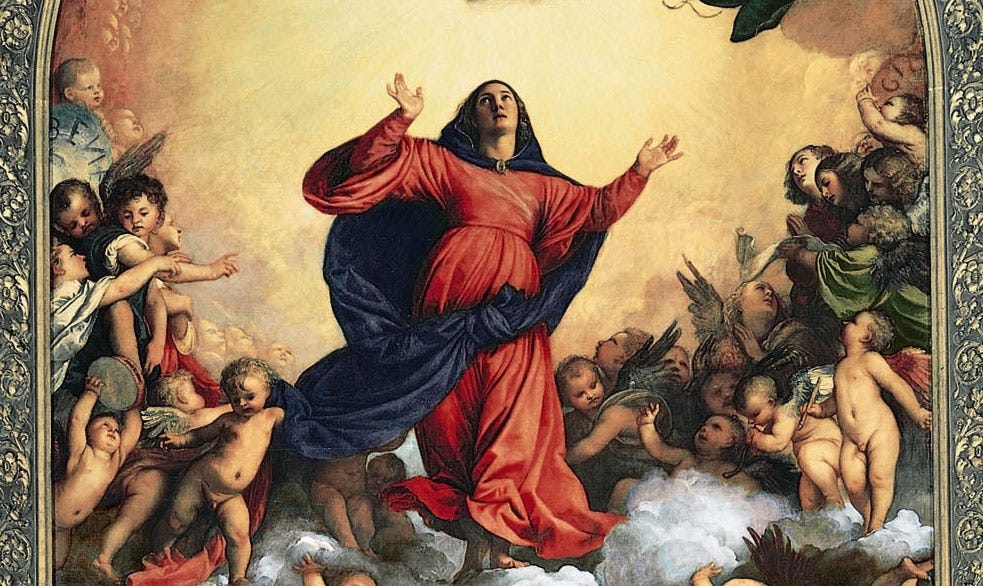
| Date of Completion | 1516-1518 |
| Dimensions | 690 cm × 360 cm |
| Location | Basilica di Santa Maria Gloriosa dei Frari, Venice |
Our odyssey commences with the celestial grandeur of the “Assumption of the Virgin.” Painted between 1516 and 1518, this monumental masterpiece stands tall at 690 cm by 360 cm in the Basilica di Santa Maria Gloriosa dei Frari in Venice. Picture yourself standing in awe, craning your neck to take in the divine splendor that Titian has captured in this colossal altarpiece.
2. Bacchus and Ariadne
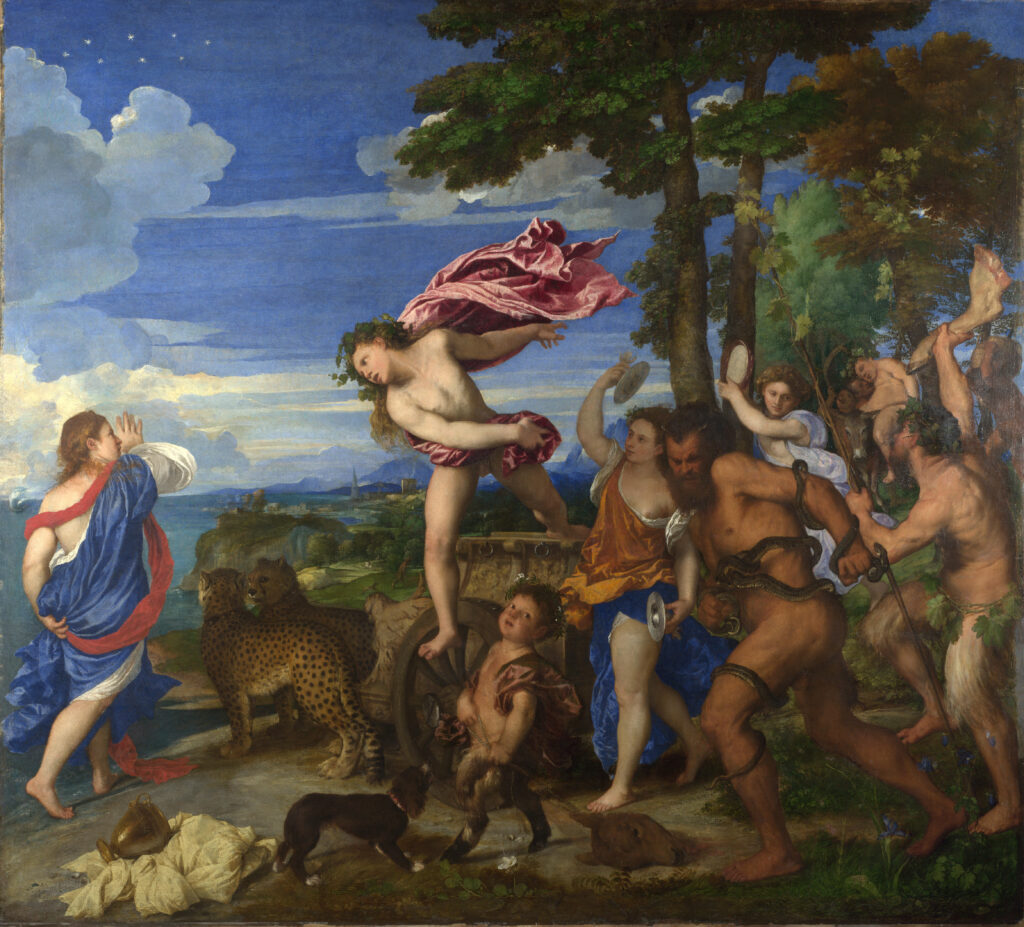
| Date of Completion | 1520-1523 |
| Dimensions | 176.5 cm × 191 cm |
| Location | National Gallery, London |
Now, let’s swing into the mythical revelry of “Bacchus and Ariadne.” Painted between 1520 and 1523, this masterpiece adorns the walls of the National Gallery in London, measuring a dynamic 176.5 cm by 191 cm. Can you feel the rhythm of the music, the clinking of goblets, and the joyous laughter as Bacchus, the god of wine, sweeps Ariadne into a dance that transcends time?
3. Diana and Actaeon
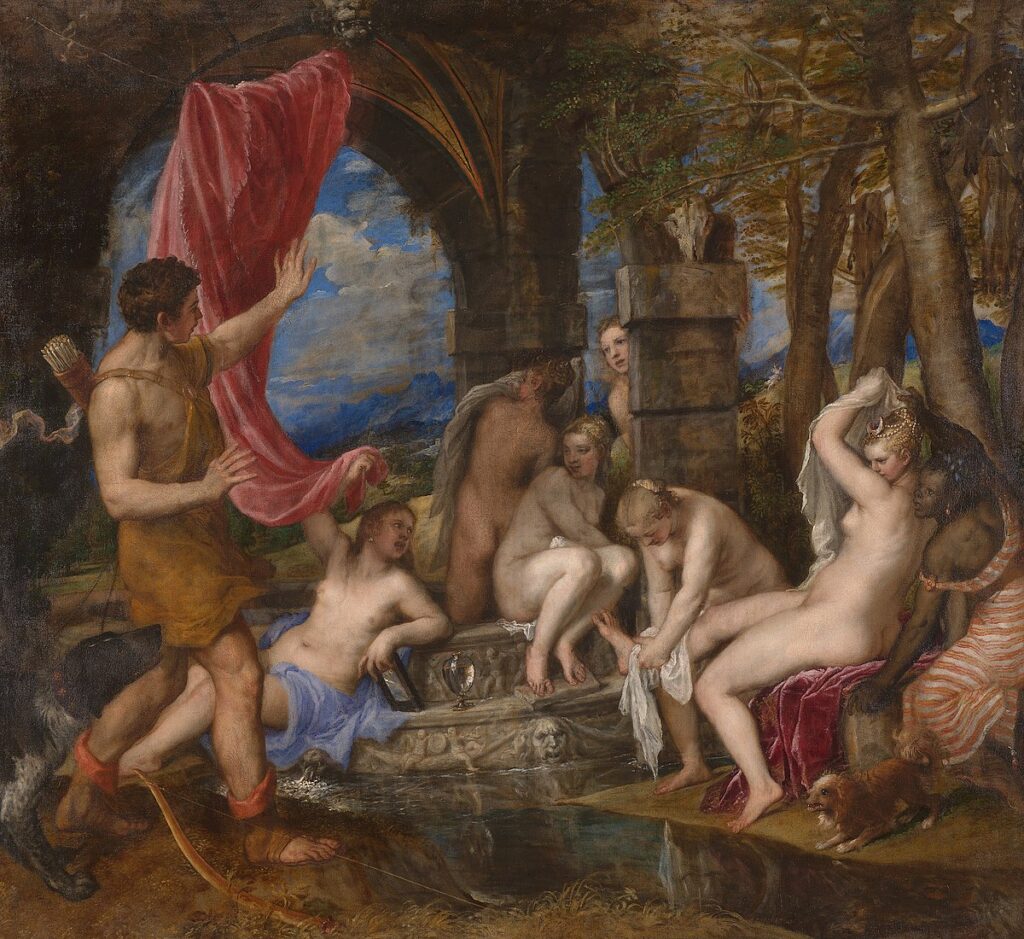
| Date of Completion | 1556-1559 |
| Dimensions | 185.4 cm × 202.2 cm |
| Location | National Gallery, London |
Hold on tight as we dive into the dramatic waters of “Diana and Actaeon.” Painted between 1556 and 1559, this emotional rollercoaster can be found at the National Gallery, London, standing tall at 185.4 cm by 202.2 cm. Feel the tension as the goddess Diana discovers the intrusion of Actaeon, a moment frozen in time by Titian’s masterful strokes.
4. Venus of Urbino
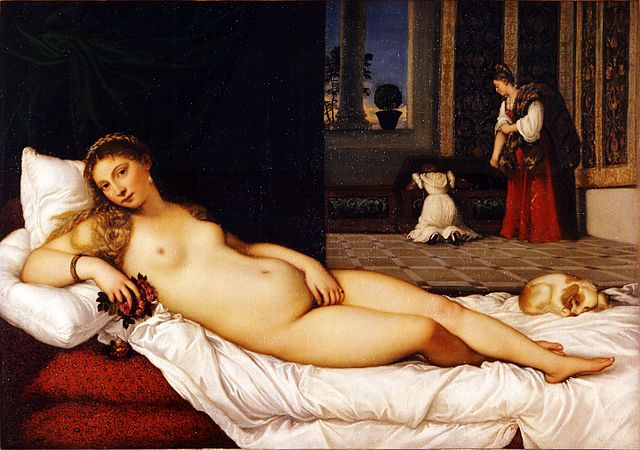
| Date of Completion | 1534-1538 |
| Dimensions | 119 cm × 165 cm |
| Location | Uffizi Gallery, Florence |
Time to spice things up with the sultry “Venus of Urbino.” Painted between 1534 and 1538, this seductive masterpiece lounges in the Uffizi Gallery in Florence, measuring 119 cm by 165 cm. Can you sense the heat, the allure, as Titian’s brush transforms the canvas into a boudoir of desire, capturing the essence of the goddess of love?
5. The Rape of Europa
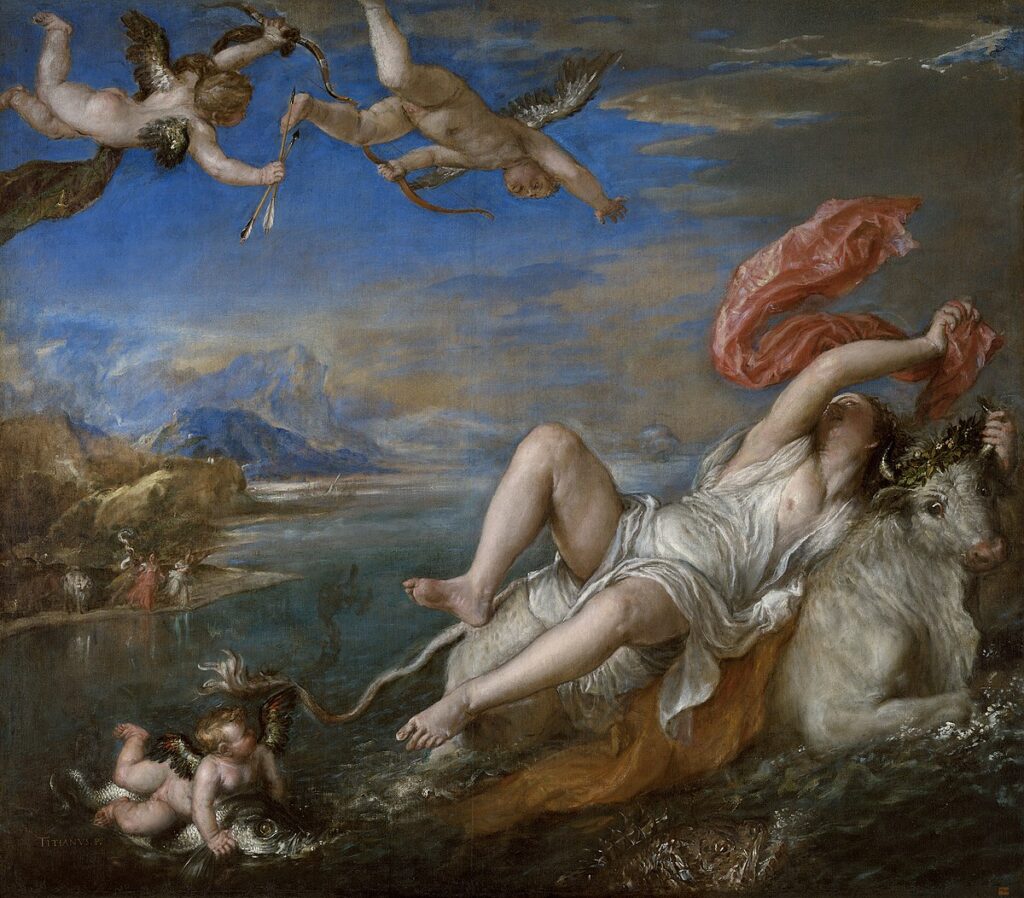
Hold on to your imagination as we set sail into the mythic waters of “The Rape of Europa.” Painted between 1560 and 1562, this captivating masterpiece resides in the Isabella Stewart Gardner Museum in Boston, measuring 178 cm by 205 cm. It’s not just a painting; it’s a voyage into the fantastical as Titian weaves the tale of Zeus and Europa.
6. Danaë with Nursemaid
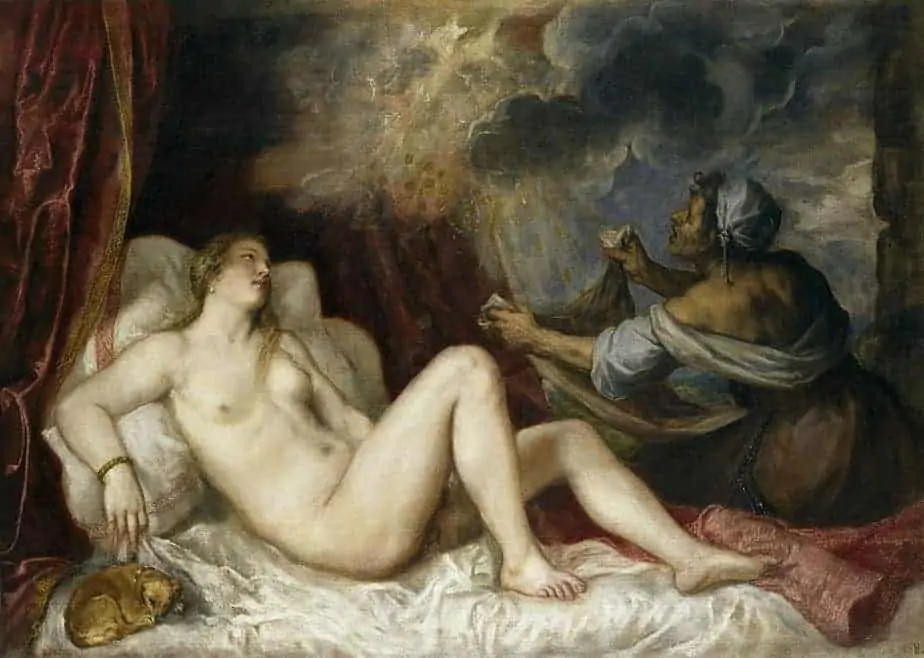
| Date of Completion | 1553-1554 |
| Dimensions | 120 cm × 172 cm |
| Location | The State Hermitage Museum, St. Petersburg |
Now, let’s melt into the tender embrace of “Danaë with Nursemaid.” Painted between 1553 and 1554, this intimate masterpiece is housed in The State Hermitage Museum in St. Petersburg, measuring 120 cm by 172 cm. Witness the divine connection as Danaë is showered in golden rain, capturing a moment of vulnerability and celestial tenderness.
7. Pope Paul III and His Grandsons
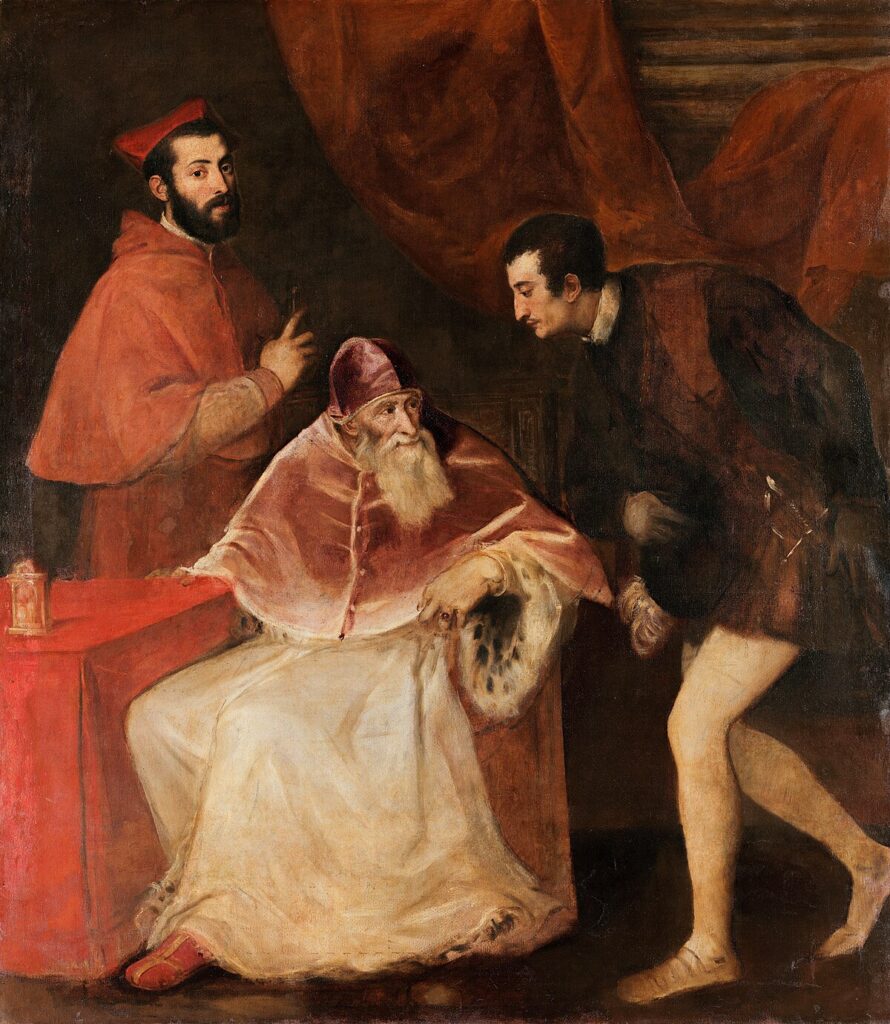
| Date of Completion | 1546 |
| Dimensions | 210 cm × 176.5 cm |
| Location | Museo di Capodimonte, Naples |
Shift gears as we enter the world of power and familial bonds in “Pope Paul III and His Grandsons.” Painted in 1546, this grand portrait resides in the Museo di Capodimonte in Naples, measuring 210 cm by 176.5 cm. It’s not just a canvas; it’s a time capsule that transports us to the presence of the powerful pontiff and his heirs.
8. Sacred and Profane Love
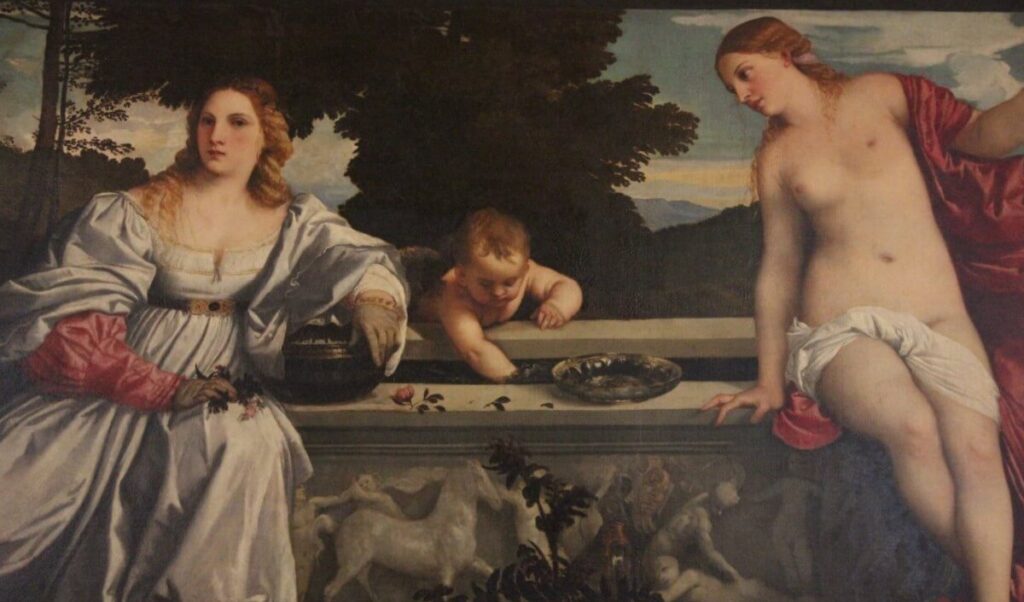
| Date of Completion | 1514 |
| Dimensions | 118 cm × 279 cm |
| Location | Borghese Gallery, Rome |
Let’s waltz into the enigmatic “Sacred and Profane Love.” Painted in 1514, this masterpiece stands proud in the Borghese Gallery in Rome, measuring 118 cm by 279 cm. Titian’s brush becomes a storyteller, weaving a narrative of contrasting love as two women, dressed differently, invite us on a journey through the complexities of human emotion.
9. Pesaro Madonna
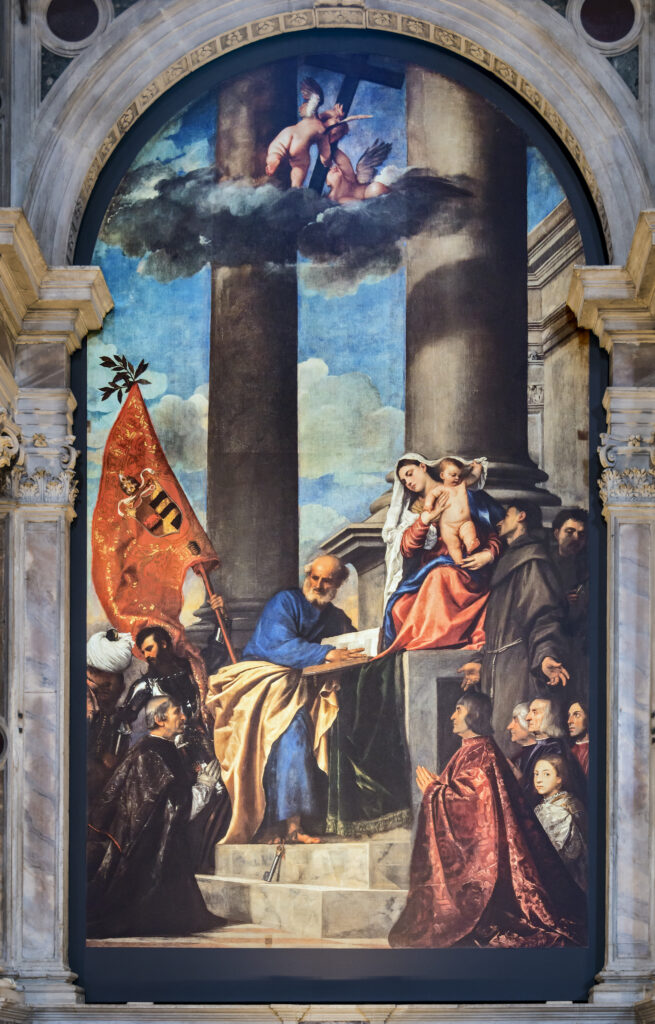
| Date of Completion | 1519-1526 |
| Dimensions | 225 cm × 185 cm |
| Location | Gemäldegalerie Alte Meister, Dresden |
Feel the divine embrace in the monumental “Pesaro Madonna.” Completed between 1519 and 1526, this painting stands tall at 225 cm by 185 cm in the Gemäldegalerie Alte Meister in Dresden. The Madonna’s gaze, tender and timeless, showcases Titian’s mastery in weaving the divine and the human into a single, stunning frame.
10. Equestrian Portrait of Charles V
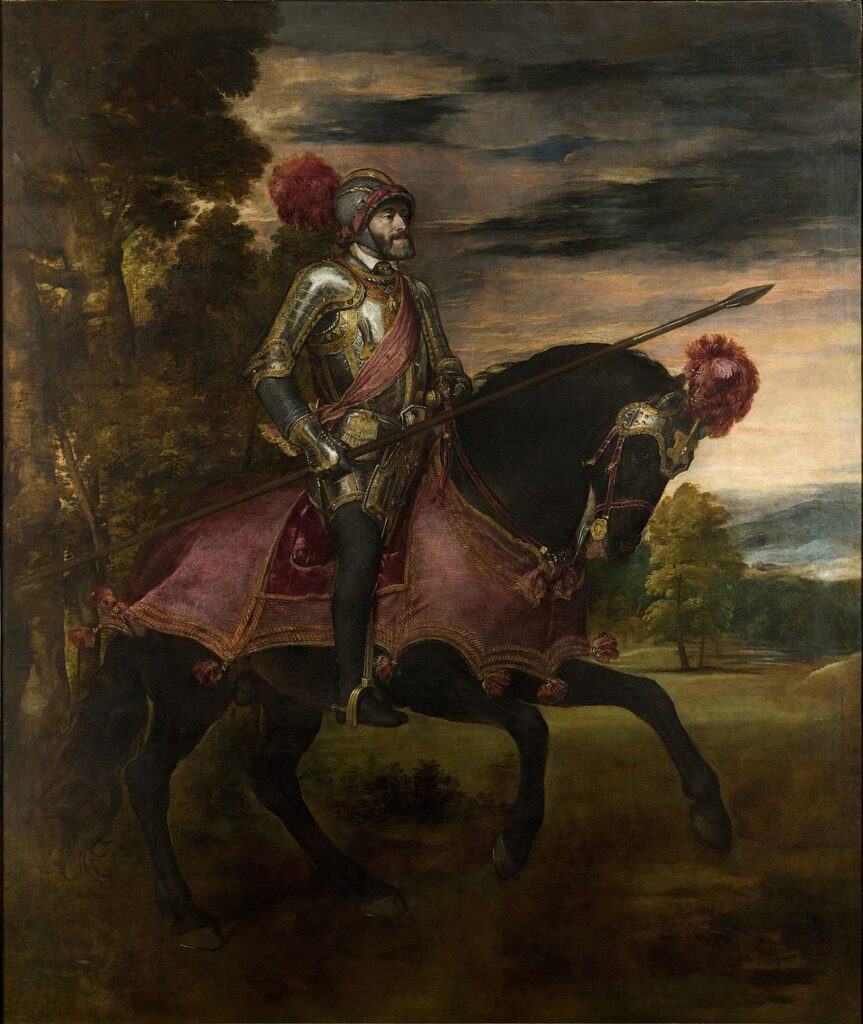
| Date of Completion | 1548 |
| Dimensions | 340 cm × 269 cm |
| Location | Museo del Prado, Madrid |
Our whirlwind odyssey concludes with the majestic “Equestrian Portrait of Charles V.” Painted in 1548, this imposing masterpiece stands tall in the Museo del Prado in Madrid, measuring 340 cm by 269 cm. Titian’s strokes transform the canvas into a royal tapestry, capturing the Holy Roman Emperor astride a powerful steed in all his grandeur.
Frequently Asked Questions
What is Titian’s most famous piece?
During 1522 and 1523, Titian painted one of his most well-known paintings, Bacchus and Ariadne. The image shows Ariadne, the daughter of King Menos of Crete, abandoned on an island by her lover. You could find this painting at London’s National Gallery.
What style of art is Titian known for?
Titian’s use of the brush became considerably more free beginning in the late 1550s, and his depictions of reality became less detailed. Titian, who was already very old, experimented with abstraction in his art in the late 1560s and early 1570s. “Magic impressionism” is the term used to describe this later style.
What are the characteristics of Titian paintings?
Titian is a Renaissance painter noted for his expressive handling of oil paint, dramatic compositions, skillful use of color, and highly lifelike subject matter. Titian is regarded as a founding member of the Venetian School, which is defined by these characteristics.
Conclusion
Titian’s brushstrokes are not just strokes; they are stories waiting to be told, emotions waiting to be felt, and adventures waiting to be embarked upon. From celestial heights to earthly desires, his masterpieces continue to enchant audiences, ensuring that Titian’s legacy remains a lively masterpiece in the grand gallery of art. Get ready to be swept away by the magic of his timeless creations, where each stroke is a heartbeat, and each canvas is a world waiting to be explored!