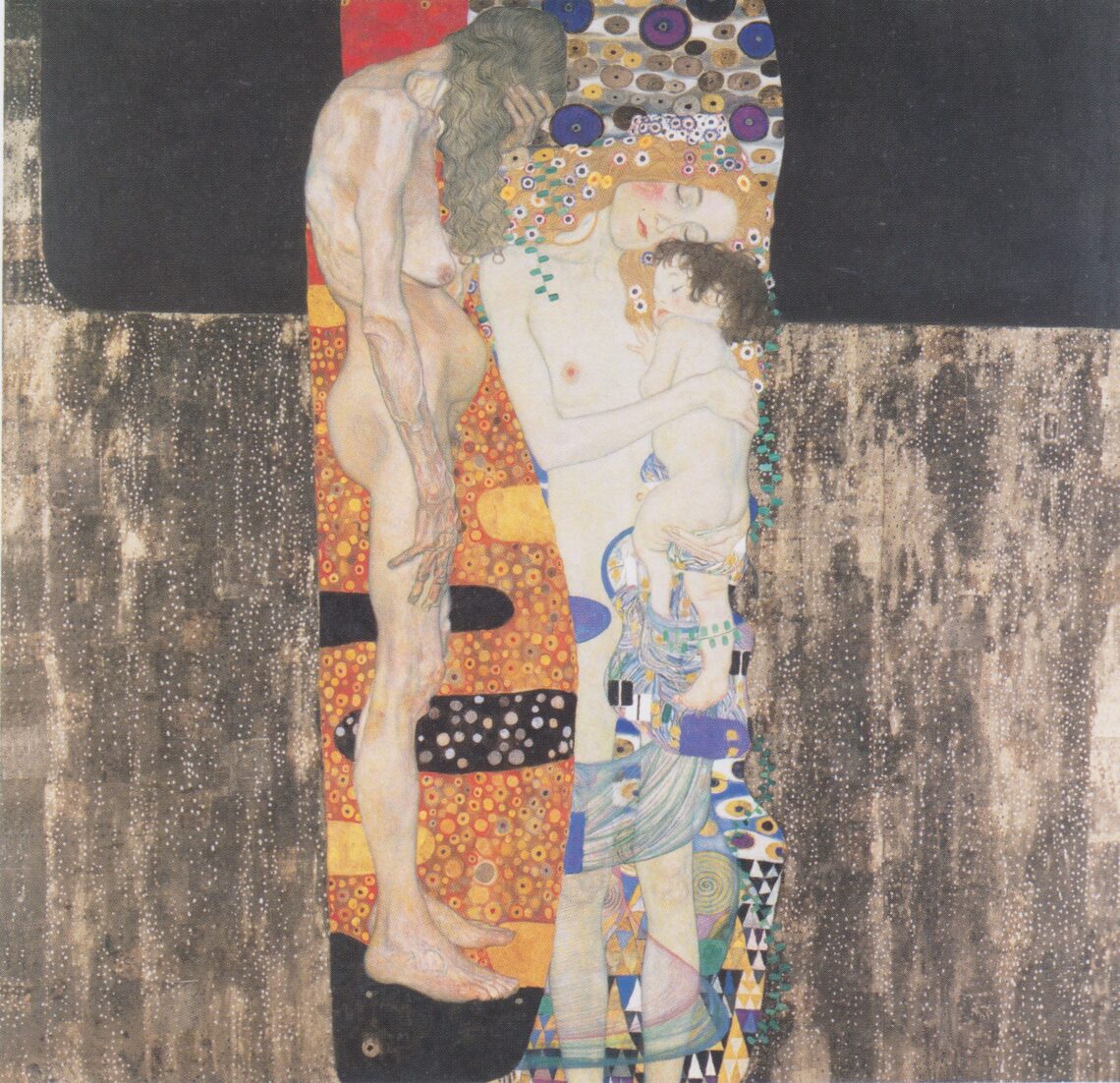
Step into the world of Gustav Klimt, an Austrian painter who translated life’s essence into art. Among his myriad masterpieces, The Three Ages of Woman stands tall, a canvas brimming with the complexities of existence, especially through the lens of femininity. In this immersive journey, we’ll unravel not just the layers of the painting but also Klimt’s life, career, and the riveting narrative etched in this iconic work.
Who was Gustav Klimt?
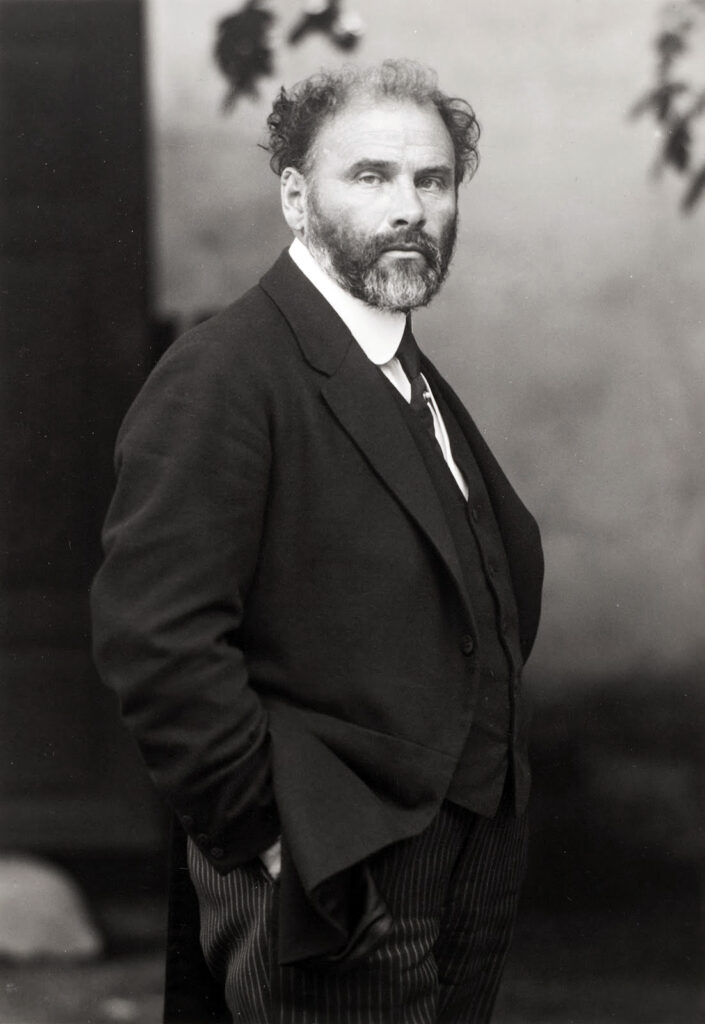
Imagine a summer day in 1862, in Baumgarten, near Vienna. That’s when Gustav Klimt, destined for artistic greatness, took his first breath. Co-founding the Vienna Secession in 1897, Klimt and his fellow artists were rebels against the art norms of their time. His art? A tapestry is woven with intricate details, color, symbolism, and an unquenchable fascination with the human form. Themes of love, death, and the mysteries of life danced through his canvases.
FUN FACT: Gustav Klimt used gold leaf in his paintings, particularly in his later works. This technique became one of his signature stylistic elements, symbolizing both opulence and spiritual transcendence.
His Career
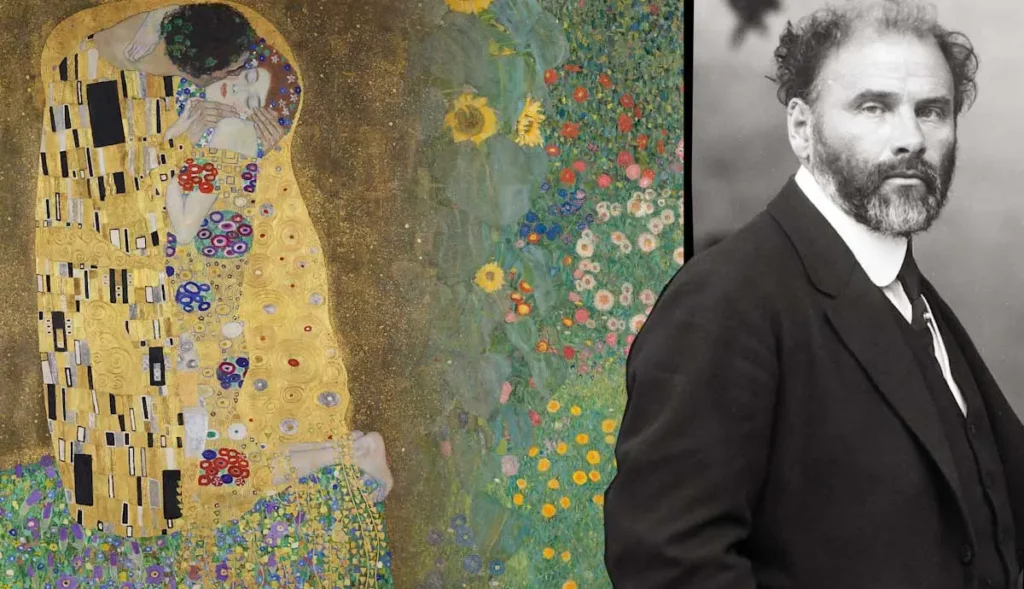
Picture the Belle Époque, that cultural renaissance in Europe around the early 1900s. Klimt, already immersed in symbolism, tiptoed into the Art Nouveau scene before finding his sweet spot in the Golden Phase, starting around 1899. Gold leaf became his signature, coinciding with the birth of “The Three Ages of Woman.”
The Three Ages of Woman
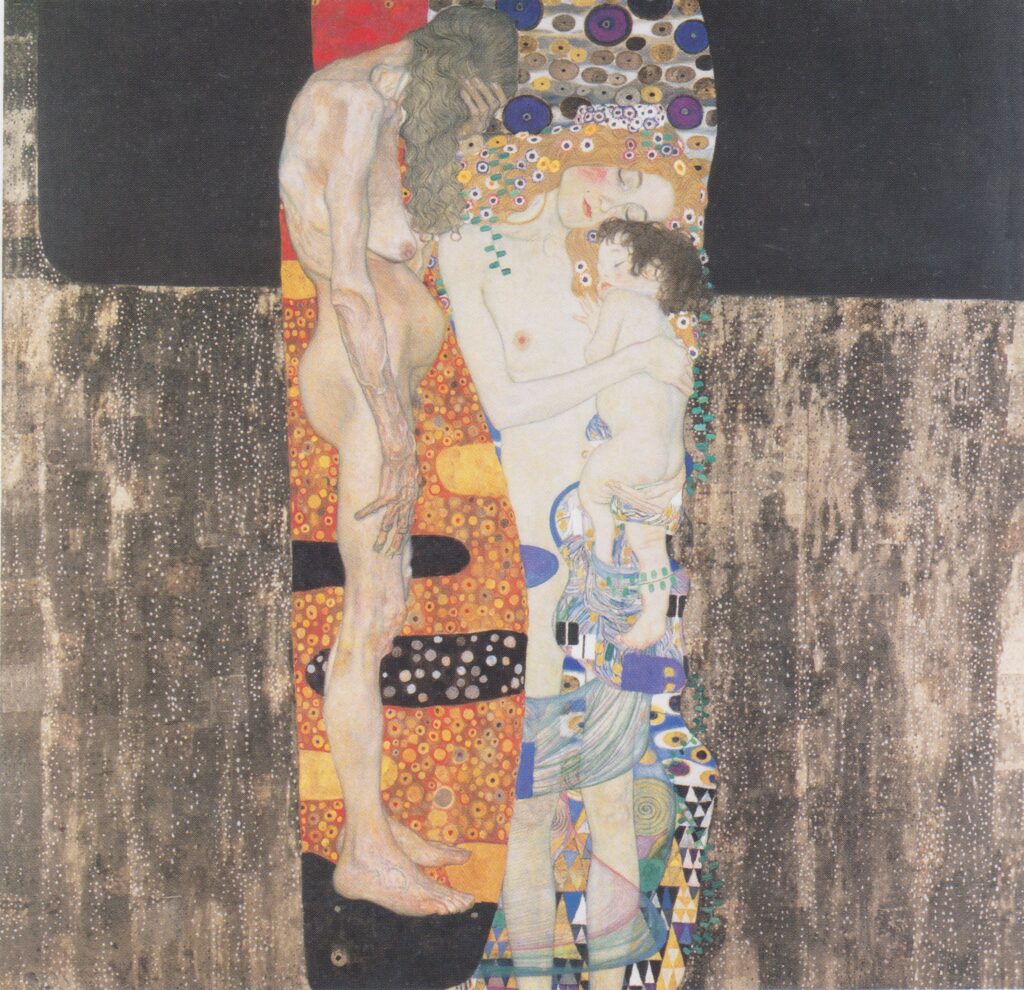
| Date Painted | 1905 |
| Medium | Oil on canvas |
| Genre | Symbolism |
| Period | Vienna Secession / Art Nouveau |
| Dimensions | 180 cm × 180 cm (71 in × 71 in) |
| Series/Versions | A one-of-a-kind masterpiece |
| Where is it housed? | Galleria Nazionale d’Arte Moderna in Rome, Italy |
Now, envision three women – a child, an adult, and an elderly lady. The older one cradles a pregnant woman who, in turn, holds a sleeping baby. It’s a profound visual narrative, illustrating life’s cycle from birth to death and shouting out the unbreakable connection between these phases.
Interesting Facts
Symbolism Galore: Klimt was the maestro of symbolism, and The Three Ages of Woman is his magnum opus. Each lady in the painting tells a different life story, showcasing the relentless march of time.
Freudian Vibes: Klimt’s art syncs up with Sigmund Freud’s psychoanalytic theories. The focus on elements like sexuality, life, and death in Klimt’s paintings aligns seamlessly with Freud’s deep exploration of the human psyche.
Stirring the Pot: Back in the day, this painting caused quite a stir. People weren’t sure what to make out of its bold themes. But if you look today, it’s a masterpiece, illustrating Klimt’s knack for challenging societal norms through his art.
Unraveling the Tapestry
In the heart of The Three Ages of Woman, we discover the true meaning of life’s journey. The figure depicts the child which represents innocence, the adult represents the struggles and triumphs of life, while the elderly woman holds the wisdom accumulated through the years. The pregnant woman forms a bridge which symbolizes the continuity of life. It’s not just a visual spectacle of an ordinary exhibition; it’s a mirror reflecting our journeys through time. See how Klimt explained life with his unique style of painting.
The Intricacies of Klimt’s Brush
Klimt’s distinctive style is evident in every stroke of The Three Ages of Woman. The painting is a dance between symbolism and intricate details. The gold leaf, a hallmark of his Golden Phase, isn’t just decorative; it’s a deliberate choice that elevates the painting to a realm beyond the ordinary. The luminous gold serves as a metaphor for the preciousness of life, casting a timeless glow over the entire composition.
The Controversial Symphony
Like many of Klimt’s creations, The Three Ages of Woman initially ruffled a few feathers. Its bold themes and departure from the conventional artistic norms of the time raised eyebrows. However, Klimt, with his unwavering commitment to artistic expression, stood his ground. Over time, the painting transitioned from controversy to reverence, solidifying its place as a timeless masterpiece.
Behind the Brushstrokes: A Glimpse into Klimt’s Mind
As we navigate through the depths of The Three Ages of Woman, we catch a glimpse of Klimt’s fascination with the human condition. His exploration of Freudian themes, coupled with symbolism, goes beyond mere aesthetics. It’s a plunge into the complexities of existence, a journey through the corridors of the human mind.
The Legacy Lives On
Today, The Three Ages of Woman stands as a testament to Klimt’s genius. Its allure lies not just in its visual brilliance but in its ability to resonate with the viewer on a profound level. The timeless themes of life, love, and mortality continue to captivate audiences, transcending the boundaries of time and culture.
Artwork Spotlight: Jeune femme accoudée
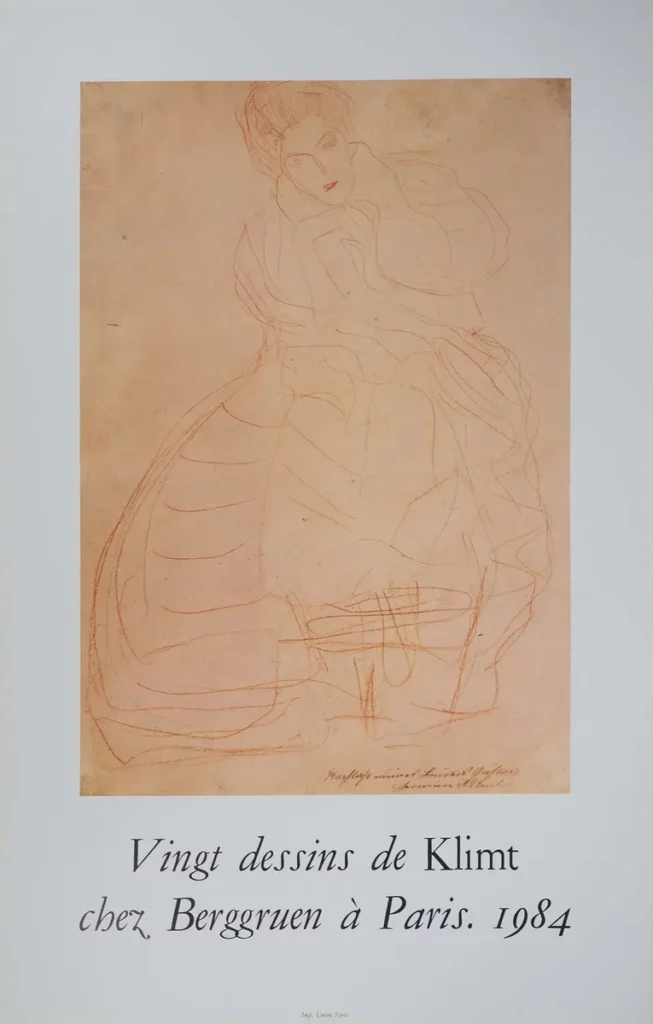
Jeune femme accoudée by Gustav Klimt is also available on Singulart. It is a painting that expresses the clairvoyance and mystery of the young woman. Klimt’s use of rich colors and detailed patterns brings to the painting a feeling of languor and depth of emotion.
Are you looking for a masterpiece from Gustav Klimt?
Singulart presents exclusive limited edition pieces by Gustav Klimt. To discover and acquire Klimt’s art, click on the artwork or the button below for more information!
Frequently Asked Questions
What does the three ages of woman symbolize?
Three ladies are depicted in the painting: an elderly woman who is about to pass away, a young girl in her prime, and a mother with her baby. Fundamentally, this painting is allegorical and symbolic. It stands for the life cycle that every woman experiences.
Where is the three ages of woman?
Gustav Klimt’s oil painting, The Three Ages of Woman, is 180 by 180 cm and was created in 1905. This masterpiece is kept at Rome’s Galleria Nazionale d’Arte Moderna.
Conclusion
In concluding our journey through the captivating world of Gustav Klimt’s The Three Ages of Woman, we find ourselves not just appreciating a painting but absorbing a narrative. Klimt’s ability to infuse life into art, to stretch the boundaries of social backgrounds, and to create a visual symphony that resonates across ages is nothing short of extraordinary.