Welcome, art enthusiasts, to the artistic world of Frida Kahlo, the art rockstar who painted her life’s roller coaster in vibrant strokes. Today, our spotlight is on The Wounded Deer, an artwork that’s not just a painting; it’s a wild fiesta of emotions. Buckle up for the ride as we explore the life of Frida, her career, dive into the surreal wonderland of The Wounded Deer, and unveil some backstage secrets.
Who was Frida Kahlo?
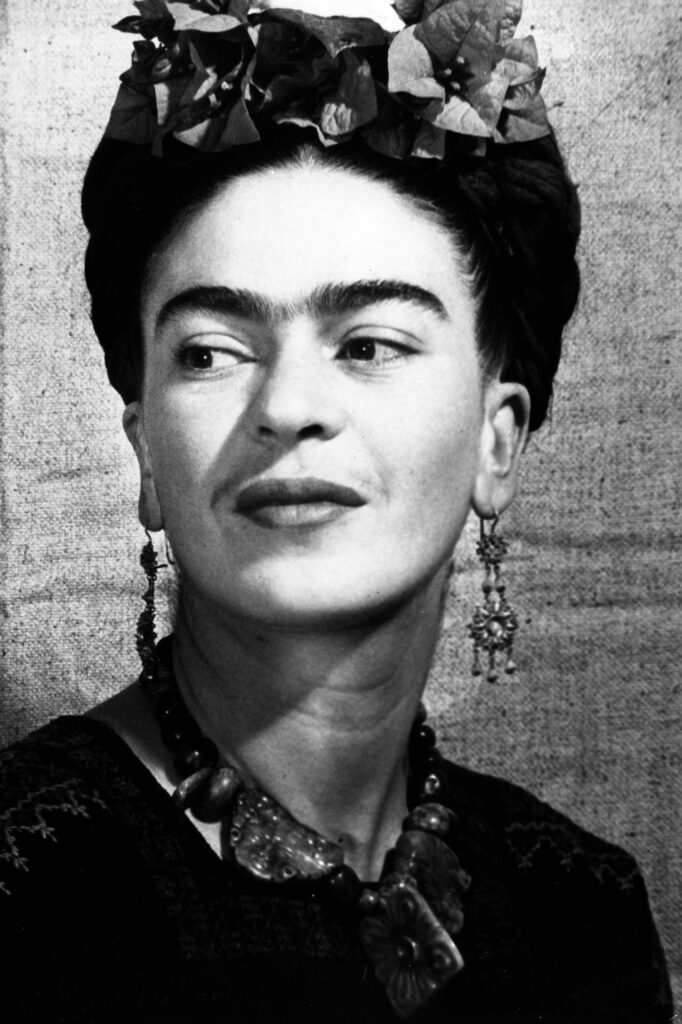
Picture this: 1907, Mexico. Frida Kahlo enters the scene, destined for a life as colorful as her palette. Her story reads like a Netflix drama, with a bus accident, brushes with death, and a whirlwind romance with fellow artist Diego Rivera. Frida wasn’t just an artist; she was a warrior who turned her pain into vibrant art, a visual storyteller with a knack for making emotions leap off the canvas.
Her Career
Fast forward to the 1920s, and Frida’s artistic journey kicks off. But it’s the 1930s that see her skyrocket to fame. Surrealism was all the rage, but Frida was the rebel, saying, “I’ll paint my reality, thank you very much.” Her art became a kaleidoscope of colors and symbols, a mirror reflecting her inner battles and triumphs.
What is happening in The Wounded Deer?
| Artist | Frida Kahlo |
| Date Painted | 1946 |
| Medium | Oil on masonite |
| Genre | Surrealism (aka the cool dreamscape) |
| Period | 20th Century (aka the era of wild vibes) |
| Dimensions | 21.5 in x 30.5 in (54.6 cm x 77.5 cm) |
| Series / Versions | Unique piece, no remixes |
| Where is it housed? | Museo Dolores Olmedo, Mexico City (the coolest art hangout) |
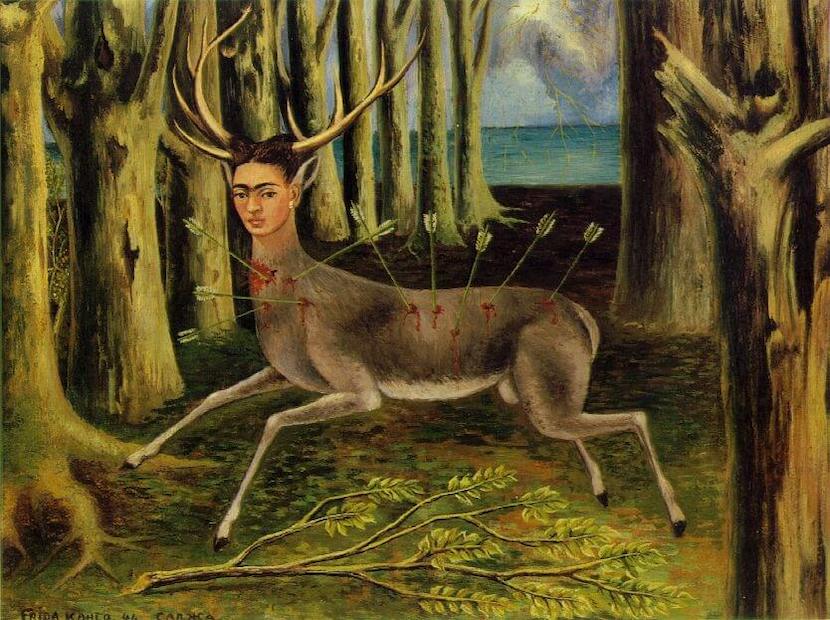
Now, let’s zoom into the heart of the party—the main figure, The Wounded Deer, painted in 1946. In this jaw-dropping self-portrait, Frida transforms into a mythical creature: part woman, part deer. Antlers crown her head, a symbol of vulnerability and strength, while an arrow pierces her, echoing the emotional wounds she carried.
The backdrop? Picture a drama-packed landscape with a spooky branch of tree and a sky ready to unleash lightning. Frida’s face? It’s a cocktail of pain and resilience, like a rockstar on stage, giving it all she’s got. The Wounded Deer is more than a painting; it’s an emotional rollercoaster in technicolor, a visual anthem of Frida’s wild journey.
Interesting Facts about The Wounded Deer
Now, let’s spill the paint (not tea) on some behind-the-scenes deets:
Symbolism of the Deer: Frida didn’t just randomly choose a deer. In cultural lore, deer stand for sensitivity and intuition. So, when Frida morphs into a wounded deer, she’s giving you a front-row seat to the emotional rollercoaster she called life.
Influence of Surrealism: Kahlo might have said “adios” to being labeled a surrealist, but The Wounded Deer is like a surrealist rave. Dreamy scenes, wild symbols—it’s a visual fiesta. Surrealism meets Frida, and it’s a match made in paint heaven.
Connection to Mexican Folklore: The background is like a Mexican folk dance—vibrant colors, indigenous nods, and a touch of desolation for that spicy flavor. It’s like a fiesta in the desert, complete with cacti and maracas.
Absence of Diego Rivera: Unlike other Kahlo hits where Diego steals the show, The Wounded Deer is like a solo track. No Diego, just Frida. It’s like a moment where she takes the stage, spotlight firmly on her wild journey.
Frequently Asked Questions
What is the meaning behind the wounded deer by Frida Kahlo?
“The Wounded Deer” symbolized Frida Kahlo’s despair because, even after having spinal operation, she continued to experience leg, back and body pain. Her physical health was affected to a greater extent. But she didn’t loose hope and accept it as her destiny. If you look right In the lower part of the picture, the word “Carma” is written. Since “carma” means “fate,” the main theme of “The Wounded Deer” is Frida’s destiny.
What happened to Frida Kahlo when she was 18?
Kahlo suffered lifelong suffering after a serious bus accident when she was eighteen. After the accident, Kahlo spent three months in bed and started painting. This gave her hope and gave her the chance to showcase her talent to the world. In order to merge her interests in science and art, she began to think about a career as a medical illustrator.
Conclusion
In a nutshell, The Wounded Deer is like a Frida Kahlo concert in a canvas—raw, emotional, and a visual party that never ends. By diving into the layers of this surreal masterpiece and catching a glimpse into Kahlo’s wild life, we get a front-row ticket to the intense vibes packed into this painting. It’s more than art; it’s an experience, a piece of Frida’s soul on display for the world to witness. So next time you’re at the Museo Dolores Olmedo in Mexico City, give The Wounded Deer a nod and say, “You sure know how to throw a party, Frida.”