Alright, buckle up, because we’re about to dive deep into the world of Pablo Picasso and one of his most mind-bending creations – The Three Dancers. Picasso left an indelible mark on the canvas of history, and this painting is like a wild ride through his emotions. In this article, we’re not just scratching the surface; we’re going all-in to understand the man, the masterpiece, and the magic that happens when paint meets passion.
Who was Pablo Picasso?
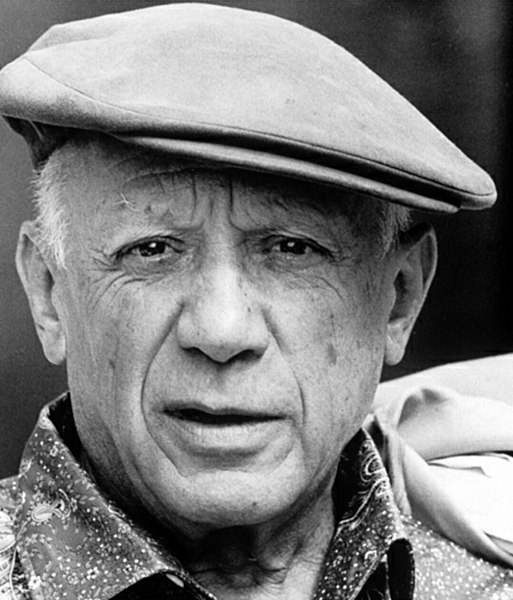
Pablo Picasso was born in Spain in the year 1881. Fast forward, and this guy becomes a famous celebrity of art. He painted, sculpted, and did all sorts of creative things. Picasso co-founded Cubism, which was like turning art into a puzzle. Then came the Blue and Rose Periods, where he splashed the canvas with different hues, leaving everyone in awe. Picasso was like the Elon Musk of the art world – always innovating, always pushing the boundaries.
FUN FACT: Did you know that Picasso’s full name is quite a mouthful? He was baptized as Pablo Diego José Francisco de Paula Juan Nepomuceno María de los Remedios Cipriano de la Santísima Trinidad Martyr Patricio Clito Ruíz y Picasso.
His Career
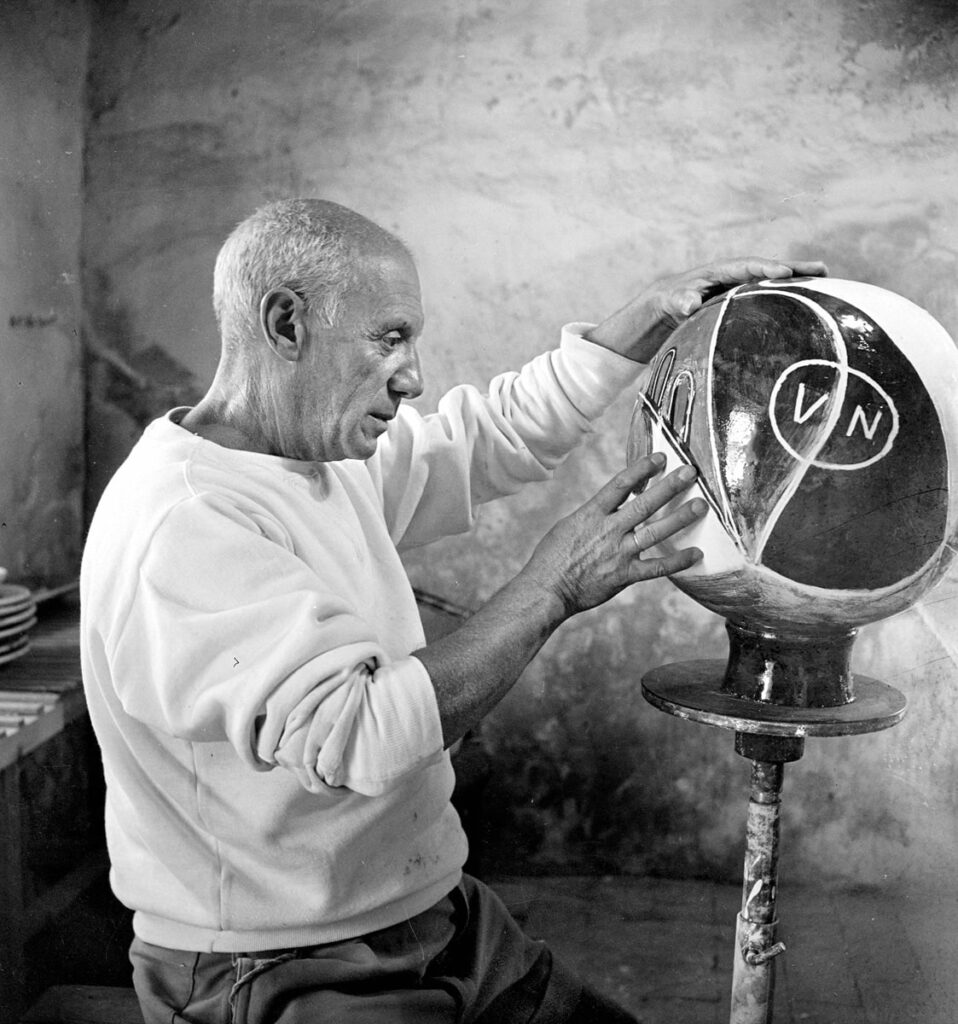
For over seven decades, Picasso created around 50,000 artworks! That’s like an artwork for every week of his life. From paintings that could make you weep to sculptures that could make you scratch your head, Picasso’s artworks were all over the map. He had these phases, like the Blue and Rose Periods, where he’d be into a specific style, and then he’d flip the script and try something completely different.
What is happening in “The Three Dancers”?
| Artist | Pablo Picasso |
| Date Painted | 1925 |
| Medium | Oil on canvas |
| Genre | Surrealism |
| Period | Surrealist |
| Dimensions | 215 cm × 142 cm (84.6 in × 55.9 in) |
| Series / Versions | Unique |
| Where is it housed? | Tate Modern, London |
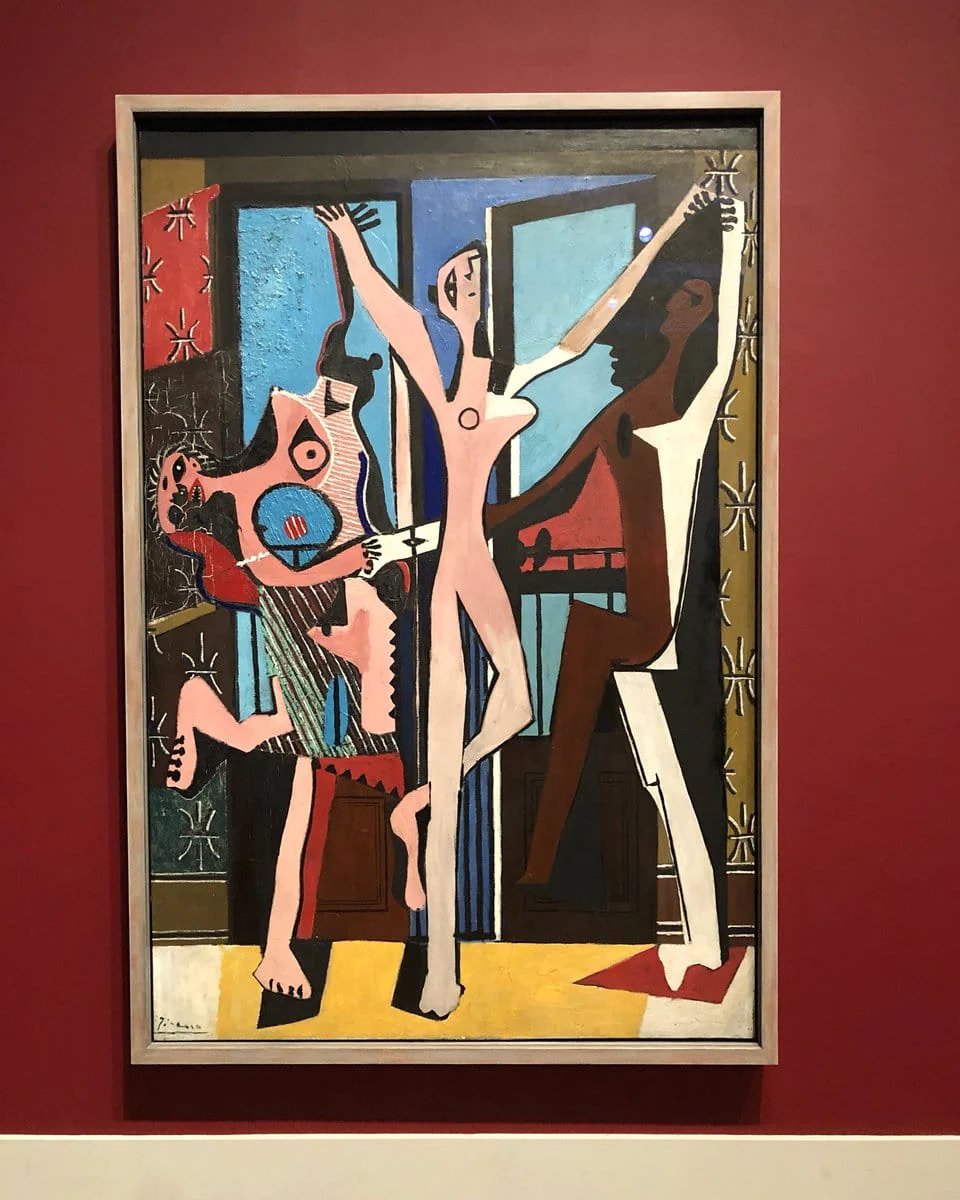
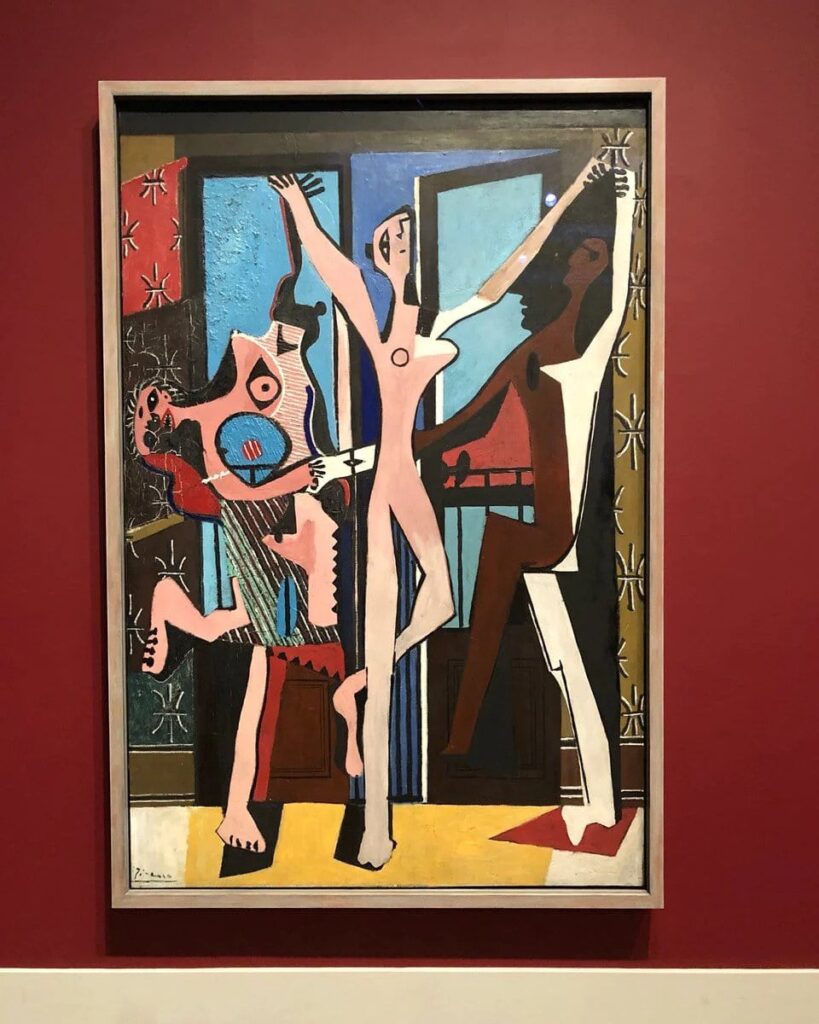
Now, let’s zoom into The Three Dancers. It’s 1925, and Picasso is in full-on Surrealist mode. This painting is painted during the Picasso’s trip to Monte Carlo in Paris. This masterpiece tell a story – a love triangle involving Picasso’s buddies, Paul Eluard, Gala (Paul’s wife), and Romola de Pulszky, a ballet dancer. Most people believe that the dancer on the right is Ramon Pichot, Picasso’s buddy who passed away while the painting of Three Dancers was being completed. Some experts think Olga Khokhlova, Picasso’s wife, may be the one. It is said that the woman on the left is Pichot’s wife Germaine Gargallo. Imagine a dance floor where three figures are going nuts – one of them looks like a weird mashup of human and animal. It’s intense, emotional, and a visual rollercoaster.
Interesting Facts
Greek Drama Vibes: Picasso wasn’t just into art; he was into drama – the Greek kind. The Three Dancers has that tragedy vibe, inspired by stories like Electra, with all its twists and turns of human relationships.
Personal Rollercoaster:This painting is like Picasso’s emotional diary during the 1920s. If his life were a movie, this would be the part with all the relationship drama.
Spot the Hidden Faces: Take a closer look, and you’ll find hidden faces in the painting. It’s like Picasso is playing hide-and-seek with symbolism, adding a touch of mystery to the madness.
Cubism Sneak Peek:Even though The Three Dancers is a Surrealist piece, Picasso couldn’t resist throwing in a bit of Cubism. It’s like he’s saying, “Hey, I’m Picasso, and I can mix styles like no one else.”
Friendship Tribute: This painting isn’t just colors and shapes; it’s Picasso’s way of tipping his hat to his pals – the Eluards and Romola. It’s like immortalizing their tangled relationships on canvas for the whole world to see.
Now, let’s unpack some more about this mind-bending image.
Breaking Down “The Three Dancers”
Okay, imagine you’re at a party, and the DJ drops the beat, but instead of people dancing, you’ve got these three figures going absolutely bonkers on the dance floor. That’s The Three Dancers for you. The central figure, the star of the show, is this monstrous being – part-human, part-animal, and 100% chaotic. It’s like Picasso threw all his emotions onto the canvas and let them dance it out.
The colors? Oh boy, they’re like a fireworks display in a hurricane. Bold, vibrant, and unapologetic – that’s Picasso telling you, “This is how I felt, and I’m not toning it down.” The sharp lines and angular shapes add to the whole whirlwind of emotions. It’s like Picasso is saying, “Emotions aren’t neat and tidy; they’re messy, and so is my art.”
Now, let’s talk about the characters on this emotional dance floor. The two figures flanking the central monster are like supporting actors in Picasso’s drama. They’re skeletal, distorted, and seem to be caught in a perpetual dance of anguish and ecstasy. You can almost feel the tension in the air, like the calm before a storm or the aftermath of a hurricane.
And don’t forget the hidden faces. Picasso is the master of surprise, and he sneaks in these faces that pop up when you least expect them. It’s like a visual Easter egg hunt, and each hidden face adds another layer to the story.
The backdrop? It’s a whirlwind of emotions – chaotic, intense, and utterly mesmerizing. “The Three Dancers” isn’t just a painting; it’s a symphony of feelings, a dance of the soul, and Picasso is the maestro orchestrating the chaos.
Why Surrealism?
Now, you might wonder, why did Picasso go all Surrealist with The Three Dancers? Surrealism was the cool kid on the art block during the 1920s. It was all about unlocking the subconscious, letting dreams and emotions run wild on canvas. Picasso, being the trendsetter he was, decided to jump on the Surrealist train. It was like giving his emotions free rein, letting them dance, twist, and turn without the constraints of reality.
The Surrealist movement was Picasso’s playground for expressing the unspoken, the hidden, and the downright bizarre. The Three Dancers is like a visual diary of Picasso’s inner world during a tumultuous period of his life. Surrealism gave him the freedom to turn his emotions into a wild, fantastical dance, and the result is this masterpiece that still leaves art enthusiasts scratching their heads and feeling all the feels.
Artwork Spotlight: Le Séducteur et son Amante
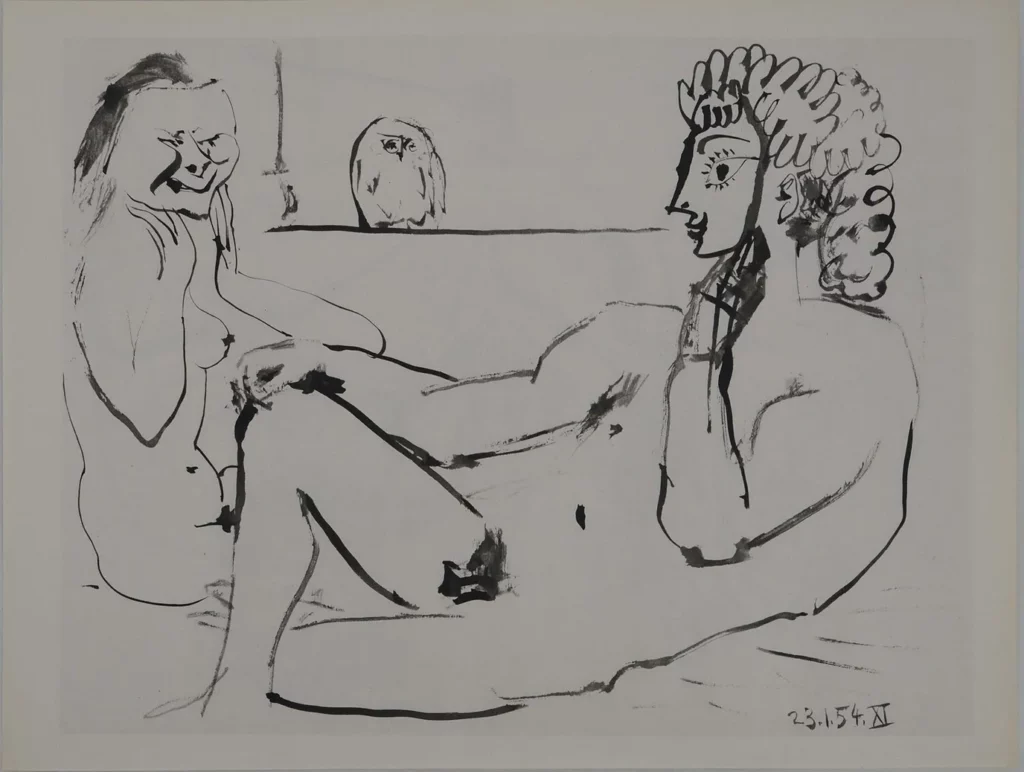
“Le Séducteur et son Amante” by Picasso is available on Singulart. It is a powerful artwork that renders emotions with great simplicity and invites the audience into a realm of mystery and eroticism. This piece, just like most of Picasso’ works, deals with the issues of desire, emotion, and the bewildering interplay between the two.
Are you looking for a piece of artwork from Pablo Picasso?
Singulart has limited edition prints of Pablo Picasso. If you are looking for a piece of Picasso’s artwork for sale, simply click on the artwork or the button below to discover more!
Frequently Asked Questions
Why did Picasso paint the three dancers?
Three Dancers’ angular forms emote a burst of energy. Picasso’s memories of a triangle romance that led to his friend Carlos Casagemas’ tragic suicide are heavily embellished in the picture. Death, sex, and love are all intertwined in a joyful dance.
What are the 4 stages of Picasso?
Picasso was transferred to Madrid’s Royal Academy of San Fernando because Ruiz saw his kid had more talent than he had. Four phases can be distinguished in Picasso’s early work: the Blue Period (1901–1904), the Rose Period (1905–1907), the African–influenced Period (1908–1909), and Cubism (1909-1919) .
Conclusion
In the world of art, The Three Dancers is like Picasso’s mic drop moment. It’s not just a painting; it’s a symphony of emotions, a dance of the soul, and a window into the tumultuous heart of an artistic genius. Picasso didn’t just paint; he unleashed his emotions onto the canvas, creating a masterpiece that continues to captivate, challenge, and inspire.