


In the realm of contemporary art like Portrait of George Dyer in the Mirror, few names resonate with as much gravitas as Francis Bacon. His distinctive style, marked by raw emotion and haunting depictions, is exemplified in the enigmatic masterpiece, “Portrait of George Dyer in the Mirror.” This exploration aims to unravel the layers of this artwork, delving into Bacon’s background, the cultural context of its creation, and the profound impact it has left on the art world.
Who was Francis Bacon?

Francis Bacon, born in 1909 in Dublin, Ireland, emerged as one of the 20th century’s most influential and controversial painters. Bacon’s oeuvre is characterized by visceral depictions that delve into the depths of human emotion and existential angst. Raised in a tumultuous period marked by World Wars and societal upheavals, Bacon’s work often reflects the turbulence of his time. His uncompromising approach to art positioned him as a leading figure in the post-war art scene.
FUN FACT: Francis Bacon had a pet named “Pickle,” a South American bird called a kookaburra. Bacon developed a strong bond with Pickle, often allowing the bird to roam freely around his studio while he worked.
Bacon’s Career
Bacon’s artistic journey began in earnest during the 1940s. His early works garnered attention for their innovative approach to portraiture and figurative art. Bacon’s visceral, almost nightmarish, renditions of the human form set him apart as a provocateur in the art world. As his career progressed, Bacon’s paintings became increasingly intense, exploring themes of mortality, isolation, and the human condition. His unapologetic exploration of taboo subjects and psychological landscapes established him as a leading figure in the School of London, a group of post-war artists who shared a focus on figurative painting.
Freedom of Speech in Bacon’s Era
Bacon’s career unfolded against a backdrop of societal shifts, including evolving notions of freedom of speech. The mid-20th century witnessed debates on artistic expression, with artists like Bacon challenging traditional norms. His willingness to confront the darker aspects of human existence, often deemed controversial, became a testament to the evolving landscape of creative freedom. Bacon’s art became a vehicle for pushing boundaries and questioning societal conventions, marking a period of increased recognition for the importance of artistic expression.
What is happening in Portrait of George Dyer in the Mirror

| Artist | Francis Bacon |
| Date Created | 1968 |
| Medium | Oil on canvas |
| Genre | Portraiture |
| Period | 20th Century |
| Dimensions | 14 x 12 in |
| Series/Versions | Part of a series featuring George Dyer |
| Location | Private location |
Portrait of George Dyer in the Mirror” depicts the artist Francis Bacon’s lover, George Dyer, gazing into a mirror. The painting captures the complex emotions and psychological intensity of their relationship. Dyer’s reflection, rendered with Bacon’s signature distorted style, conveys a sense of inner turmoil and vulnerability, offering a poignant glimpse into the tumultuous dynamics between the artist and his muse. The work is celebrated for its raw emotional power and the exploration of human complexity.
Content Depicted
“Portrait of George Dyer in the Mirror” is an intimate portrayal that delves into the complex relationship between the artist and his muse, George Dyer. Bacon’s lover and a recurring figure in his work, Dyer is depicted in a reflective moment, gazing into a mirror. The distortion and fragmentation of Dyer’s form, a hallmark of Bacon’s style, evoke a sense of psychological turmoil and existential questioning. The mirror becomes a metaphorical portal into the inner recesses of Dyer’s psyche.
Background and Notes
The painting is part of a series that features George Dyer, a pivotal figure in Bacon’s life and art. Dyer’s presence in Bacon’s work is multifaceted, embodying both vulnerability and strength. The distorted and fragmented portrayal in “Portrait of George Dyer in the Mirror” reflects Bacon’s fascination with the transient nature of identity and the complexities of human relationships. The intimate setting of the mirror adds a layer of introspection, inviting viewers into the private realm of the subject.
Emotional Resonance:
Bacon’s emotional resonance in “Portrait of George Dyer in the Mirror” is palpable. The distorted and fragmented portrayal of George Dyer captures a psychological turbulence, revealing the emotional complexity within their relationship. Bacon, known for his ability to convey raw emotion, uses form and color to delve into the intricacies of love, desire, and introspection.
Exploration of Identity:
The distorted reflection in the mirror becomes a metaphor for the fluidity and fragility of identity. Bacon’s fascination with existential themes shines through as he challenges conventional notions of portraiture. The fractured depiction of Dyer prompts viewers to question the stability of selfhood and the ever-shifting nature of personal identity.
Color Palette and Symbolism:
Bacon’s masterful use of color adds another layer of symbolism to the artwork. The somber tones, dominated by muted grays and deep blues, create an atmosphere of melancholy and introspection. The subtle interplay of light and shadow enhances the psychological depth, emphasizing the internal conflict within Dyer’s psyche.
Series Dynamics:
As part of a series featuring George Dyer, this portrait gains significance within the context of Bacon’s artistic evolution. The repetition of a subject allows Bacon to peel away layers gradually, exposing new facets of emotion and experience. Each iteration becomes a chapter in an ongoing narrative, offering viewers a deeper understanding of the complexities within their relationship.
Biographical Connection:
Bacon’s personal life, marked by tumultuous relationships and a sense of existential angst, seeps into the canvas. Dyer’s presence in Bacon’s art becomes a reflection of the artist’s own internal struggles, creating a symbiotic relationship between creator and muse. The blurred boundaries between art and life add a profound depth to the viewing experience.
Cultural Context:
Set against the backdrop of the 1960s, a period marked by societal upheavals and a questioning of established norms, Bacon’s work becomes a microcosm of the larger cultural dialogue. The exploration of identity and the tumultuous nature of relationships align with the era’s introspective and rebellious spirit, making Bacon a crucial voice in the evolving narrative of contemporary art.
Legacy and Influence:
“Portrait of George Dyer in the Mirror” contributes to Bacon’s enduring legacy as a trailblazer in figurative art. His influence extends beyond his contemporaries, inspiring subsequent generations of artists to engage with the visceral and the existential. The painting’s impact on the trajectory of portraiture and its role in dismantling artistic conventions solidify Bacon’s status as a transformative force in the art world.
Interesting Facts about the Artwork
- Symbolism of the Mirror: The mirror in the artwork serves as a symbolic element, inviting viewers to contemplate themes of self-reflection and identity. It adds a psychological dimension to the portrait, blurring the lines between reality and introspection.
- Influence of Existentialism: Bacon’s work often aligns with existentialist philosophy, exploring the anguish and uncertainty inherent in human existence. “Portrait of George Dyer in the Mirror” encapsulates these existential themes through its fragmented and distorted portrayal.
- Continuation of a Theme: The series featuring George Dyer is a testament to Bacon’s commitment to exploring the nuances of his relationships through art. Dyer’s recurring presence allows for a deepening exploration of emotion and identity within Bacon’s body of work.
Artwork Spotlight: Oedipe et le Sphinx
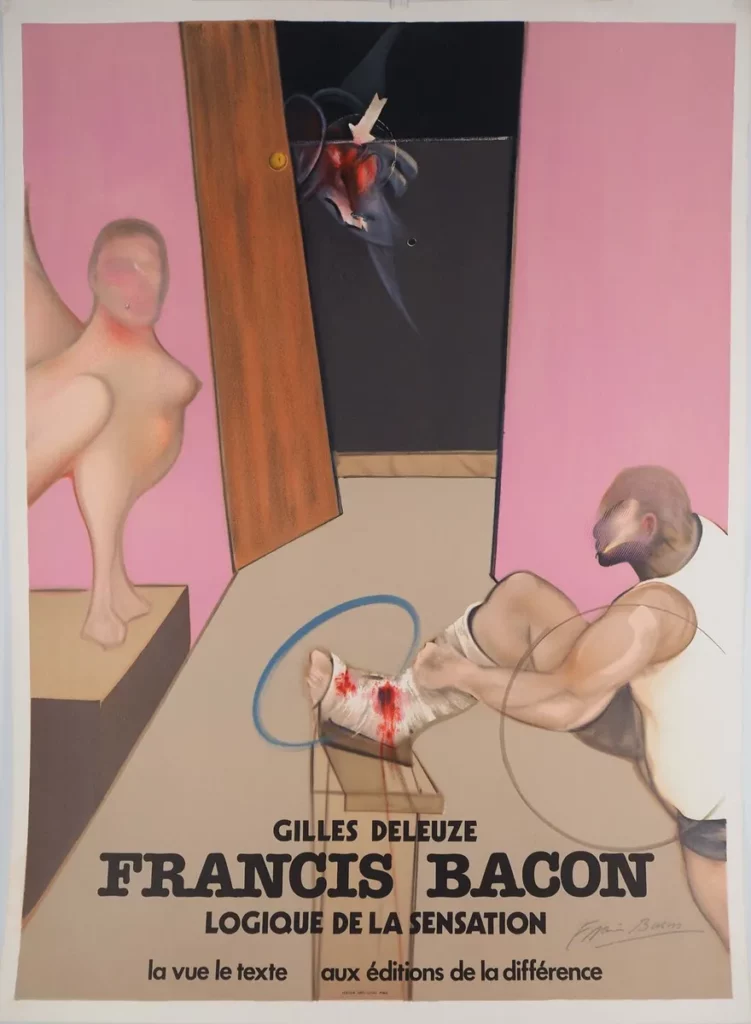
“Oedipe et le Sphinx” (“Oedipus and the Sphinx”) is available on Singulart. This artwork is powerful piece by Francis Bacon from 1983. In this haunting creation, Bacon deals with the themes of mythology and the human psyche, illustrating the timeless battle between man and destiny in his signature way with distorted figures and raw emotions.
Are you looking for a piece of artwork from Francis Bacon?
Singulart has limited edition prints of Francis Bacon. If you are looking for a piece of Bacon‘s artwork for sale, simply click on the artwork or the button below to discover more!
FAQs
Why is George Dyer a recurring figure in Bacon’s art?
George Dyer was not only Bacon’s lover but also a muse who inspired profound emotional exploration in the artist. His recurring presence allowed Bacon to delve into the complexities of human relationships.
What is the significance of the mirror in the painting?
The mirror symbolizes self-reflection and existential questioning. It adds a psychological depth to the portrait, inviting viewers to contemplate the inner world of the subject.
Why is the painting part of a series?
Bacon often created series of works featuring the same subject to delve deeper into the emotional and psychological complexities of the individual. The series format allowed for a nuanced exploration of themes.
Conclusion
“Portrait of George Dyer in the Mirror” stands as a testament to Francis Bacon‘s ability to encapsulate profound human experiences on canvas. Through the distorted portrayal of his muse, Bacon invites viewers into a world of psychological intensity and existential contemplation. The intimate setting of the mirror adds a layer of introspection, making the artwork a poignant exploration of identity and self-reflection. As part of Bacon’s broader body of work, this painting contributes to the ongoing dialogue on the complexities of the human condition, solidifying Bacon’s place as a master of figurative art in the 20th century.


