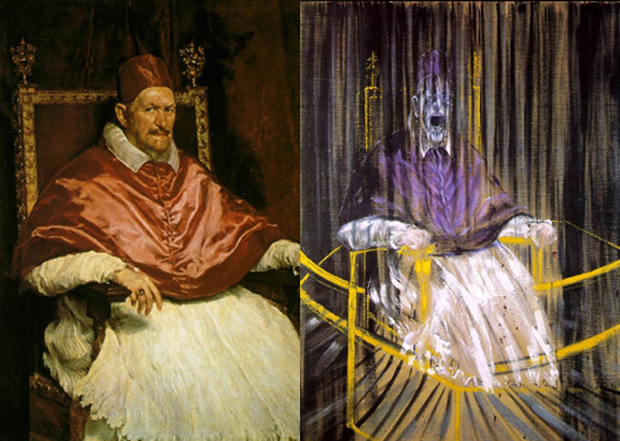
In the art world, Francis Bacon’s Study after Velázquez’s Portrait of Pope Innocent X” is known for its deep effect on emotions and its bold challenge to traditional views. Created in 1953, this artwork brings a new way of thinking about Diego Velázquez’s well-known 1650 portrait of Pope Innocent X. Bacon, a leader in post-war modern art, takes viewers on a different and interesting adventure through the human mind.
Who was Francis Bacon?

Francis Bacon (1561–1626) was a clever guy from England who liked science and thinking. He was born on January 22, 1561, in London, and did important stuff during the scientific revolution. Bacon was a big deal in England, working as a lawyer and a leader, but he got into trouble for being a bit shady. He passed away on April 9, 1626. His smart books, like “Novum Organum,” talked about using science and observations to learn new things. People call him the father of empiricism because he believed in learning from real experiences.
FUN FACT: Instead of a typical artist’s studio, Bacon famously worked in a cluttered, chaotic space with piles of books, photographs, and paint splatters covering the floor.
His Career
Francis Bacon began his career in the late 16th century as a scholar and lawyer. He entered politics and gained favour at the court of Queen Elizabeth I. His early writings, including the “Essays,” showcased his intellect. Bacon’s political ascent continued under James I, and he served in various roles, eventually becoming Lord Chancellor. Despite his success, his political career faced a downfall due to corruption allegations, but his early contributions laid the foundation for his later influential work in philosophy and science.
What’s Happening in Pope Innocent X

| Artist name | Diego Velázquez |
| Date Created | 1650 |
| Medium | Oil on canvas |
| Genre | Portrait |
| Period | Baroque |
| Dimensions | 140 cm × 119 cm |
| Series / Versions | Single version (no known copies) |
| Where is it housed? | Galleria Doria Pamphilj, Rome, Italy |
In Velázquez’s painting of “Pope Innocent X,” you’re right in the middle of a story about power and importance. The Pope, looking serious with a strong stare, sits surrounded by fancy things that show how important he is. The painting gives off a feeling of tension and close inspection, capturing the mixed emotions and challenges the Pope might be facing.
Similar to another artwork where a guy does something extreme to avoid a prophecy, “Pope Innocent X” shows a leader who understands the highs and lows of the job. Even though Velázquez’s painting isn’t as intense as the other one, both artworks explore the difficulties and weaknesses that come with being in charge.
This painting makes you think about the hard parts of being a leader. The Pope’s face and body language become a way for Velázquez to show how being in charge can mess with your head, delving into the struggles and the repeating cycle of challenges that come with authority.
Pope Innocent X
Velázquez’s “Pope Innocent X” is a masterpiece of Baroque art, painted in 1650. The portrait captures the Pope’s intense gaze and exudes power through rich details in his garments. Velázquez skillfully plays with light and shadow, showcasing his artistic mastery. The painting’s psychological depth makes it a timeless and captivating work, highlighting the artist’s ability to convey both emotion and authority.
Interesting Facts
- The Powerful Pope: Painted in 1650, “Pope Innocent X” by Diego Velázquez is all about capturing the might and authority of the Pope. The artist skillfully shows the Pope’s stern look and strong presence, making you feel the weight of his role in the Church.
- Colors with Meaning: What stands out in the painting is the bold use of color, especially the vibrant red of the Pope’s clothes. It’s not just for looks; the red symbolizes the power and importance linked to the papacy. Velázquez pays close attention to details, showing off his skills by making the Pope’s clothes and face look incredibly realistic.
- Mystery in Expression: Look closely at the Pope’s face – there’s something mysterious going on. Velázquez captures a moment where the Pope seems deep in thought or maybe even troubled. This mystery adds an interesting layer to the painting, inviting you to think about what might be going on in the Pope’s mind. It’s this mix of realism and psychological depth that keeps art lovers and scholars intrigued by “Pope Innocent X.”
Artwork Spotlight: Lying Figure
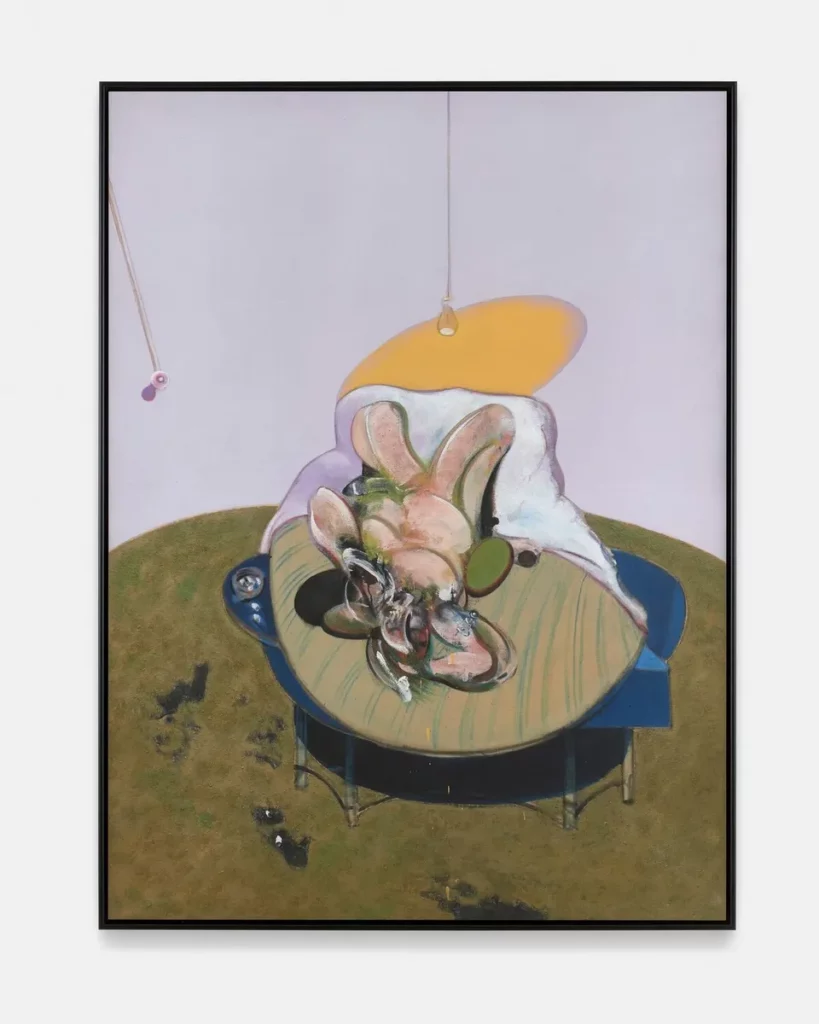
Francis Bacon’s “Lying Figure” is available on Singulart. This artwork enchants the spectator with its tangible and animate depiction, thus raising a feeling of nervous tension among the spectators due to its twisted figures. In this incredible artwork, Bacon’s expressionism skills and the ability to engage the viewer with the inner sense of being and the complexity of the human nature comes into light.
Are you looking for a piece of artwork from Francis Bacon?
Singulart has limited edition prints of Francis Bacon. If you are looking for a piece of Bacon‘s artwork for sale, simply click on the artwork or the button below to discover more!
FAQs
Who was Francis Bacon, and why is his “Study after Velázquez’s Pope Innocent X” significant?
Francis Bacon (1561–1626) was a clever English thinker known for science and philosophy. His “Study after Velázquez’s Pope Innocent X” is a bold reinterpretation of Diego Velázquez’s 1650 portrait, offering a raw exploration of the human mind.
What makes Velázquez’s “Pope Innocent X” important, and how does it portray leadership and power?
Velázquez’s 1650 masterpiece captures the intense gaze of Pope Innocent X, symbolising papal authority with vibrant red colors. The painting explores leadership complexities through the Pope’s expression and body language.
What interesting details define Velázquez’s “Pope Innocent X,” and what do they signify?
Velázquez’s masterpiece uses bold colors, notably vibrant red, symbolizing papal power. The painting’s mystery lies in the Pope’s expression, adding psychological depth. Velázquez’s attention to realism and symbolism keeps art enthusiasts and scholars intrigued.
Conclusion
In summary, Francis Bacon’s unique version of Velázquez’s ‘Pope Innocent X’ delves into the human mind in post-war art. Velázquez’s original, showcasing papal authority with vivid colors and the Pope’s expression, remains a captivating study in leadership. Both pieces make us think about power and complexity in a lasting way. Bacon’s bold take adds depth, inviting us to reflect on the intricate nuances of authority and the human experience