In the ever-evolving realm of art, Piet Mondrian stands as a luminary who boldly stepped into the uncharted territory of abstraction. From his early days dabbling in traditional landscapes to becoming a trailblazer of geometric abstraction, Mondrian’s journey was nothing short of revolutionary. Among his myriad masterpieces, “Broadway Boogie Woogie” emerges as a vibrant tapestry that intricately weaves together the energy of New York City and the syncopated beats of jazz. In this exploration, we embark on a comprehensive journey through Mondrian’s life, career, the essence of “Broadway Boogie Woogie,” and fascinating anecdotes surrounding this iconic artwork.
Who was Piet Mondrian?
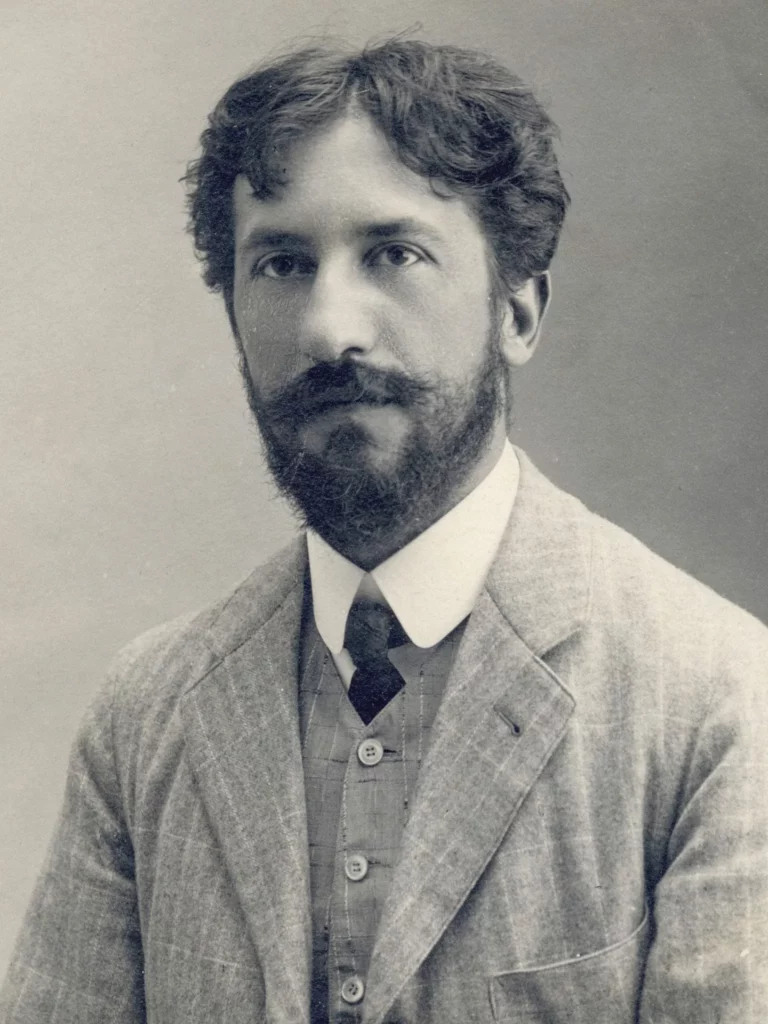
Picture the late 19th century in the Netherlands, where Piet Mondrian was born in 1872. Initially drawn to conventional landscapes and still-life scenes, Mondrian’s artistic trajectory took a seismic shift as he embraced abstraction. The influence of avant-garde movements, such as Cubism, and spiritual philosophies like theosophy, prompted him to experiment with form and color.
FUN FACT: Piet Mondrian was a strict vegetarian who adhered to a rather peculiar diet. Mondrian’s culinary preferences included a daily regimen of boiled vegetables and raw fruits, which he believed contributed to his physical and spiritual well-being.
His Career
Mondrian’s career unfolded like a vibrant canvas, reflecting the tumultuous changes of the 20th century. Co-founding the De Stijl movement with like-minded artists, he championed an aesthetic marked by simplicity, harmony, and pure abstraction. As the movement gained momentum, Mondrian’s style evolved into what he termed Neo-Plasticism—a visual language characterized by geometric precision, primary colors, and a grid-like structure.
What is Happening in Broadway Boogie Woogie?

The backdrop for “Broadway Boogie Woogie” is the dynamic landscape of New York City during World War II. Fleeing the war in Europe, Mondrian found refuge in the pulsating heart of Manhattan. The painting, completed in 1943, encapsulates the rhythm of the city streets and the vibrant cadence of jazz music.
Imagine standing amidst the bustling energy of Times Square or strolling along the gridded streets of New York. This masterpiece captures this essence with a meticulous arrangement of colored squares and rectangles. The primary colors—red, yellow, and blue—take center stage, interspersed with smaller blocks of white and gray. The composition creates a sense of perpetual motion, mirroring the ebb and flow of city life.
Exploring Broadway Boogie Woogie
| Artist | Piet Mondrian |
| Date Created | 1942-1943 |
| Medium | Oil on canvas |
| Genre | Abstract |
| Period | Modern |
| Dimensions | 127 cm × 127 cm |
| Series / Versions | Unique |
| Where is it housed? | Museum of Modern Art, New York |
Interesting Facts
Mondrian’s abstraction isn’t confined to the canvas; it extends into our understanding of the world. The intersecting lines and blocks in this painting not only mirror the city grid but also invite viewers to contemplate the harmonious interplay of various elements in their own lives.
The Jazz Connection
To truly appreciate this masterpiece, one must understand Mondrian’s affinity for jazz. The boogie-woogie style, with its upbeat tempo and syncopated rhythms, resonated deeply with the artist. In the painting, each colored block seems to dance independently, echoing the improvisational spirit of jazz music.
Grid as a Symbol
The grid in Mondrian’s work is more than just a compositional choice—it’s a philosophical statement. He believed that through this grid, he could capture the underlying order of the universe. In “Broadway Boogie Woogie,” the grid becomes a metaphor for the structured chaos of city life.
Primary Colors and Beyond
Mondrian’s use of primary colors wasn’t arbitrary, but a deliberate choice rooted in his belief in the universal significance of these hues. Each color, carefully placed in the composition, carries its own energy, contributing to the overall harmony of the piece.
Series and Versions
“Broadway Boogie Woogie” stands as a unique creation within Mondrian’s body of work. Unlike some of his earlier pieces, which were part of larger series, this painting is a standalone masterpiece. Its singularity adds to its allure and significance.
A Canvas Beyond Borders
The legacy of “Broadway Boogie Woogie” extends beyond its physical dimensions. Housed in the Museum of Modern Art in New York, the painting serves as a timeless bridge between the past and the present. Visitors from around the world can witness Mondrian’s interpretation of the vibrant city that never sleeps.
Artwork Spotlight: Composition with Yellow and Blue
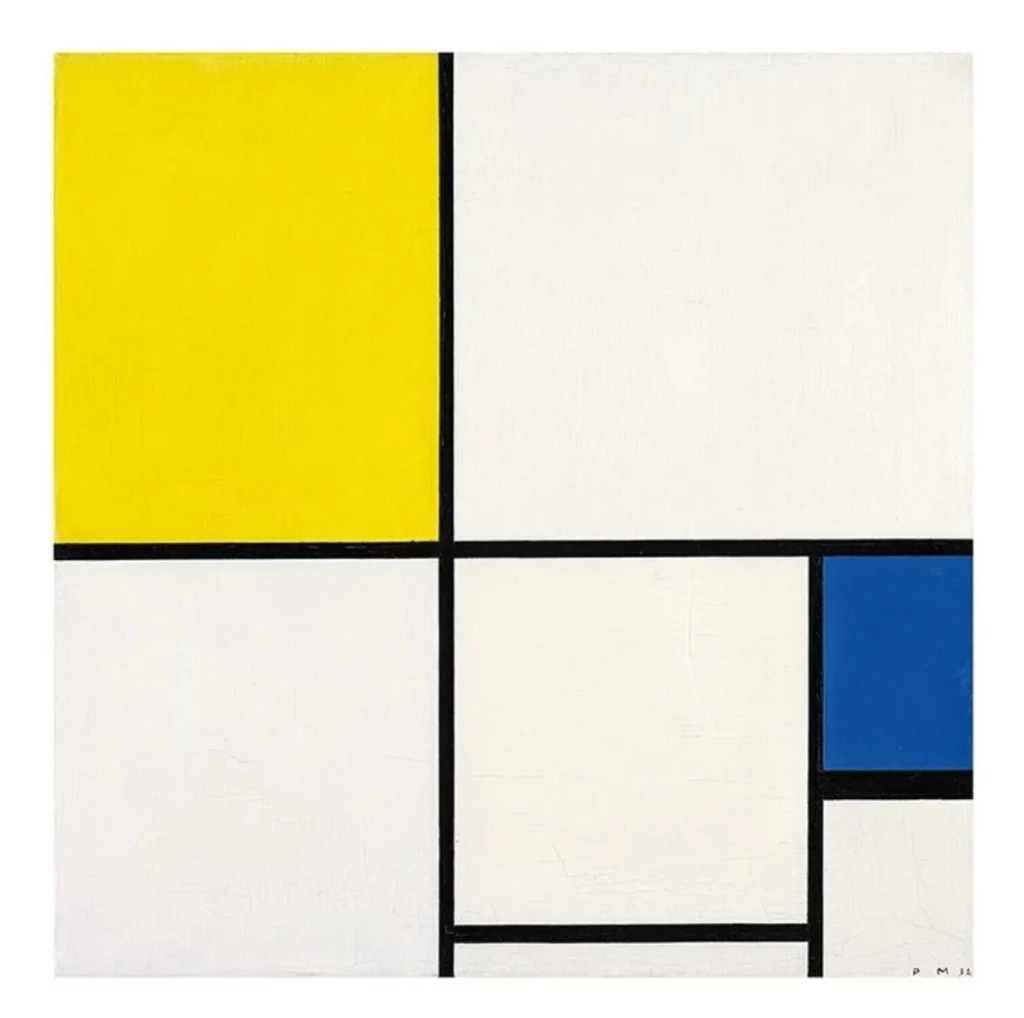
Mondrian’s “Composition with Yellow and Blue” is available on Singulart. It is a typical abstract work; it contains a square divided by black regular lines into red, yellow, and blue rectangular areas. Thus, the artwork is closely related to Mondrian’s search for harmony and balanced order in works that are formally simplified and geometrically constructed.
Are you looking for a piece of artwork from Piet Mondrian ?
Singulart has limited edition prints of Piet Mondrian. If you are looking for a piece of Mondrian‘s artwork for sale, simply click on the artwork or the button below to discover more!
Frequently Asked Questions
What does Broadway Boogie Woogie represent?
The small, shimmering color blocks pulse with a rhythmic energy, evoking the lively and dynamic ambiance of the American metropolis. From a stylistic perspective, “Broadway Boogie Woogie” marks a significant shift in Mondrian’s Neo-Plasticism aesthetic philosophy.
What is Piet Mondrian painting Broadway Boogie Woogie A Tribute to?
The painting’s title, “Broadway Boogie-Woogie,” beautifully encapsulates Mondrian’s excitement for his new life in New York City. It elegantly merges two elements that resonated deeply with him: Broadway, a bustling thoroughfare teeming with intriguing shops, and the vibrant theater scene, symbolizing novelty and liveliness.
Conclusion
In the kaleidoscopic world of “Broadway Boogie Woogie,” Piet Mondrian invites us to experience the intersection of art, music, and life. As we navigate the grid of colors and lines, we glimpse the rhythm of New York City and the pulsating beats of jazz. “Broadway Boogie Woogie” isn’t just a painting; it’s a living testament to Mondrian’s quest for harmony and his desire to capture the essence of the modern world. In every brushstroke, in every block of color, we find a celebration of the vibrant, ever-changing dance of life.