Joan Miró, an extraordinary Catalan artist, made an everlasting impact on the art world through his distinctive and innovative approach to Surrealism. At the pinnacle of his creative prowess, he bestowed upon the world one of his most cherished creations – “The Birth of the World.” In this exploration, we will journey through the life of Joan Miró, tracing his artistic trajectory, and embark on a comprehensive analysis of the mesmerizing canvas that is “The Birth of the World.”
Who was Joan Miró?
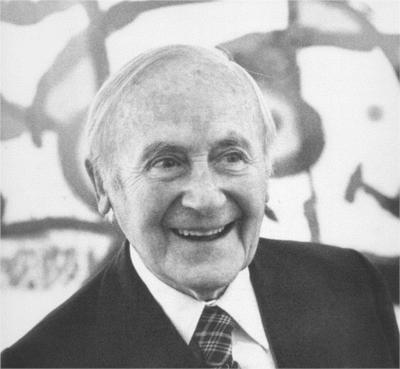
Joan Miró, born in Barcelona in 1893, emerged as a trailblazing force in the 20th-century art scene. His journey was marked by a dynamic interplay of cultural and political influences, shaping his quest for artistic freedom and expression. Originally enrolled in business studies, Miró bravely abandoned conventional paths to pursue his passion for art. While his early works bore the fingerprints of Fauvism and Cubism, it was his engagement with Surrealism that became the defining chapter of his artistic identity.
FUN FACT: Joan Miró often incorporated elements of Catalan folklore and culture into his artwork.
Miró’s Career
Miró’s career unfolded as a captivating narrative, punctuated by ceaseless experimentation with form, color, and symbolism. His collaboration with Surrealist poets and writers, notably André Breton, further fueled his exploration of the subconscious and the fantastical. Miró’s art evolved into a captivating amalgamation of whimsical abstraction and symbolic representation, challenging the artistic norms of his time.
What is happening in “The Birth of the World”

| Artist | Joan Miró |
| Date Created | 1925 |
| Medium | Oil on canvas |
| Genre | Surrealism |
| Period | Modernism |
| Dimensions | 6.5 feet x 8 feet |
| Series / Versions | Unique creation, no direct series |
| Where is it housed? | Museum of Modern Art (MoMA), New York City |
“The Birth of the World” presents a dynamic and chaotic composition that defies straightforward interpretation. The canvas is a playground of seemingly random, yet meticulously orchestrated, shapes and symbols. Miró’s bold use of colors and organic forms evokes a sense of primal energy, reminiscent of cosmic creation. The painting suggests a dreamlike landscape, with floating entities and biomorphic shapes intermingling in a dance of abstraction.
Miró deliberately rejects representational clarity, challenging viewers to engage with their interpretations. The title itself beckons speculation about the origins of the forms within the painting – are they symbolic of the birth of the universe, or perhaps a representation of the artist’s creative genesis? Miró’s intent was not to provide concrete answers but to provoke contemplation, inviting viewers to unleash their imaginations.
“The Birth of the World” – Unveiling the Masterpiece
In 1925, Joan Miró birthed a masterpiece that would eternally captivate the imagination of art enthusiasts – “The Birth of the World.” This colossal painting, stretching across 6.5 by 8 feet, serves as a visual symphony of vibrant hues, organic shapes, and enigmatic symbols. What sets this piece apart is Miró’s revolutionary departure from conventional techniques; he embraced chance and spontaneity, allowing his subconscious to guide the artistic process.
Interesting Facts about “The Birth of the World”:
Innovative Technique: Miró’s painting technique involved the use of non-traditional tools such as sticks and spatulas instead of conventional brushes. This avant-garde approach allowed for a more spontaneous and intuitive expression, giving the artwork an unparalleled sense of dynamism.
Collaboration with André Breton: Miró’s collaboration with Surrealist poet André Breton, a central figure in the Surrealist movement, significantly influenced the conceptual depth of “The Birth of the World.” The painting reflects the Surrealist emphasis on the subconscious and automatic creative processes, blurring the lines between reality and imagination.
Abstract Symbolism: The painting is a tapestry of abstract symbols – enigmatic floating shapes and dripping lines, adding an element of mystery and complexity. These symbols serve as a visual language, inviting viewers to decipher their meanings and contributing to the enduring allure of the artwork.
Exhibited at MoMA: “The Birth of the World” found its home at the Museum of Modern Art (MoMA) in New York City, a testament to its significance in the realm of modern art. Its presence in this renowned institution solidifies its status as a pivotal work in the history of art, drawing art enthusiasts and scholars alike to witness its mesmerizing allure.
Artwork Spotlight: LITOGRAFO IV
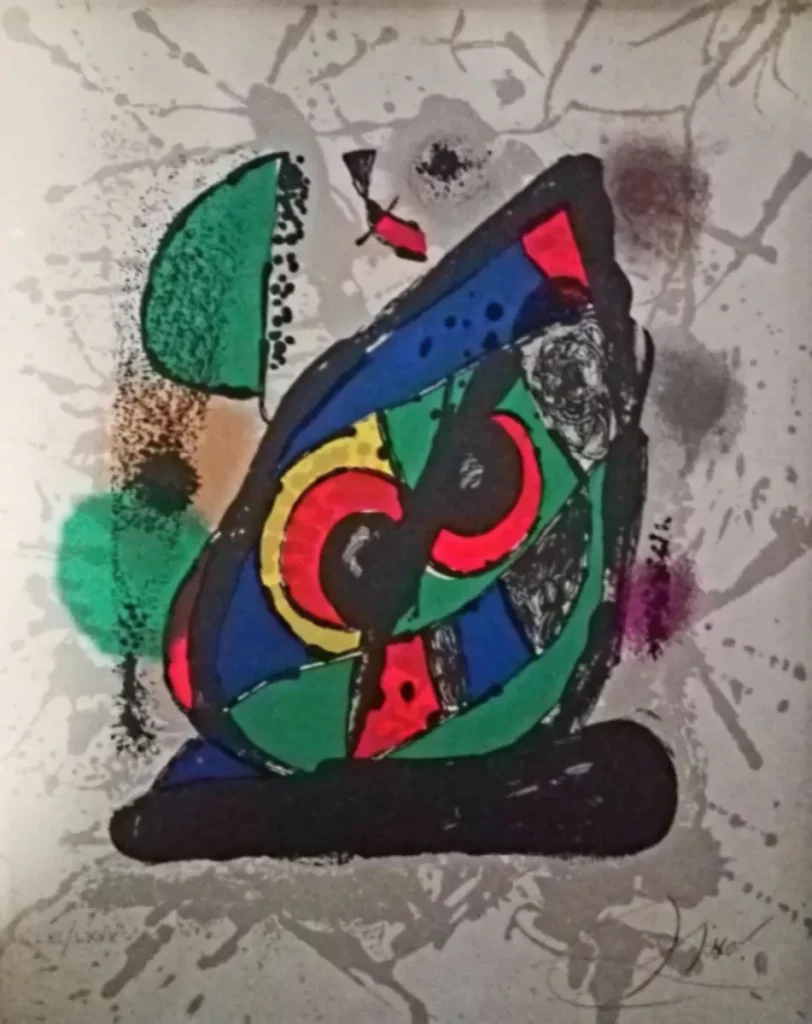
Joan Miró’s “LITOGRAFO IV” is available on Singulart. It is a lithograph which could be described as a classical example of abstract art – the colourful image is filled with organic and geometric shapes that look almost surrealist. This piece can also be attributed to Miró’s experimentations with automatism, as well as his attempts to achieve a sort of playful and lighthearted feeling within his work.
Are you looking for a piece of artwork from Joan Miró?
Singulart has limited edition prints of Joan Miró. If you are looking for a piece of Miró’s artwork for sale, simply click on the artwork or the button below to discover more!
Frequently Asked Questions
What did Joan Miró mean by the birth of the world?
“The Birth of the World,” created in 1925 by Joan Miró, is described by the artist as representing “a sort of genesis,” symbolizing the undefined origins of life. In the creation of this masterpiece, Miró employed a technique involving the pouring, brushing, and flinging of paint onto a canvas that had been unevenly primed. This method resulted in the paint penetrating certain areas while remaining on the surface in others.
What is the theme of Joan Miró?
Between 1925 and 1928, Miro crafted numerous dream-like scenarios and fantastical landscapes infused with Surrealist motifs. His works during this period delved into the realms of unconscious imagery and thoughts, serving as primary themes. In his early artistic endeavors, Miro concentrated on objects depicted with a flattened perspective, a style referred to as “Detailism.”
Conclusion
Joan Miró’s “The Birth of the World” stands as a testament to the boundless possibilities of artistic expression. Through innovative techniques and a daring exploration of the subconscious, Miró crafted a masterpiece that transcends the confines of traditional art. The enigmatic symbolism, coupled with Miró’s avant-garde approach, ensures its place as a timeless and influential work in the annals of art history, captivating the hearts and minds of generations to come.
A chance to visit Miró’s studio
If you are fascinated by Miró’s artworks as much as we are- you can read this article to find out more about his place of work and how you can visit it, along with many other popular art art and design destinations in Europe.