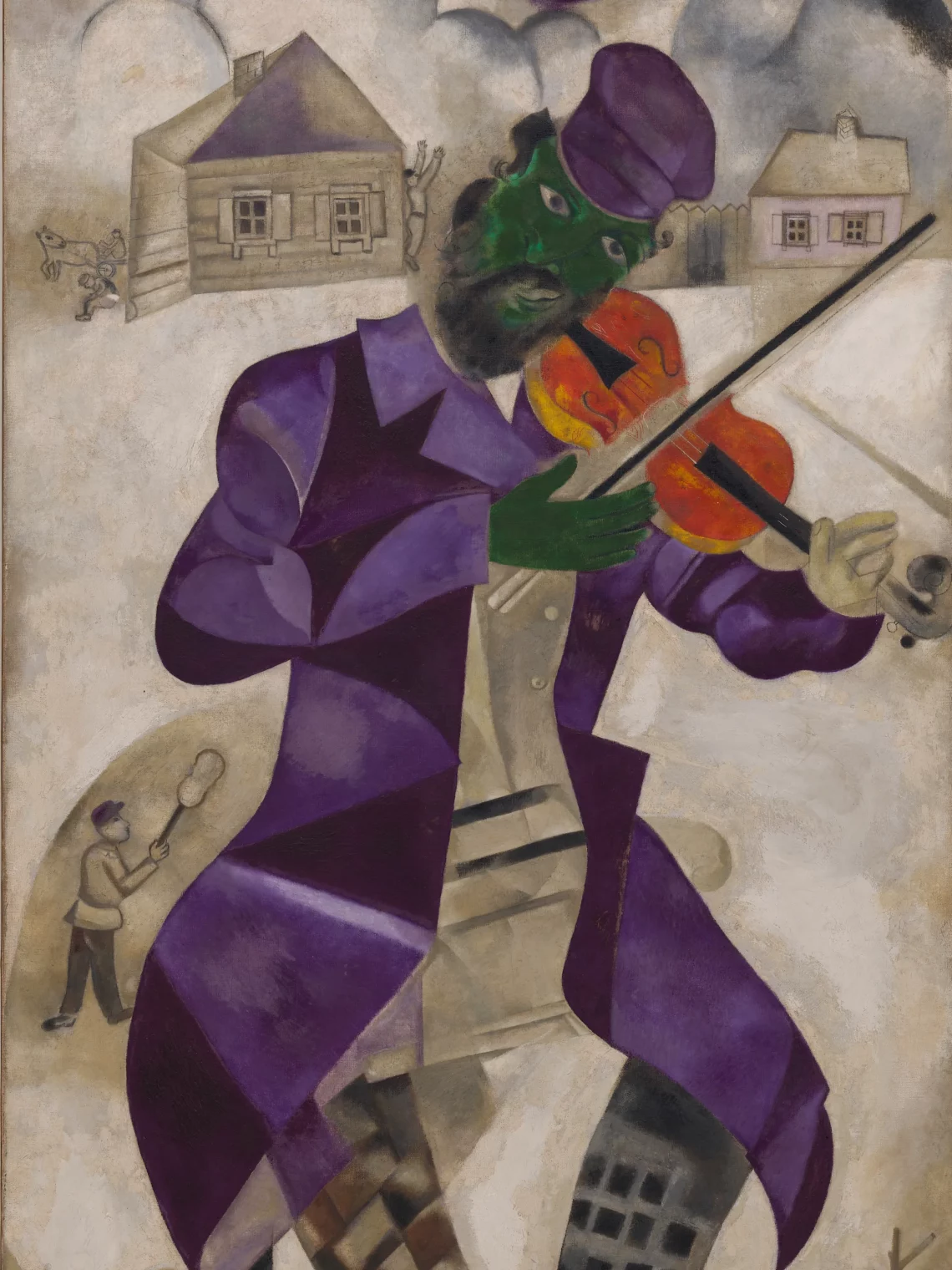
Let’s embark on a journey into the enchanting world of Marc Chagall’s artistry, with a special focus on one of his most captivating works, “The Green Violinist.” Chagall, a Russian-French artist renowned for his dreamlike creations, possessed a unique ability to weave together reality and imagination. Among his vast body of work, “The Green Violinist” stands as a beacon of his artistic genius, beckoning viewers into a realm of whimsy and wonder. In this article, we’ll delve into Chagall’s life and career, unravel the enchantment behind “The Green Violinist,” and uncover some fascinating insights into his masterpiece.
Who was Marc Chagall?
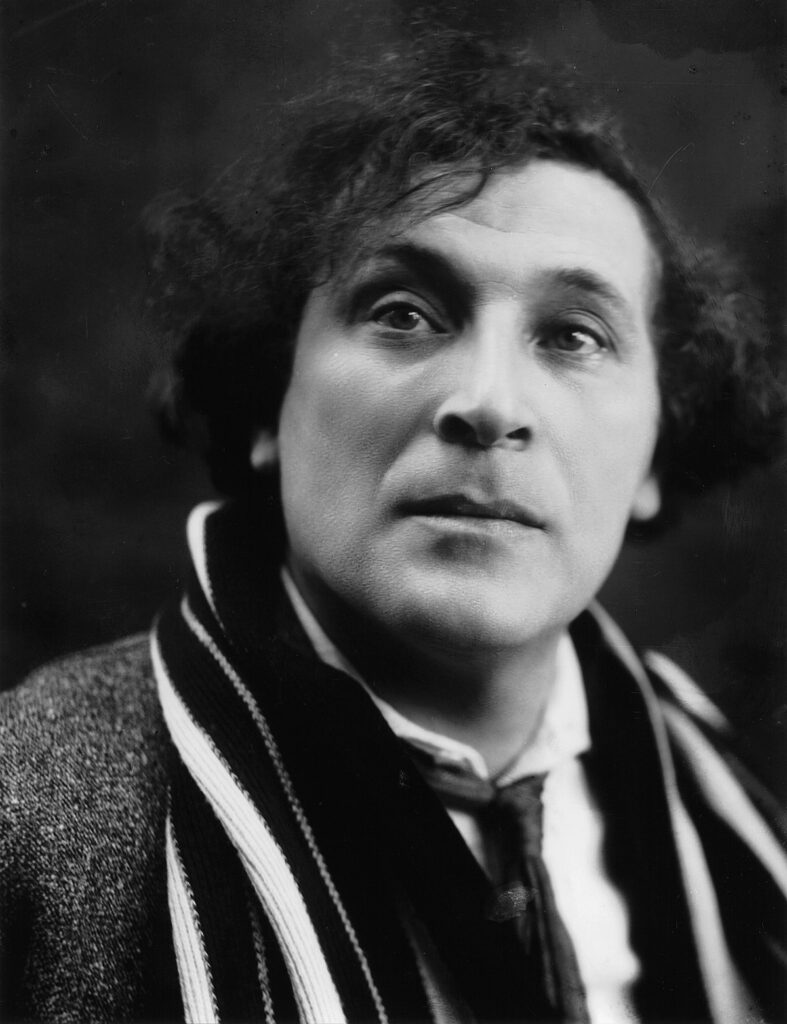
Marc Chagall, born in Belarus in 1887, was a visionary artist who transcended artistic boundaries with his vibrant canvases. Drawing from his Jewish heritage and personal experiences, Chagall crafted a visual language that resonated with audiences worldwide. His paintings, characterized by bold colors and surreal imagery, reflected his profound connection to both the tangible and the ethereal.
FUN FACT: Despite his fame as a painter, Chagall was also a proficient and passionate writer. He wrote several autobiographical books, essays, and even poetry. His writing often intertwined with his visual art, providing deeper insights into his creative process and personal experiences.
Chagall’s Journey
Chagall’s artistic odyssey began in the provincial town of Vitebsk, where he nurtured his talent at the local art school. However, it was his move to Paris in 1910 that catapulted him into the heart of the avant-garde movement. In the bohemian atmosphere of Montparnasse, Chagall found inspiration aplenty, rubbing shoulders with luminaries like Picasso and Modigliani. His early works, such as the iconic “I and the Village,” showcased his distinctive style and laid the foundation for his illustrious career.
The Green Violinist
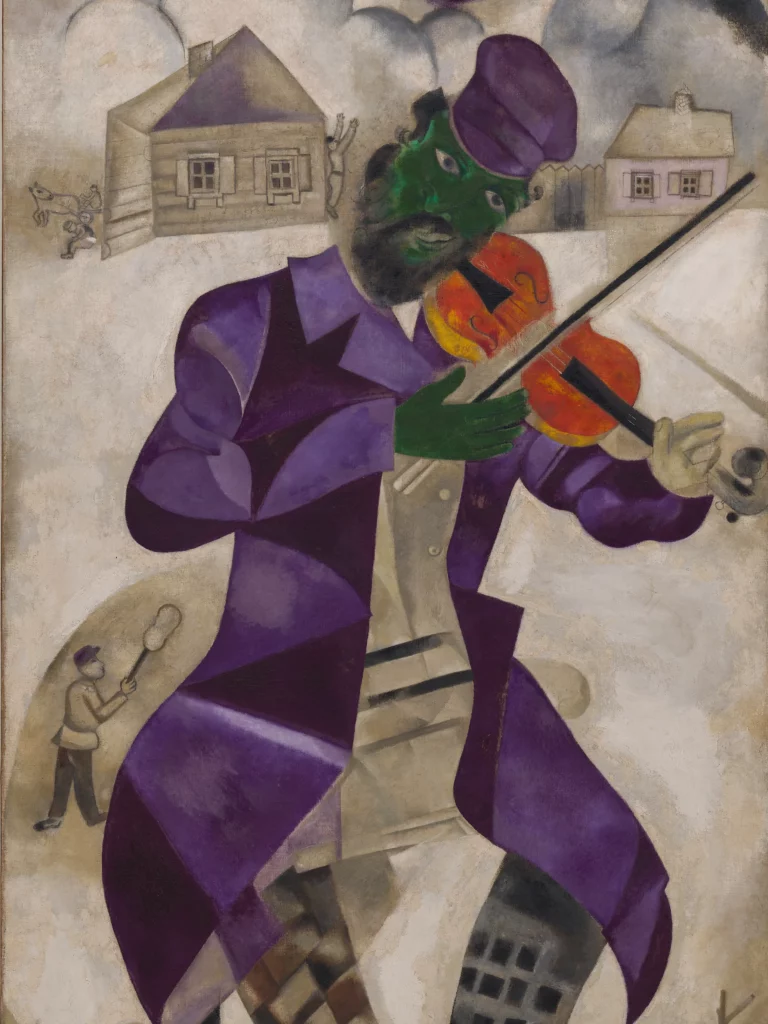
Painted in 1923, “The Green Violinist” encapsulates the whimsy and enchantment that define Chagall’s oeuvre. At the center of the composition stands a figure clad in a vibrant green coat, his bow poised over the strings of a fantastical violin. Suspended in mid-air against a surreal backdrop of swirling hues, the violinist exudes an air of mystery and magic. Chagall’s masterful use of color and form imbues the scene with a sense of otherworldly beauty, inviting viewers to lose themselves in its spell.
Analysis of The Green Violinist
| Artist | Marc Chagall |
| Date Created | 1923 |
| Medium | Oil on canvas |
| Genre | Surrealism |
| Period | Modern |
| Dimensions | 91 x 73 cm |
| Series/Versions | Part of Chagall’s broader body of work |
| Where is it housed? | Private collection |
“The Green Violinist” serves as a testament to Chagall’s mastery of the surreal. The juxtaposition of the violinist’s emerald attire against the azure expanse of the canvas creates a striking visual contrast, while the figure’s ethereal presence lends an air of mystery to the scene. Chagall’s use of symbolism, often rooted in his cultural heritage, adds depth and complexity to the composition, inviting viewers to interpret its meaning through their own lens.
Interesting Facts about The Green Violinist
Musical Inspiration: Chagall’s love for music permeates many of his works, with the violinist serving as a recurring motif throughout his career. In “The Green Violinist,” the figure’s serenade evokes a sense of harmony and transcendence, mirroring the artist’s own spiritual journey.
Personal Allegory: Some art historians speculate that “The Green Violinist” may hold personal significance for Chagall, representing his yearning for a lost love or a longing for spiritual fulfillment. The solitary figure and dreamlike setting invite introspection, inviting viewers to reflect on their own desires and aspirations.
Cultural Influences: Chagall’s paintings often draw inspiration from Russian folklore and mythology, infusing his work with a sense of nostalgia and whimsy. The fantastical elements of “The Green Violinist” harken back to the rich storytelling tradition of his homeland, adding depth and texture to the composition.
Spiritual Symbolism: The floating figure of the violinist in “The Green Violinist” may symbolize a sense of transcendence or spiritual enlightenment, hinting at Chagall’s deep-seated belief in the power of art to elevate the soul and awaken the senses.
Artwork Spotlight: L’annonciation (L’annonce d’Elie)
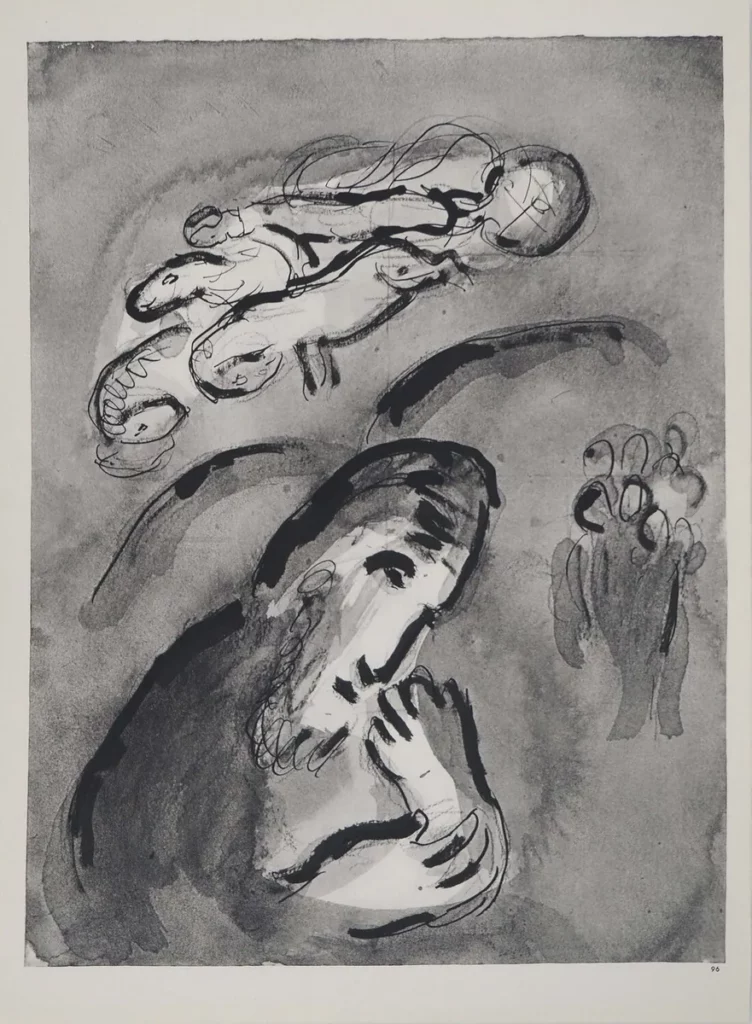
“L’annonciation (L’annonce d’Elie)” is available on Singulart. It is a compelling painting by Marc Chagall presenting the Biblical narrative of the Annunciation. Chagall’s juxtaposition of bright colors and magical imagery gives the environment a property of spiritual elevation.
Are you looking for a masterpiece from Marc Chagall?
Singulart offers exclusive limited edition prints of Marc Chagall. If you’re searching for a Chagall artwork to purchase, click on the artwork or the button below to explore further!
Frequently Asked Questions
What is the color of the violin in the green violinist?
The violinist is depicted using cool tones and secondary hues like purple, green, and a hint of orange. His visage is shaded in green, which, in my view, appears to convey his emotions. Perhaps he is unwell or feeling isolated, hence the green complexion. The violinist is attired in purple attire, while his violin gleams in shades of orange.
What is Marc Chagall most known for?
The White Crucifixion, created in 1938, stands as one of Chagall’s most renowned pieces. It possesses a distinctly unsettling and haunting aura, echoing the tumultuous period in which Chagall found himself. This artwork emerged in the aftermath of Chagall’s visit to Berlin, where he directly witnessed the persecution endured by Jews amidst the ascent of Nazism.
Conclusion
Marc Chagall’s “The Green Violinist” is a masterpiece of surreal beauty, inviting viewers into a world where the ordinary and the extraordinary collide. Through his use of color, form, and symbolism, Chagall creates a tableau that captivates the imagination and stirs the soul. As we marvel at the enigmatic figure of the violinist, we are reminded of the transformative power of art to transcend the confines of reality and transport us to realms unknown. In “The Green Violinist,” Chagall invites us to embark on a journey of discovery, where each brushstroke tells a story and every hue sings a song of wonder and delight.