Let’s embark on a fascinating journey into the world of Max Ernst, an artist whose Surrealist creations continue to captivate and intrigue audiences worldwide. Among his many enigmatic works, “Two Children Threatened by a Nightingale” stands out as a testament to Ernst’s unparalleled imagination and artistic vision. In this exploration, we’ll delve deeper into the life and career of Max Ernst, unravel the mysteries behind this captivating artwork, and uncover the layers of symbolism and meaning hidden within its surreal landscape.
Who was Max Ernst
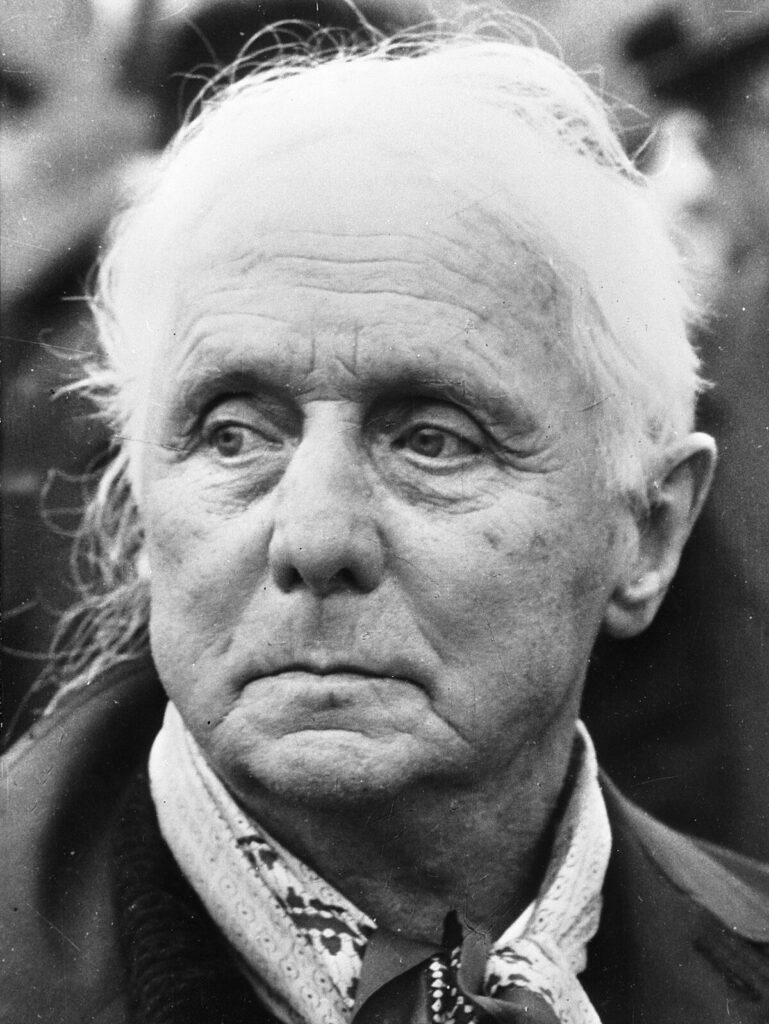
Max Ernst, born on April 2, 1891, in Germany, was a revolutionary artist who pushed the boundaries of artistic expression throughout his career. His journey began amidst the tumultuous landscape of early 20th-century Europe, where he found himself drawn to the avant-garde movements of the time. Ernst initially embraced Dadaism, a radical art movement that rejected traditional artistic conventions in favor of chaos and absurdity. However, it was his later exploration of Surrealism that truly solidified his place in the annals of art history.
FUN FACT: Max Ernst was a key figure in the Dada and Surrealist movements. He developed a technique called “frottage,” where he would rub pencil or crayon on paper over textured surfaces to create unexpected patterns and forms.
Ernst’s Career
Ernst’s artistic career was characterized by a relentless pursuit of innovation and experimentation. His early works, influenced by the Dadaist ethos, were marked by their irreverence and defiance of societal norms. Yet, it was his foray into Surrealism that allowed Ernst to fully realize his creative potential. Drawing inspiration from the theories of Sigmund Freud and the writings of fellow Surrealists like André Breton, Ernst sought to unlock the mysteries of the unconscious mind through his art.
Two Children Threatened by a Nightingale
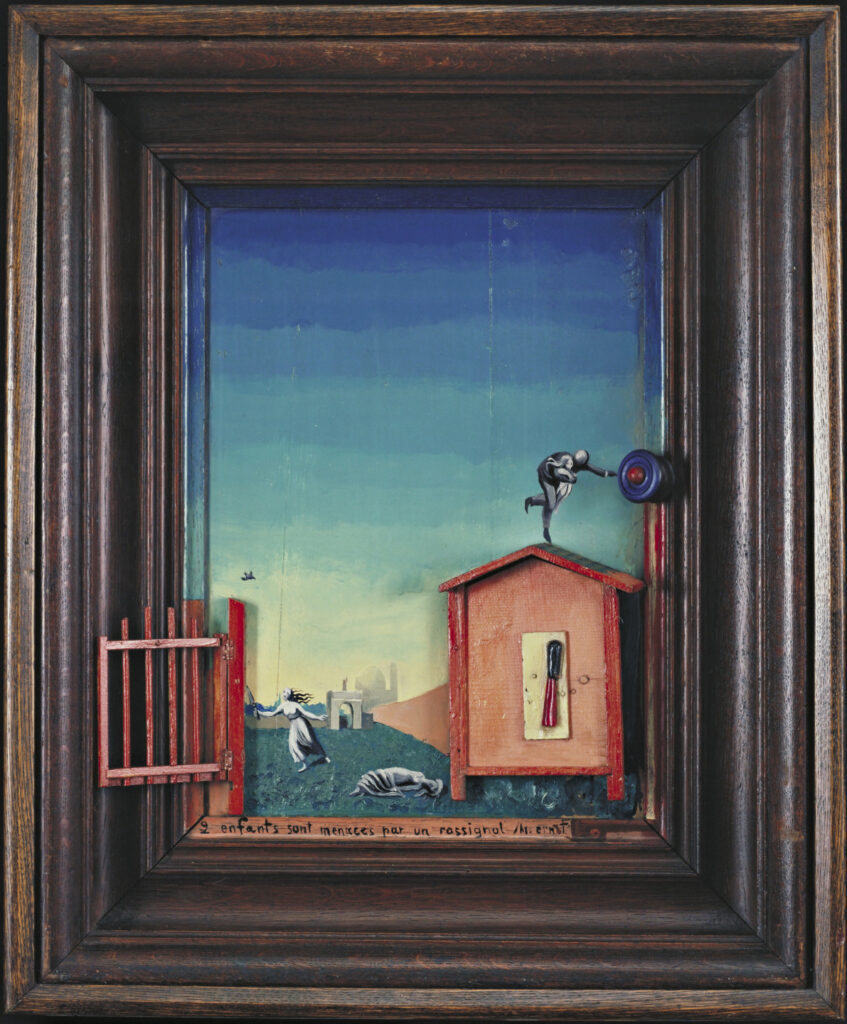
| Artist | Max Ernst |
| Date Created | 1924 |
| Medium | Oil on canvas |
| Genre | Surrealism |
| Period | Interwar period |
| Dimensions | 73 cm x 92 cm |
| Series / Versions | N/A |
| Where is it housed? | Private Collection |
Painted in 1924, “Two Children Threatened by a Nightingale” stands as a quintessential example of Ernst’s Surrealist exploration. The painting depicts two children standing on a desolate shore, their backs turned to the viewer as they gaze apprehensively at a lone nightingale perched on a nearby tree branch. The scene is imbued with an eerie sense of foreboding, as if the children are on the brink of a momentous encounter with the natural world.
Interpretation
“Two Children Threatened by a Nightingale” invites viewers to engage in a process of interpretation and introspection. The juxtaposition of innocence and menace, embodied by the children and the nightingale respectively, serves as a metaphor for the inherent duality of human existence. The desolate landscape evokes a sense of isolation and existential angst, while the presence of the nightingale hints at the possibility of transcendence and renewal.
Interesting Facts
Surrealist Techniques: Ernst’s innovative use of Surrealist techniques, such as frottage and grattage, adds depth and texture to the painting, creating a dreamlike atmosphere that blurs the boundaries between reality and fantasy.
Freudian Influence: Like many Surrealists, Ernst was deeply influenced by the writings of Sigmund Freud, particularly his theories on the unconscious mind. The symbolic imagery in “Two Children Threatened by a Nightingale” can be interpreted through a Freudian lens, as a manifestation of repressed desires and fears.
Personal Symbolism: The nightingale, a recurring motif in Ernst’s work, holds personal significance for the artist. It is believed to symbolize Ernst’s own fascination with nature and its role in the human psyche, serving as a metaphor for the creative impulse that drives his artistic endeavors.
Impact on Surrealist Movement: “Two Children Threatened by a Nightingale” is widely regarded as a seminal work in the Surrealist movement, influencing generations of artists with its innovative approach to composition and subject matter. Ernst’s skill to tap into the depths of the unconscious mind continues to inspire artists and art enthusiasts alike, reaffirming his status as one of the preeminent figures of 20th-century art.
Artwork Spotlight: Rêve surréaliste : Les coqs
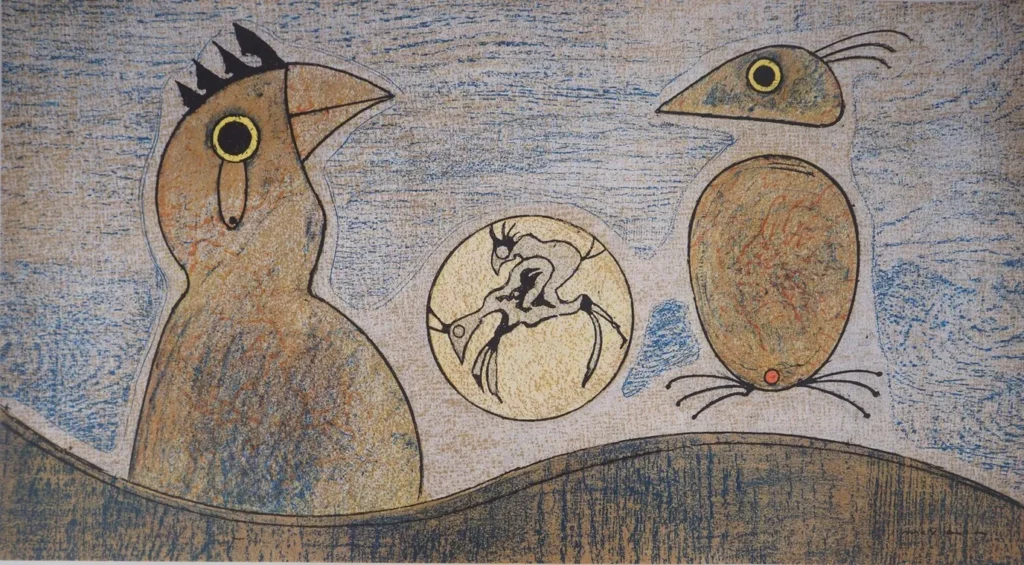
“Rêve surréaliste : Les coqs” by Max Ernst is also available on Singulart. It is a surrealist artwork of a dreamy world of roosters in a fantastic landscape. Ernst’s use of incredibly bright colors and symbolism enables viewers to be immersed in a world of dreams and fantasies where reality meets imagination.
Are you looking for a masterpiece from Max Ernst?
Singulart presents exclusive limited edition pieces by Max Ernst. To discover and acquire Ernst’s art, click on the artwork or the button below for more information!
Frequently Asked Questions
What is the meaning of two children are threatened by a nightingale?
“Two Children Threatened by a Nightingale” emerges not only as a depiction marking the conclusion of a historical epoch but also as a portrayal that delves into the intricacies of human behavior through the lens of surrealist artistic interpretation.
Conclusion
In “Two Children Threatened by a Nightingale,” Max Ernst invites us to explore the hidden recesses of the human psyche, where dreams and reality intertwine in a mesmerizing dance of symbolism and imagination. As we unravel the layers of meaning embedded within this captivating artwork, we gain a deeper appreciation for Ernst’s enduring legacy and the transformative power of art to transcend the boundaries of time and space.