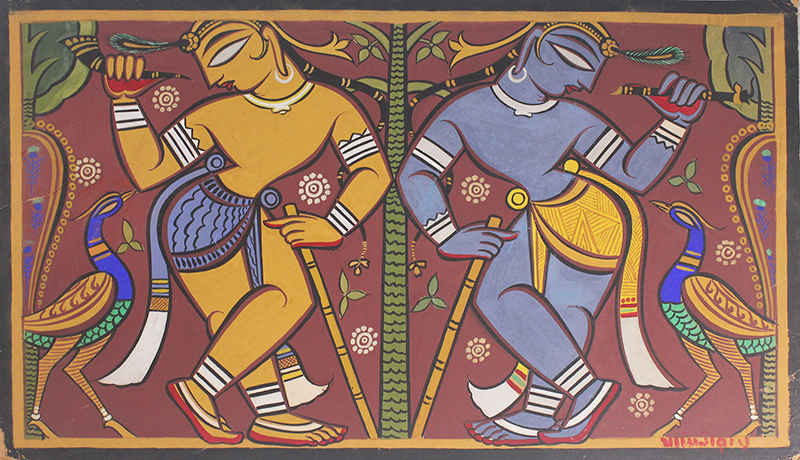
Jamini Roy made a lasting impact on the art world through his fusion of folk and modern styles. One of his creations, Krishna and Balarama beautifully captures his artistic vision and cultural heritage.
In this blogpost, we will discuss the beautiful creation of Jamini Roy which is Krishna and Balaram.
Who was Jamini Roy?
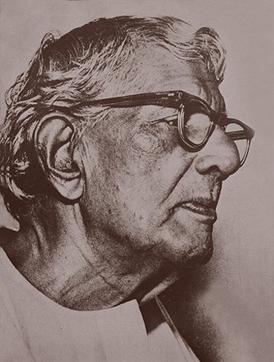
Jamini Roy drew inspiration from the folk art traditions of his region. Despite receiving training at the Government College of Art in Kolkata, he felt compelled to break free from the conventions of European art and reconnect with his roots. This decision marked the beginning of his style characterized by lines, flat colors and motifs influenced by Indian folk art.
His Career
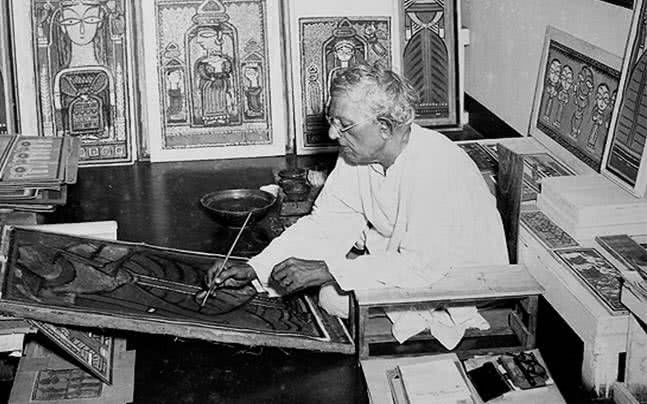
Roy’s artistic journey was defined by experimentation and innovation. He found inspiration in folk traditions such as the Kalighat patua scrolls and Bengal’s rural patachitra paintings. By blending these elements with a sensibility, he created a distinctive visual language that resonated with audiences worldwide.
Throughout his career, Roy remained dedicated to making art accessible to all. He often used materials like dyes and cloth to create his artworks.
What is Happening in Krishna and Balarama
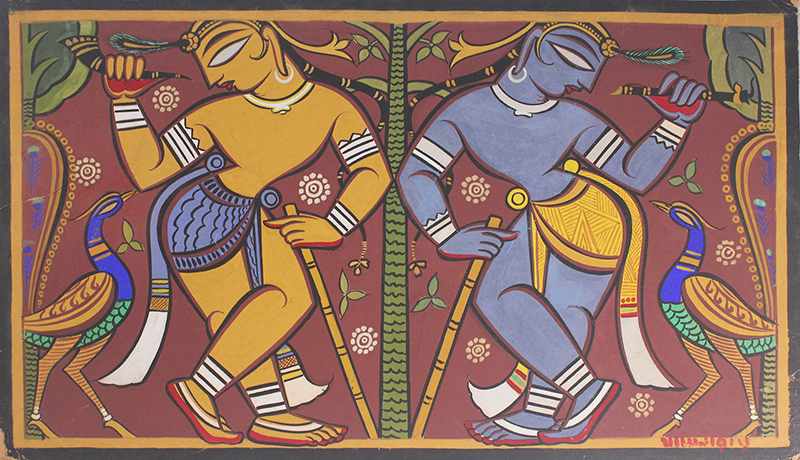
| Artist | Jamini Roy |
| Date Created | 1940s |
| Medium | Tempera on canvas |
| Genre | Modern Indian Art |
| Period | Post Period |
| Dimensions | 80 cm × 50 cm |
| Series/Versions | N/A |
| Location | National Gallery of Modern Art in New Delhi |
In Roy’s Krishna and Balarama painting we are presented with a depiction of the brothers from Hindu mythology. Krishna, the god renowned for his pranks stands side by side with his older brother Balarama symbolizing the eternal bond shared among siblings. In his style, Roy beautifully captures the essence of their relationship with simplicity and grace.
The depictions of Krishna and Balarama are portrayed through fluid lines conveying a sense of movement and vitality. Then Roy opts for clean and graphic shapes allowing viewers to focus on the heart of the scene. The colors used are also remarkable in their simplicity featuring blues and earthy browns that dominate the composition.
Interesting Facts
1. Roy’s depiction of Krishna and Balarama goes beyond representation; it captures the essence of Hindu mythology. With forms and vibrant colors Roy manages to convey the energy of these brothers inviting viewers to reflect upon the deeper significance behind the imagery.
2. In Krishna and Balarama, we see Jamini Roy’s incredible talent for blending cultural influences. Roy creates a visual language that knows no bounds, resonating with audiences around the world by infusing elements of folk art with innovative techniques.
3. Jamini Roy’s bold and expressive artistic style continues to inspire artists, both in India and beyond. He has opened a new chapter in the country’s artistic narrative by embracing and reinterpreting India’s rich heritage for the modern era.
4. Just as groundbreaking as his artistic style is Roy’s experimentation with materials and techniques, evident in Krishna and Balarama. Here, he uses tempera on canvas, a medium typically associated with European art traditions.
5. Despite drawing inspiration from folklore and mythology, Roy’s art transcends cultural barriers. His dynamic graphic style, coupled with universal themes, captivates audiences worldwide, earning him acclaim that stretches far beyond India’s borders.
6. Jamini Roy’s artwork isn’t just admired for its aesthetic appeal; it also carries subtle messages about society and culture. In Krishna and Balarama, the depiction of the divine siblings symbolizes the importance of familial bonds and spiritual devotion, inviting viewers to reflect on the shared values that unite humanity.
7. This artwork played a pivotal role in shaping the identity of a nation on the verge of transformation. It instilled a sense of pride and resilience among the people, leaving an indelible mark on society.
8. While Krishna and Balarama remains one of Jamini Roy’s most iconic creations, it also reflects his ongoing artistic journey. Throughout his career, Roy continually pushed boundaries, exploring new techniques and subjects while remaining rooted in his cultural heritage.
Frequently Asked Questions
What is the theme of the paintings of Jamini Roy?
Beginning in 1920, Roy’s artwork depicted images from village life, capturing the romanticism and purity of the rural environment. Jamini Roy painted a series of portraits of Santal women. The paintings, which are carefully drawn with strong, angular lines, depict the women going about their daily activities.
How was Roy’s work Recognised?
Due to his rejection of the modern style and preference for painting in the Bengali folk style, his work marked a new beginning in Indian modern art. Awards for Roy’s achievements included the Padma Bhushan in 1954 and the Viceroy’s gold medal in 1934.
Conclusion
Jamini Roy’s masterpiece Krishna and Balarama stands as a testament to his brilliance, as an artist and visionary. By blending folk art with sensibilities he invites us to delve into timeless themes of mythology and spirituality while celebrating India’s artistic heritage.