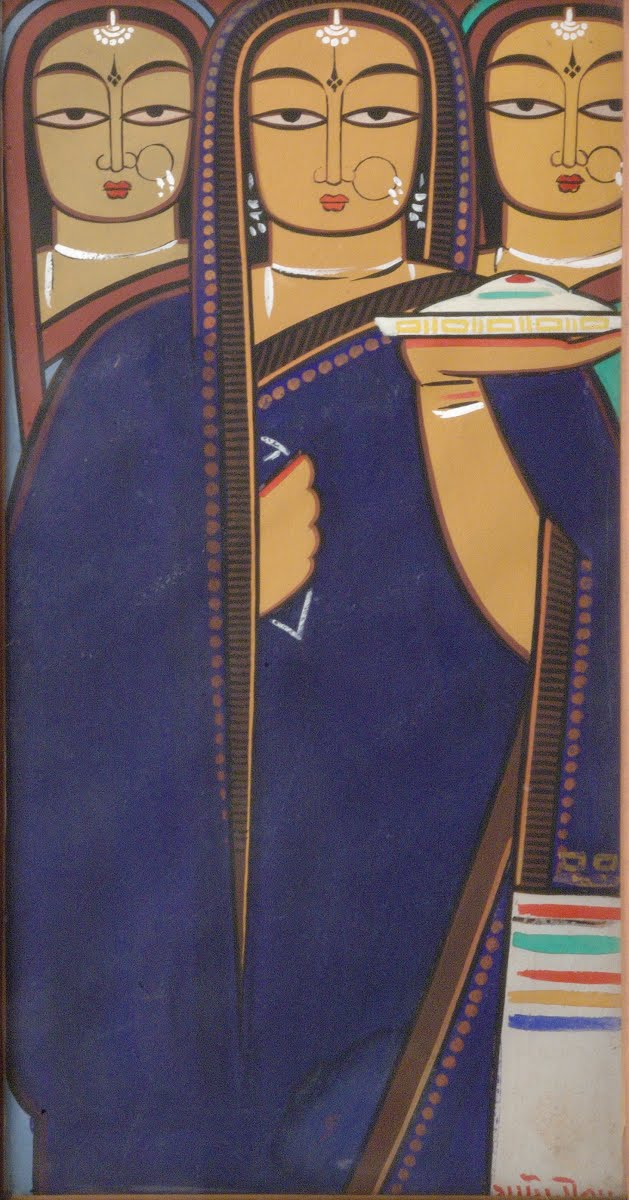
Today, we’re taking a leisurely stroll through the vibrant world of Jamini Roy, an artist whose canvas became a playground for tradition and innovation. Our spotlight? The enchanting masterpiece known as Three Pujarins. So, grab a cup of chai, settle in, and let’s unravel the layers of this artistic gem.
Who was Jamini Roy
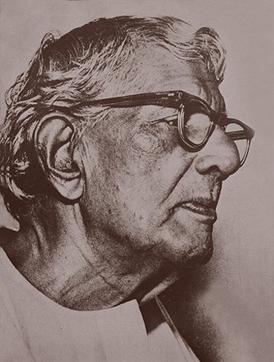
Picture this: the late 1800s in Beliatore, West Bengal. Enter Jamini Roy, a man destined to leave an indelible mark on the canvas of Indian art. Born in 1887, Roy was no stranger to the mix of cultures that shaped Bengal. Trained initially in the classical Western style, he did a classic Jamini move and pivoted towards something more homegrown, drawing inspiration from the folk art pulsating through the villages.
FUN FACT: He initially trained in the British academic style of painting but later rejected it to embrace indigenous Bengali folk art traditions, such as Kalighat painting.
His Career
Jamini Roy’s artistic journey was a rollercoaster of experimentation. He dabbled in various styles, searching for that elusive sweet spot. And guess what? He found it. The ‘Jamini Roy Style’ emerged – a fusion of Kalighat paintings and traditional folk art. This was his magnum opus, a style that breathed life into the ordinary and made it extraordinary.
What is Happening in Three Pujarins
| Artist | Jamini Roy |
| Date Created | 1937 |
| Medium | Tempera |
| Genre | Folk |
| Period | Modern |
| Dimensions | 36 x 48 in |
| Series / Versions | Not applicable |
| Where is it housed? | Indian Museum, Kolkata, India |
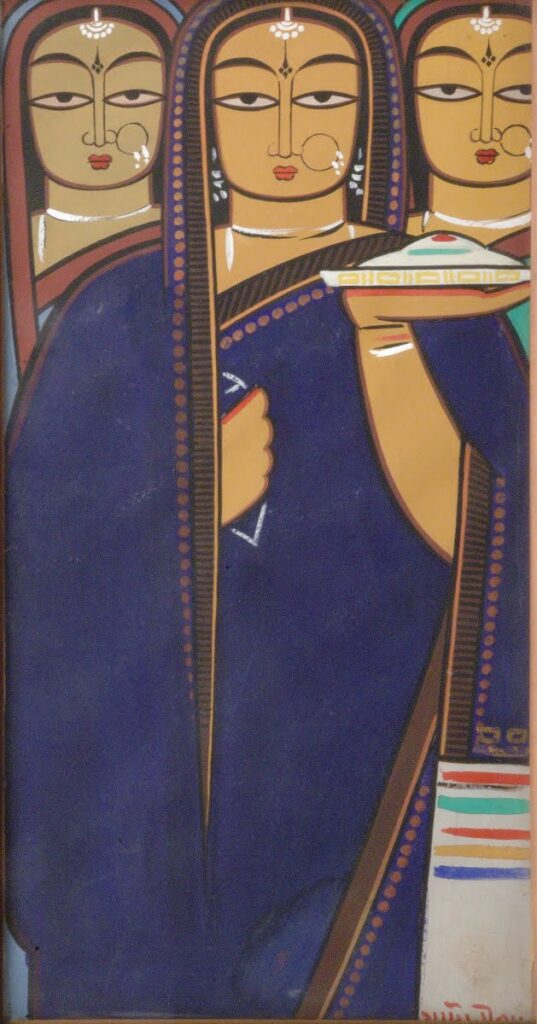
Now, let’s zoom in on Three Pujarins. This masterpiece is like a visual feast of rural Bengal during festivities. Picture this: three women, draped in the hues of celebration, deep in the throes of worship. Roy’s strokes are bold, his colors earthy, creating a harmonious dance on the canvas. It’s more than a painting; it’s a snapshot of cultural richness and spiritual energy.
Interesting Facts about Three Pujarins
Less is More: One glance at Three Pujarins, and you’ll notice the deliberate simplicity. Roy skips the intricate details, letting the essence shine through.
Mixing it Up: The beauty of this artwork lies in its seamless blend of old-school folk art with a touch of modern flair. It’s a symphony of tradition and contemporaneity.
Breaking the Rules: Roy wasn’t one to play by the book. In a time when the art world was getting snooty, he did the unthinkable – he embraced folk art. This was a rebellion, a thumbing of the nose to the established norms. Respect!
Heart and Soul: Three Pujarins isn’t just colors on canvas; it’s a love letter to Bengal’s culture and traditions. Roy’s brush pays homage to the spirit of devotion that runs deep in these parts. It’s not just a scene; it’s a cultural embrace.
Legacy of Awesomeness: Three Pujarins isn’t just a painting; it’s a legacy. Roy’s influence on modern Indian art is like ripples in a pond, spreading far and wide. Many artists have donned the hat of inspiration, thanks to the trailblazing path he carved.
Exploring the Depths
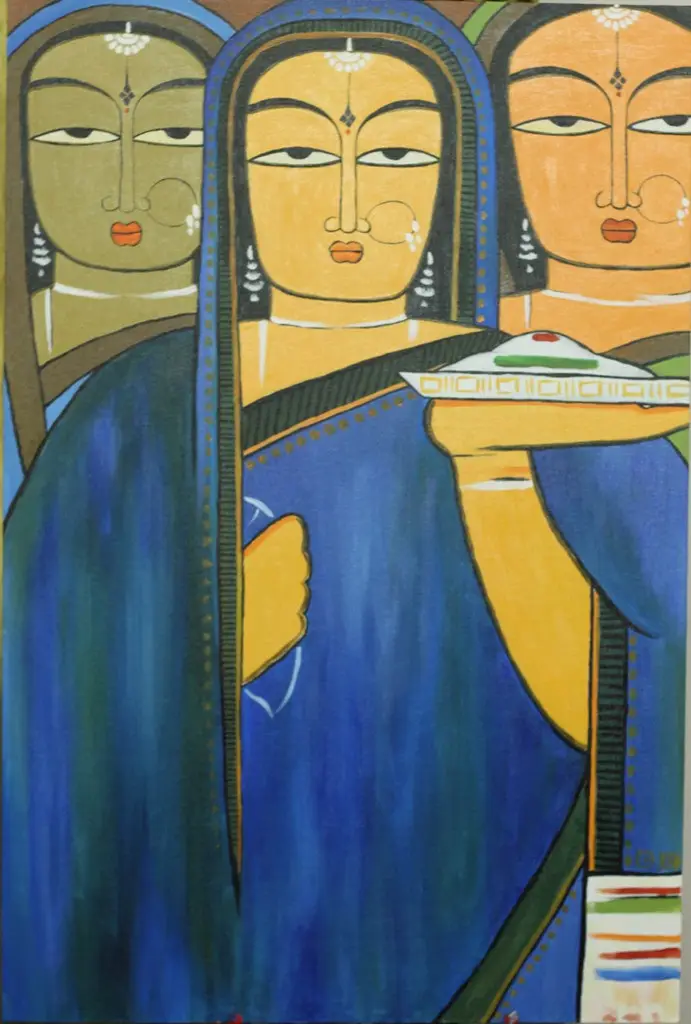
Let’s dive deeper into the canvas. Three Pujarins is a visual narrative, each stroke telling a story. The choice of tempera as the medium adds a unique texture to the artwork, creating a tactile experience even through the eyes. The colors, oh, the colors! Roy’s palette is a celebration in itself – warm reds, earthy browns, and serene whites, each hue playing its part in the grand symphony.
The period when Roy birthed this masterpiece was the Modern era, yet his homage to folk art provides a timeless quality. It’s like he took a snapshot of tradition and framed it in a modern context. The dimensions, 36 x 48 inches, make it large enough to immerse yourself in the details, yet not overwhelming.
Now, about the series or versions, here’s the twist – Three Pujarins is a lone wolf. It stands tall as a singular creation, a testament to Roy’s singular vision. As for its residence, you can catch this masterpiece doing its thing in the Indian Museum, Kolkata, India. It’s like a homecoming, returning to the roots that birthed its inspiration.
A Visual Feast
Three Pujarins isn’t just a painting; it’s an experience. Roy’s strokes, intentional and bold, guide your eyes through the canvas, inviting you to dance with the women lost in devotion. The simplicity is deceptive – it’s a portal to a world where every line, every color, tells a story.
Roy’s fascination with folk art wasn’t just a style choice; it was a love affair with the everyday. Through his brush, he elevated the mundane to the extraordinary, and Three Pujarins is a prime example. It’s as if he said, “Hey, these moments of worship, these celebrations – they’re not just ordinary; they’re extraordinary. Let me show you why.”
Impact and Legacy
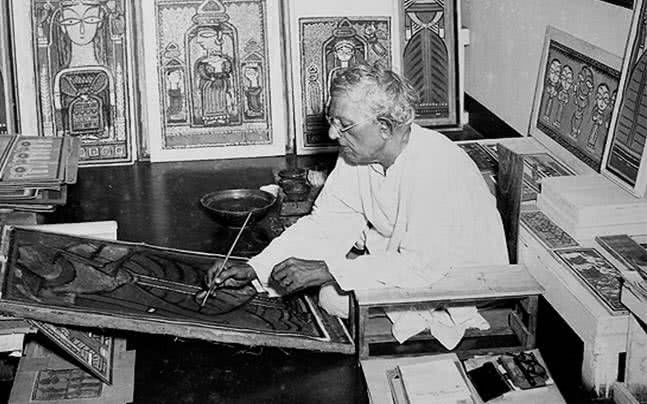
Three Pujarins isn’t confined to the canvas; it reverberates in the corridors of art history. Roy’s departure from the conventional paved the way for a new wave in Indian art. His influence echoes in the works of countless artists who found inspiration in his fusion of tradition and contemporary flair.
It’s not just about aesthetics; it’s about identity. Roy’s journey mirrors the evolution of a nation finding its voice. He didn’t just paint; he articulated the heartbeat of Bengal, the pulse of a culture that refused to be forgotten.
Frequently Asked Questions
What are the three pujarins made of?
The Tempera on Paper, “The Three Pujarins,” or “Three Priestesses,” is 36.5 cm by 70.5 cm. He created hard, geometric lines sensually using the gouache technique.
What is the theme of the paintings of Jamini Roy?
Roy began to depict scenes from village life in his paintings around 1920, capturing the beauty and purity of the rural environment. Jamini Roy painted a series of portraits of Santal women. The paintings, which are sensuously drawn with strong, angular lines, depict the women going about their everyday business.
What medium did Jamini Roy use?
Jamini Roy, an Indian painter from Bengal, is still well-known for having studied under Abanindranath Tagore. He painted in a distinctive way by fusing elements of the traditional arts of his native country with his own approach. He started painting using tempera methods.
Conclusion
As we wrap up our journey through Three Pujarins, take a moment to appreciate the strokes, the colors, and the stories embedded in the canvas. It’s more than a piece of art; it’s a cultural time capsule. Jamini Roy didn’t just create paintings; he crafted experiences, and Three Pujarins is a testament to his genius.
So, next time you find yourself in Kolkata, swing by the Indian Museum. Stand in front of Three Pujarins and let its magic transport you to the heart of rural Bengal. Feel the devotion, hear the festive beats, and witness the legacy of an artist who dared to be different. After all, art isn’t just about what you see; it’s about what you feel, and with Three Pujarins, you’re in for a soul-stirring experience.