Get ready for an exhilarating adventure into the captivating artwork called Canyon, created by the visionary artist Robert Rauschenberg. In this journey, we will explore the life and lasting impact of Rauschenberg, unravel the intricacies of his career and analyze the details of Canyon.
Who exactly was Robert Rauschenberg?
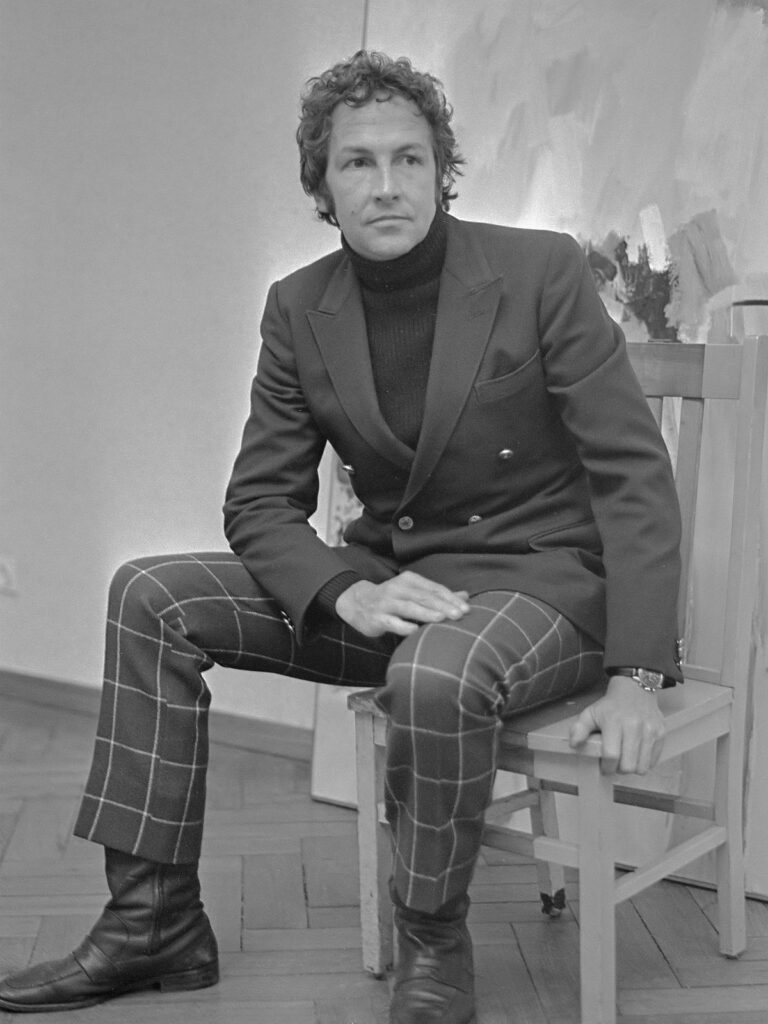
Robert Rauschenberg was a trailblazer in the art realm who pushed against boundaries with his experimental approach. Hailing from Port Arthur, Texas Rauschenberg’s path was marked by a quest for innovation and a refusal to conform to traditional artistic norms. His extensive body of work which encompassed painting, sculpture, photography and performance art firmly established him as a figure in the evolution of 20th century art.
FUN FACT: He was one of the first artists to incorporate digital technology into his creative process, collaborating with engineers and programmers to produce digital prints and installations.
His Professional Journey
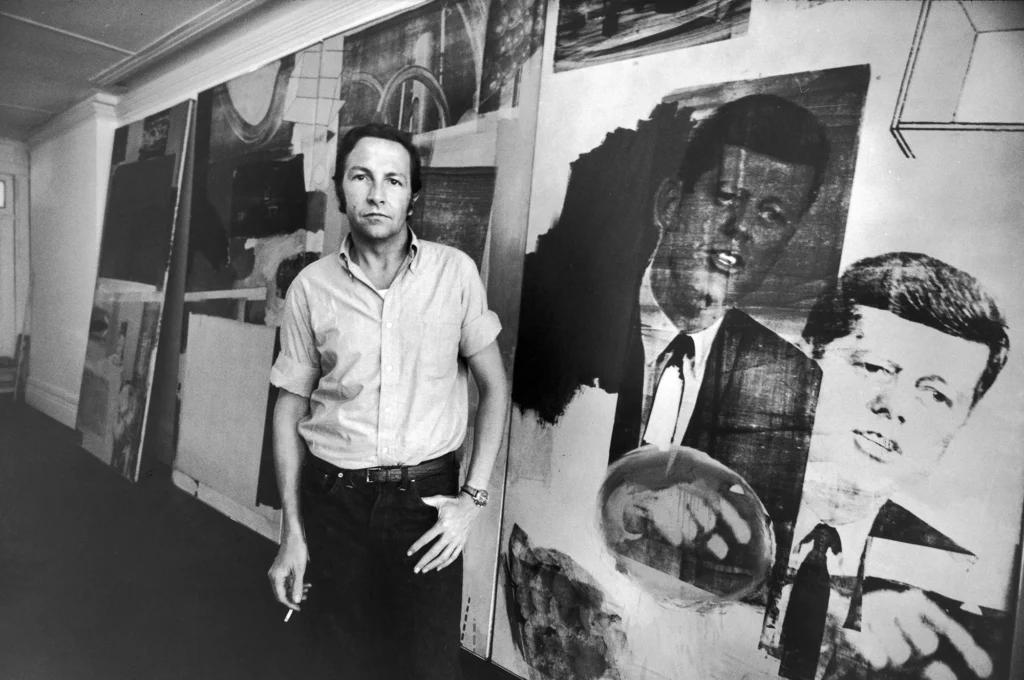
The 1950s witnessed Rauschenberg’s ascent within New York City’s art scene. With his friend and collaborator Jasper Johns he embarked on an artistic exploration that would redefine the contemporary arts landscape. It was during this period that Rauschenberg introduced his ground breaking concept known as “Combines,” which merged painting and sculpture to blur the boundaries between three dimensional art forms.
Rauschenberg’s Combines represented a departure from expressionism, the prevailing style in the art world, at that time. Instead he incorporated objects and materials into his artworks giving them layers of meaning and symbolism. This innovative approach received praise and also established Rauschenberg as a pioneer in the field of mixed media art.
What Is Happening in Canyon?
| Artist | Robert Rauschenberg |
| Date Created | 1959 |
| Medium | Mixed Media |
| Genre | Combine Painting |
| Period | 20th Century |
| Dimensions | 81 x 70 x 24 inches |
| Series/Versions | Unique |
| Location | Museum of Modern Art (MoMA) New York City |
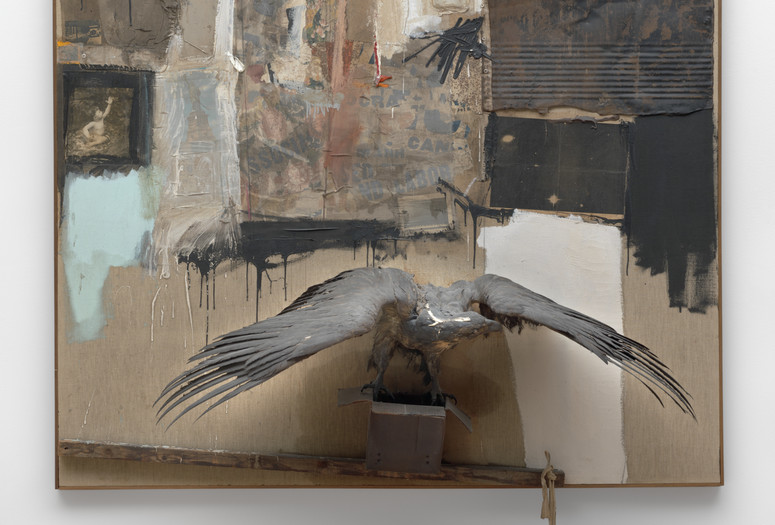
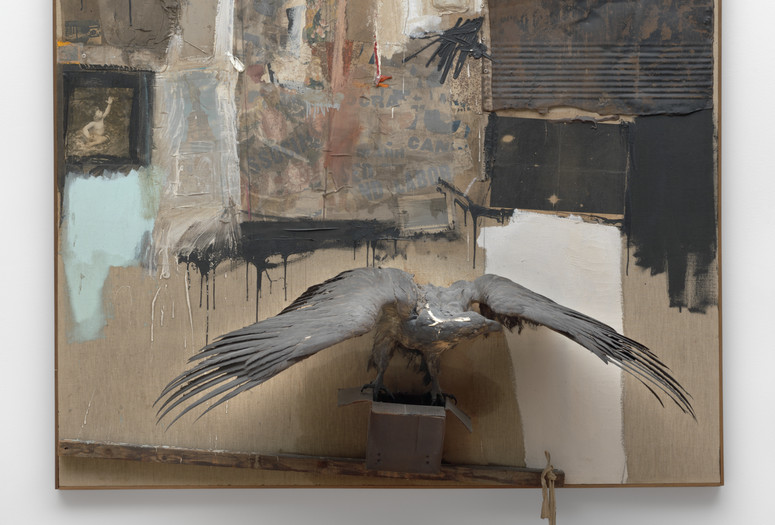
At the heart of Rauschenberg’s body of work lies Canyon, an artwork created in 1959 that embodies his approach to combining different media. As viewers observe Canyon they are faced with a captivating fusion of elements—a stuffed bald eagle, a pillow, a rubber tire—intertwined on a canvas.
The choice to prominently feature the eagle as the centrepiece of the artwork is particularly striking, symbolizing identity and patriotism in a powerful way. However this decision also sparked controversy and legal disputes for Rauschenberg due to regulations governing the sale and transportation of eagles, under U.S. Law.
Despite facing challenges Rauschenberg remained determined. He managed to secure a special permit allowing him to incorporate the majestic eagle into his artwork. This showcases his commitment to his vision.
However, Canyon goes beyond being a collection of objects; it represents an exploration of various themes such as national identity and the intersection of art and legality. By blending materials into his work, Rauschenberg encourages viewers to revaluate their preconceived notions about art and the world that surrounds them.
Fascinating Details
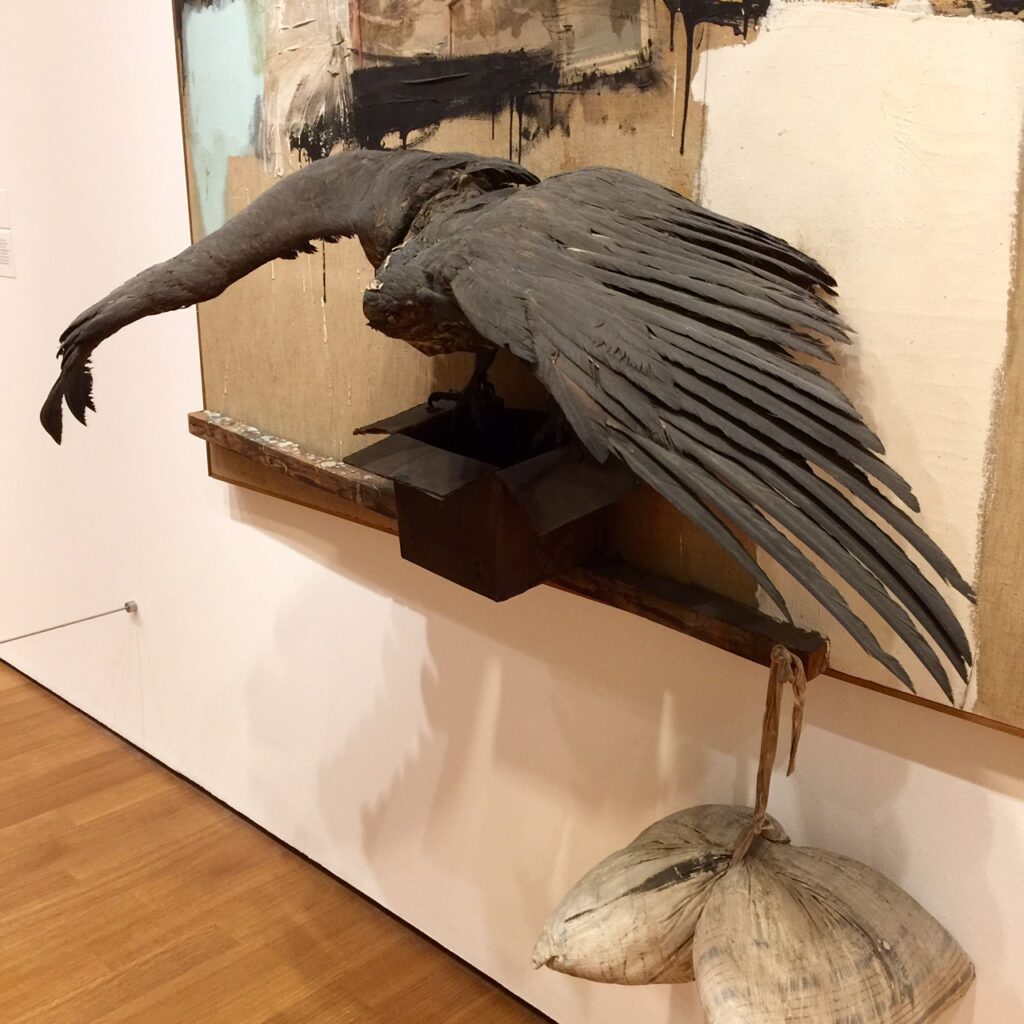
The inclusion of the eagle in Canyon sparked debates and obstacles highlighting the intricate complexities that arise when art intersects with law.
Within the layers of Canyon, Rauschenberg discreetly embedded a photograph featuring his son, Christopher. This personal touch adds a layer of meaning to the artwork.
Rauschenberg strongly believed in engaging viewers with art. Canyon entices individuals to interact with its three elements creating an immersive experience that transcends traditional boundaries of artistic observation.
Artwork Spotlight: Samarkand Stitches III
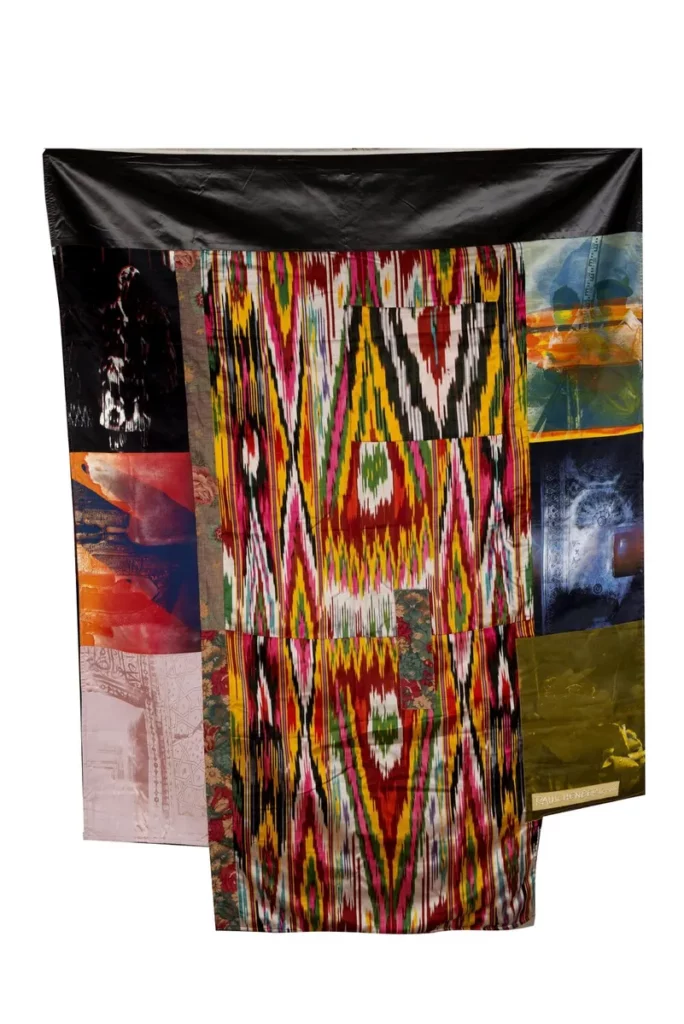
“Samarkand Stitches III ” by Robert Rauschenberg is also available on Singulart. It has three-dimensionality made up of fabric, paper, and other materials being assembled down to create a texture-full composition. Made of a wealth of visual details and the texture itself, the piece prompts visitors to investigate the artist’s bold recycling of various media into his art.
Are you looking for a masterpiece from Robert Rauschenberg?
Singulart presents exclusive limited edition pieces by Robert Rauschenberg. To discover and acquire Rauschenberg’s art, click on the artwork or the button below for more information!
Frequently Asked Questions
What did Robert Rauschenberg call his approach to art making?
Part of Rauschenberg’s style was sometimes referred to as “Neo-Dadaist,” a term he and painter Jasper Johns both used.
Is Rauschenberg an abstract expressionist?
Together with Cy Twombly and Jasper Johns, Robert Rauschenberg expanded the boundaries of art by challenging the 1950s abstract expressionism’s philosophical and stylistic dominance.
What inspired Robert Rauschenberg’s work?
Although he started to rely more on his own photography, he still included photos from commercial print media. His encounters with artists in Mexico, China, Japan, and other nations had an impact on a few of his works.
Conclusion
Robert Rauschenberg’s masterpiece, Canyon serves as a testament to his creativity and fearless experimentation. Through its utilization of media and thought provoking symbolism, Canyon prompts viewers to ponder the essence of art and its connection to our ever changing world.
As we explore the historical background of “Canyon” using our detailed table, we develop a greater admiration for this iconic masterpiece displayed at the Museum of Modern Art in New York City. The lasting impact of Rauschenberg’s work continues to inspire artists and art lovers across generations encouraging them to explore realms of creativity and imagination.