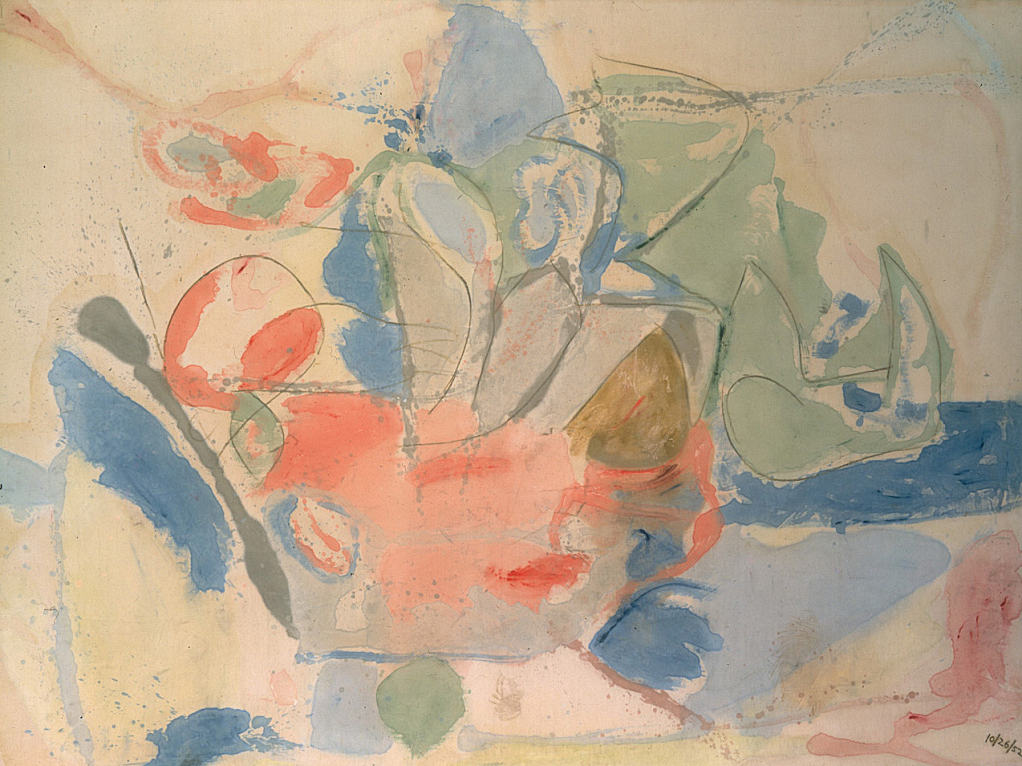
Take a walk into the suave artistic realm where Helen Frankenthaler steps forth and showcases her creative insights and inventiveness that has led to the evolution of abstract art. In 1928, Frankenthaler was born into an artistic family that was outgoing and exuberant with the colorful backdrop of 1950’s New York. Besides her great contributions, it was in the field of art particularly her “soak-stain” method that changed the tradition of painting. Aside from this method which was to soften or dilute the oil paints directly on unprimed canvas, this material features mystical yet beautiful quality. On the list of the masterpieces worth mentioning is Mountains and Sea from 1952 which is a beautiful enduring work that affected the art world.
FUN FACT: Frankenthaler was famous for her ability to transfigure the essense of landscapes into abstract embodiments of color and shape which in turn endowed her paintings with the vitality of nature, making her a leading figure at the point where art and nature meet.
Her Career
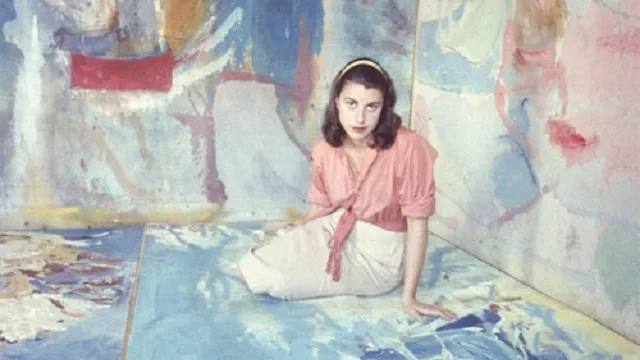
At the core of New York City’s dynamism in the mid-twentieth century was an unstoppable wave of creativity that came in many artistic forms. This hyper ambient city was the place where the future artist started her journey. Ultimately, her revolutionary breakthrough was her invention of the “soak-stain” method, which is now understood as her fashion trademark.
The revolutionary approach consisted of the use of oil pigments, which with turpentine were creating a gradient oil painting to affect raw canvas color and mixing. The final outcome was a glowing piece of translucency that used to decorate the abstract world of expressionism. Unfortunately, Frankenthaler’s openness to chance and trying out new techniques that affirmed her distinct art from the others, shaped the generation of vibrant and emotional artworks that captured various-minded audiences.
What is Happening in Mountains and Sea?
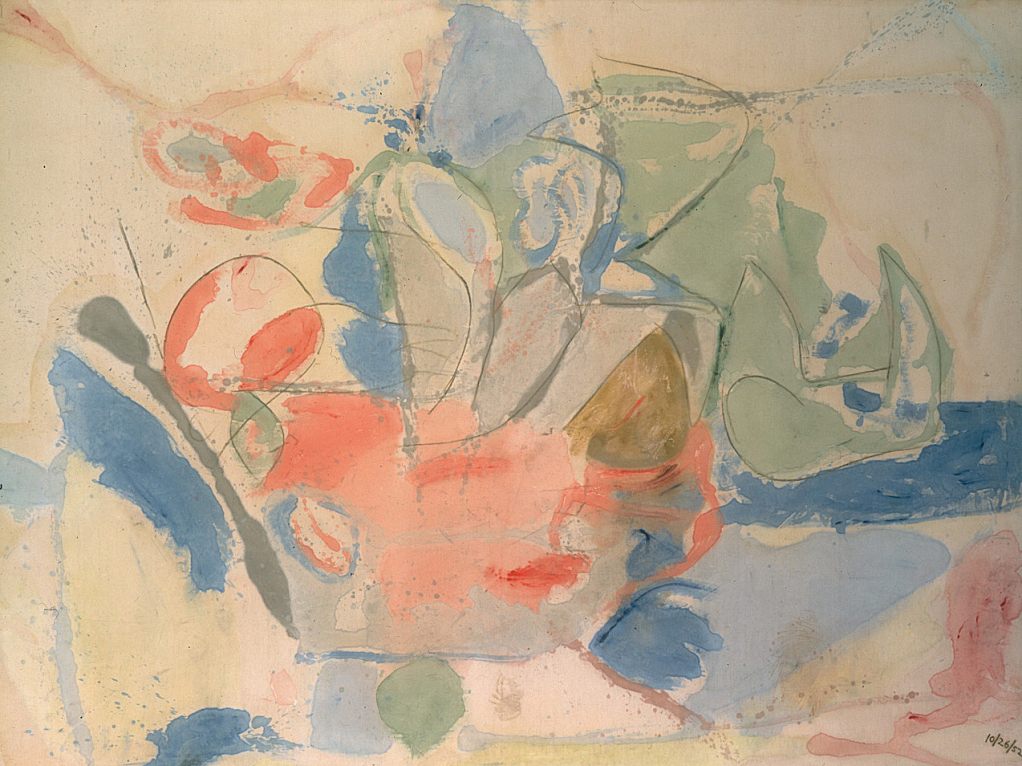
| Artist | Helen Frankenthaler |
| Date Created | 1952 |
| Medium | Oil on canvas |
| Genre | Abstract Expressionism |
| Period | Post-war American art |
| Dimensions | 86 x 117 inches |
| Series / Versions | N/A |
| Where is it housed? | National Gallery of Art, Washington, D.C. |
Mountains and Sea, painted in 1952, remains a testament to Frankenthaler’s ability to transcend the confines of representation and evoke a deeper emotional response. The canvas, measuring 86 by 117 inches, draws viewers into a dreamscape where the boundaries between reality and imagination blur. The title hints at a landscape interpretation, suggesting mountains and seas, but it’s the emotive power and abstract expression that make this piece truly remarkable.
The soak-stain technique, evident in the painting, allows colors to flow freely, creating a dynamic interplay of shapes and forms. The canvas becomes a living entity, capturing the ephemerality of nature and the essence of a moment. Swirling brushstrokes and layered hues invite viewers to explore the emotional landscape Frankenthaler has crafted, encouraging a personal connection with the artwork.
Interesting Facts about Mountains and Sea
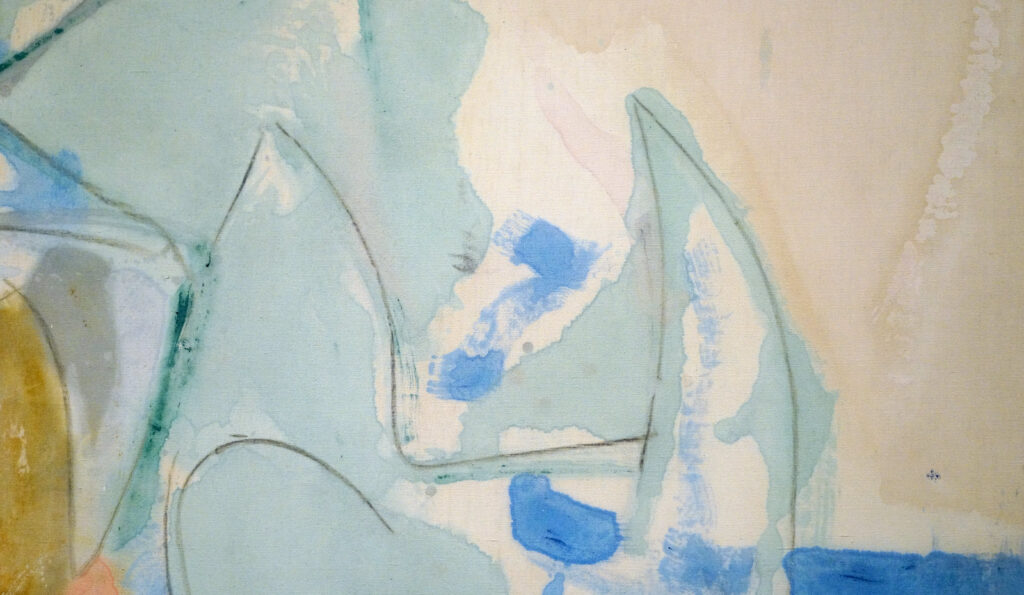
Innovative Technique: The work is also a tribute to the innovative characteristics of soak-stain methods that were introduced by the artist. This brand new approach to the painting actualisation not only disrupted the traditional methods of this type but also inspired a new generation of artists to explore such a vibrant connection of the palette with the canvas.
Expressive Spontaneity: Similar to that of Frankenthaler’s, her method was based on impulsiveness and feeling liberated in the process. Every single dot in the Mountains and Sea belongs to this creative process set free, encompassing the quality of the present event and the eagerness of the lightning moment.
Enduring Legacy: Mountains and Sea also have an influence that reaches farther. The painting remains the fulcrum of inspiration to many artists and this is because of Frankenthaler’s perpetual legacy in the abstract art development. Not only does the presence of this piece at the National Gallery of Art ensure its continuous existence, but it’s also easy for millions to come and experience it for generations to come.
Spatial Dimensions: The size of the Mountains and Sea exhibit, with dimensions being 86 by 117 inches, heightens a sense of presence for the viewer. The wide dimension serves to capture not only the eye but also the body of the audience, thus exerting power that provides depth to the effect of the artwork.
Exploration of Color: Frankenthaler’s color set in Mountains and Sea is also another subject. The way how the colors are flowing into one another and how the transitions are becoming gradually indistinct is showing her skills in working with the medium. The perfect use of colors makes the viewer feel the emotions in various ways; the painting engages the viewer on a deeper level.
Artwork Spotlight: Un Poco Más
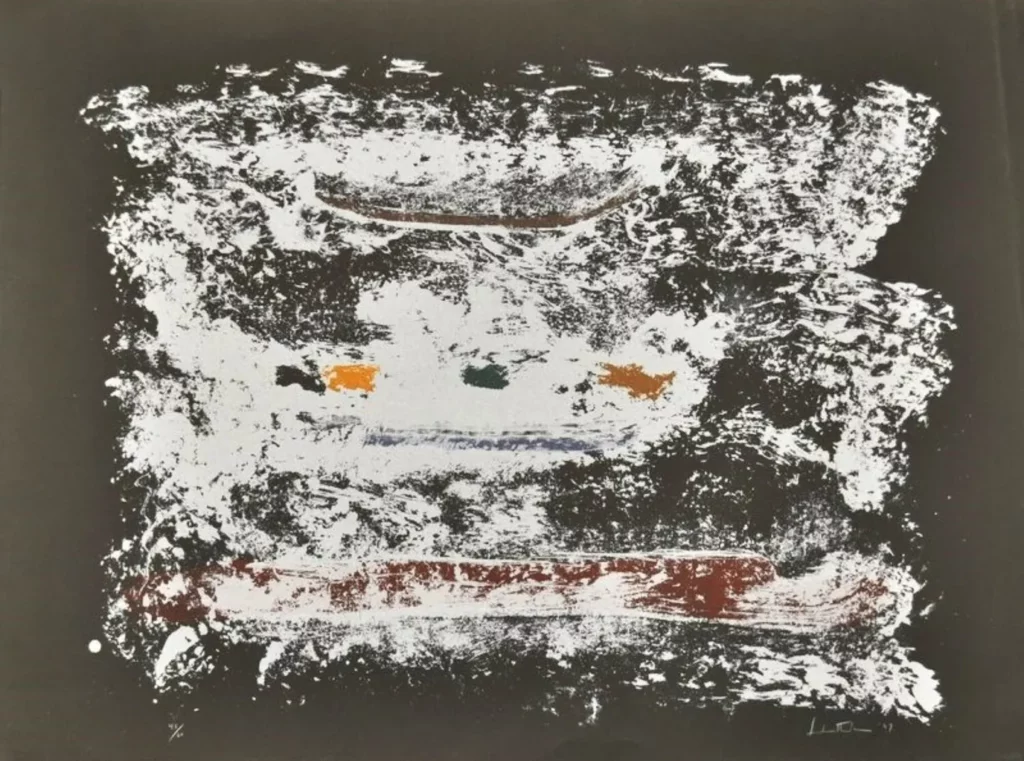
Un Poco Más (1987) is an abstract piece by Helen Frankenthaler which is also available on Singulart. This artwork is a typical example of her color field style with painted washes of bold colors. This piece is a perfect example of her tactics in abstracting and lyrical use of colour in her work.
Are you looking for a piece of artwork from Helen Frankenthaler?
Singulart has limited edition prints of Helen Frankenthaler. If you are looking for a piece of Frankenthaler‘s artwork for sale, simply click on the artwork or the button below to discover more!
Frequently Asked Questions
What is Helen Frankenthaler best known for?
She was a prominent member of the second wave of American abstract artists from the postwar era, and her contribution to the change from Abstract Expressionism to Color Field painting is generally acknowledged.
What was Helen Frankenthaler inspired by?
She was influenced by the works of Jackson Pollock and Arshile Gorky, among others, and eventually gained recognition as an Abstract Expressionist of the second generation. 1951 saw the opening of Frankenthaler’s first solo exhibition in New York City.
Conclusion
As we delve into the mesmerizing depths of Mountains and Sea, Helen Frankenthaler’s impact on the art world becomes palpable. This canvas, more than just an artwork, is a window into a realm where colors dance, forms shift, and emotions intertwine. The soak-stain technique, expressed with spontaneity and freedom, transcends the canvas, inviting viewers to connect with the essence of nature and the artist’s own emotional landscape.