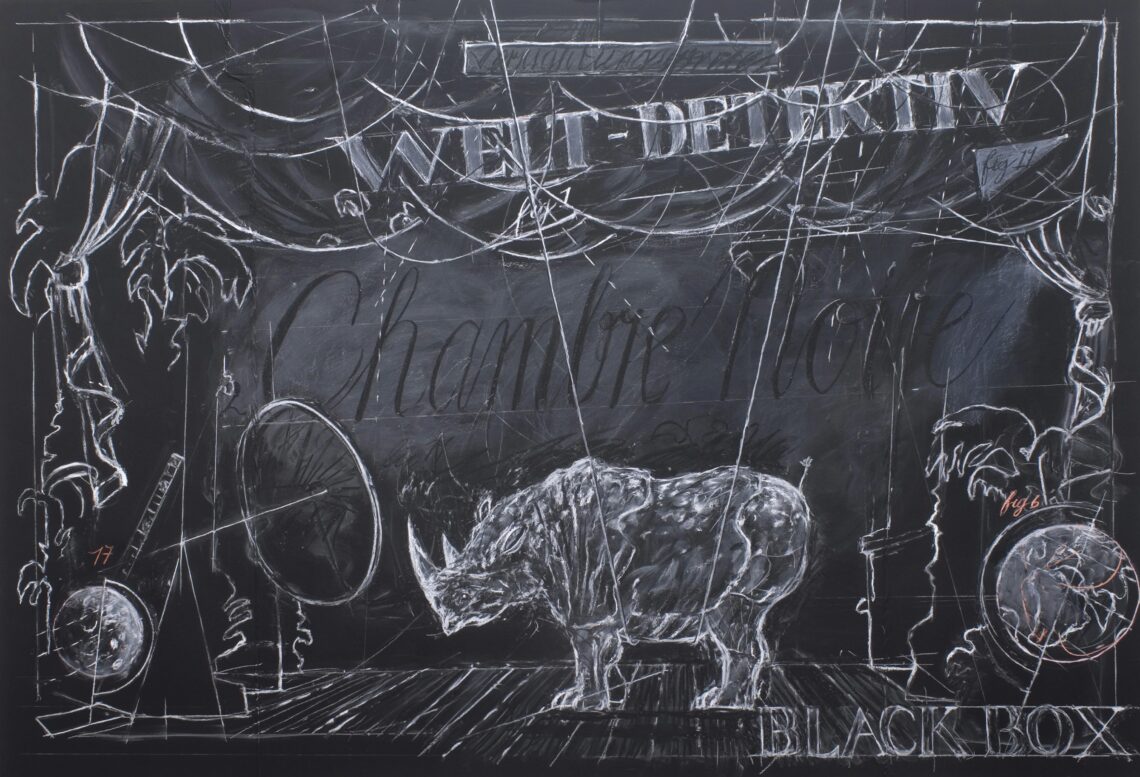
The South African artist, William Kentridge, with a multi-disciplinary approach, has made a significant contribution to the contemporary art scene through his out-of-the-box artworks that touch up our minds. Among his greatest works is a coded one that also expresses feelings of sympathy towards closed rooms, Black Box/Chambre Noire, as he calls it. This article covers his background, career, and an in-depth analysis of the Black Box/ Chambre Noire, interesting facts; that sum up the main theme.
Who was William Kentridge
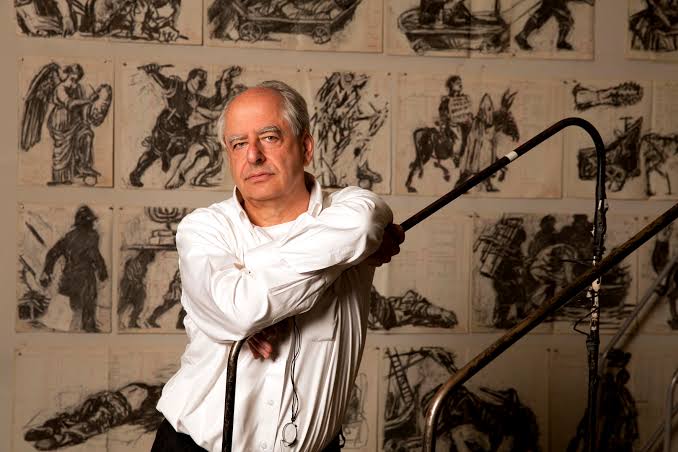
William Kentridge from Johannesburg born in 1955, is a well-known artist around the world who has earned a reputation from his multidisciplinary art practice across genres of drawing, animation, sculpture, and performance. Nonetheless, the primary message of his works is to touch on various intricate issues like apartheid, colonialism, and human nature. Kentridge’s distinctive style combines drawing, collage, and animation to produce fascinating storylines that have found their way into hearts elsewhere throughout the globe.
FUN FACT: Did you know that in addition to being a renowned visual artist known for his animated films and charcoal drawings, Kentridge is also a talented stage director? He’s been involved in productions for opera, theater, and even directed Mozart’s “The Magic Flute” for the Metropolitan Opera in New York City.
His Career
Kentridge’s artistic accomplishments commenced during the 70s when he enrolled in Fine Arts at the University of Witwatersrand in Johannesburg. In his early works, social and political topics particularly drew his attention, the trend that later would be characteristic of his entire production. In the 80’s and 90’s, the artist gained international acknowledgment for his unique animation method of blending handpainted images with stop-motion techniques. What is happening in Black Box/Chambre Noire
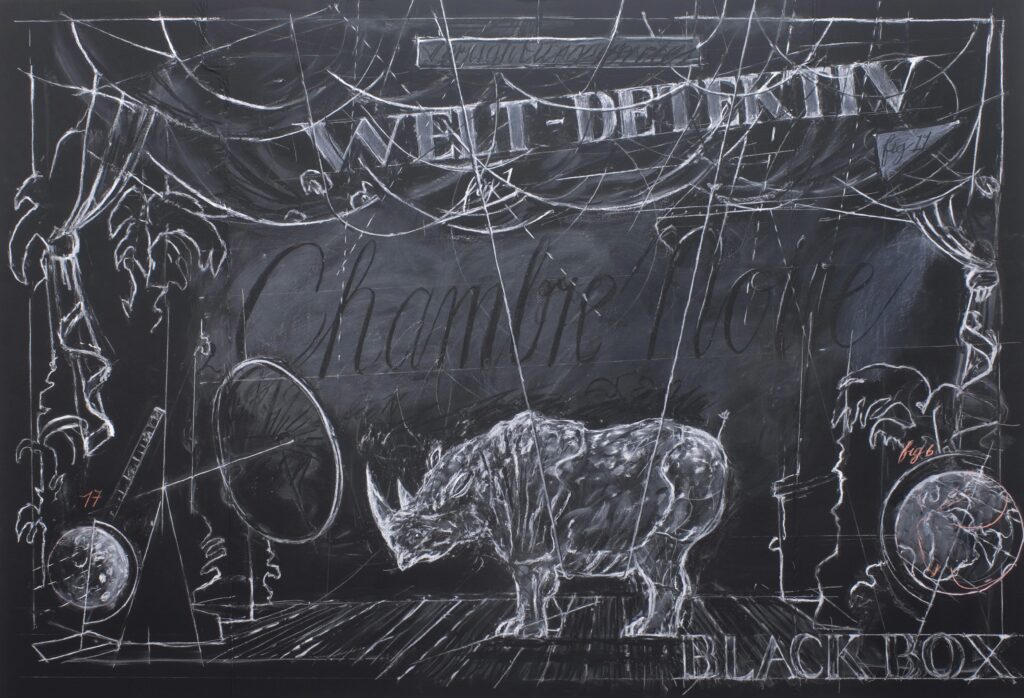
The Black Box/Chambre Noire, Kentridge created in 2005 can be considered a classical work of his art which is very original. The installation is presented by way of a captivating combination of drawing, animation, and sound techniques that make it a heartbreakingly evocative visual piece for the visitors. This is an art show in a dark chamber that is covered generally by a series of moving pictures displayed on walls.
As viewers roam through this space, they meet a kaleidoscope of images and sounds, which are woven to convey historical and personal impressions. Kentridge’s noticeable line drawings with charcoal impart a raw and visceral touch to the visuals and give the audience a sense of here and now and some intimacy. The frameworks of dislocation, struggle, and reconciliation are part of the work. So, the viewers are given a chance to reflect on the complexities of human existence.
Analysis of Black Box/Chambre Noire
| Artist | William Kentridge |
| Date Created | 2005 |
| Medium | Animated film installation |
| Genre | Contemporary art |
| Period | 21st century |
| Dimensions | Variable |
| Series/Versions | Unique installation |
| Where is it housed? | Various exhibitions globally |
Black Box/Chambre Noire defies easy categorization, blurring the boundaries between traditional artistic genres. Its interactive nature encourages viewers to actively engage with the artwork, forging personal connections and interpretations. Kentridge’s use of sound further enhances the immersive quality of the installation, enveloping spectators in a rich auditory tapestry that complements the visual experience.
Interesting Facts about the Artwork
Iterative Nature: The Black Box/Chambre Noire is not static but has a dynamic element to it. Kentridge constantly edits and adds new features, conforming to different environment options.
Historical Allusions: The imagery in Black Box/Chambre Noire frequently points to particular historical components such as South Africa’s apartheid period and the broad struggle against injustice and inequality.
Collaborative Effort: Kentridge works with musicians, composers, and performers to come up with the multi-media components of Black Box/Chambre Noire, which illustrates his unique interdisciplinary approach.
Global Recognition: Award-winning installation, Black Box/Chambre Noire, has been displayed at several prominent venues all over the world, such as the Museum of Modern Art in New York and the Tate Modern in London, thus bringing Kentridge’s name to the forefront of the contemporary art world.
Artwork Spotlight: Security
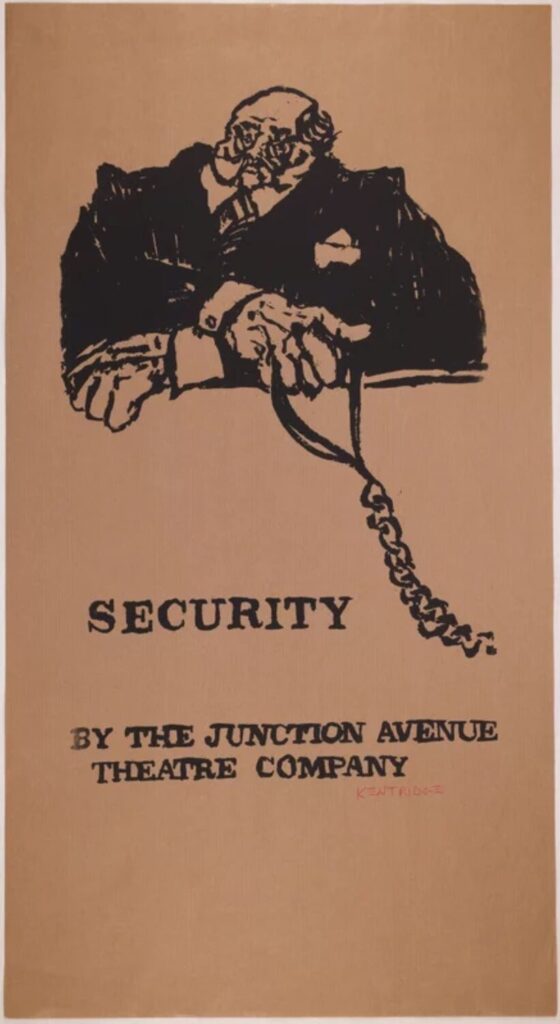
William Kentridge’s artwork “Security” is also available on Singulart. This artwork is a compelling piece created in 2015 that explores themes of surveillance and control. Utilizing his signature style, Kentridge combines drawing, film, and multimedia to convey a powerful commentary on contemporary socio-political issues.
Are you looking for a masterpiece from William Kentridge?
Singulart presents exclusive limited edition pieces by William Kentridge. To discover and acquire Kentridge’s art, click on the artwork or the button below for more information!
Frequently Asked Questions
How did William Kentridge use the mirror?
Kentridge employed catoptric anamorphosis with a mirror cylinder, a commonly used tool, to create his Medusa image. He sketched with charcoal using the reflection, constantly staring in the mirror rather than at the page.
What techniques does William Kentridge use?
Unlike conventional cell animations, which utilize a separate drawing for each sequence of action, Kentridge’s work achieves its effect by a cumulative process of drawing and erasure.
Conclusion
William Kentridge’s Black Box/Chambre Noire stands as a testament to the artist’s boundless creativity and profound insight into the human condition. Through its innovative blend of drawing, animation, and sound, the installation offers a richly immersive experience that challenges viewers to confront complex themes of history, memory, and identity. As Kentridge continues to push the boundaries of artistic expression, his work remains as relevant and impactful as ever, inviting audiences to explore the depths of the human psyche and the enduring power of art.