Richard Hamilton, one of the pioneers of British Pop Art commonly referred to as the father of British Pop Art, left a lasting impression on the art world with his progressive pieces of art. One of his most popular works is ‘My Marilyn‘, an intriguing examination of celebrity culture by the twisted light of mass media. Through this deeper conversation, we explore the life of Richard Hamilton, examine the course of his career, uncover the attraction of “My Marilyn,” and discover some interesting details about this famous painting.
Who was Richard Hamilton?
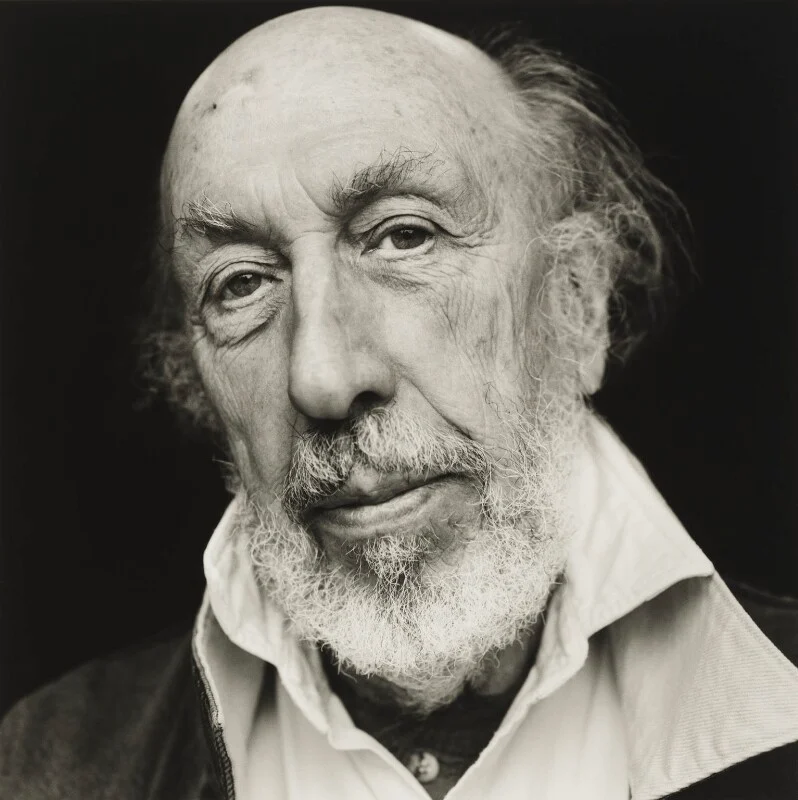
Richard Hamilton, the British artist (born in 1922 and passed away in 2011), was a creative visionary whose art career started in commercial design before moving to fine art. From his birth in London through the mid-20th century, Hamilton’s contribution to the art was very revolutionary. Although his early inspiration came from Cubism and Surrealism, it was his adoption of popular culture that set him apart.
FUN FACT: Richard Hamilton had a penchant for incorporating technology into his art. In the late 1960s, he created a groundbreaking artwork titled “Swingeing London 67,” which was based on a newspaper photograph of Mick Jagger and art dealer Robert Fraser handcuffed together in the back of a police car after a drug bust.
His Career
In the late 1950s, Hamilton made himself known with one of his breakthrough works, ‘Just What Is It That Makes Today’s Homes So Different, So Appealing?.‘ This marked the start of the Pop Art movement as a distinct category of art featuring bold imagery and commentary on consumerism. Hamilton, throughout his career, has always been a boundary pusher, doing this through art and popular culture in the form of paintings, prints, and installations.
What is Happening in “My Marilyn”?

| Artist | Richard Hamilton |
| Date Created | 1965 |
| Medium | Screen printing on paper |
| Genre | Pop Art |
| Period | Modern |
| Dimensions | 45.7 x 45.7 cm |
| Series/Versions | N/A |
| Where is it housed? | Tate Modern, London |
Having been designed in 1965, “My Marilyn” represents Hamilton’s obsession with celebrities and mass media. The image depicts Marilyn Monroe, the most famous Hollywood star, in a fragmentary and distorted fashion, which is an allusion to the impact of media images on the way we grasp the reality. The use of the screen print by Hamilton manifests the sense of detachment, as well as the reproducibility of the image, thus stressing the overwhelming power of Monroe’s picture in the general culture.
The composition of “My Marilyn” is dynamic and visually striking, having vivid colors and playful graphics that grab the audience’s attention. The artwork of deconstructing Monroe’s image into separate shapes and patterns encourages viewers to reassess their sentiment toward celebrity and media spectacle.
Interesting Facts about “My Marilyn”

Homage to Monroe: “My Marilyn” becomes a homage to Marilyn Monroe, the quintessence of Hollywood’s golden age. Hamilton distinguishes the riddles and the mysteries of Monroe life, portraying her as a public figure and as a private person.
Influence of Mass Media: The screen printing in “My Marilyn” by Hamilton highlights her obsession with the mass media and its function in creating cultural norms. Through the appropriation of images from mainstream media, he disrupts the accepted idea of authorship as well as the power of mass media imagery.
Legacy in Pop Art: “My Marilyn” represents both Andy Warhol and Roy Lichtenstein in the Pop Art movement. The film’s use of striking visual language and the depiction of the celebrity culture remains relevant today, highlighting Hamilton’s role as a visionary artist of the 20th century.
Visual Deconstruction: The fact that Hamilton distorted and broke apart Monroe’s image may be a critical commentary on how celebrities are depicted in the media. By this intentional destruction, the viewers must wonder about the genuineness of such images and consider the effect of media manipulation on the way we see the reality.
Screen Printing Innovation: The technique of screen printing in “My Marilyn” was innovative when it appeared. Hamilton used this approach to recreate pictures from the magazines, thus introducing mass production, which was against the traditional techniques of art. This strategy is in accord with the Pop Art principles that aimed to find inspiration in the consumer culture of everyday life.
Artwork Spotlight: Swingeing London 67
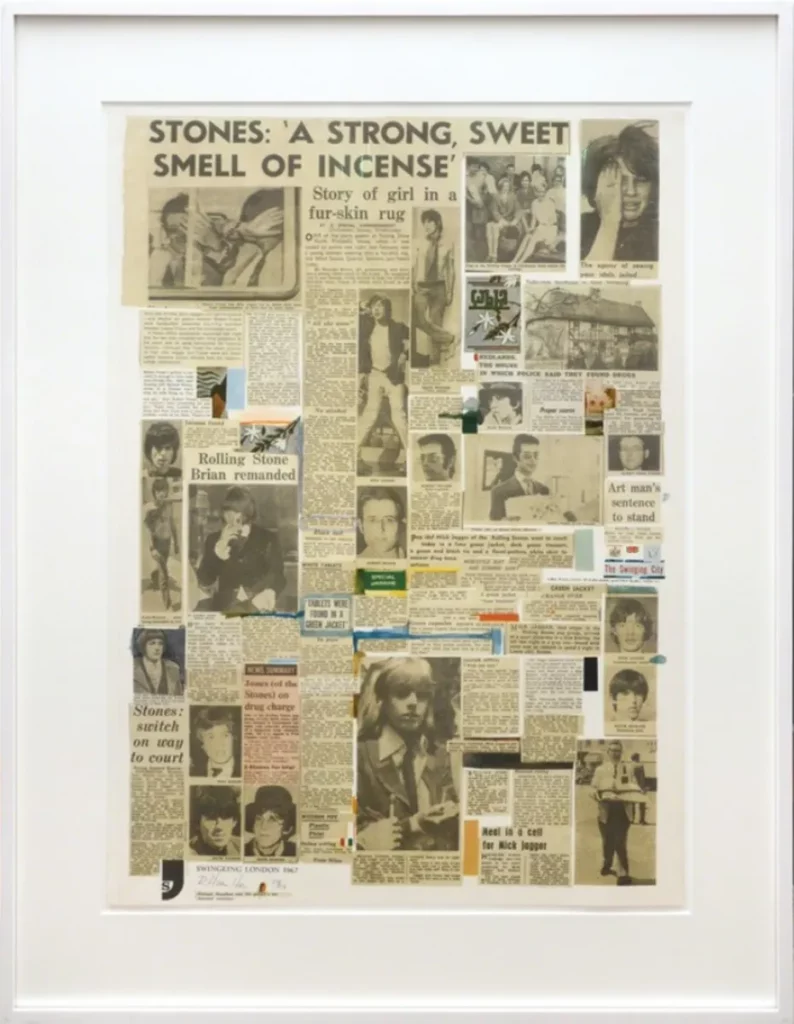
“Swingeing London 67” by Richard Hamilton is available on Singulart. This artwork is a revolutionary work of art that portrays Mick Jagger and art dealer Robert Fraser in the back of a police car after a drugs bust.
Are you looking for a piece of artwork from Richard Hamilton?
Singulart has limited edition prints of Richard Hamilton. If you are looking for a piece of Hamilton‘s artwork for sale, simply click on the artwork or the button below to discover more!
Frequently Asked Questions
What was Richard Hamilton most famous for?
Richard Hamilton, a British painter and collage artist, was one of the earliest figures in the Pop Art movement. He was born on February 24, 1922, and passed away on September 13, 2011. Born in London, England, Hamilton first studied painting at the Royal Academy School in 1938 after enrolling in evening lessons.
Who is the father of Pop Art?
Those recognized as the first Pop Artists include Roy Lichtenstein, Richard Hamilton, Andy Warhol, and David Hockney. Richard Hamilton is frequently referred to as the founding father of British Pop Art because he articulated the goals and principles of the movement.
Conclusion
Richard Hamilton’s “My Marilyn” serves as a reminder of the unstoppable power of Pop Art and its look into the present realities. By his creative application of imagery and technique, Hamilton encourages the viewers to inquire on the hegemony of the mass media and the celebrity culture in our modern society. The role that “My Marilyn” plays in the artist’s legacy proves that he is a visionary 20th-century artist whose works continue to get admiration and provoke thought. Its visual complexity and layered meanings make the work a timeless piece that touches the audience, allowing them to ponder over the convergence of art, fame and media culture.