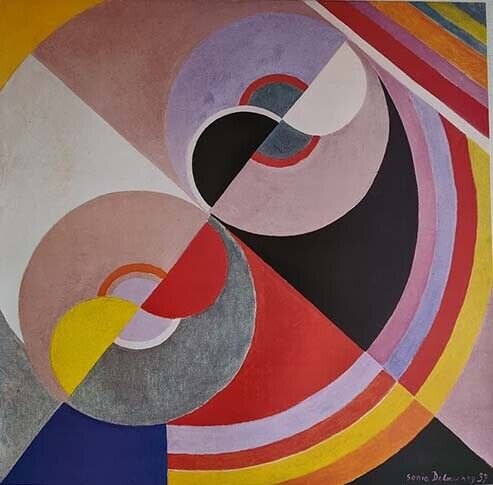
Sonia Delaunay, a person whose artworks are recognized for their vibrant and dynamic quality, proved to be an artist who influenced the development of modern art. Sonia Delaunay, born in 1885 as Sarah Ilinitchna Stern in Ukraine, later adopted the name Delaunay; it marked the beginning of a captivating adventure that would engulf her in a world of creative constancy. Delaunay’s artistic vision was distinguished by the dominating colorful blocks, geometric shapes, and rhythmic forms which were in sharp contrast with the trends of the time and what the historical avant-gardists were doing after her. Among the various pieces she left, “Rythme coloré” speaks to her wide creativity and lasting influence.
Sonia Delaunay: A Life in Color
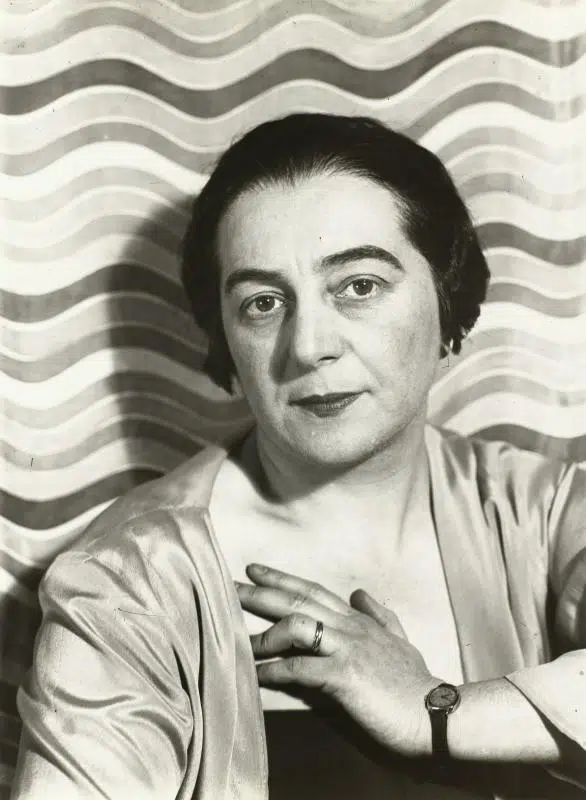
Sonia Delaunay’s tale of achievement, which led her to become one of the most renowned artists of all time, her whole life was filled with a burning passion. From an early age, she demonstrated an evident passion about the art, trying to channel her impressions of the universe around her. At twenty years of age Delaunay relocated to Paris, the art hub of the avant-garde movement where she would establish herself.
Paris offered a world of art experimentation and innovation to the artist Delaunay. It was the lively colors and the life that enlivened the city that had tremendous influence on the artist’s later work. In addition to Paris where she met her future husband, Robert Delaunay, a prominent painter who became an important influence on her own art.
Hand in hand, Sonia and Robinson started an exploration journey into the world of arts, where the borders of artistic traditions were blurred. They created a kind of style called Orphism, which consisted of the elements of Cubism and the bright colors and the abstract shapes. These aesthetics is characterized by the priority of rhythm and movement, and as it comes, this style would be the artist’s starting point in defining her artistic vision.
FUN FACT: Sonia Delaunay didn’t just limit her artistic talents to painting; she also applied her vibrant and colorful aesthetic to various other mediums, including textiles, fashion design, and even set and costume design for theater productions.
Exploring “Rythme coloré”
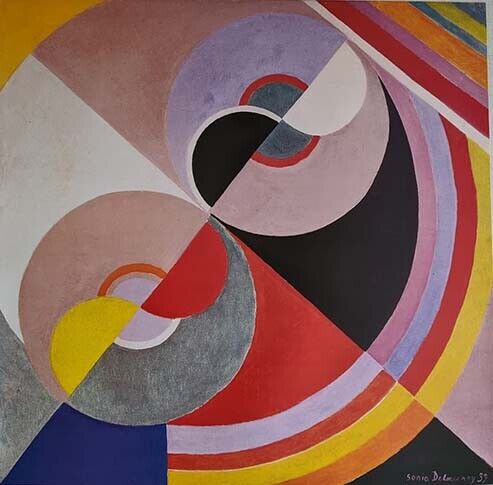
| Artist | Sonia Delaunay |
| Date Created | 1946 |
| Medium | Oil on Canvas |
| Genre | Abstract Art |
| Period | 20th Century |
| Dimensions | TBD |
| Series / Versions | Rythme coloré series |
| Where is it housed? | Private Collection/ Museum TBD |
“Rythme coloré” from 1946, Sonia Delaunay’s work clearly demonstrates the artist’s ability to use shape and colour. The oil-on-canvas painting, which would have caught anyone’s eye due to its strong composition and vibrant color palette, portrayed a scene of a peaceful countryside.
First sight may give the composition “Rythme coloré” an impression of chaos, with its overlaid shapes and the bright colors. But, after the closer look, we see the order and rhythm there. Delaunay utilizes the geometry shapes of a circle and a rectangle that results in the formation of movement and dynamism within his paintings.
The explosive nature of the colors in “Rythme coloré” is so tangible that it makes you feel like you are watching a dazzling dance or liberated music. Delanauy’s ability to creatively harmonize color and shape elicits a physical response from the viewer as one can experience the painting with the senses aroused and the imagination stirred.
Unlocking the Secrets of “Rythme coloré”
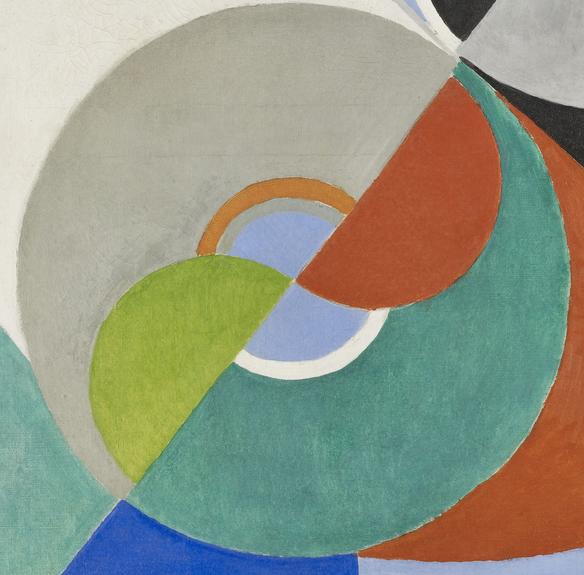
Though “Rythme coloré” might be seen as something unplanned and unrestricted, it is a product of certain preparation and artistic outlook. Delaunay was influenced by a number of elements, such as music, dance, or the rhythm in a day-to-day life. She was especially inspired by jazz, a genre with its syncopated rhythms and a spontaneous, creative nature.
The title, “Rythme coloré,” informs the viewer that Delaunay pursued the objectification of the rhythmical motion through color. Each composition consists of elements such as the shape and the color, which together make perfect harmony – the balance of the forms and the colors.
Perhaps the most salient thing about “Rythme coloré” is the feeling of movement that it evokes. The outlines seem to perform a dance on the canvas, with the contours obscuring and merging into a waltz of color and rhythm. Delaunay’s use of fast brush movements and big, expressive strokes adds to the impression of motion and excitement in the painting.
Fun Facts about “Rythme coloré”
“Rythme coloré,” French for “Coloreation”, refers to Delaunay’s color play with motion.
Delaunay’s “Rythme coloré” already reveals her fascination with the overlap between art and science through her use of geometric abstraction. She was exposed to the new discipline of non-Euclidean geometry that forced the ordinary conception of space and form.
Artwork Spotlight: Carnaval
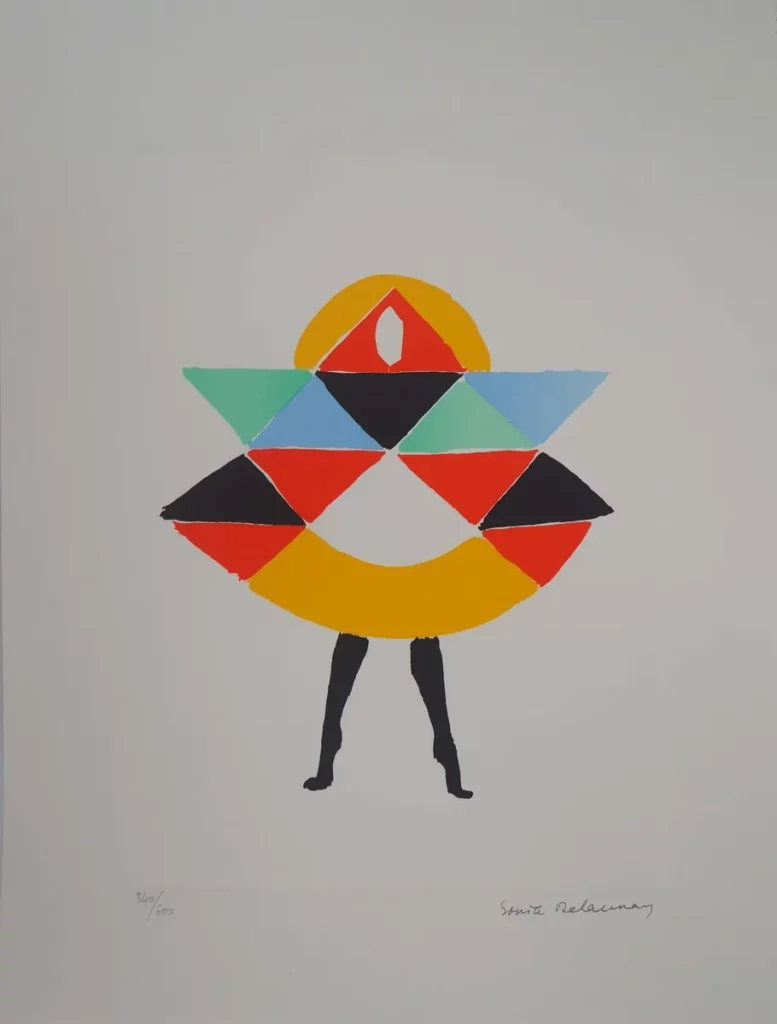
“Carnaval” by Sonia Delaunay is also available on Singulart. It is a lively artwork with moving colors and geometric patterns which are in a jubilant fusion of joyfulness and vibrancy, showing the energy and excitement of the carnival that this picture depicts. Delaunay’s impressive color and form boldly create an image of celebration and jollity which is very beautiful to look at.
Are you looking for a masterpiece from Sonia Delaunay?
Singulart presents exclusive limited edition pieces by Sonia Delaunay. To discover and acquire Delaunay’s art, click on the artwork or the button below for more information!
Frequently Asked Questions
What technique did Sonia Delaunay use?
Based on their ability to produce intense expressions through color on the canvas, the Delaunay pair employed Orphism to produce non-objective imagery, which had importance.
What medium did Sonia Delaunay use?
In the 1960s, she painted Rythme Couleur in a gouache manner (which she also replicated as pochoirs). She went back to her Orphism beginnings with these paintings, bringing back the hues and forms from their early collaborations with Robert.
Conclusion
Rythme coloré is a manifestation of Sonia Delaunay’s daring creativity and continuing impact on the domain of contemporary art. By means of her daring employment of color and shape she established a visual language that is still captivating and inspiring audiences all over the world. While we submerge ourselves in the exciting colors and patterns of “Rythme coloré,” we are reminded that art is endless in its manifestations and that creativity holds the ability to transform.